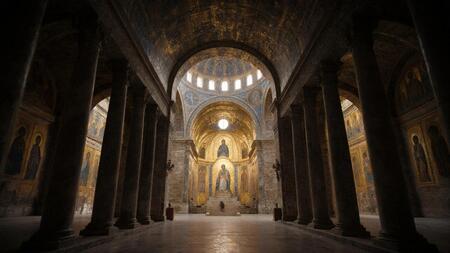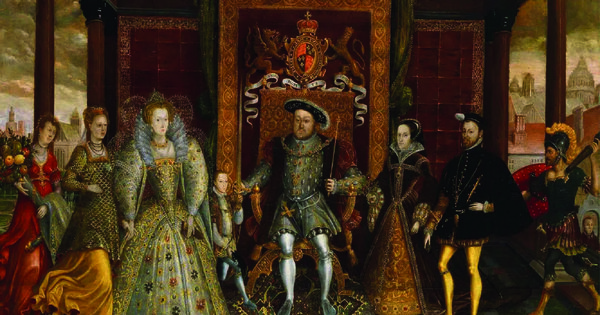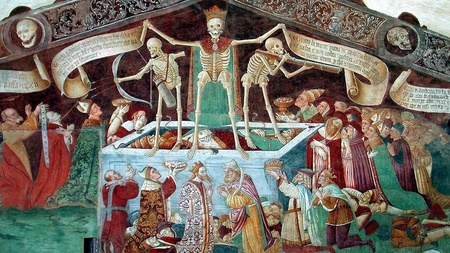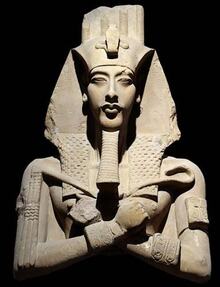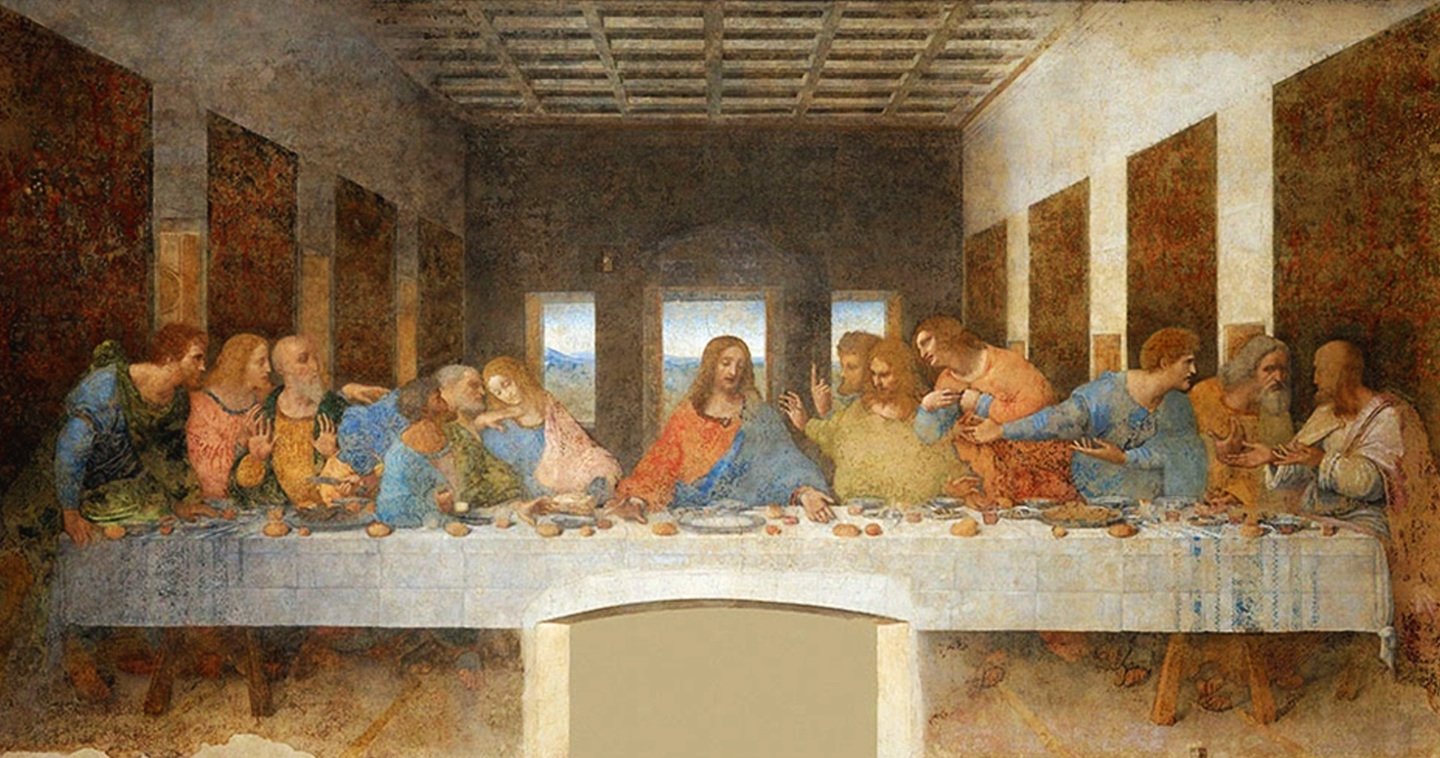
Even in the ancient world, people imbued objects with meaning. The things surrounding a person became part of myths or ritualistic implements. A simple bowl in a painting could not just indicate something—it could tell us an entire, deeply significant story.
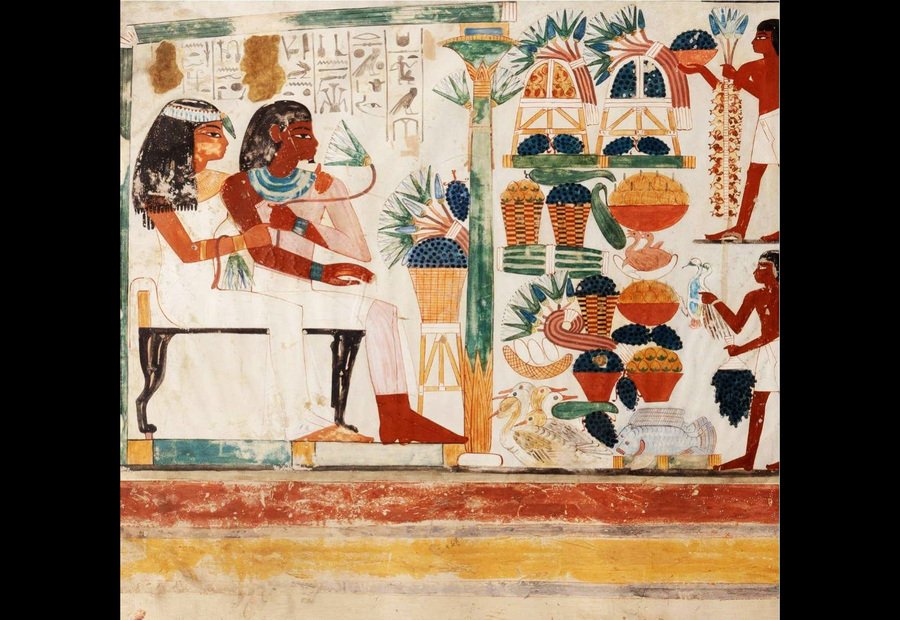
In ancient civilizations, objects frequently held a close connection to religious beliefs and the afterlife. Ancient Egypt is a striking example, where certain items, arranged in a specific order, could signify power or protection.
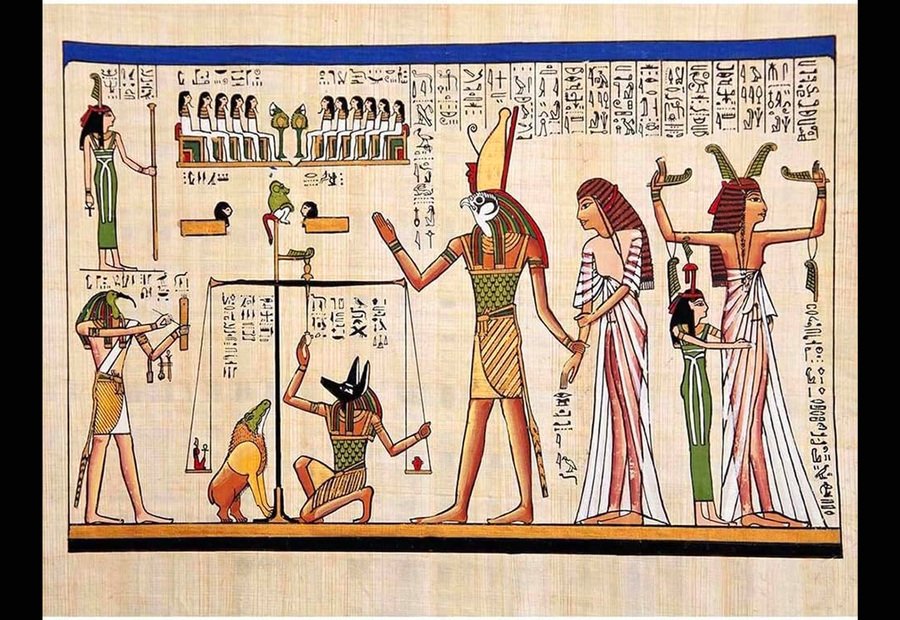
In ancient art, plants, animals, and divine attributes became symbolic motifs. Their depiction helped the viewer recognize the heroes of myths and legends.
During the Middle Ages, the symbolism of objects became particularly intertwined with Christianity. Imagery was used not only for decoration but also to convey religious ideas.
Painting: «The Annunciation» by Simone Martini and Lippo Memmi, 1333.
In medieval painting, plants were often used not merely as decorative elements in a composition, but as symbols representing specific qualities and states. In Simone Martini’s painting, the white lily stands near the Virgin Mary, symbolizing her purity and innocence. Archangel Gabriel holds an olive branch, which is associated with peace.
It is interesting that both symbols are represented through ordinary plants. Perhaps the artist chose them precisely because the viewer could easily recognize these images and connect them with certain associations.
«The Merodinsky Altarpiece"—a workshop piece by Robert Campin, circa 1427–1432.
At the center of the altar is depicted a room containing a metal candlestick with an extinguished candle. At first glance, this is an ordinary domestic detail, but in a religious context, the candle is linked to the image of divine light and the presence of Christ.
It is particularly interesting that the candle is shown already extinguished. Its state becomes part of the symbolic interpretation of the painting. This raises a question: why did the artist choose to depict this specific detail rather than a normally lit candle?
Perhaps the candle relates to the image of divine light and the presence of Christ. Its unusual state in the Annunciation scene is interpreted as a symbolic indication of Christ’s incarnation. Here, it is crucial to convey not just the candle itself, but its extinguished wick.
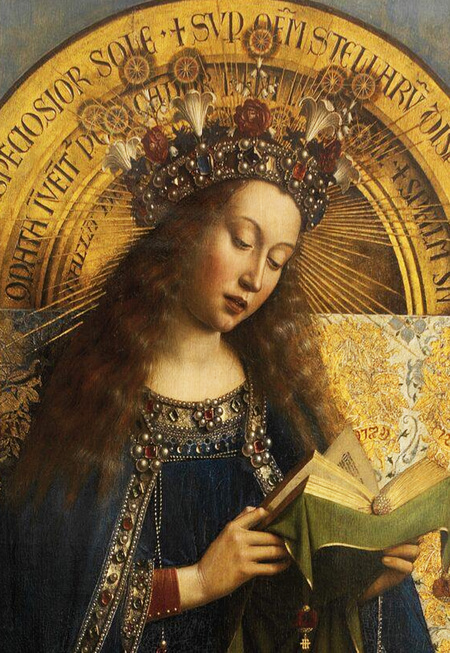
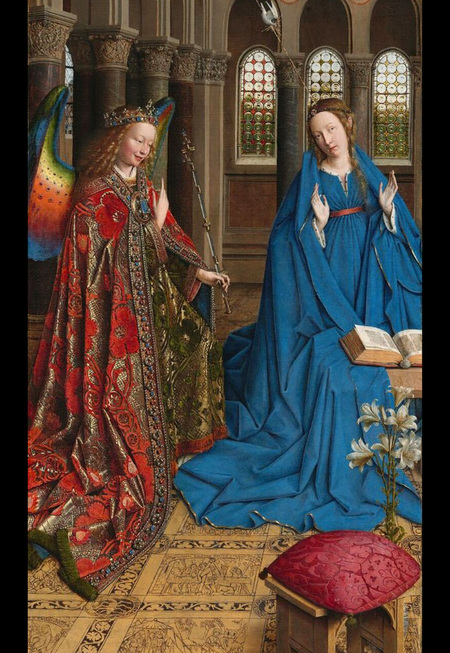
The book frequently appears in medieval religious works. It could symbolize the Holy Scripture, faith, knowledge, and spiritual life.
In Jan van Eyck’s «The Annunciation,» an open book is depicted before Mary. It does not merely supplement the interior design; it helps convey the heroine’s state of being and the religious context of the scene.
The book is associated with religious reading and the Holy Scripture. It shows that Mary was engaged in reading prior to the archangel’s arrival. In medieval painting, the book often became a symbol of knowledge, faith, and spiritual life.
One of the most unusual elements in the studied works is the mousetrap depicted in Joseph’s workshop. At first glance, it seems completely unrelated to the religious subject matter.
However, in Christian tradition, the cross was compared to a trap for the devil. This idea is connected to the works of Augustine, who used the image of a trap—where Christ’s death becomes a way to conquer evil.
This reveals an interesting connection: an ordinary object from daily life is transformed into an image representing a complex religious concept. I was intrigued by how unusually artists could convey their thoughts. Sometimes, obvious religious attributes weren’t even necessary—an object the viewer saw every day was enough.
Maria’s room features a metal water pitcher, a washbasin, and a towel. These items are part of everyday domestic life, but within the context of religious painting, they acquire an additional layer of meaning.
«The Merodsky Altar”—a workshop piece by Robert Campin, circa 1427–1432.
They are associated with the purity and immaculate nature of the Virgin Mary. Here, it is particularly evident how everyday objects could be used to convey spiritual concepts. It is interesting that the artist does not separate the religious from everyday life. On the contrary, the sacred narrative unfolds within a familiar interior, filled with recognizable objects.
The mirror in this painting occupies a small space, yet it draws particular attention. It is placed on the back wall of the room and reflects not only the space but also the figures situated outside the main image. The mirror’s uniqueness is further enhanced by its framing: small depictions of the Passion of Christ surround it.
Several oranges can be spotted on the windowsill and the chest in the painting. Today, this is an ordinary fruit, but in 15th-century Northern Europe, it was an expensive imported commodity.
Its presence in the interior could have indicated the wealth and high social status of the homeowners.