Образ мыльного пузыря в голландской живописи XVII–XVIII веков
Block I. Concept
Justification for Topic Selection
This visual study is dedicated to analyzing the use of the soap bubble motif in Dutch painting from the 17th and 18th centuries. Interest in this topic stems from the possibility of tracing how the bubble was employed with different meanings depending on the historical and artistic context.
The soap bubble—an element that, at first glance, might seem like a decorative or minor fragment of a work of art—possesses a profound symbolic meaning that reinforces or complements the idea embedded in the painting. Furthermore, it is undoubtedly one of the ways to demonstrate masterful brushwork, as capturing air, volume, the sensation of flight, and the play of light on canvas is a very complex undertaking. To gain a deeper understanding of the significance of soap bubbles, one must turn to the Vanitas genre, which gained popularity in 17th-century Dutch painting.
Vanitas consists of allegorical still lifes. In paintings belonging to this genre, objects that symbolize the inevitability of death, the transience of material possessions, and the ephemeral nature of worldly things are often depicted. One such element is the soap bubble, which, with its fragility, symbolizes human life, the fleeting nature of pleasure, and the futility of achievement.
Material Selection PrincipleThe analysis primarily incorporates works of Dutch painting, as this motif achieved notable prominence within the artistic culture of the region, particularly within the context of vanitas still lifes and genre scenes.The main selection criteria are the presence of soap bubbles in the works, a geographical restriction (the Netherlands), and a time frame spanning the 17th–18th centuries. Additional materials are used to explore the origins of the iconographic motif Homo Bulla, which is essential for understanding the preconditions for the idea’s spread.
NavigationBlock I. Concept Block II. The Transient Nature of Being Block III. Allegory and the Motif of Children’s Play Block IV. Everyday Life and Observation Block V. Conclusion
The structure is organized to present a chronology of works featuring the soap bubble and the evolution of its meaning. The sections address the premise of the motif, its role in vanitas painting, and the interplay between symbolism and everyday scenes. This sequence allows one to trace how the perception of the soap bubble changed and what meanings were retained or added throughout the period under review.
Principle of Selecting and Analyzing Textual SourcesLiterary materials include scholarly publications on the history of Western European art, studies of vanitas symbolism, and sources dedicated to specific artists and works. Official catalogs and descriptions of museum collections are also examined to verify authorship, titles, and dates.
Key QuestionThe main research question is how the artistic and symbolic meaning of the soap bubble evolved in Dutch painting during the 17th and 18th centuries, and what cultural concepts influenced its interpretation.HypothesisWithin the specified time frame, the soap bubble gradually shifts its meaning from a symbol of transience to a depiction of everyday play and the beauty of the moment, while retaining a connection to its original symbolism.
Block II. A Memento Mori
Man as a Soap Bubble
Homo bulla est is one of the sources of symbolic meaning in Dutch art’s soap bubble motif. This expression reflects the perception of the transience and fragility of human life. Although the phrase has ancient roots, it gained popularity through Erasmus of Rotterdam’s book, «Adagia» (Maxims).
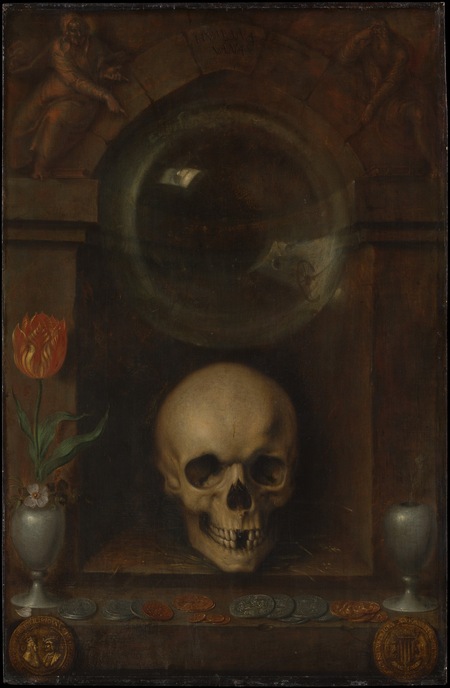
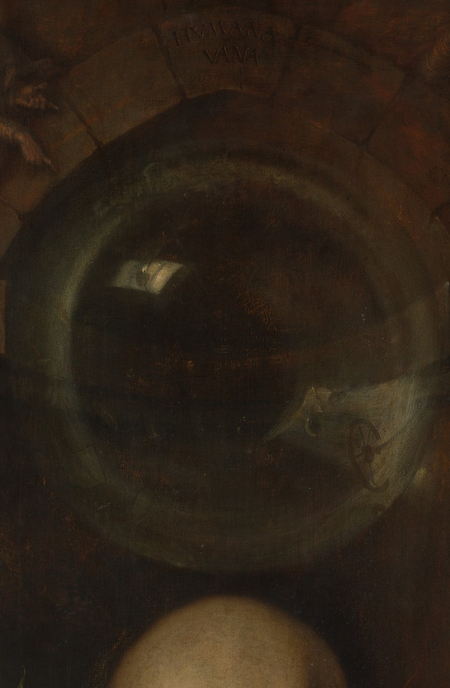
Jacob de Gheyn II. «Vanitas Still Life» (1603)
A soap bubble, a skull, a severed flower, and smoke rising from a vessel in the painting «Vanitas Still Life» all serve as reminders of life’s transience. What appears at first glance to be reflections in the bubble are, upon closer inspection, a leper’s rattle and the wheel of torture, adding a further meditation on illness, suffering, and death.
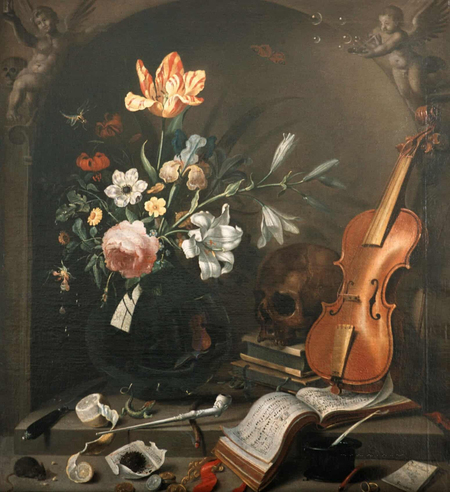
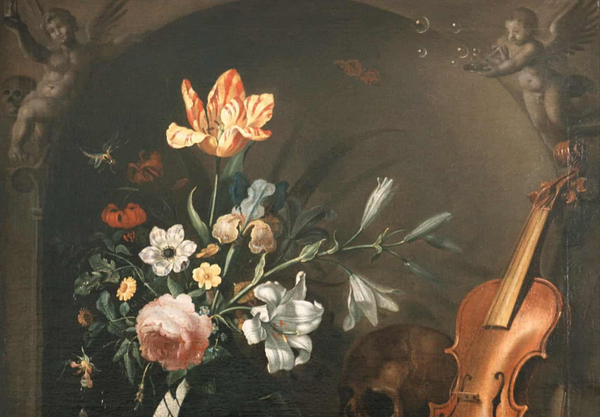
Jacob Marsel. «Vanitas» (1637)
Fragile bubbles float above a skull, symbolizing the fleeting moment juxtaposed with the eternity of death. Flowers in a vase and luxury items also represent the transience of beauty and material wealth.
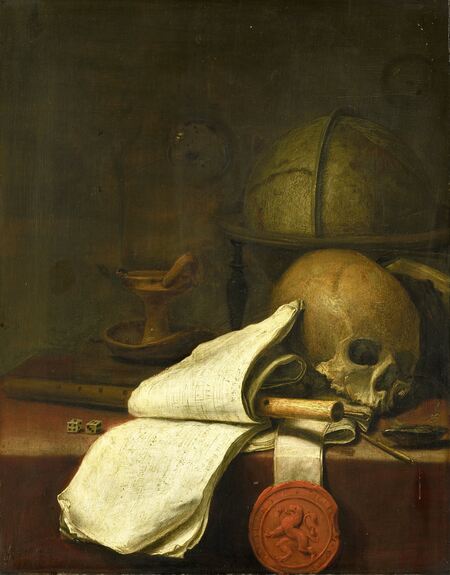
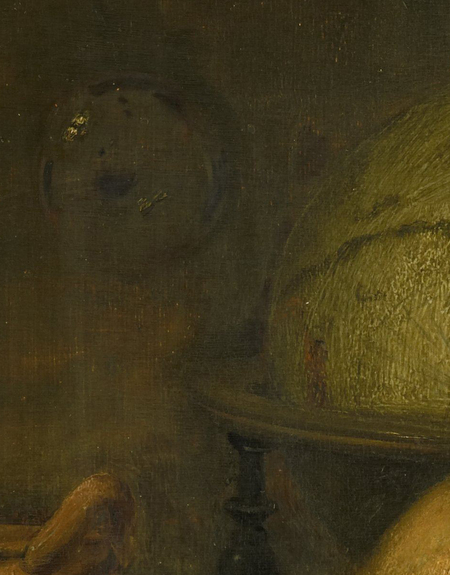
Peter Simons Potter. «Vanitas Still Life» (1646)
The artist employs traditional vanitas elements in the still life genre. The globe and manuscript symbolize knowledge and experience, the dice represent play and pleasure, and the depiction of a bubble reinforces the allegory of life’s transience.
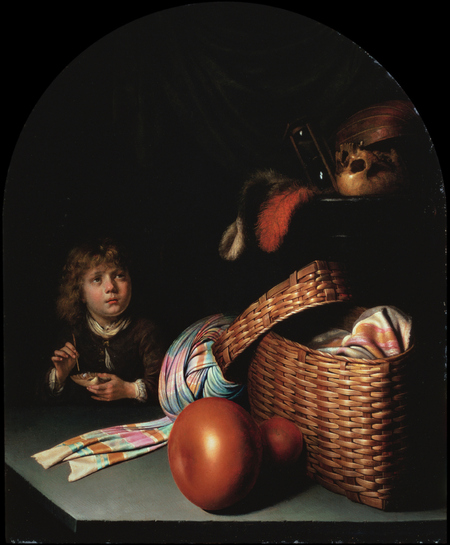
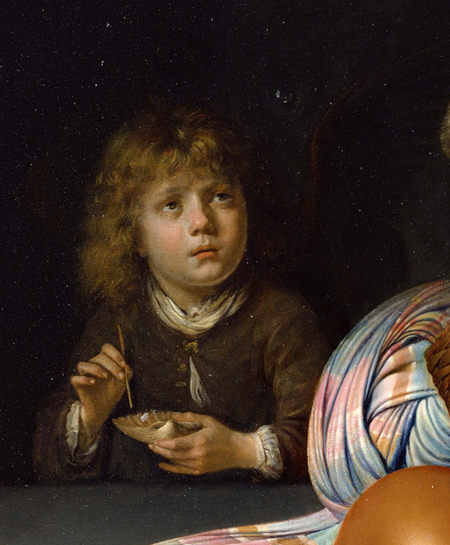
Gerard Dou. «Still Life with Boy Blowing Soap Bubbles» (c. 1635–1636)
In Gerard Dou’s still life, there are canonical vanitas objects: a skull and an hourglass, which symbolize death and the fleeting nature of time. The child depicted in the painting, whose silhouette bears the faint outline of an angel’s wings behind him, gazes at the bubbles he himself blew. Through all these images, the artist reminds the viewer of the fragility of life.
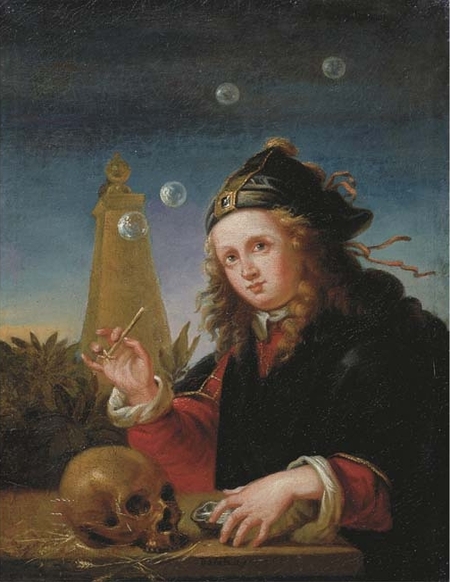
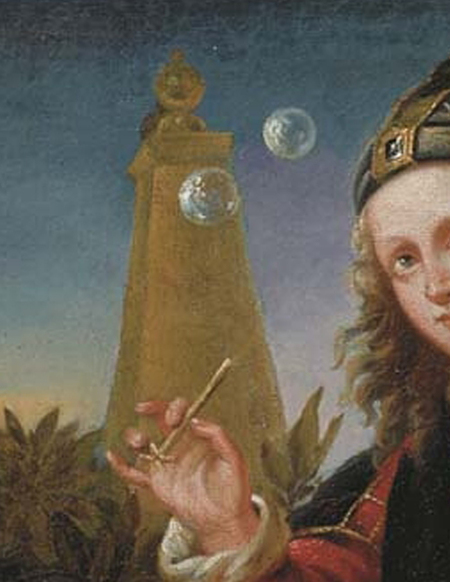
Renoir de la Hay. «Boy Blowing Soap Bubbles» (1650s)
In this genre scene, the central figure is a young man holding a basin of soapy water in one hand and a bubble wand in the other. A skull lies on the table beside him; bubbles float upwards, and all of this together alludes to the fleeting nature of entertainment and the transience of existence.
David Baïyi. «Still Life with Self-Portrait» (1651)
The painting depicts a young David Bayi, surrounded by objects that hold symbolic meaning. The artist employs an interesting technique, presenting two stages of his life—a younger version of himself holding a portrait of the current David Bayi. This alludes to the inevitability of death. Furthermore, a translucent face of his deceased wife is visible on the wall, and soap bubbles float above the table. Their combination with a clock, a skull, flowers, and a candle intensifies the contemplation of human decay and the certainty of an ending.
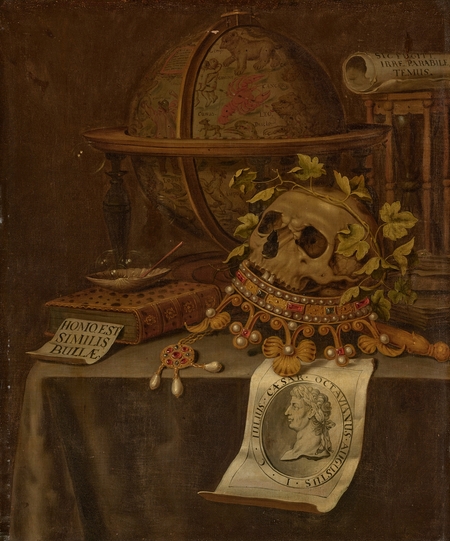
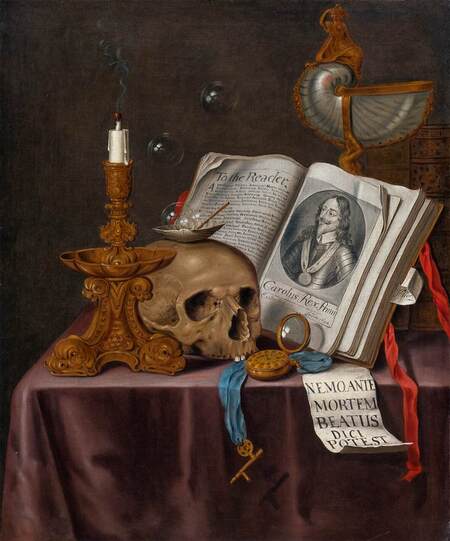
Evert Coller. «Vanitas» (1663) and «Still Life with a Portrait of King Charles I» (1698)
Still lifes convey the idea of the transience of all worldly things: skulls, clocks, portraits of emperors and kings, the smoking candle in the second painting, and shells with soap bubbles illustrate the fragility of human life and the futility of achievement.
Thus, in Dutch painting of the first half of the 17th century, the soap bubble primarily serves as a symbol of the fleeting nature and transience of human life. Its meaning is revealed through its interaction with other objects (such as skulls, flowers, clocks, and smoke). In Vanitas still lifes, this image becomes a reminder of the fragility of existence and the inevitability of death. It is important to note that during this period, precursors to a shift in the motif’s interpretation are evident. In the works of Gerard Dou, Reinier de La Hey, and David Baas, the symbolism of the soap bubble begins to combine with depictions of humans, which gradually broadens narrative possibilities while maintaining its connection to the idea of life’s transience.
Block III. Allegory and the Motif of Children’s Play
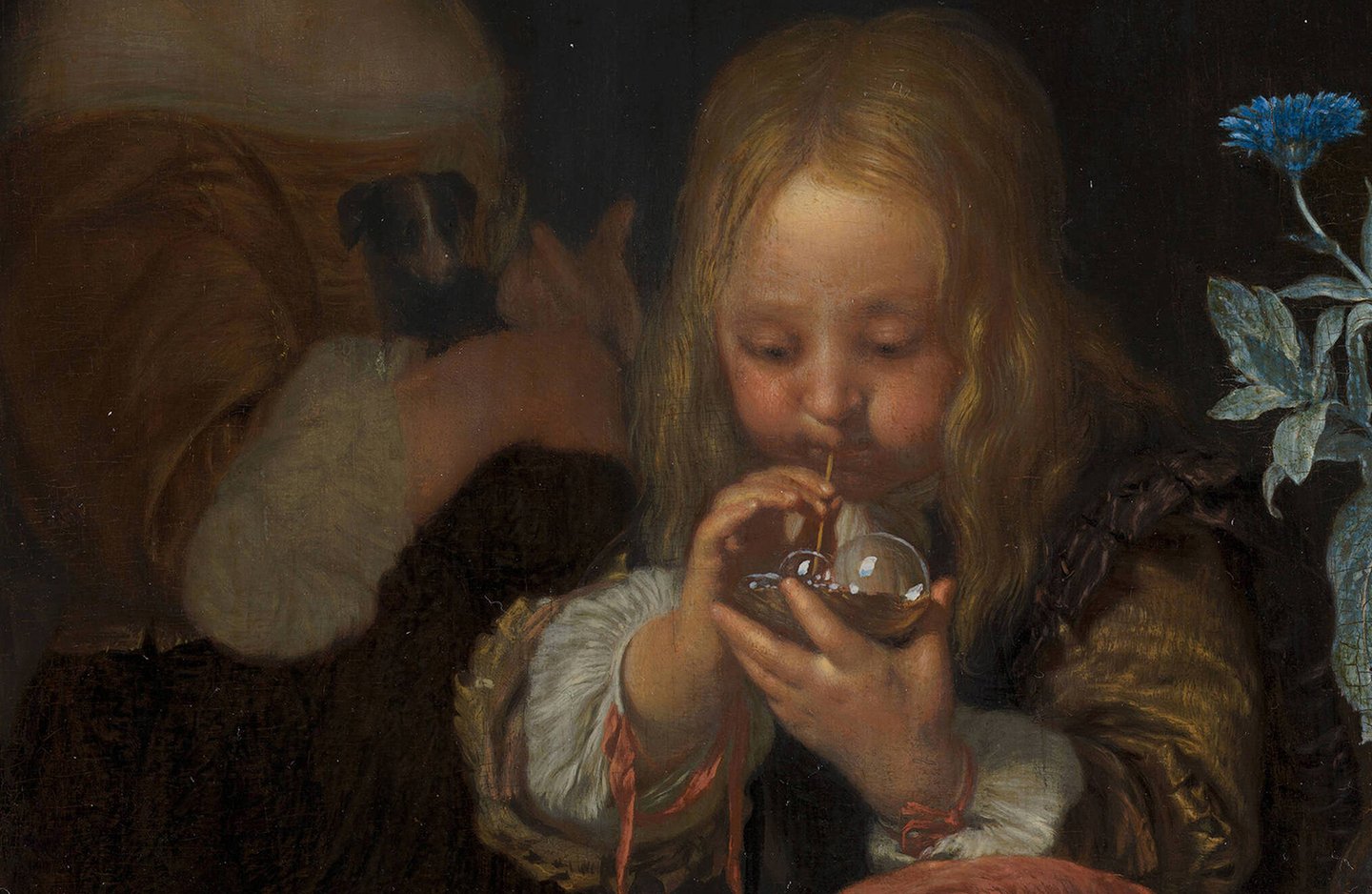
Frans van Mieris the Elder. Fragment of the painting «Boy Blowing Bubbles» (1663)
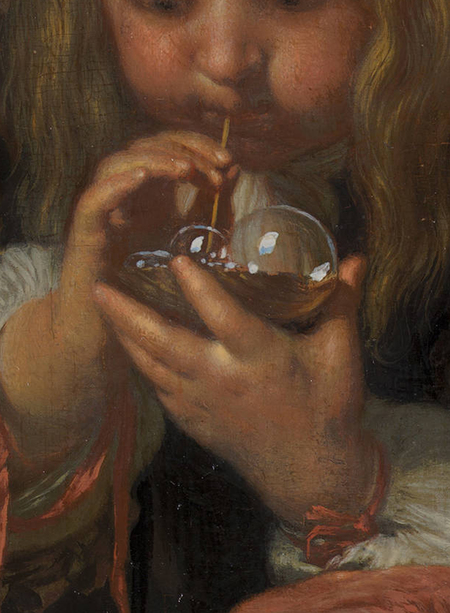
The painting depicts a boy blowing bubbles in a basin of soapy water. Here, the composition focuses on a simple action, emphasizing the value of the present moment and the act itself as a carrier of meaning.