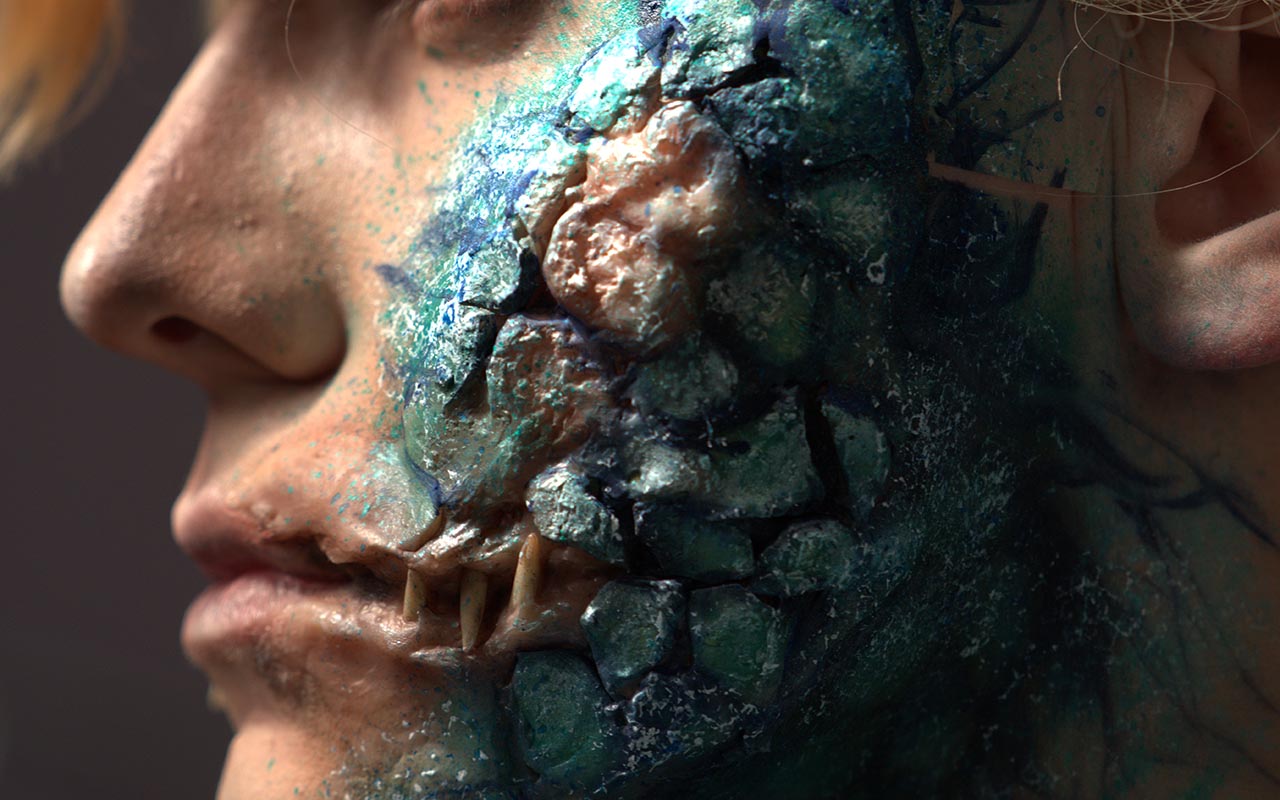
История грима: от ритуальных рисунков до способа современного самовыражения
Concept
Research Contents
I. Make-up in the Stone Age II. Make-up in Ancient Egypt III. Make-up in the Middle Ages IV. Make-up in the Renaissance V. Make-up in the 19th Century VI. Make-up in Modern Times VII. Conclusion
Topic Selection
The choice of topic is justified by my interest in the art of makeup, its history, and its development. Makeup is not merely a decorative medium; it is a tool for creating characters and conveying personality, which is an integral part of theatrical art. I am particularly interested in the evolution of makeup artistry—from ritual body painting in ancient times to stage makeup in the 18th century. This research allows me to trace the progression of this art form. Changing eras brought new perspectives on human appearance, which was directly reflected in methods of facial transformation. In each century, makeup artists sought new techniques to make the image on stage or in life more expressive.
Visual Material Selection Principle
The foundation of material selection is adherence to chronological sequence and consideration of the historical context relevant to each image. We study makeup implements and makeup reconstructions, which helps us understand the practical aspects of facial design across different periods. Special attention is given to analyzing color palettes, characteristic ornaments and patterns, methods of altering facial features, and the materials used in makeup creation. These visual materials must clearly demonstrate how makeup looked during a specific historical era and what function it served. By following this principle of material selection, one can trace the evolution of makeup and understand how the techniques and purposes of its application changed across different historical periods.
The Principle of Rubrication
The research material is presented in chronological order and divided into five periods: the Ancient World, the Middle Ages, the Renaissance, and the 17th and 18th Centuries. Each section examines the primary applications of makeup, its functions, the materials used, and the application techniques. This structure allows one to trace how face and body painting, historically linked to rites and symbols, evolved into full-fledged theatrical embodiment over time. Gradually shifting from ancient rituals toward the stage, makeup became increasingly complex and expressive.
Principles of Selecting and Analyzing Textual Sources
For the preparation of this study, we utilized texts on theater history, museum catalogs, academic articles, and research on ancient rituals. The analysis took into account the functions of makeup, the methods of its creation, the pigments used, and the application techniques. Working with diverse sources allowed us to synthesize scattered facts into a coherent history of makeup evolution.
Research Question
How and why has the application of makeup, its techniques, and artistic features changed, and what factors influenced the selection of makeup materials and how they were applied across different centuries?
Working Hypothesis
The function, techniques, and artistic characteristics were determined by shifts in cultural traditions, as well as by evolving methods of creative self-expression. The development of crafts, the availability of necessary components, and societal perceptions of beauty also played a role in these changes.
Research Objective
To trace the evolution of makeup artistry from antiquity through the 18th century, identifying the fundamental shifts in the purpose of cosmetics, their social significance, and changes in techniques and materials.
Introduction
Makeup is the art of altering human appearance. Today, makeup is widely used everywhere—in film, theater, and even in everyday life as a means of self-expression. However, this art form has not always been this way. It has undergone a long journey to adopt its current form. Through my visual research, I can trace the transformation of makeup artistry from ritualistic painting to a modern spectacle. Studying the history of makeup allows one to see how the materials used, the techniques, and society’s attitude toward the art of physical transformation have changed.
Makeup in the Stone Age
Ochre pigment in the Stone Age
Safety
How Paint Was Created in the Stone Age
The history of makeup began in the Stone Age. Even then, people used paint to decorate faces and bodies. Through these paintings, one could determine social status, gender, or military rank. Natural pigments were used for the designs: ochre, charcoal, and chalk.
Red ochre traces on the exterior surface of the shells
Paints were stored in shell palettes. In the Blombos cave in South Africa, archaeologists discovered a paint-making kit dating back approximately 100,000 years. Remains of a paste made from red ochre, bone marrow, and charcoal were preserved in large shells of the abalone (Haliotis midae). Similar shells bearing pigment traces have also been found at Neanderthal campsites in Europe.
Makeup in Ancient Egypt
Detail of the sarcophagus of the Ancient Egyptian nobleman Yuya
In ancient Egypt, makeup and cosmetics served both ritualistic and aesthetic functions. Eyeliner acted as a religious talisman against evil spirits. Makeup was also used in ancient Egypt to emphasize status and high social standing.