Concept
In the 1920s, perceptions of female appearance underwent significant changes. The silhouette defined by corsets, elaborate hairstyles, and layered clothing—characterized by an emphasized waist—gave way to a new visual ideal: short hair, a straight silhouette, a dropped waistline, shorter skirts, and a looser garment structure. The woman of the 1920s became a symbol of modernity, independence, and a new way of life. Her appearance increasingly deviated from traditional notions of femininity and frequently incorporated elements previously associated with men’s fashion. This look was encapsulated by the terms garçonne and flapper, which denoted a new type of contemporary woman. However, the fashion shifts of this decade are of interest not merely as a collection of new styles and trends. They allow us to trace a deeper transformation in concepts surrounding the female body, gender identity, and women’s social roles. Clothing ceases to be merely a means of adorning the exterior; it becomes a tool for constructing a new visual image—one through which cultural and societal changes are expressed.
Hypothesis
The central hypothesis of this study is that 1920s fashion did not so much liberate the female body from previous constraints as it reconstructed the very notion of femininity. The rejection of the traditional corset, the proliferation of the straight silhouette, short haircuts, and elements of menswear altered established visual markers of femininity. Concurrently, this emancipation from the prior ideal was accompanied by the formation of a new beauty standard: a body that was slender, youthful, dynamic, and visually androgynous. Thus, the fashion revolution of the 1920s simultaneously dismantled one set of normative ideas about female beauty while establishing another. The research centers on how the tools of fashion influenced the visual construction of the new woman’s image. Particular attention is paid to the changes in silhouette and garment construction, as these most vividly demonstrate the transformation in the relationship to the body. The corset, which previously dictated the shape of the female figure, gradually gives way to looser constructions. The lowered waistline, straight tailoring, and abandonment of emphasizing natural curves change the conventional proportions of the female silhouette. It is also crucial to examine not only the disappearance of previous clothing elements but also the emergence of new ways to shape and modify the figure.
Another significant aspect is the masculinization of the female image. Bob haircuts, loose blazers, suits, and streamlined silhouettes blur the line between traditionally masculine and feminine appearance. The garçonne look demonstrates that femininity is no longer solely associated with ornamentation, long hair, and accentuated body shapes. Masculine elements become part of a new aesthetic language that allows women to express modernity and independence.This change in appearance is also accompanied by a rethinking of the female body in motion. Shorter dresses, sportswear, and looser tailoring are linked to the spread of new forms of leisure and physical activity. Dancing, sports, swimming, and everyday urban life shape new ways of displaying the female body. Where the traditional fashion image often implied a static pose and emphasized external ornamentation, the new woman is increasingly depicted in motion, occupying an active space.The visual culture of the 1920s is of particular importance to this study. Fashion magazines, advertising, photography, and cinema not only reflected changes in clothing but also participated in creating and disseminating the new female ideal. The repetition of characteristic visual traits across various media transformed the garçonne image into a recognizable cultural symbol. Through this, fashion became a means of transmitting new concepts of femininity that extended beyond individual wardrobes to achieve mass dissemination.
The research is based on the analysis of historical photographs, fashion shoots, magazine illustrations, advertising materials, and clothing imagery. Comparing different types of visual sources allows for an examination not only of how the modern woman looked, but also how her image was constructed, disseminated, and solidified in the public consciousness. Special attention is paid to details—waistlines, skirt length, hairstyle, suit construction, body posture, and posing style. These elements are viewed as visual evidence of changing cultural perceptions of femininity.
Navigation:
- Femininity as a Visual Code The formation of a new image of womanhood and the emergence of the garçonne aesthetic.
- Adopted Masculinity: Redefining the Boundaries of Gender Short haircuts, menswear elements in wardrobes, and androgyny.
- The Body in Motion: Fashion and New Female Activity Dance, sport, daily life, and the shifting perception of bodily freedom.
- Constructing the Ideal: The New Woman in Photography, Advertising, and Magazines The dissemination and popularization of this new image through visual culture.
- Sources and Literature
1. Femininity as a Visual Code
Shaping a new image of womanhood and the emergence of garçonne aesthetics
In the 1920s, perceptions of femininity underwent a noticeable shift. Whereas previously the feminine image was largely constructed around an emphasized waist, voluptuous curves, and an elaborate hairstyle, a different silhouette was gaining increasing popularity—short hair, straight-cut clothing, a dropped waistline, and a looser dress fit. Femininity ceased to be exclusively associated with softness, ornamentation, and pronounced corporeality. One symbol of these changes was the garçonne aesthetic—the image of a woman borrowing elements from masculine attire. The French word itself is linked to the concept of «boy» and reflects a desire for a more androgynous appearance. However, this was not about a literal transformation of women into men, but rather a reevaluation of conventional visual markers of femininity. This new appearance demonstrated independence, modernity, and a readiness to discard previous norms.
A female figure in the garçonne style, circa 1925. Artist unknown.
The straight silhouette of the dress has become one of the main visual hallmarks of a new femininity. Clothing no longer strives to accentuate the body’s natural curves: the waistline drops, and the cut becomes looser. The figure appears more slender and youthful, adopting an almost geometric shape. This silhouette changes not only the woman’s appearance but also the very principle of how she is perceived: attention shifts from individual body parts to the overall image, movement, and proportions. Femininity can now be expressed not through accentuated forms, but through conciseness and restraint.
Women’s portrait with a short haircut, 1920s. Artist unknown.
The short haircut became one of the most visible symbols of changing feminine appearance. Long hair had traditionally been perceived as an important element of female attractiveness, so letting it go carried not only aesthetic but also cultural significance. The bob exposed the neck, accentuated the facial contours, and lent the appearance a more severe, dynamic character. The hairstyle stopped being a complex decorative element and became part of a cohesive modern look. Together with new clothing, it formed the recognizable visual code of the woman of the 1920s.
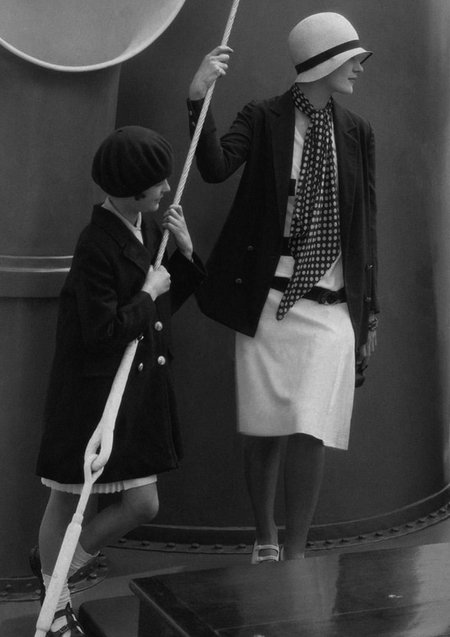
Edward Steichen. «George Baker on a Yacht,» 1928
In this photograph by Edward Steichen, modern femininity is conveyed through clothing, posture, and the surrounding environment. The women are dressed in styles relevant to the decade, complemented by bell-shaped hats and sleek accessories. The context of the shoot is equally important: the subjects are not in a stereotypical domestic interior, but in a space of leisure and social life. Fashion becomes an integral part of the woman’s identity—a woman who moves freely, travels, and participates in public life. Thus, this new visual identity is connected to a new concept of female activity and independence.
Manuel de Lambarry. «Fashion Illustration, ” 1928
The aesthetic of the garçonne manifested not only in everyday clothing but also in fashionable graphics. In such images, the female figure takes on elongated proportions, and the clothing forms an almost straight line. The lack of a pronounced waist and the loose drape of the fabric create an impression of simplicity and lightness. Fashion magazine illustrations didn’t just reflect existing trends—they offered readers a ready-made model of appearance that could be replicated. Thus, a new ideal was formed: a slim, young, understated, and visually independent woman.
Frank M. Brandstetter. «Portrait of a Woman, ” circa 1925–1935
The portrait features a short haircut paired with a minimalist dress, subtle jewelry, and understated makeup. The model’s appearance reads as both contemporary and meticulously curated. This reveals a contradiction in modern fashion: while the abandonment of old rules did not signal the disappearance of aesthetic demands for women. Corsets and exaggerated curves have been replaced by new benchmarks—slenderness, youthfulness, a distinct hairstyle, and a corresponding silhouette. Women gained greater avenues for self-expression, yet this simultaneous emergence of a new visual standard required compliance.
Chapter Conclusion:
The garçonne aesthetic shifted the conventional visual language of femininity. A short haircut, a straight silhouette, and the rejection of accentuating natural forms became symbols of modernity and independence. The female image no longer needed to conform solely to the traditional ideal of softness and ornamentation. However, this new fashion did not eliminate beauty ideals—it merely replaced them. Therefore, the image of the 1920s woman must be viewed simultaneously as a symbol of liberation from former constraints and as the formation of a new aesthetic standard.
In the 1920s, women’s fashion increasingly incorporated elements from menswear. Trousers, suits, shirts, ties, and structured jackets gradually stopped being perceived exclusively as male attire. Women borrowed not just individual pieces, but also the very concept of the masculine silhouette: straight lines, sleekness, the absence of an emphasized waist, and decorative embellishment. This phenomenon was part of a broader shift in perceptions of gender and appearance. Masculinity became one tool in constructing a new feminine image. At the same time, women did not abandon their own identity; rather, they used conventional male elements to express independence, confidence, and modernity. This gave rise to an androgynous aesthetic, where the boundary between masculine and feminine presentation became less distinct.
Woman in a men’s suit, 1920s. Artist unknown.
The suit, featuring a tailored jacket and trousers, long remained one of the most recognizable elements of men’s wardrobes. Its appearance in women’s fashion shifted the conventional perception of female appearance. Instead of a dress that emphasized the figure, women chose clothing that obscured the body’s contours, creating a more structured silhouette. This choice can be interpreted as a rejection of mandatory ornamentation: clothing became not just a means of adornment, but a vehicle for expressing character. Adopting the male suit allowed a woman to appear composed, confident, and independent.
Female figure with elements of menswear, 1920s. Artist unknown.
Shirts, ties, and vests took on a new significance when incorporated into female attire. These items were traditionally associated with business wear and a masculine, public role. By using them, women could project an image of restraint and practicality. It was particularly noteworthy that the masculine elements were not always copied entirely—they were combined with skirts, jewelry, and makeup. This resulted in a hybrid style where traditional markers of masculine and feminine presentation existed simultaneously. Such a combination demonstrated that the gendered nature of clothing is not immutable.
Portrait of Louise Brooks with a short bob haircut, 1920s. Artist unknown.
The short bob cut became an important part of the decade’s androgynous aesthetic. The geometric shape of the hairstyle made the face appear more open, while the overall look remained strict and concise. Paired with straight dresses and minimalist accessories, the short hair conveyed an image of independence from traditional notions of feminine beauty. At the same time, the cut did not diminish the look’s appeal; rather, it offered an alternative way to express it. Femininity could now be combined with traits previously considered exclusively masculine.
Gabrielle Chanel in attire with elements of menswear, 1920s. Photographer unknown.