Navigation
- Concept
- Introduction
- The East. The «Dragon-Deity»: — Jade: eternity and ritual — Bronze: casting for spirits and volume — Silk and Gold: imperial status
- The West. The «Dragon-Enemy»: — Ceramic: the ancient target — Stone: the immutability of faith — Parchment: the allegory of the devil — Metal: the taming of the monster
- Cultural Synthesis: the meeting of two types (13th–14th centuries)
- Conclusion
1. Concept
The dragon motif is one of the primary visual universals of world art culture. However, in the art of East Asia and medieval Europe, this image is imbued with polar meanings. In the East, the dragon embodies heavenly harmony, the element of water, and supreme imperial power; whereas in the European tradition, it becomes a symbol of chaos, sin, and vanquished evil. Traditionally, this difference is explained through mythology and religious texts. This study proposes shifting the focus to the materiality and technology of creating the artwork. In the pre-industrial era, the choice of raw materials was never neutral. The physical properties of the material and the labor required for its processing directly dictated the shape of the image, the character of the line, and its place in the world’s hierarchy. This approach allows us to see how the texture and structure of a form establish the character of a figure even before the plot emerges.
Key Question and Hypothesis
How do the physical properties of a material and the technology used to process it determine the sacred or low status of the dragon image in Eastern and Western art before the 14th century?
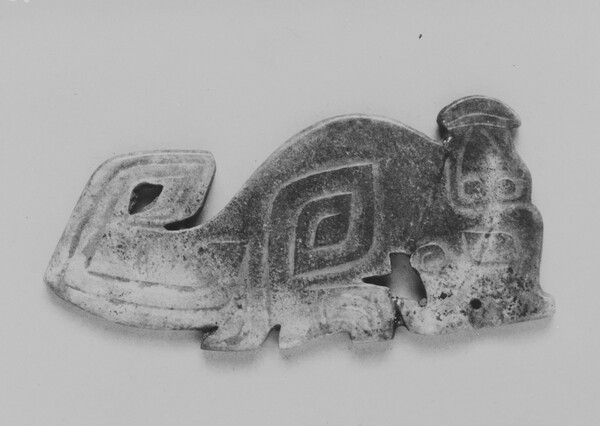
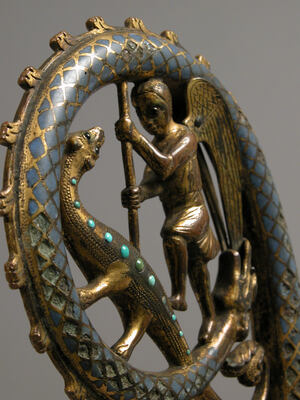
In China, jade imbues the dragon with the status of an immortal spirit. In Europe, gilded copper and enamel contain it in the spiral of a saint’s staff at its feet.
The hypothesis is that the sacralization or «demythologization» of the image directly depends on how the artisan interacts with the material’s resistance and the environment into which the object is embedded.
3. East. «Dragon Deity»
How do materials create sacred status?
Nephrite
The archaic Neolithic «pig-dragon"—the most ancient jade prototype of this image—was discovered in the burials of the Hundshan culture. It was placed on the chest of a deceased chief or shaman as a primary ritual amulet, intended to protect the soul in the afterlife, ensure the fertility of the land, and maintain a connection to rain and water.
Unknown master. Coiled dragon (Zhulong). China, Hongshan culture, c. 3500–2500 BCE. Nephrite. Metropolitan Museum of Art, New York.
In ancient Chinese cosmology, jade was considered the «stone of heaven and immortality, ” capable of accumulating the vital energy of qi. It was valued above gold and bronze, symbolizing purity, power, connection to the spirits, and high social standing.
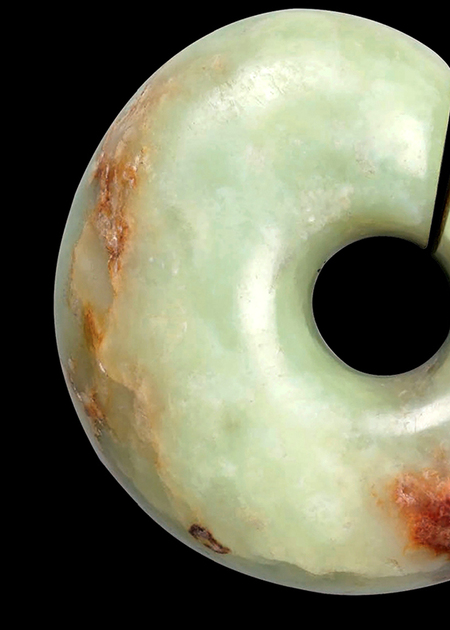
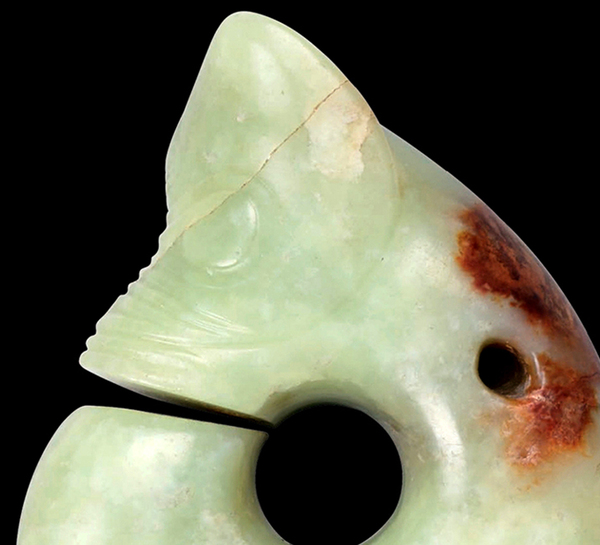
Due to the mineral’s high hardness, the ancient master could not carve long, thin legs or whiskers without cracking the raw material. Therefore, he curled the creature’s body into a single, unbroken ring.
Primitive abrasive tools were not yet capable of carving fine whiskers or curves without the risk of fracturing the gemstone. The creature’s form was dictated by the size and strength of the solid piece of nephrite.
Unknown master. Ring in the form of a coiled dragon. China, Shang Dynasty, 13th–12th centuries BCE. Nephrite. Metropolitan Museum of Art, New York.
In the Shang Dynasty era, jade pendant-rings (jue or pei) were worn on the waist by the highest aristocracy during their lifetime and placed in royal tombs after death. Jade dragons were not part of the common people’s daily life—they were a closed ritual marker of power and connection to ancestors.
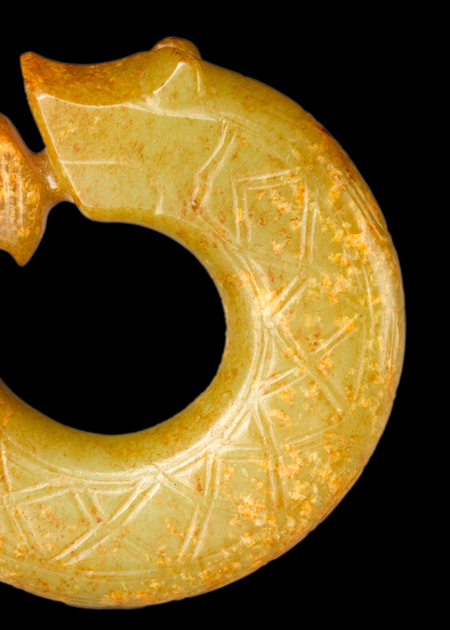
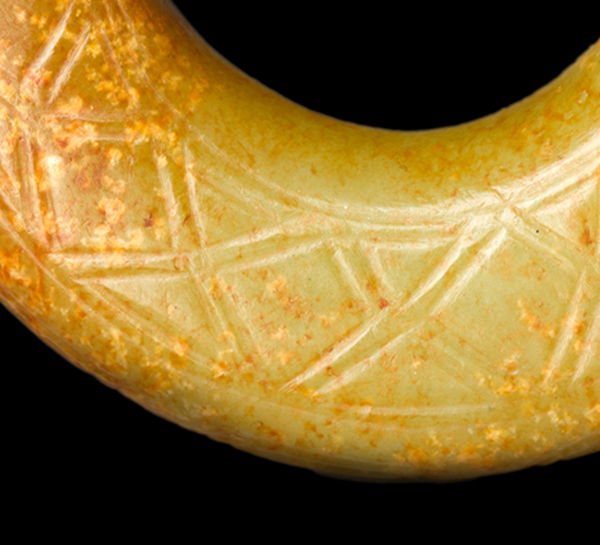
Nephrite cannot be cracked with one strike or cut with a knife—it was polished for months using bamboo sticks, cords, and quartz sand. This continuous, slow grinding bound all the details into a single, fluid contour without sharp angles. The abrasive polishing of nephrite softens the edges and gives birth to a soft, flowing wave.
The geometric ornamentation on the surface adheres to the stone’s circular motion, transforming the dragon into a symbol of an infinite cosmic cycle.
Thus, the material reflects the sacred nature of the dragon image. Jade dragons existed only within the realm of ritual, power, and eternity. They served as funerary amulets and symbols of nobility’s status. The hardness of the jade and the technology of slow abrasive polishing prevented the silhouette from being fragmented. The material itself dictated a closed, smooth, and unified plasticity, making the dragon the embodiment of harmony.
Bronze. Casting for perfumes
In ancient China, bronze was valued more highly than gold and belonged exclusively to the ruling dynasty. Household utensils were not made from it—such vessels were kept in ancestral temples and served for ritual sacrifices to the spirits.
Unknown Master. Ritual Vessel of Gui with Dragon Ornament. China, Shang Dynasty, 12th–11th centuries BCE. Bronze. Frick Collection, Washington.
The vessels of the Shang era were cast in composite clay molds. The clay mold was cut into vertical sections, and relief was carved into the inner walls. It was these seams at the joints of these clay blocks that dictated the strict symmetry and the «blocky,» geometric ornamentation of the dragons depicted on the walls of the sacred vessel.
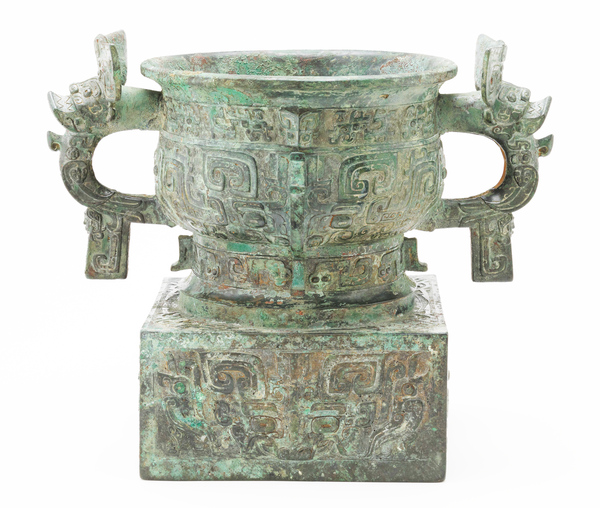
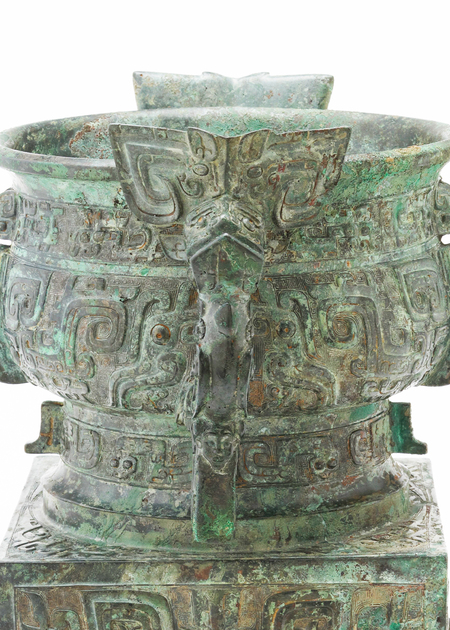
Changing the material alters the dragon’s plasticity. Different technologies dictate a distinct character for the line. Incising into clay molds for bronze subjects the dragon’s body to a sharp, geometric rhythm. Yet, the image’s sacred status as a mediator between humankind and the heavens remains unchanged.
Winged Dragon / Stoclet Dragon (Northern China, Warring States Period, 5th–3rd centuries BCE, bronze, Louvre Abu Dhabi).