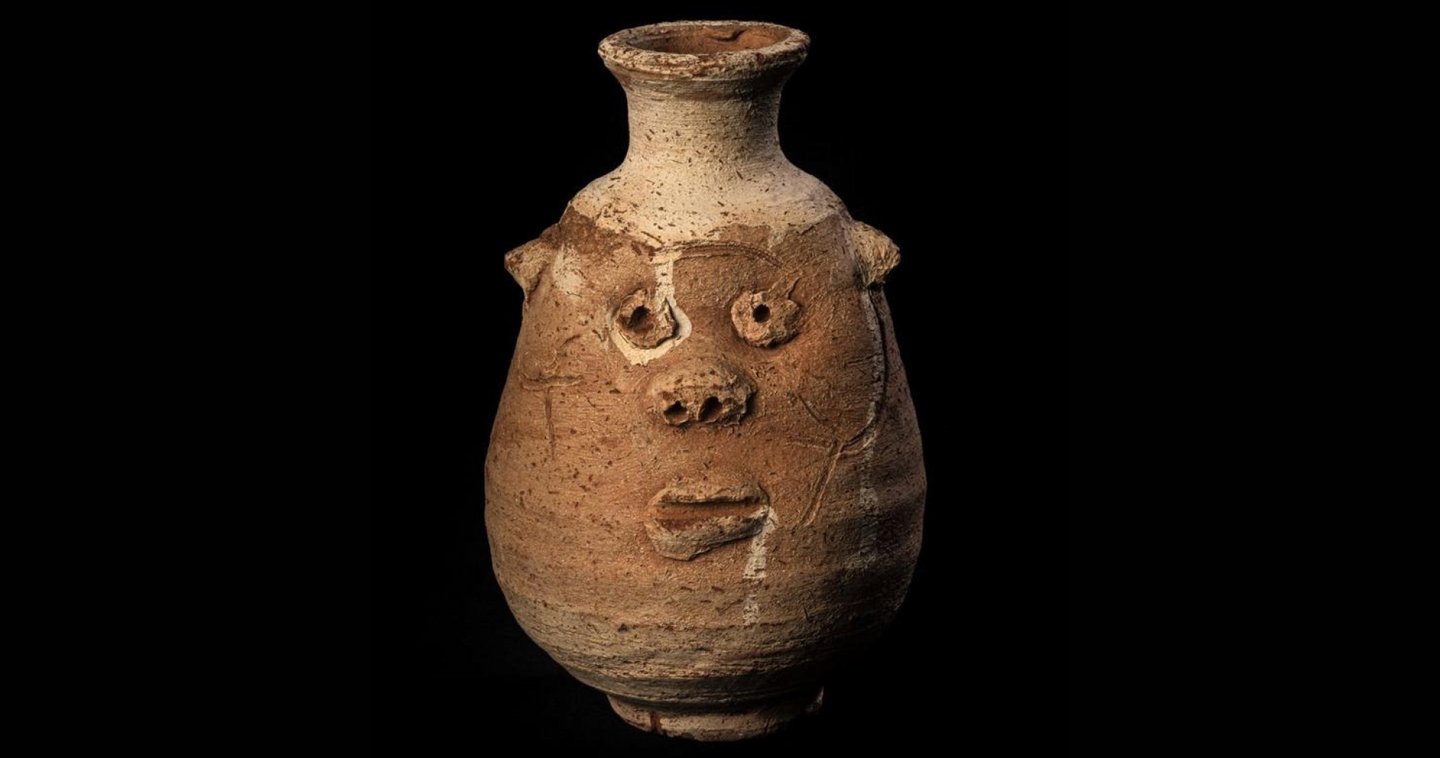
Vessels—one of the most commonplace items in material culture. They are designed for storing, transporting, and consuming liquids or other substances. However, across different historical periods, the vessel evolved from merely a functional object into a bearer of anthropomorphic imagery: its surface was adorned with eyes, noses, and mouths, handles resembled ears, and the neck and body could form a semblance of a head or human torso. Particularly interesting is the moment when the depiction ceases to be mere ornamentation. Two drawn dots transform into eyes, a protruding element becomes a nose, and the arrangement of details creates the impression of a face looking back at the viewer.
Navigation
Concept
- Ancient Egypt;
- Ancient Greece;
- Conclusion;
- Bibliography.
The goal of this research is to trace the point at which an object begins to be perceived as a living being and which visual elements evoke this effect. The research is based on a visual analysis of museum collections, as well as a study of literary sources that mention anthropomorphic ceramics.
Anthropomorphic ceramics represents one of the earliest ways in art history that humans «humanized» the material world. A vessel with a face is simultaneously a functional object and an image, and the primary interest of visual research lies at the intersection of these two functions. The question of how people in those eras conceived of the world through the study of everyday objects is compelling. How does the depiction of eyes and other facial features alter the perception of the vessel?
The vessel-face is not a sculpture depicting a human figure, nor is it merely a utilitarian object. The face dictates the manner in which the vessel is handled.
Ancient Egypt
In ancient Egypt, the human face depicted on vessels often held not just decorative, but symbolic meaning. Images of gods and mythical creatures were closely tied to Egyptian religious beliefs—their faith in the afterlife, magic, and the possibility of protecting a person from harm.
Canopic jars were sacred funerary vessels in Ancient Egypt, designed for the separate storage of the deceased’s embalmed internal organs, which modern science studies as complex bioarchaeological artifacts.
The god Bes held a special place among these figures—a deity associated with protecting the hearth, motherhood, children, and family well-being. He was depicted as a short creature with a broad head, large eyes, a protruding tongue, and expressive facial features. Bes’s unusual, sometimes grotesque appearance was integral to his recognizable image. It was believed that his presence could ward off evil forces and protect people.
Frightening appearance as a weapon. Unlike other Egyptian gods, who were depicted in strict profile, Bes was always shown strictly facing forward—as a dwarf with a lion’s mane, thick eyebrows, a flattened nose, long whiskers, and arms on his stomach. The Egyptians believed that his amusing yet ferocious grimace scared away evil demons, venomous snakes, and the evil eye.
Anthropomorphic vessels are primarily sculptural modeling: the master built the entire volume from hands to head, often based on a sausage or collage assembly, and then refined the details through impressing—fingerprint marks can still be seen on the inside of such pieces.
Technique of applied clay. The torso was shaped on a wheel, while the god’s face was assembled from individual clay appliqués, each pre-formed with the shapes of eyebrows, eyes, ears, nose, arms, legs, and even a belly button; these were attached more often to the torso than to the shoulder. The appliqués were placed onto the dried surface and adhered with slip (liquid clay), and the edges were smoothed until the seam disappeared.
The appearance of such imagery on vessels was linked to the peculiarities of Egyptian culture, in which religion was present in virtually every sphere of life. Everyday objects could simultaneously serve practical and symbolic functions. A vessel adorned with a deity was perceived not merely as a container for substance, but as an object connected to the protection and well-being of its owner.
Thus, in Egyptian tradition, a human face on a vessel could serve as a sign of the presence of divine powers. Through the depiction of a specific character, the object acquired additional meaning related to protection, belief, and worldview.
Ancient Greece
In Ancient Greece, anthropomorphic vessels existed within a different cultural context. Unlike in Egypt, where images of gods and protective beings often carried religious and magical significance, in Greek ceramics, the human face frequently became a means of artistic expression—a way to convey character and create a specific emotional image.