Navigation
The city reigns here Face as evidence I have conquered I have built and given the world The heavens crown me By divine grace Conclusion Bibliography
Concept
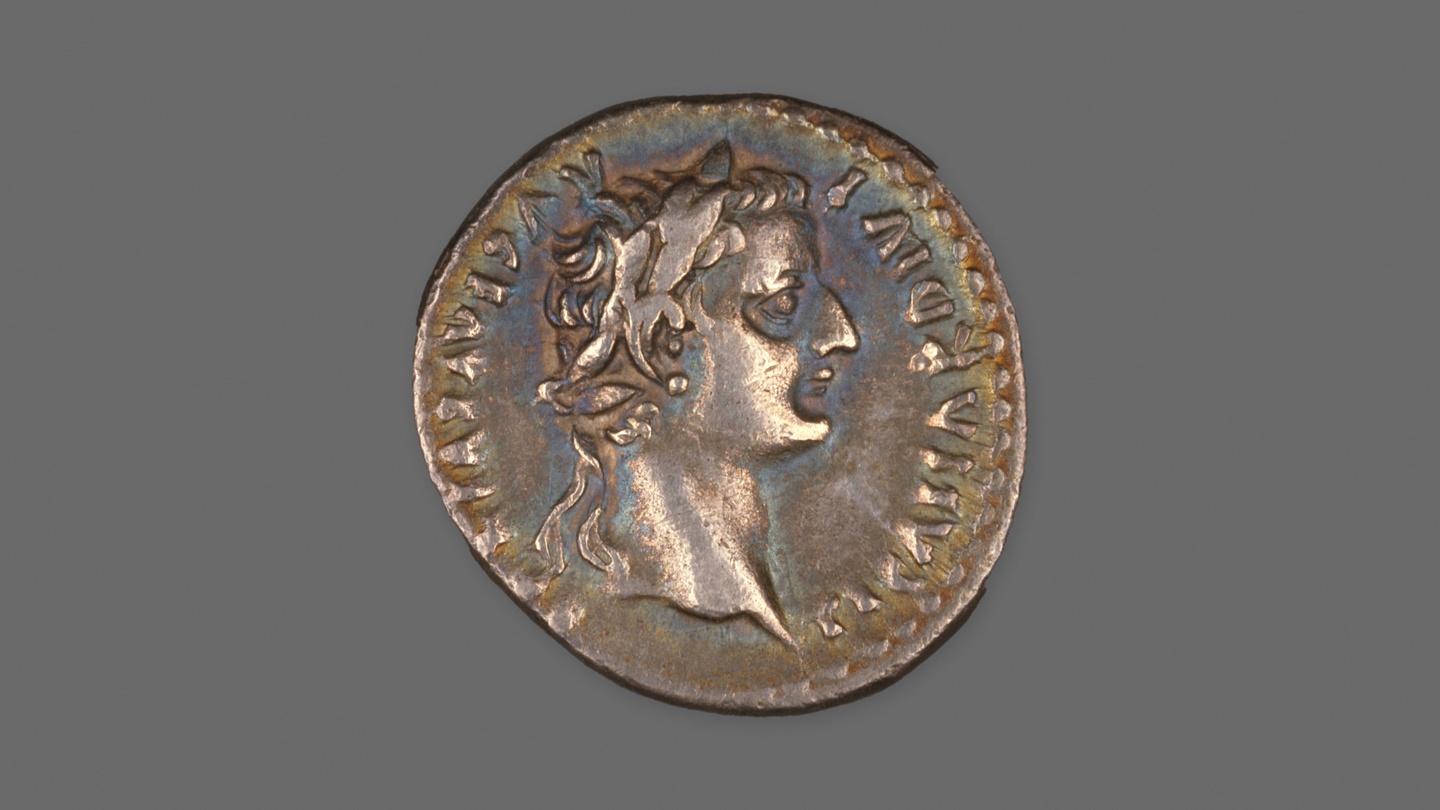
«Whose image and inscription is this?» Christ asks when offered a Roman denarius. The question resonates with everyone in the crowd: the face of the Caesar is on the coin, and everyone knows whose power holds sway. Two thousand years before newspapers and posters existed, the coin was the only image that reached almost everyone—the merchant, the peasant, the soldier. Most of these people could not read, but they understood the picture. Therefore, the coin is interesting not as a collectible object, but as the first mass medium of power. Its language is understood today: the same tropes—the ruler over the vanquished, the hand from above, the building as an account of affairs—are used in posters, stamps, and election flyers. To understand how these were constructed is to learn how to recognize them.
Key question: how did the coin become a tool of propaganda—what images did the authorities use to make their message accessible to everyone, and how did the justification of power change from Ancient Greece through the Middle Ages?
Hypothesis: for a coin’s message to be understood by illiterate people, power relied on a small set of enduring visual formulas—victory over the enemy, divine election, construction, or the personification of land or virtue. The meaning was conveyed not through inscriptions, but through the posture, scale, and arrangement of the figures. The eras hardly changed this scheme; only what the power used to justify its right changed: in Greece—the city’s patron god; in the Hellenistic kingdoms—the deified image of the ruler; in Rome—victory, virtue, and construction; in Byzantium—the presence of Christ; in Medieval Europe—the cross and the formula of «God’s Grace.»
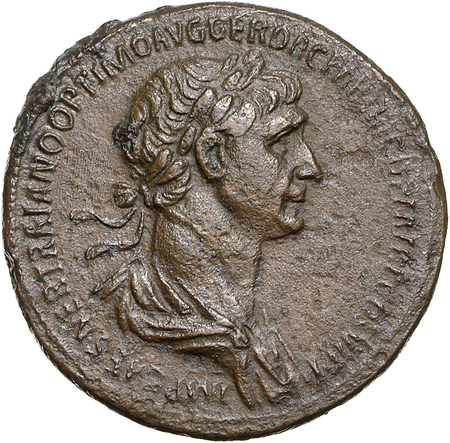
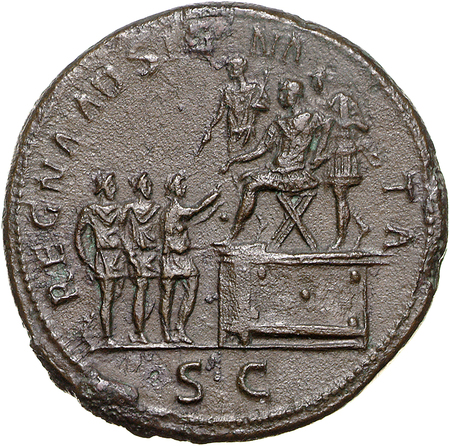
Trajan. Sestertius, bronze alloy. 114–117. Rome. Münzkabinett, Berlin
The investigation is structured as a succession of arguments supporting authority: the six chapters follow the order in which these arguments became paramount—from the city and its god to the face of the ruler, victory, construction, divine election, and the cross. The final screen of each chapter presents the same formula for the next era. This reveals how the foundations of power evolved while the underlying structure remained constant.
The material was selected based on three principles: chronology—ranging from the first Lydian coins of the 7th century BCE to the 13th century; narrative—meaning is conveyed through the figures and their arrangement, not solely through inscription; and comparability—coins from different eras sharing a similar composition. Images were sourced from the open collections of the Münzkabinett of the Berlin State Museums, The Metropolitan Museum of Art, and the Cleveland Museum of Art.
Textual sources—numismatist research and museum publications: the works of B. Levick, E. Wallace-Hadrill, F. Grirson, materials from the British Museum, Dumbarton Oaks, the American Numismatic Society, and the Hermitage. These sources were used to establish the dating of key turning points—such as the first portrait of a living ruler or the first depiction of Christ on a coin—as well as information regarding who selected the imagery. The dates and attributions were cross-referenced with museum collection records.
The City Rules Here
The earliest coins do not feature a ruler. In Lydia of the 7th century BCE, royal authority is signified by a lion’s head, while in Athens, it is represented by the patron goddess and her bird. The mark attests to the coin’s authenticity and correct weight, and behind this mark stands not an individual, but an institution—a royal house or a city. To understand whose power is at stake, it is enough to recognize the animal or the deity—no reading is required.
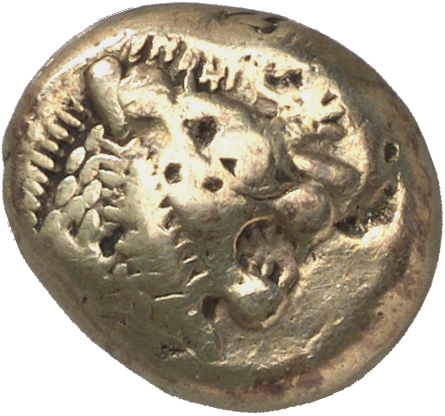
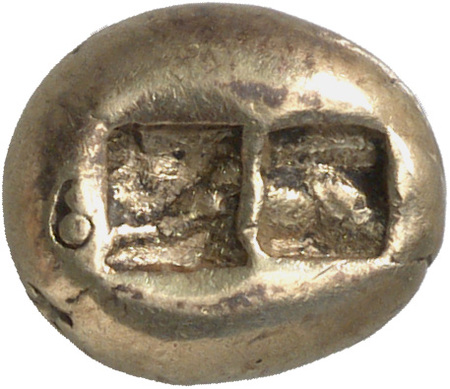
Lydia. Tripartite, electric. Circa 625–560 BCE. Sardis. Munich Cabinet, Berlin
The lion’s head is a symbol of the Lydian kings. The coin does not yet name or show a face; the lion holds the metal and weight like a seal on a document. Power is present on the coin, yet it remains impersonal.
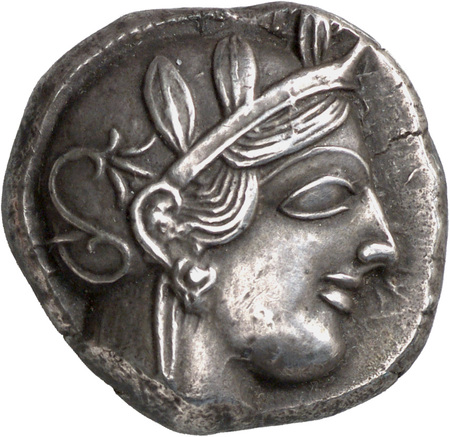
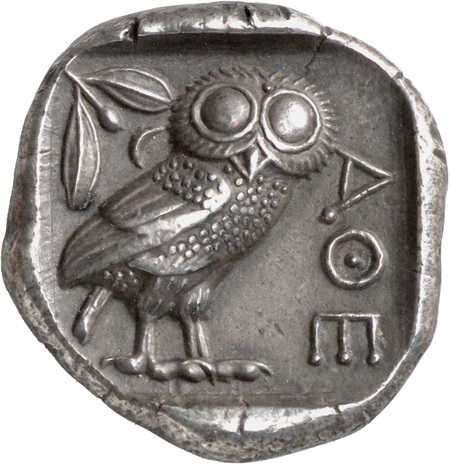
Athens. Decadrachm, silver. After 467 BCE Münzkabinett, Berlin
The Athenian tetradrachm—the head of Athena on one side, the owl on the other—remained virtually unchanged for over two centuries. Its consistency was its primary claim: across the Mediterranean, the «owl» signified pure Athenian silver. The city speaks of itself through its goddess, not through individuals: in the polis, power belongs to the citizenry, and depicting an individual’s face on a coin would have been impossible.
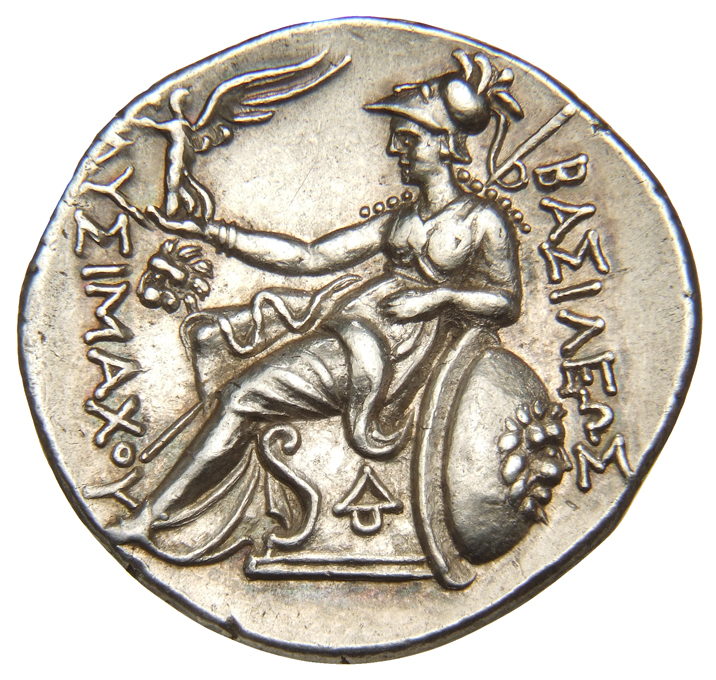
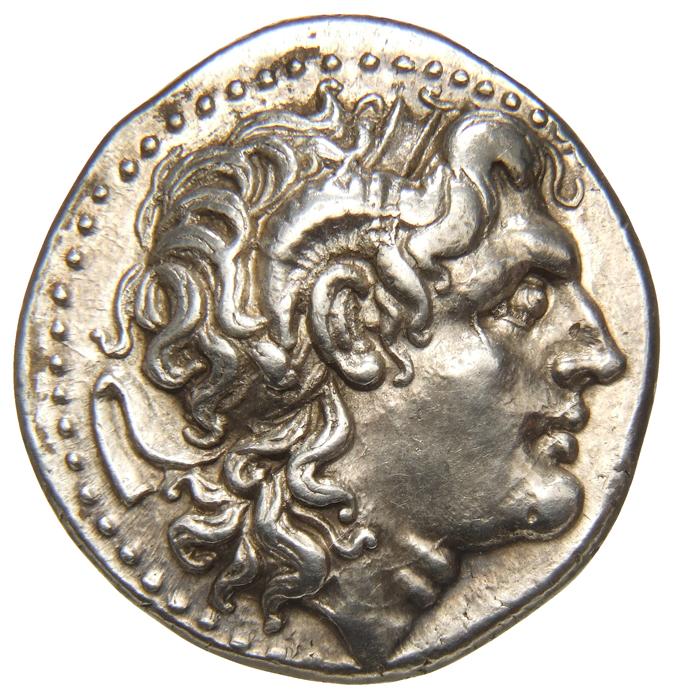
Lissimachus. Tetradrachm, silver. Circa 297–281 BCE. Lissimachus. Münzkabinett, Berlin