Research Concept
Ceramics serve as a vital source for studying the material and artistic culture of Abkhazia. Due to its geographical location, the region has been influenced by various cultures over the centuries while preserving its own pottery traditions.The relevance of this research lies in examining the development of Abkhaz pottery craft up to the 14th century CE. Special attention is given to vessel forms, ornamentation, manufacturing techniques, and decorative features that reflect changes in the region’s daily life, art, and cultural connections.
The principle of research categorization
-Industrial foundations and firing technologies -Architectural and structural terracotta -Imported and domestic tableware -Container ceramics and trade relations -Cult ceramics and epigraphy -Ceramic complexes of autochthonous necropolises (Tsebelda)
Principle of Source Analysis
The analysis is based on stratigraphical correlation of finds to sealed archaeological complexes of fortress walls, towers, and I–V century CE burials. Petrographic and macroscopic comparison is used between the clay paste of imported products (fine-grained clay without inclusions, dense glaze) and local artifacts (presence of sand, mica, and grog).
Key question
How did the Roman fortification presence in the 1st–5th centuries CE change the structure, technology, and aesthetic of ceramic production in Abkhazia?
Hypothesis
The arrival of Roman garrisons in Sebastopolis and Pityunt spurred a technological leap in ceramic construction and a massive influx of Mediterranean imports; however, local pottery did not dissolve into the provincial-Roman tradition, but instead developed a durable syncretic style that met the needs of both the coastal garrisons and the population of the Celbela foothill zone.
1. Production facilities and firing kilns of Sevastopol
During the Roman and Byzantine periods, pottery making in the territory of modern Sukhumi was concentrated near the fortress walls of Sebastopolis, where there was direct access to marine sand, river clay, and running water.
Kiln for firing ceramic ware (4th century CE)
Structural parameters of the horns under investigation
During excavations led by M. M. Trapsh in 1959, a two-chamber, rectangular pottery kiln measuring 6,25×5.50 m was discovered near the seaside wall:
Furnace section: constructed from fired brick set in clay mortar and reinforced externally with a thick, up to 1-meter-thick fieldstone casing. The central channel, measuring 4.20 m in length, featured a brick vaulted ceiling. Heat distribution system: eight transverse channels extended from the central collector, covered with brick arched vaults spaced 59–75 cm apart. Firing chamber: situated beneath the 5–8 cm thick furnace, it rested on the wall arches and projections and contained rows of circular heat conduit openings (fireholes), through which flue gases at a temperature of 850–950 degrees Celsius entered the cooling area for the finished product.
The interior surface of the furnace was coated with slag-like deposits and a glassy crust, which indicates continuous and prolonged operation of the kiln throughout the late 3rd and 4th centuries CE.
2. Architectural Terracotta of Castellums
The establishment of Roman outposts (Sebastopol, Pityunt) necessitated the mass production of standardized clay building materials.
Импорт из Малой Азии
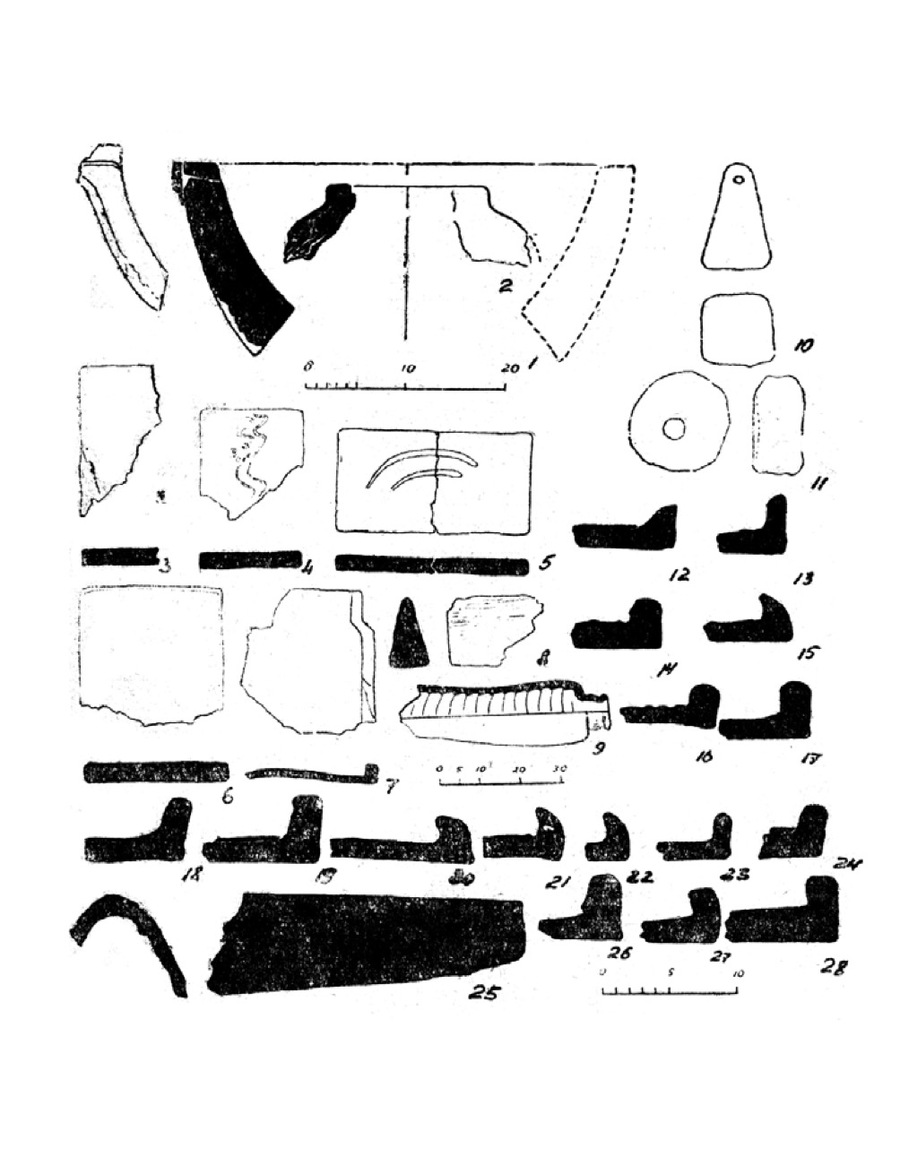
Местное понтийское производство
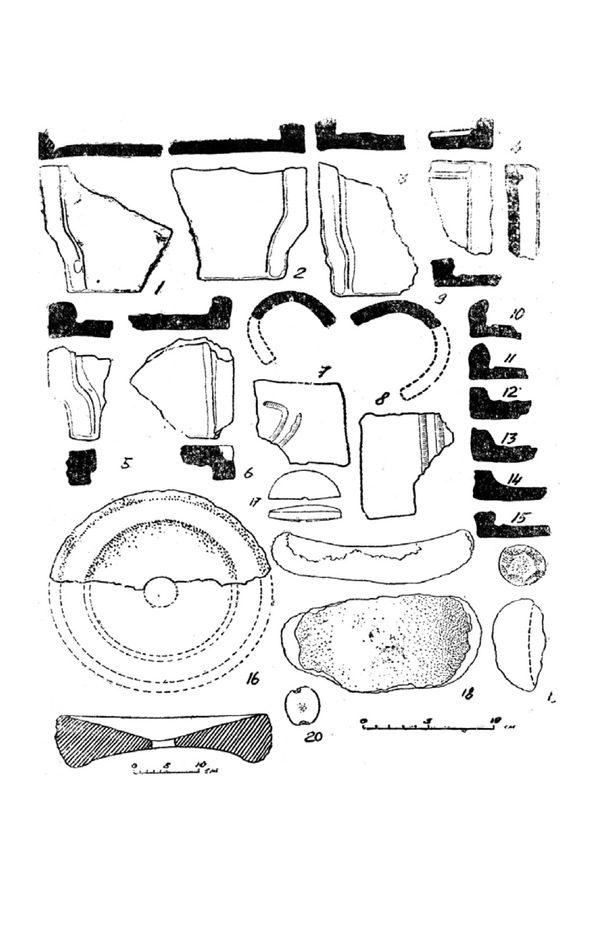
Centers of Lacquerware Origin
Morphology and Artistic Design
-Bowls and Plates: Forms featuring a low ring base and a flaring rim. The base was decorated with stamped palmettes, concentric lines, and rosettes; in the 4th–5th centuries CE, these were supplemented with early Christian crosses and palm branches. -Luceriæ Bowls: Massive vessels fired in a yellowish-brown glaze, featuring a wide, rolled rim and a pouring spout. Some specimens from Sebastopolis show synoptic stamps on their edges. -Oil Flasks (Unguentaria): Spindle-shaped and teardrop-shaped small vessels crafted from thinly burnished pink clay, used for aromatic oils and unguents.
4. Ware Ceramics and the Dynamics of Amphora Imports
Amphorae from the 1st–5th centuries CE illustrate the intensity of supply to Roman garrisons and the integration of the local population into interregional trade of wine and olive oil.
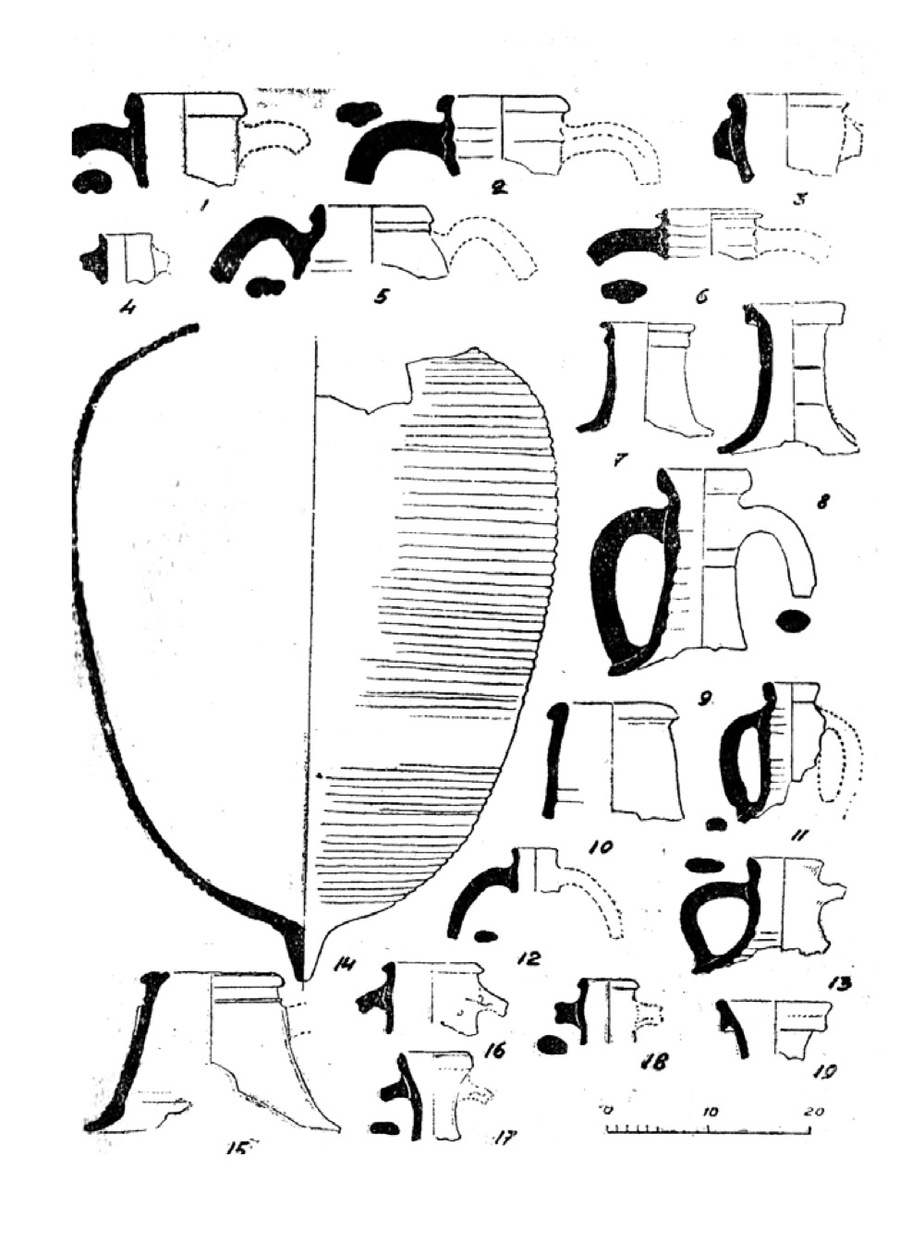
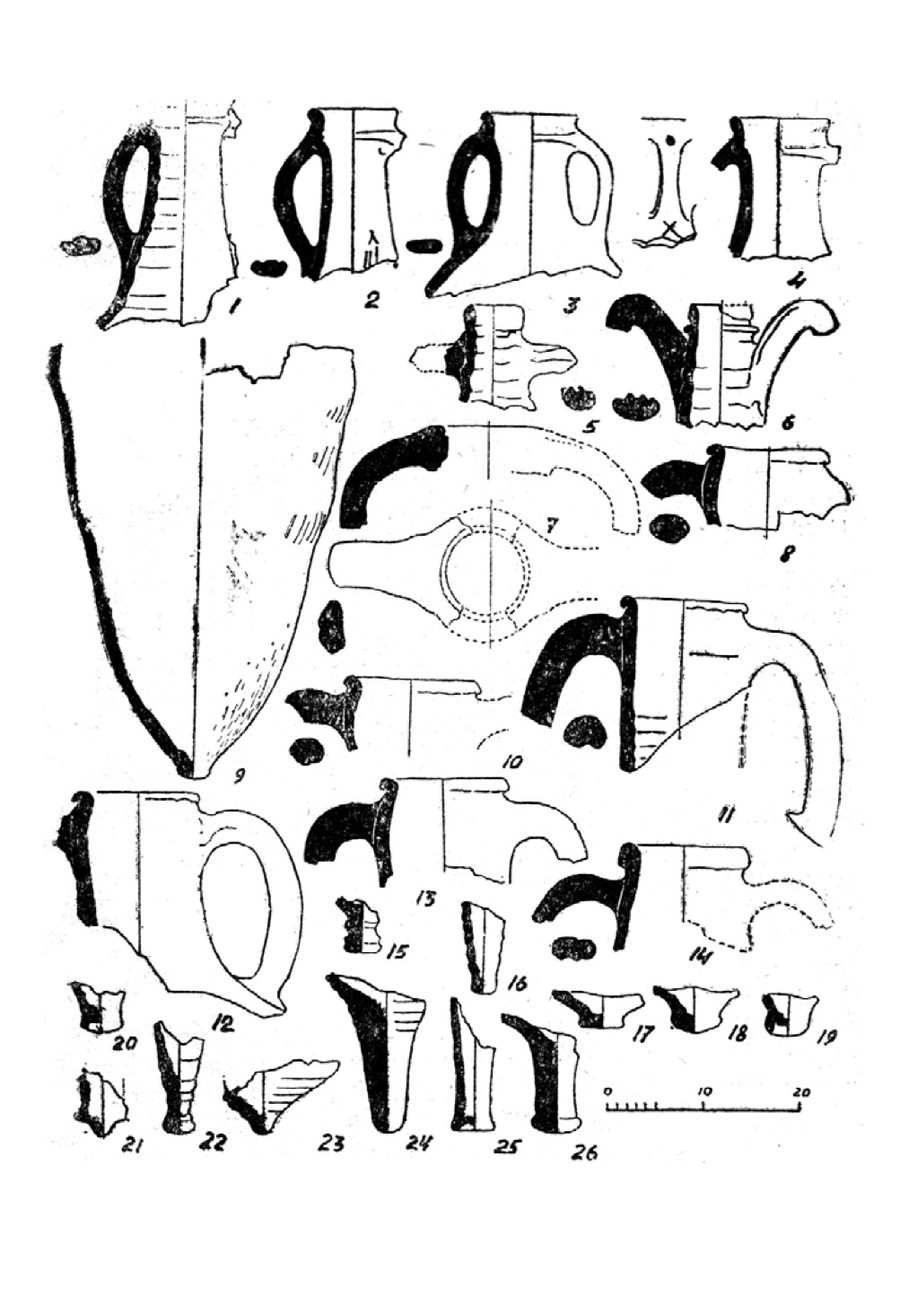
Sevastopol. Amphora Typology in Abkhazia (1st–5th Centuries CE)
Primary Types of Unglazed Ceramics
-Synopic light-clay amphorae (2nd–3rd centuries AD): vessels with pyroxene inclusions in the clay, an elongated body, and characteristic handles featuring a longitudinal groove. -East Mediterranean red-clay amphorae (3rd–4th centuries AD): vessels fired to a bright red color with massive rims. The interiors of the walls often retain resinous coating and a reddish-pink patina of wine scale. -Light-clay amphorae with frequent comb ribbing (4th–5th centuries AD): the appearance of dense zonal ribbing, applied using a comb mold, synchronous with materials from Chersonesus, Mangup, and the Bosporus.
5. Iconic Ceramics, Lighting Fixtures, and Epigraphy
Ceramic lamps from the 1st–5th centuries CE combined utilitarian, sacred, and votive functions. Several leading types have been identified in the cultural strata of Sebastopolis and the Odynets Estate: