Navigation
1. Concept 2. Pink Guy—Digital Neo-Dadaism 3. Internal Transition from Satire 4. The Joji Era: Melancholy and Sonic Catharsis 5. «Past Won’t Leave My Bed”—Sound Continuation After Two Years 6. Conclusion 7. Literature Sources
Concept
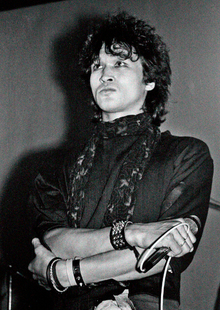
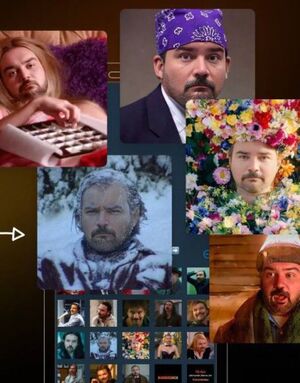
I grew up on this artist, and it was unexpected to gradually see how he transformed from an unconventional, flamboyant figure into a serious artist. He is a unique musician who crafts a form of deep artistic expression through radical shifts in sound and persona. He creates two phases of work: the provocative image of Pink GUY and the melancholic JOJI.
The era of Pink Guy, from 2014 to 2017, represented digital Dadaism. His work expressed artistic sensibility—satire and absurdity created intentional sonic chaos. George accelerated, distorted, and layered dissonant textures. He highlighted the conventionality of pop clichés, and his Pink Guy persona functioned as a living readymade, criticizing a society saturated with content consumption. He employed anti-structuralism, a rejection of traditional taste, deliberate absurdity, physicality, and performativity. His absurdity was not created for chaos, but for an artistic gesture that dismantled the meaninglessness of the informational noise of the algorithm age, aligning with avant-garde movements such as Fluxus and Neo-Dadaism.
The transition to the JOJI persona from 2017 to the present is a drive to transform expressive noise into sonic minimalism. George treats sound as a spatial object. His musical arrangements create an auditory space where each note resonates long and smoothly, dissolving into echo, generating a sense of depth and expanse. His voice becomes part of this composition—the pauses and silence here allow the listener to fully experience the emotion, making the music not background noise, but a profound experience. His inner sound stops being background and becomes a mode of emotional experience, placed in opposition to the digital cacophony from which he emerged.
From this, a philosophical context emerges. Pink Guy creates noise installations that expose the absurdity of internet culture, whereas JOJI designs a space where one can experience the internal reflections of a lyrical protagonist. The current era is a reconstruction—a search for a new form of meaning through silence and minimalism. His music is an auditory architecture into which the listener enters emotionally, experiencing the same feelings that permeate the lyrical self of George Miller.
In my visual exploration, I want to examine how the artist traces a path from deconstructing sound through chaos to recreating it through silence. The shift in sound and imagery in Joji is not merely a change of genre, but a deliberate artistic statement about growing up, sincerity, and overcoming digital absurdity through creativity. His journey demonstrates that even amidst the immense noise of the internet, there is room for deeply fragile and sincere emotions, and that the very ability to hear the silence becomes an act of resistance against that noise.
Pink Guy — Digital Neo-Dadaism
«Pink Guy»
Album «PINK GUY» Pink Guy Released May 22, 2014
Pink Guy’s album—the debut release from Japanese-American YouTuber George Miller under one of his alter egos, Pink Guy. It was his first album. It emerged as a satirical musical performance piece, created by George in the persona of his absurdly comedic character. He compiled a chaotic mix of sketches, parodies, and songs, all unified by a single aesthetic—the aesthetic of early internet culture, memes, and deliberate provocation.
In it, he explores the YouTube culture of that era: grotesquerie, trash humor, hyperbole, and strangeness as artistic methods. The music is produced in a DIY format: minimalistic beats, simple structure, and a «home-made» sound—all enhance the feeling that the listener is watching a performance rather than a professional studio project.
The song themes are deliberately hyper-exaggerated, absurd, and sometimes nonsensical—but this is what creates a unique atmosphere: a world where prohibitions vanish, and everything becomes part of the comedy. The album can be viewed as a sound archive of the Filthy Frank era: this is where the culture of memes, internet irony, and creative freedom was captured before censorship and strict internet moderation took hold.
Next, I will present a couple of tracks that will give a glimpse into the album; I cannot include other tracks here to avoid censorship and ethnic concerns.
«Ramen King»
ramen beat layo 2013
«Ramen King» is the first song released from the 2014 album. Throughout the track, he mentions several socioeconomic issues facing the world, including rising prices for many goods.
Beyond its serious message, the song transforms an everyday object into a piece of performance art while simultaneously serving as a tool for ironic critique of «experiential education.» Pink Guy demonstrates the lack of authenticity in mass culture. He attempts to place the viewer in the position of an «observer of the absurd.» The text and subtext function as a means to highlight and reframe cultural taboos and the mechanics of internet humor.


PINK GUY COOKS RAMEN AND RAPS TVFilthyFrank 2013
«Kill yourself»
The Filthy Frank Show 2011
«Kill yourself”—in the context of Pink Guy, this phrase is an imitation and critique of internet behavior, not an exhortation. The track demonstrates how meaninglessly and brutally people use highlight phrases online.
Musically, the track relies on sharp samples, harsh distortions, and rhythm. The vocals, meanwhile, create tension between literalism and parody. The track is built around the obsessive repetition of the phrase, which transforms its meaning into rhythm. The word becomes an object that performatively mocks others, thereby dismantling itself. The track itself is a satirical home installation, cobbled together to ridicule an internet that is growing increasingly cruel due to its anonymity.
FRANCIS OF THE FILTH — ORIGINAL FILTHY FRANK 2011
«Pink Season»
Album «Pink Season» Pink Guy 2017
If the 2014 album «Pink Guy» was a noisy parody of internet culture, the 2017 album «Pink Season» becomes a performative statement where chaos is an artistic gesture designed to deconstruct a society living in absurdity and clip culture logic.
It creates Fluxus in the YouTube format, but does so in a way that its sonic madness functions as a critique of the digital age, where the clip, the meme, the flash, and the fragment cannot hold the viewer’s attention for long. It begins to operate as a medium of the absurd. Pink Guy creates performance and formal rupture to break the mechanism of modernity.
«STFU»
For ethnic considerations and regulations regarding the inclusion of expressive language, the track «STFU» has not been included in the visual study. However, its sonic and artistic structure was analyzed separately to understand the author’s early creative phase.
PINK GUY — STFU TVFilthyFrank 2016
«STFU» is one of the standout tracks on the album «Pink Season.» It showcases an aggressive, noisy, anti-musical statement pushed to grotesque extremes. The track functions as an artistic provocation, exposing the toxicity of the internet and a culture of irritation. Pink Guy deliberately exaggerates rudeness and noise, transforming internet aggression into an audio spectacle. It is a sonic caricature of digital communication, where vulgarity becomes the art material.


PINK GUY — STFU TVFilthyFrank 2016
Aggressive sounds with a higher concentration of upper harmonics and fast attacks evoke tension, nervous anxiety, and a desire to withdraw. This is intentionally used in the track to imitate and amplify the feeling of conflict and superfluous aggression characteristic of a portion of internet communication. This anti-compositional structure shifts attention away from the narrative and toward perception. The listener attempts to understand how it functions, rather than what it is saying.
Ultimately, the track performs a critical function: it does not sing about the problem; it creates its acoustic representation. This allows the audience to see and feel how easily language can be reduced to primitive forms, and how these forms govern behavior in the digital environment.