Искусство полумрака
Роль искусственного освещения в западноевропейской живописи XVII века
«Light becomes visible only in the dark.» — Gerrit van Honthorst [2–3].
Concept
Light is one of the most vital tools for artistic expression in painting. It assists the artist in conveying volume, creating space, highlighting individual objects and figures, and shaping the emotional perception of the work. However, in 17th-century Western European painting, light acquires a special significance: it ceases to be merely a method of depicting the visible world and becomes an independent participant in the artistic narrative.
The focus of this research is artificial illumination—the light from candles, torches, and other sources that 17th-century artists used to create a specific atmosphere of twilight. Unlike uniform daylight, artificial light has a limited scope: it illuminates only specific parts of the space, leaving the remainder in shadow. This creates a sharp contrast between light and shadow, enabling the artist to direct the viewer’s attention and determine which elements of the composition become primary.
The relevance of this topic lies in the opportunity to examine 17th-century painting through a specific visual technique—the depiction of artificial light. This approach allows us to move beyond the conventional study of artistic movements and individual subjects to concentrate on how the image itself is structured. A candle in a painting can serve not merely as a mundane detail, but as a compositional center, a source of dramatic tension, a symbol of spiritual enlightenment, or a marker of human vulnerability. In some works, light reveals the ongoing action; in others, it emphasizes the character’s internal state, and occasionally, it becomes the main semantic element of the entire composition.
The goal of this study is to trace how 17th-century Western European artists utilized artificial lighting and what artistic and semantic functions it served in their paintings.
Light and Darkness: The Birth of a New Artistic Language
In the early 17th century, there was a growing interest in dramatic lighting effects in European painting. Among the artists who profoundly influenced this development was Michelangelo Merisi da Caravaggio. His paintings were characterized by the sharp contrast between illuminated figures and dark space. For Caravaggio, light did more than just define volume; it highlighted crucial moments of action, created a feeling of the viewer’s immediate presence, and intensified the emotional tension of the scene [1].Caravaggio’s followers developed these principles in varied ways. A specific movement emerged in Utrecht, where artists familiar with Italian painting began to actively employ nocturnal lighting and candlelight imagery. Gerrit van Honthorst stood out among them. His works demonstrate that an artificial light source could become not merely a part of the narrative, but the central focus of the entire compositional system.
Michelangelo Merisi da Caravaggio — «The Calling of St. Matthew» (1599–1600)
One source—an entire scene
Gerrit van Honthorst — «Christ Before the High Priest» (1617)
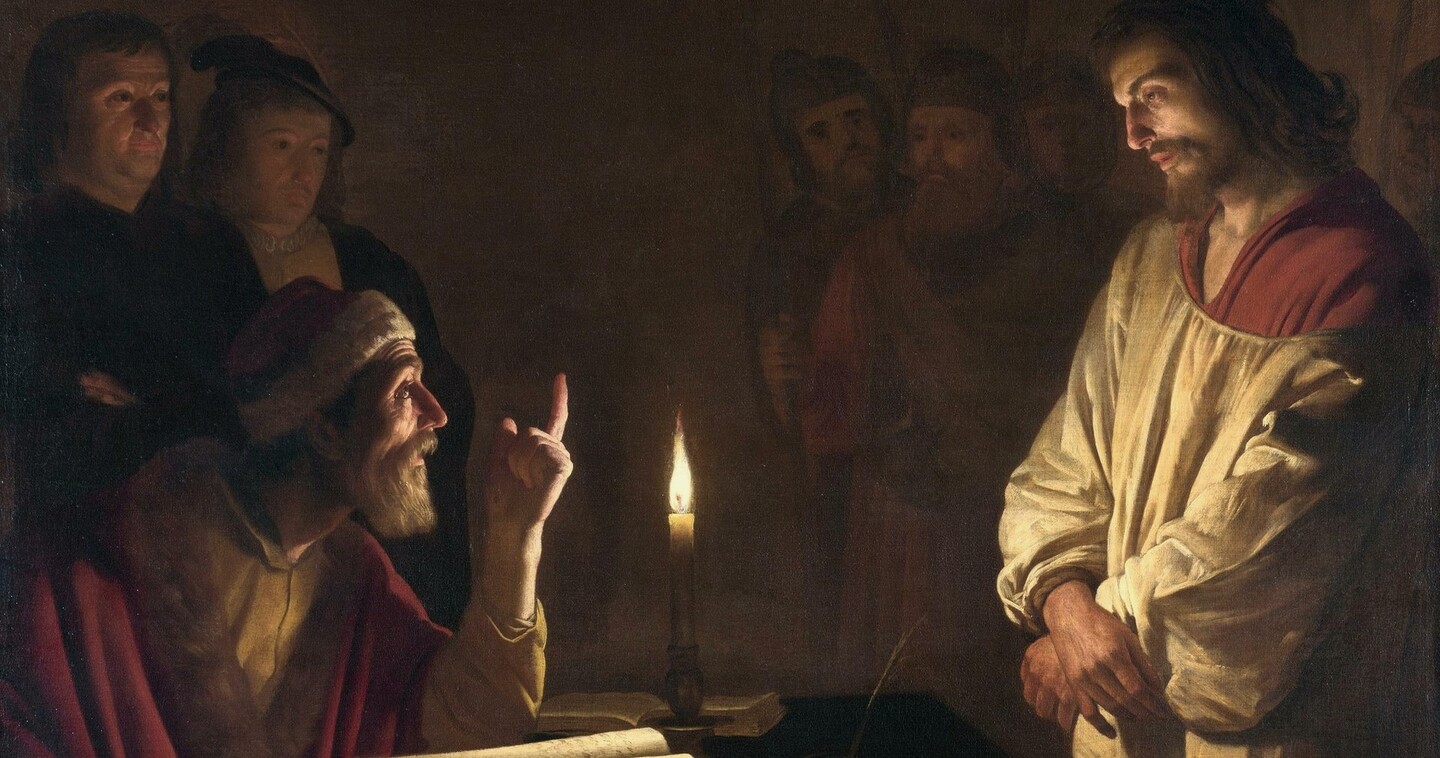
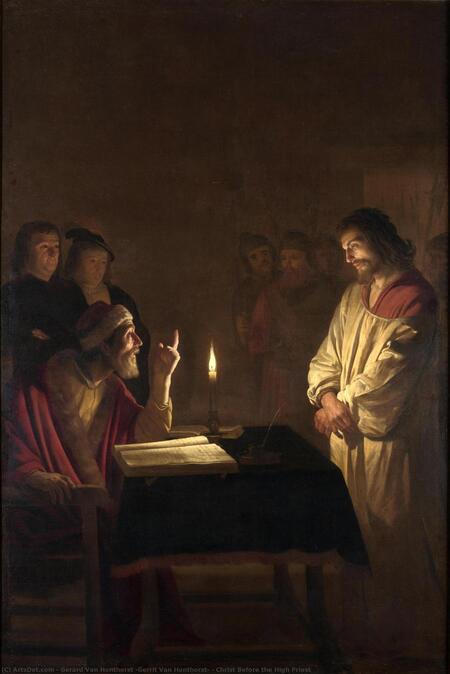
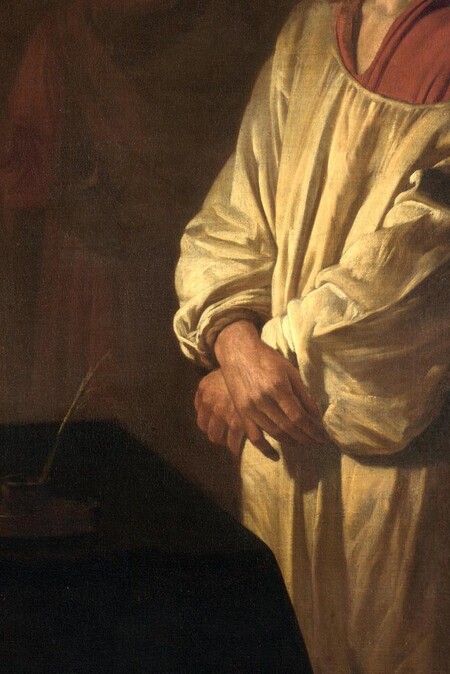
In this painting, artificial light becomes the primary organizing element of the composition [2]. A burning candle is depicted in the center, around which the main figures are arranged. Its flame illuminates the faces of Christ and the high priest, while the other areas of the space gradually dissolve into darkness.It is particularly important that the candle is not merely beside the characters, but between them. It divides the space while simultaneously unifying the figures within a single zone of light. The viewer’s gaze is first drawn to the flame and then moves to the illuminated faces and gestures of the characters [3].Light serves a dramatic function here. It emphasizes the tension of the interrogation, creates a sense of nocturnal mystery, and isolates the events from the outside world. The darkness prevents the viewer from getting distracted by interior details, so all attention is focused on the confrontation between the figures.It is also significant that the artist uses light unevenly: the illuminated parts of the painting become semantic accents, while the dark areas transform into a space of uncertainty. Thus, the candle establishes not only the visual center but also the emotional structure of the work.
Gerrit van Honthorst — «A Banquet Scene» (1619)
Unlike the religious scene featuring a high priest, this image incorporates artificial lighting into a depiction of secular gathering. The artist translates the technique of dramatic lighting into the dining space, where the light helps convey movement, gestures, and the emotional vitality of the characters [4].A dark figure in the foreground partially obscures the light source. Because of this, the illuminated participants at the table seem to recede into the depth of the space. This creates an effect of viewer presence—as if we are observing the scene from a dimly lit room.The light reflects off the characters’ faces and clothing, emphasizing their expressions and movements. However, it does not make the space entirely visible, preserving the feeling of a nighttime atmosphere.
Gerard van Honthorst — «Adoration of the Infant» (1619–1620)
Unlike previous works, here the light emanates not from a candle, but from the infant Christ himself. The artist utilizes the familiar principle of local lighting, yet imbues it with religious significance [5].
The light softly spreads from the central figure, illuminating the faces of those around him. As a result, the infant becomes not only the thematic, but also the visual center of the work. The other characters are unified by a shared gaze and the light radiating from him.
This painting can be used to compare two types of illumination: a physical artificial source versus a conventional divine light. It demonstrates that nocturnal painting techniques could also be employed to create a religious image where light acquired symbolic meaning.
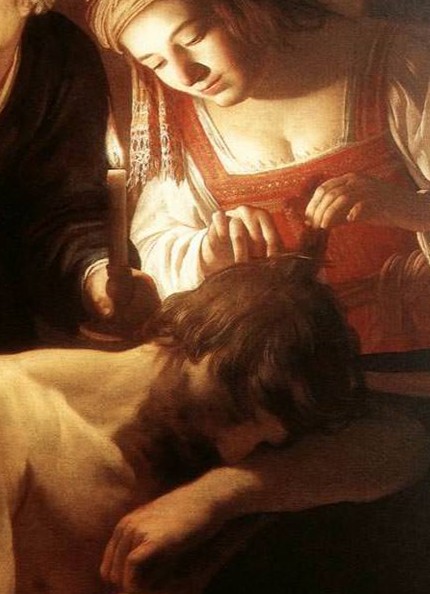
Samson and Delilah — Gerrit van Honthorst (1616)
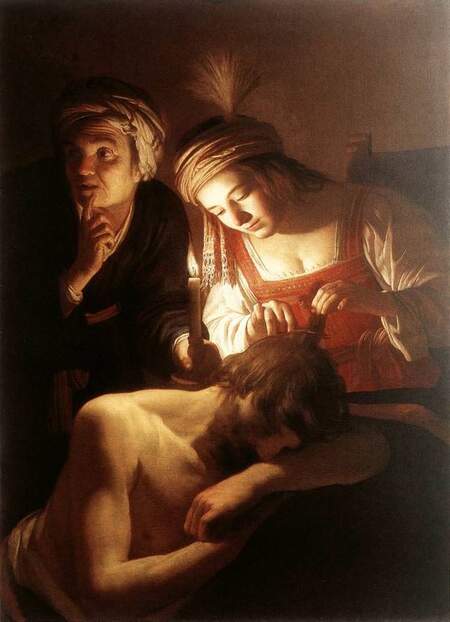
In this painting, artificial lighting is used to heighten the drama of a domestic, nocturnal episode. A single candle illuminates Samson, Delilah, and the maidservant, while the surrounding space remains dark [6].
The light helps focus attention on the secret action—the cutting of Samson’s hair. The faces and hands of the characters, the parts of the image through which the unfolding events are revealed, are particularly highlighted [7].
Unlike «Christ before the High Priest, ” where light organizes religious drama, here it becomes a means of generating anxiety and a sense of mystery. The maidservant’s gesture, calling for silence, seems to draw the viewer into the scene.
Thus, Hunthorst employs the same artistic technique for different purposes: in one instance, light creates solemn tension, and in another, it establishes an atmosphere of clandestine action.
Michelangelo Merisi da Caravaggio — «The Arrest of Christ» (1602)
In this painting, artificial lighting plays a crucial role in establishing the dramatic atmosphere of the nocturnal scene [8]. Caravaggio employs a stark contrast between light and shadow—chiaroscuro—which causes the faces and individual details of the figures to emerge from almost complete darkness. According to a description from the National Gallery of Ireland, the scene is predominantly illuminated by moonlight. Although a man holding a lantern is depicted on the right, he is hardly a source of illumination. Thus, the artist deliberately separates the visible object—the lantern—from the actual light effect within the painting.
The light highlights the faces of Christ, Judas, and the guards, and also reflects off the metal armor. This draws the viewer’s gaze to the moment of betrayal and arrest, while the surrounding space remains shrouded in darkness. The figures are positioned close to the viewer, intensifying the feeling of being a direct participant in the event. The contrast between the illuminated areas and the deep shadows creates tension and underscores the tragedy of the event. In this work, light transcends being merely a means of depicting a night scene; it becomes a vital tool of dramaturgy that directs the viewer’s attention and amplifies the emotional impact of the piece.
Light within silence
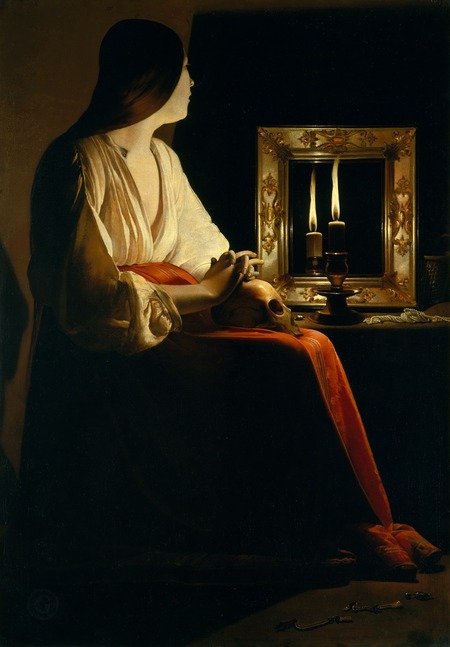
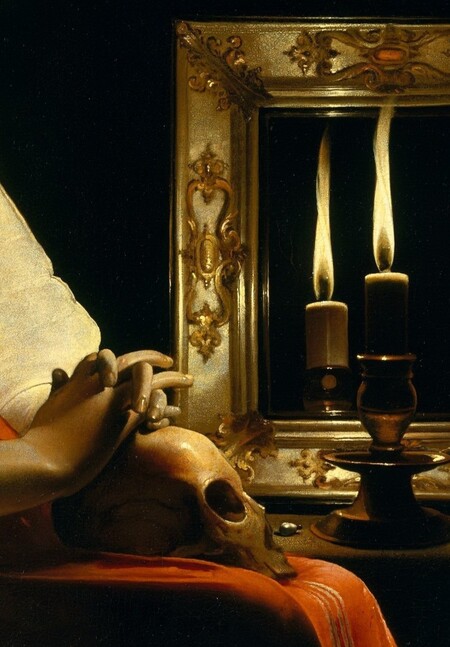
Georges de La Tour — «Penitent Magdalene» (1640)
In this work, the candle serves as a source of soft, directed light. Though partially obscured by the skull, its presence dictates the illumination of the entire composition. The flame is not depicted as a standalone, bright object; rather, its influence is felt in the golden tones of the skin, objects, and clothing [9].
Mary Magdalene is portrayed in a contemplative pose. Her gaze is directed toward a mirror, beside which rest a skull and a book. These objects relate to traditional iconography concerning the transience of life, penitence, and spiritual transformation [10].
The light does not reveal the space entirely; instead, it seems to contain it around the figure and the objects on the table. Darkness functions not merely as a background but as a crucial element of the work’s emotional state. It amplifies the sense of solitude and the character’s concentration.
Unlike the dramatic lighting of Hunthorst, the light here does not emphasize conflict between multiple figures. Instead, it creates a space for internal reflection. The viewer becomes, it seems, a silent witness to a quiet, personal moment.
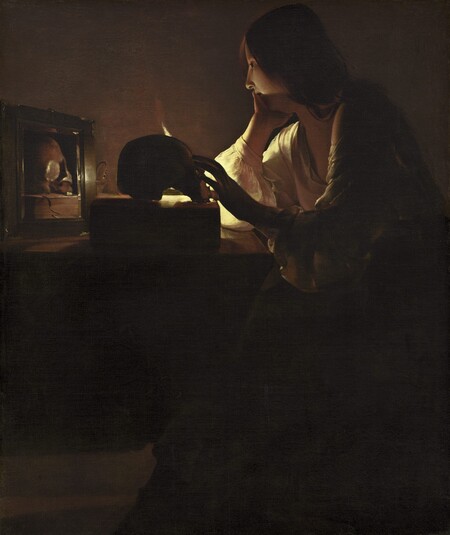
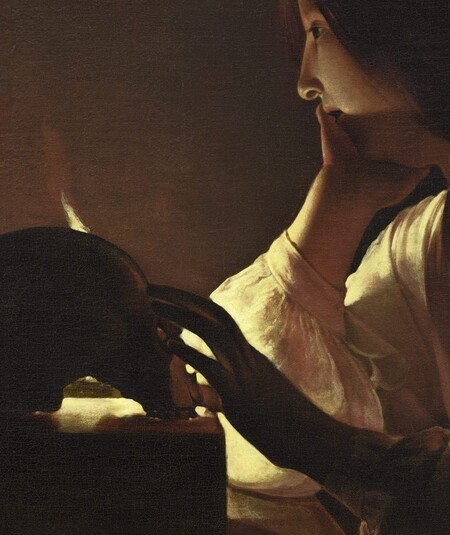
Georges de La Tour — «Penitent Magdalene» (1635–1640)
In this piece, dedicated to Mary Magdalene, the artist employs a candle positioned behind a skull. The light source is barely visible, yet its presence manifests through the illuminated surfaces of the objects and the figure’s silhouette [11].
Particular attention is drawn to the interplay between light and the mirror. While the mirror reflects the objects, it does not serve as the primary light source. The skull, the book, and the mirror form a semantic cluster related to reflection on life, time, and spiritual choice.
The light highlights Mary Magdalene’s hand and the objects before her, as if gathering all the painting’s conceptual weight around them. The space outside this small illuminated zone almost vanishes [12].
It is crucial here to note that the viewer is not merely observing an action; rather, they become immersed in the character’s state of being. The artificial light functions as a means of conveying the inner world of the individual.
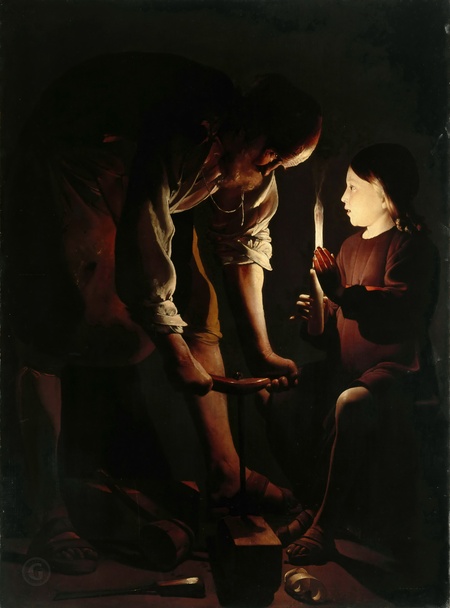
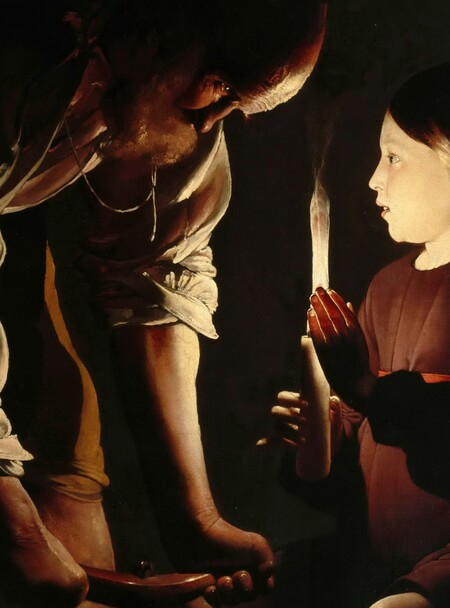
Georges de La Tour — «Saint Joseph the Carpenter» (1642–1644)
In this painting, artificial lighting becomes the central element of the composition [13]. The artist depicts Saint Joseph working in his workshop alongside the young Christ, who holds a candle illuminating his father’s endeavor. The flame serves as the sole visible light source, highlighting the figures against an almost entirely dark background. The artist particularly uses the contrast between the aged Joseph’s face—where the light emphasizes the wrinkles—and the smooth, luminous skin of the child. The lighting also draws attention to the father’s strong hands and the delicate fingers of Christ, through which the flame shines [14].
What makes this painting remarkable is that the light here serves not only a practical but also a symbolic function. The candle illuminates Joseph’s workspace, yet it simultaneously creates an atmosphere of intimacy, silence, and spiritual concentration. The light especially accentuates the young Christ’s face, lending him an extraordinary inner radiance. In the description of the work, published as part of the Louvre exhibition, this effect is connected to the spiritual significance of Christ’s image as a source of light. Thus, De La Tour transforms an ordinary scene of family life into a religious icon, in which artificial lighting becomes a symbol of divine presence.
George de La Tour — «The Adoration of the Shepherds» (1644)
The painting depicts Mary, Joseph, shepherds, and other witnesses to the birth of Christ gathered around the infant. The figures are positioned very close to one another, forming a closed composition. Their gazes and gestures are directed toward the child, drawing the viewer’s entire focus to the central part of the scene [15].The main light source is a candle held by Joseph, which he partially covers with his hand. Its warm light shines through his fingers, illuminating the faces of those present and the infant’s swaddling clothes, while the background is almost completely plunged into darkness. What is particularly expressive is how the light visually appears to emanate from Christ himself. Thus, the candle takes on symbolic meaning—it becomes an image of divine light, truth, and spiritual presence.
Everyday Life by Candlelight
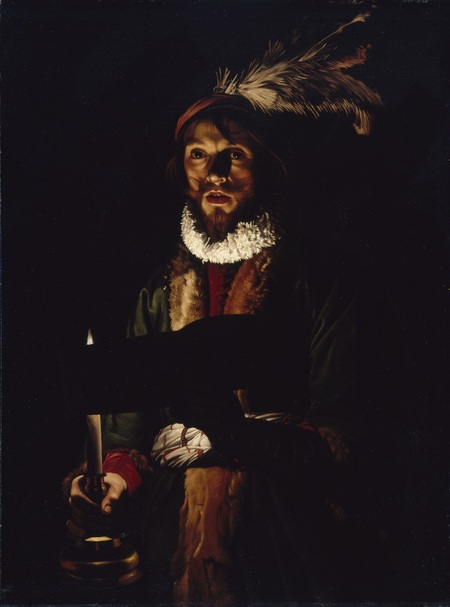
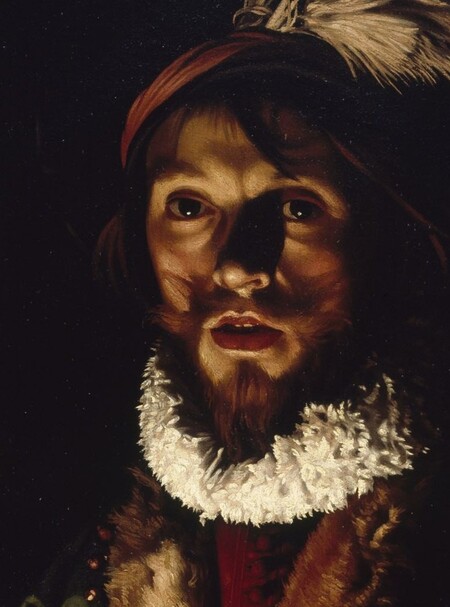
Adam de Coster — «Man Singing by Candles» (1625–1635)