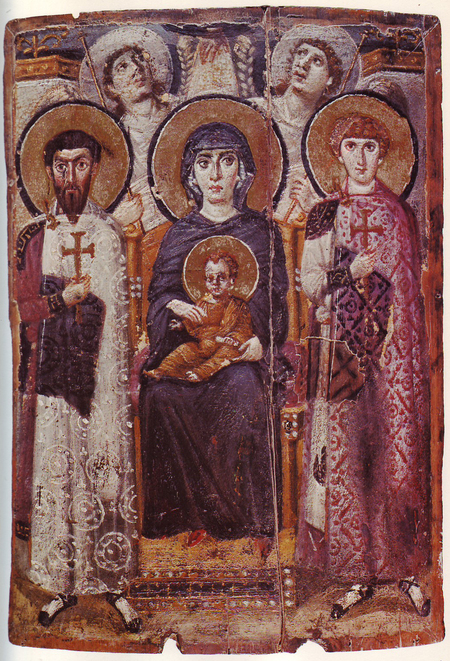
«Magnificent Byzantine culture spread across vast territories—Anatolia, Syria, Palestine, Egypt, the Balkan Peninsula, Armenia, Ancient Rus', and this is not even an exhaustive list of locations”—wrote Lidov A.M. in his work on Sinai Byzantine Icons.
Early Byzantine icon painting originated in the 4th–7th centuries and marked the beginning of Christian panel painting. It was during this period that the characteristics of the iconographic language were established—features that later became characteristic of Orthodox art. Only a small number of early examples survive to this day, as many works were destroyed during the Iconoclast period.
Before beginning our research on gesture images in early Byzantine icons, let’s examine what an «icon» was and what functions it served during those periods (the 6th–8th centuries). We will explore the development of easel painting.