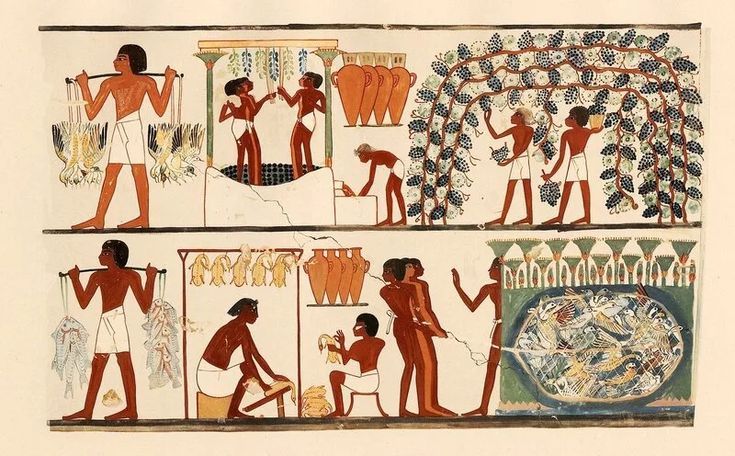
In light of all that has been said, one characteristic feature of Egyptian art becomes clear—its prolonged adherence to established ancient prototypes.
Concept
In this research, I am interested in how the Egyptians conveyed art during the New Kingdom. Ancient Egypt was renowned for its strict canon and clear structure in its creative works. It was long believed that rulers and the elite should be depicted formally and deified, while common people were shown in their working environments. However, the religious reform initiated by Pharaoh Akhenaten spurred an artistic boom.
I explored this topic by examining the art of the New Kingdom, which differs significantly from the works of the Old Kingdom, and I am particularly interested in studying the Amarna Period in greater depth. I find creative approaches to depicting the human form—the departure from canonical forms and the boldness in expressing emotion—to be especially compelling, as this represented a genuine breakthrough in Egyptian painting and sculpture.
This period, known as the Amarna Period, was marked by a radical departure from age-old traditions. Instead of monumental stateliness and idealized figures, the art became more vibrant, dynamic, and humanistic. Akhenaten, by proclaiming the cult of the single deity Aten, the sun, demanded that this new truth be reflected in visual forms as well.
Navigation
- Concept and Topic Selection
- The Amarna Reform (or Canon)
- Depicting the Pharaoh as an Ordinary Person
- Pose Dynamics
- Conveying Emotion
- Psychological Depth of Imagery
- Conclusion and Bibliography
I decided to use this structure to first introduce the canon of ancient Egypt before transitioning to its evolution. For this research, I studied articles and websites regarding the history of Egypt and its artistic transformations. My approach involves a sequential deep dive into the fundamental tenets of ancient Egyptian culture, allowing for a subsequent, more profound analysis of the evolution of its artistic forms and semantic layers under the influence of various historical factors. This methodology will enable the identification of transformation patterns and specific characteristics, avoiding superficial interpretation.
The goal of this research is to trace what makes the Amarna style so uniquely compelling.
I aim to examine its distinctive features—those that set it apart from other movements—and to understand how these characteristics developed under the influence of historical, cultural, and geographical forces. Particular attention will be paid to analyzing the symbolism, the materials and techniques employed, as well as investigating its influence on subsequent artistic trends. The research hypothesis posits that: what methods did the Egyptians employ during the New Kingdom to alter the established canon? The study will focus on analyzing specific artistic decisions that emerged during this period, such as changes in the depiction of the human figure, compositional structures, and subject matter selection.
I) Canon
Before the Amarna reforms, the canon was strict, and the principles of drawing were highly structured. This was because art in Ancient Egypt was profoundly sacred. Its purpose was not merely to decorate, but to ensure life continued in the afterlife and to uphold the divine order. Deviating from established rules was viewed almost as sacrilege. Artists did not strive for innovation; their task was to accurately reproduce the «correct» form from one generation to the next.
For this, they even used grids: before starting, the master would divide the wall into squares and transfer the contours from templates, strictly adhering to the proportions of each body part.
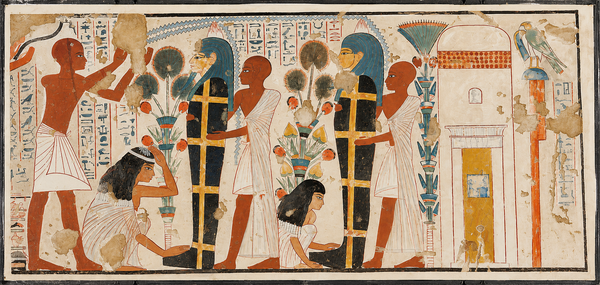
Paintings in Ancient Egypt, much like sculptures, were also executed according to specific rules—canons: the head and legs were depicted in profile (sideways to the viewer), while the shoulders were depicted frontally (facing the viewer). The head shape was in profile, and the eye was frontal. In painting, artists divided the plane into horizontal strips (registers) and arranged the narrative scene by episode, like a story. To represent a figure, they used the «turnaround» technique: the head and legs were shown in profile, but the torso and eye were shown frontally. Objects located farther away were placed higher on the plane. Another feature was the unity of the image and the hieroglyphic inscription: the text complemented the scene and clarified its meaning. A real shift occurred during the reign of Akhenaten (ruled 1351–1334 BCE). His religious reform—the cult of the single god Aten—broke the old artistic canon. Desecration
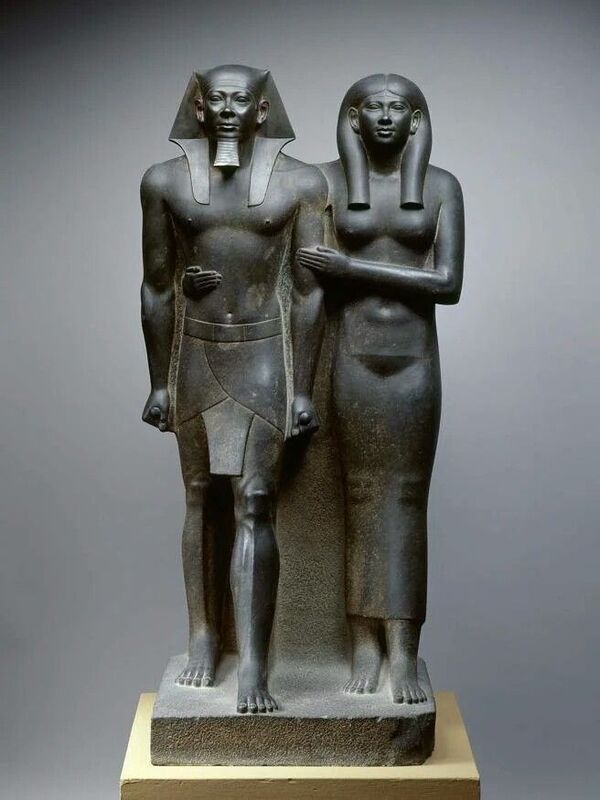
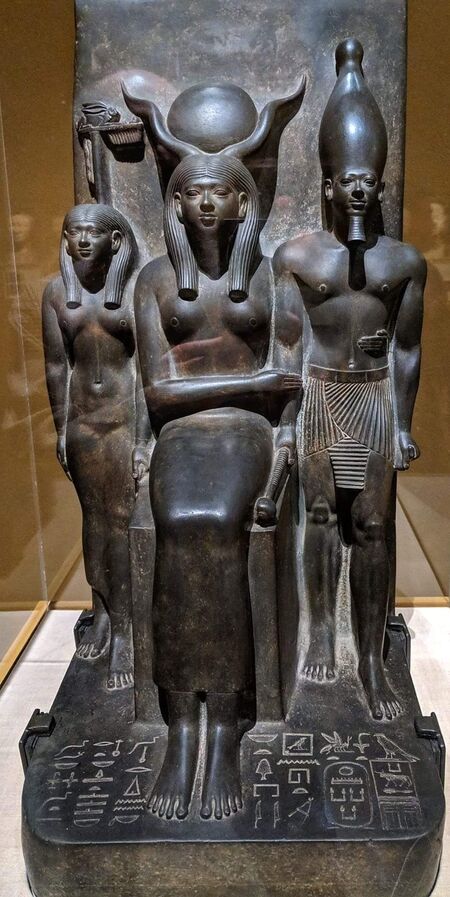
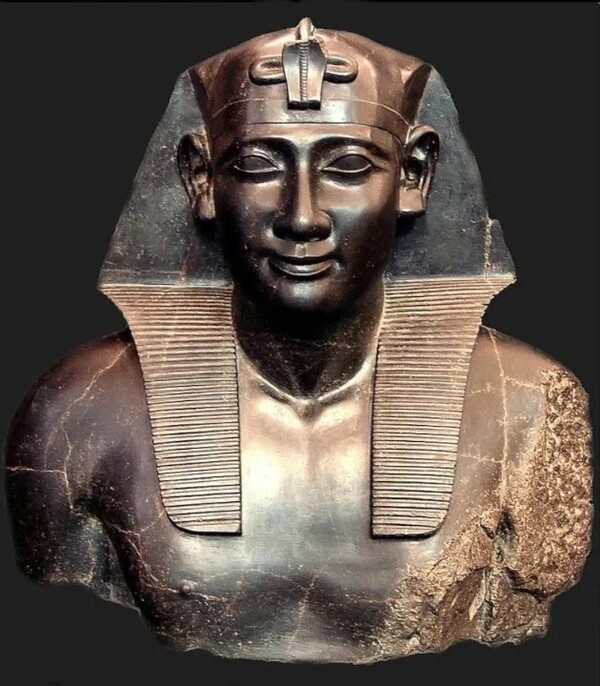
In the sculptures of the Old Kingdom, one observes a stillness and physical perfection; the figure, with its left leg extended forward—a pose of eternal movement. It is devoid of fleeting emotion and conveys the idea of divine order. The faces are typically serene, their gazes directed into the distance. Every line, every curve of the stone, is subordinated to the ideal of perfection, intended to immortalize the power and piety of the rulers and their connection to the world of the gods.
Image of a Pharaoh as an ordinary person
This revolution took place during the reign of Akhenaten (who ruled from 1351–1334 BCE). His religious reform—the cult of the single god Aten—shattered the old artistic canon.For the first time, pharaohs were depicted in everyday life: at meals, within family settings. Art immediately reflected Akhenaten’s religious reform: instead of grand portraits of a conqueror, the subject was an ordinary person.
Akhenaten is depicted with his daughters on his lap, embracing Nefertiti; the entire family is shown in scenes worshipping Aton. Their mutual understanding and warm relationships were specifically emphasized because Akhenaten asked artists to portray everything as realistically as possible—a detail recorded by the court sculptor Beck. Consequently, the king’s portraits reveal imperfect features: a heavy jawline, a swollen abdomen, and a thin, curved neck.
Pose Dynamics
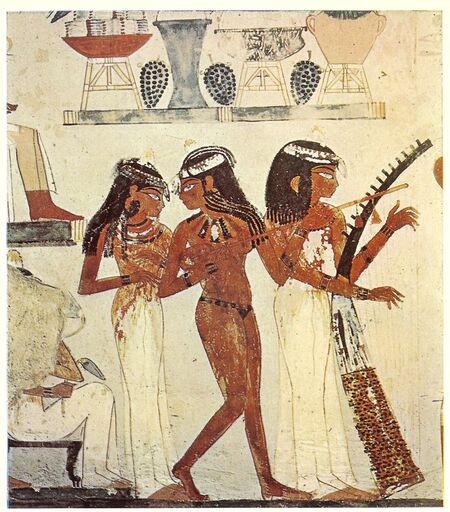
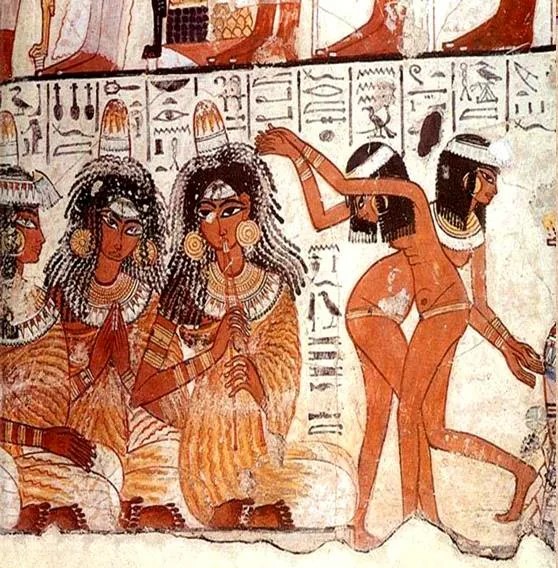
musicians are depicted more freely and individually
Conveying Emotion
The primary language is posture and movement. This is especially evident in mourning scenes: grief was not depicted chaotically, but as a recognizable ritual language of sorrow. Figures appear in profile, three-quarter view, and even from the back; figures obscure one another. The clustering, the mutual overlapping of bodies, and the complex rhythm itself create a sense of confusion or the intense crush of a festive gathering.
According to researcher M. E. Mathie, the pinnacle of the artistry of the Amarna painters is the scene of the death of Akhetaten in the royal tomb: a father with a hand bent over his head, a mother pressing a hand to her face, and a nurse struggling to restrain herself from rushing toward the child’s body. From this moment emerged the profound humanity that subsequently characterized later Egyptian monuments.
Psychologism of Images
Psychologism is an attempt not just to depict a person, but their character, age, temperament, and inner state. In ancient Egypt, the portrait originally served funerary cults, and the artist was required to portray the deceased as «eternally beautiful» and flawless—individual imperfections were deliberately smoothed over.
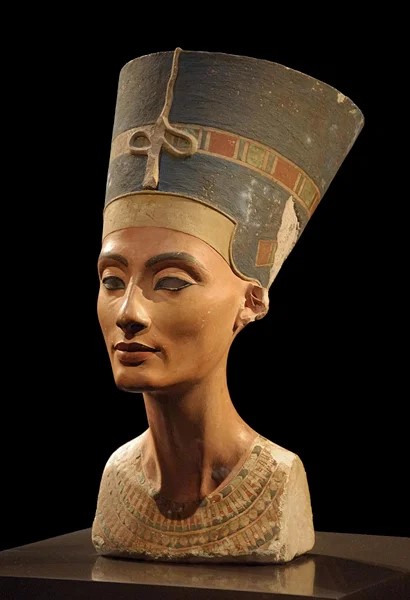
Nefertiti—character in stasis. In the famous bust, researchers identify a rare combination of stillness and motion: the neck leans forward under the weight of the crown, the neck muscles are taut, and beneath the idealized face, a vibrant effort and a willful nature can be discerned.
Conclusion