This project is an academic assignment from a student at the School of Design or a research project by a faculty member at the School of Design. This project is not for commercial purposes and serves educational objectives.
Concept
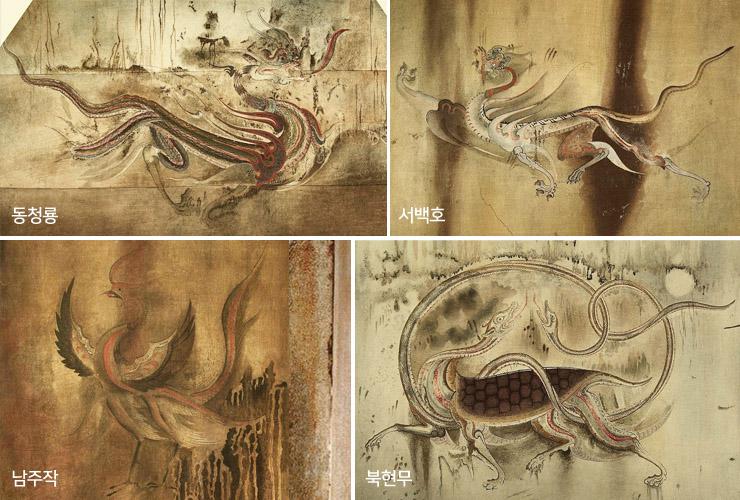
Goguryeo—one of the ancient states of the Korean Peninsula, existing from 37 BCE to 668 CE. One of the most significant features of its artistic culture was its funerary wall painting. The murals in ancient tombs reflected the people’s beliefs about earthly life, the structure of the world, and afterlife existence.Four mythological creatures, known as Sasin, held a special place in these paintings. Each was associated with a specific cardinal direction: the Azure Dragon with the east, the White Tiger with the west, the Red Bird with the south, and the Black Turtle with the snake with the north.In early funerary paintings, these creatures were depicted alongside images of the deceased, scenes of daily life, the sun, the moon, and other celestial symbols. Gradually, their role changed: in later tombs, they became the central motifs of the burial chamber, covering its walls and forming a unified compositional system.
«Four guardian deities ceased to be mere symbols of the afterlife and attained the status of tomb guardians» [2]
The topic of this visual study is the examination of the transformation of the images of four guardians in Goguryeo funerary painting from the 5th to the 7th centuries. Primary attention is given to the changes in their physical appearance, compositional placement, and symbolic function.
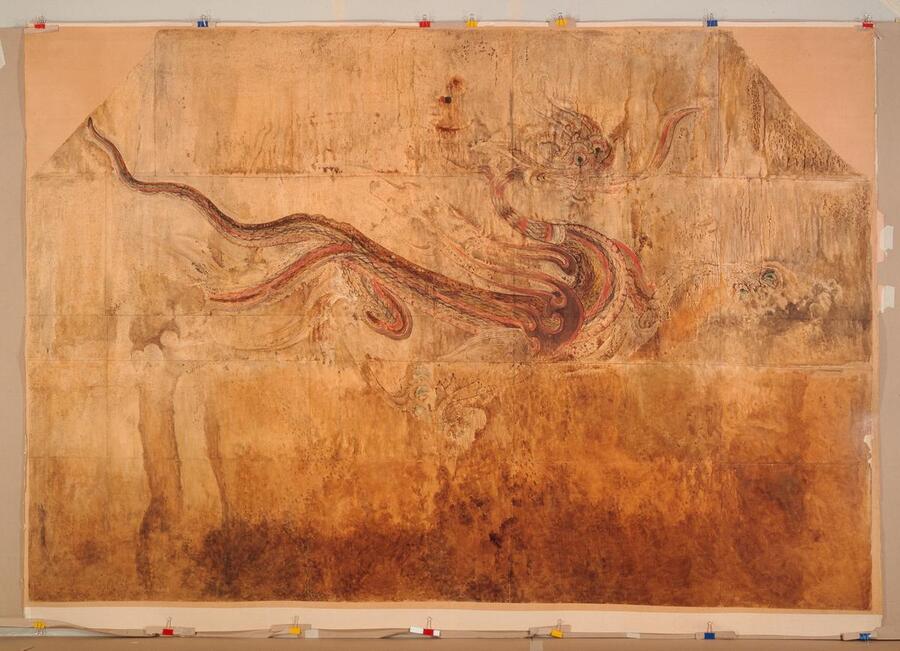
The transition from individual mythological figures within the overall depiction of the afterlife to a distinct system of guardians for the burial space is particularly interesting. This process is most vividly demonstrated in the Great Tomb of Kanso, where four creatures became the central motif of the wall paintings.Studying this theme allows for an examination of the interconnectedness of mythology, religious concepts, and the artistic language of ancient Korea.
The goal of this study is to trace the evolution of the images of four mythological guardians in Koguryo burial art and to determine the artistic means through which their protective function was expressed.
In conducting this research, I relied on museum catalogs, archaeological materials, and scientific publications concerning Goguryeo burial murals. These resources enabled me to study the history of individual monuments, refine dating, and trace the distinctive depiction of mythical creatures. I analyzed changes in the silhouettes, proportions, plasticity, color, and compositional arrangement of the figures, comparing early and later paintings. Special attention was paid to how the images interact with the architecture of the burial chamber.
The key question of the research is how and why the four guardians of the symbols of the universe became the chief custodians of the afterlife.
For the visual context, I utilized the murals from Koguryo burial structures, which most vividly showcase the evolution of Sasin iconography. The primary monuments included the tombs of Yaksu-ri, Honam-ri, Chinphari, and Ganso.
We can hypothesize that the four mythological beings gradually transitioned from discrete elements of a broader cosmological system into an independent system of tomb guardians.
Thus, the foundation of the research becomes the sequential comparison of monuments from different periods, which allows us to trace how four mythological archetypes transformed into a unified system for protecting the afterlife.
(1) The Tomb as a Reflection of the Cosmos
To understand why four mythological beings became guardians of the underworld, one must examine the Goguryeo people’s conceptions of death, space, and the structure of the cosmos.
Unknown Koguryeo Master. Decorations of Burial Structures. 3rd–7th Centuries. Mural Painting.
Goguryeo was one of the ancient states of the Korean Peninsula, existing from 37 BCE to 668 CE. Its culture developed across a vast territory in Northeast Asia, evolving through interaction with neighboring states and regions.
One of Goguryeo’s most significant artistic achievements was its funerary mural painting. These frescoes were created inside stone tombs and reflected concepts of earthly life, social structure, and existence after death.
Unlike standalone decorative art objects, the wall paintings were intrinsically linked to the architecture of the burial structure. They formed a cohesive visual environment surrounding the deceased, becoming an integral part of the perceptions of their afterlife.
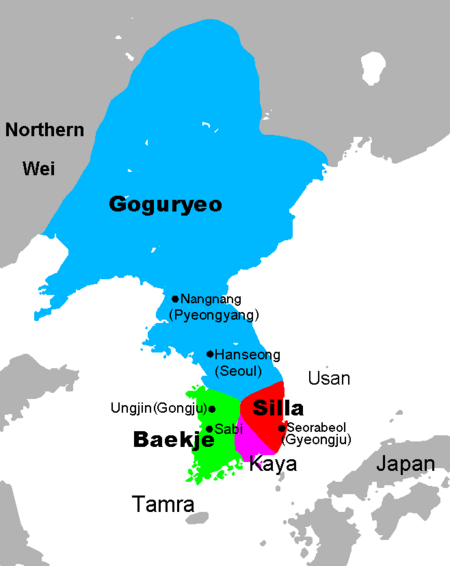
The Koguryo burial mounds were spread across a vast territory of the state. The most significant complexes of mural paintings have been discovered in the area of modern Pyongyang, Nampho, and the Chinese city of Jian.
This study examines monuments from these historical regions because they allow us to trace the development of a single artistic phenomenon across different Koguryo centers.
Two groups of monuments are particularly significant. The tombs in the Pyongyang and Nampho regions demonstrate the gradual formation of an independent system of four guardians. The tombs in the Jian region allow for an additional examination of expressive variants of late iconography and the artistic specificity of individual regions.
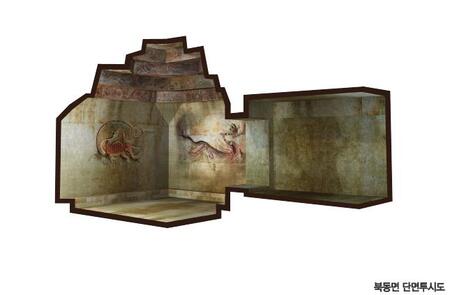
Unknown Koguryo Master. Burial Chamber of the Yaksu-ri Tomb. Early 5th Century.
Unknown Koguryo Master. Burial Chamber of the Kanso Great Tomb. Second Half of the 6th — Early 7th Century.
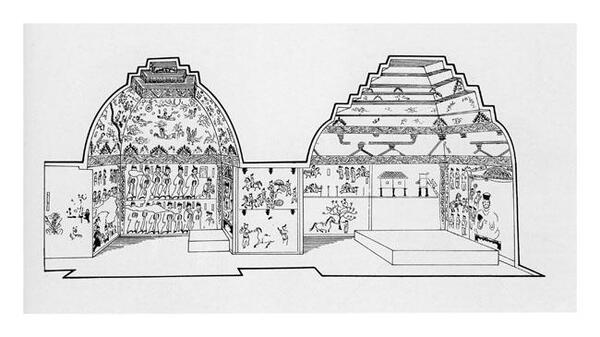
The Koguryo burial structures were complex architectural spaces, consisting of corridors, burial chambers, and auxiliary rooms. Their construction gradually evolved—from multi-chambered structures to more compact, single-chamber tombs of the later period.The interior layout held great significance for artistic ornamentation. The number of rooms, the placement of walls, the shape of the ceiling, and the entrance determined the possibilities for organizing mural painting.
The transition to single-chamber tombs, where four walls form a single, enclosed space, becomes especially significant. This architectural structure allowed for the organization of images of four guards as an interconnected system.
Floor plan of the Great Tomb of Kanso. Based on materials from the National Museum of Korea.
The interior space of the tomb was perceived as an autonomous artistic and symbolic environment. Each surface could perform a specific function within the overall decorative program of the structure.
The walls were designated for large figures, narrative compositions, and decorative motifs. The ceiling often included depictions of celestial bodies, constellations, lotuses, clouds, and fantastical creatures.
In later Koguryeo tombs, this spatial division achieved a particular expressiveness. The four walls might be adorned with mythological guardians, while the ceiling continued to evoke the image of the celestial world.
Thus, architecture became the foundation for creating a cohesive system of symbolic imagery.
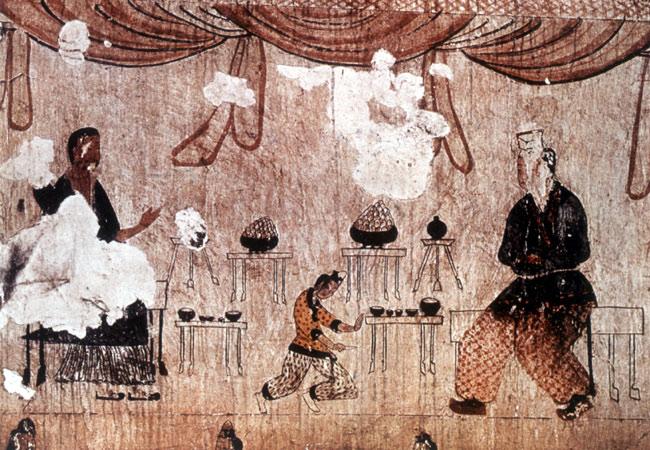
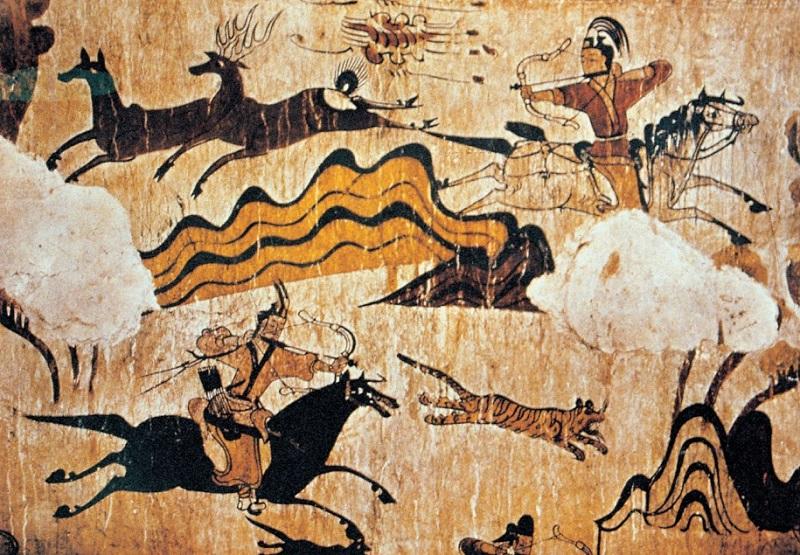
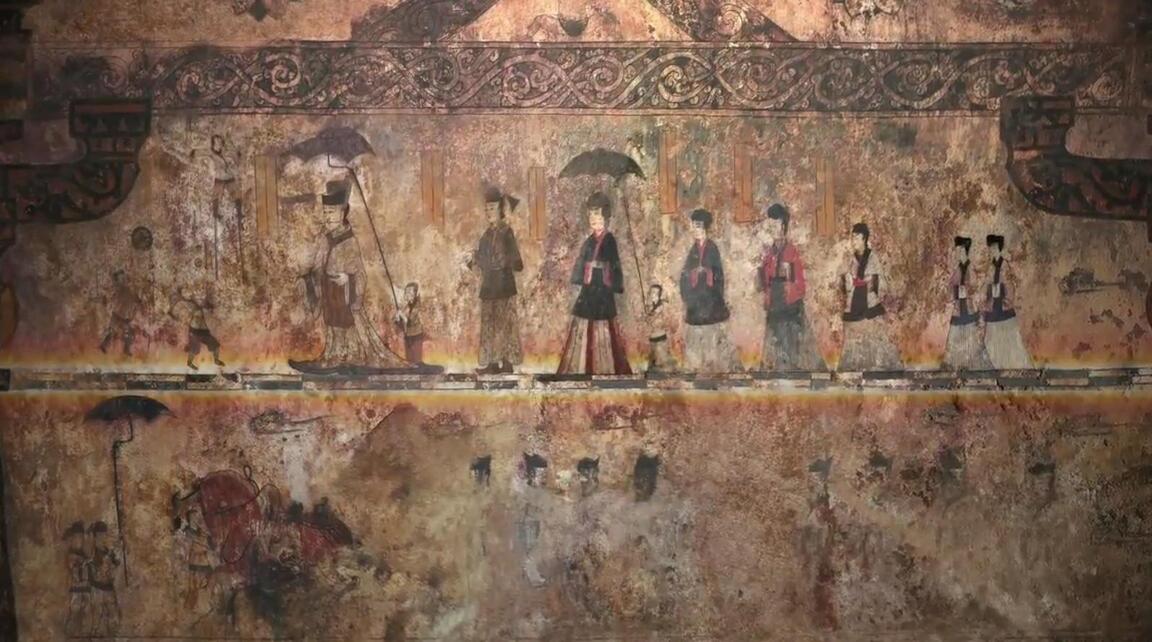
Unknown Goguryeo master. Hunting scene. Yaksu-ri Tomb. Early 5th century. Unknown Goguryeo master. Feast and dance scene. Muyunchon Tomb. 5th century.