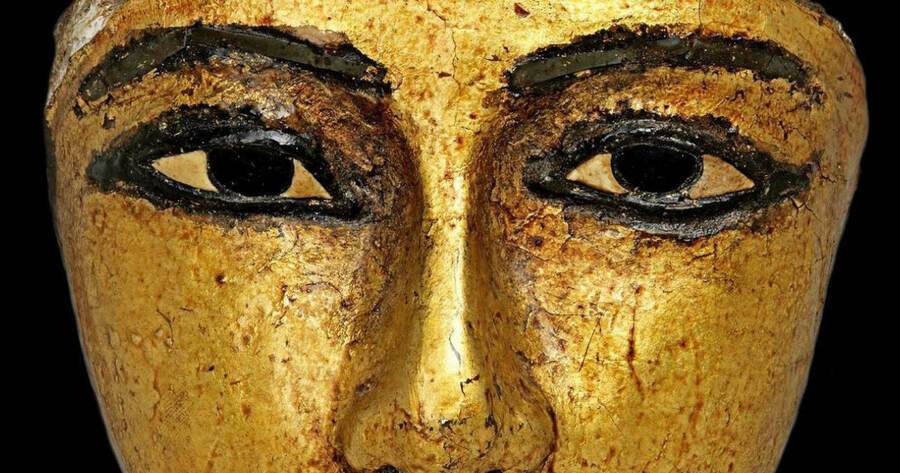
Человек, которого собирали по частям
I. Concept and Topic Selection
I chose the theme, «The Man Put Together in Pieces, ” because I wanted to explore how the ancient Egyptians conceived of the human being and life after death. They believed that existence did not end upon death, which is why they created tombs, sarcophagi, masks, and other objects intended to aid the deceased in the afterlife. To the Egyptians, a person consisted of more than just a physical body; they comprised several other elements: the Ka, Ba, heart, name, shadow, and Akh. I became interested in understanding what these concepts meant and how they relate to funerary art.
For visual research, I selected mummies, funerary masks, sarcophagi, statues, stelae, papyri, and depictions of various rituals. It was important for me to gather not just well-known examples of Egyptian art, but those that help us better understand the Egyptians' conceptions of humanity. When selecting materials, I paid close attention to museum collections and the accuracy of the information provided about the artifacts.
The study begins with what can be seen and examined physically—the body and its preservation. Then, I move on to the less obvious components of the human being that existed in the ancient Egyptians’ worldview. Finally, the funerary rituals and their role in ensuring the deceased’s continued existence are examined.
As sources, I am using books, scholarly publications, and museum materials. Museum descriptions help clarify the function of individual objects, while the works of Egyptologists help explain the meaning of the concepts of the soul and the afterlife. It is also important to consider that these beliefs evolved over time.
The central question of my research is: according to the ancient Egyptians, what components constituted a human being, and how did funerary art aid in preserving that essence after death?
I hypothesize that funerary art was not merely a way to immortalize the deceased’s image, but rather an essential part of preparing for the afterlife. Mummies, statues, inscriptions, and funerary texts each served different purposes, but together, they helped preserve human essence and ensure the individual’s transition to another world.
Categories
I. Concept and Theme Selection II. Body: Preservation of Form III. Ka: The Presence of the Deceased IV. Ba: Movement Between Worlds V. Heart: Memory and Judgment VI. Name: Preservation of Identity VII. Shadow and Akh: Invisible Existence VIII. Ritual: The Return of Agency IX. Conclusion
II. Body: Preserving Form
The ancient Egyptians believed that the human body remained significant even after death, as it was intrinsically linked to the individual’s continued existence in the afterlife. This belief led them to develop a specific body preparation method—mummification. During this process, the body was cleaned, treated with various substances, and then wrapped in linen bandages.
Beyond the mummy itself, funerary masks and sarcophagi held great importance. They served to protect the remains and maintain a recognizable depiction of the deceased. Internal organs were placed in specialized vessels known as canopic jars.
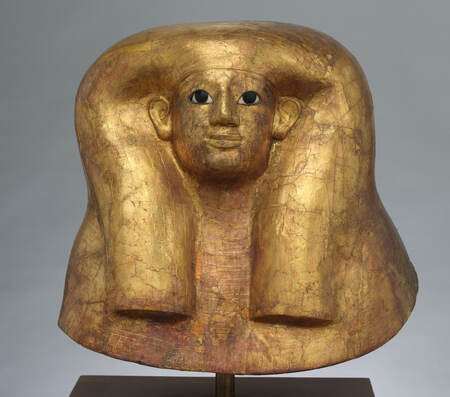
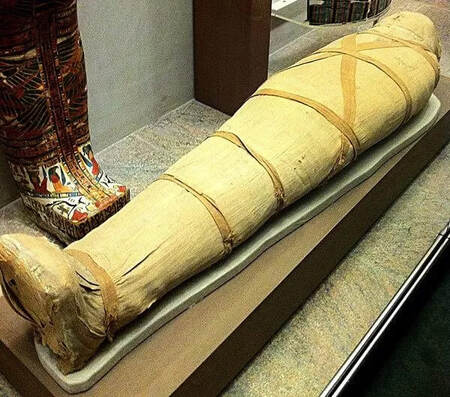
«Hattenfer Funerary Mask» New Kingdom (c. 1491–1473 BCE) «Harusheere Mummy» Third Intermediate Period (c. 945–721 BCE)
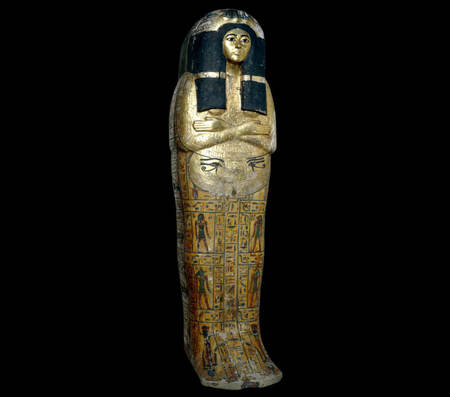
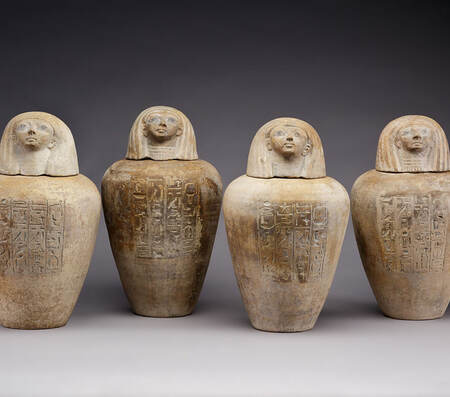
«Gilded Sarcophagus of Henutmehyt» 19th Dynasty (c. 1250 BCE) «Canopic Jars of Ruiu» New Kingdom (c. 1504–1447 BCE)
III. Case: Presence of the Deceased
The word «Ka, ” known throughout the history of Pharaonic Egypt, was written with a hieroglyph of two raised hands, which is generally understood as a symbol of encompassing—that is, protecting a person’s Ka.
Hieroglyph «Ka»
Ka was one of the constituent elements of the human essence in ancient Egyptian beliefs. It was typically understood as a life force that did not vanish after a person’s death.
It was believed that Ka required food and other offerings, so relatives brought these to the funerary chapel. Statues and false doors were used to maintain a connection between the living and the deceased. Egyptians believed that Ka could reside in a funerary statue, and the offerings placed on special tables helped it sustain its existence.
«Statue of Ka» Old Kingdom (c. 2345–2160 BCE) or First Intermediate Period (c. 2160–2055 BCE)
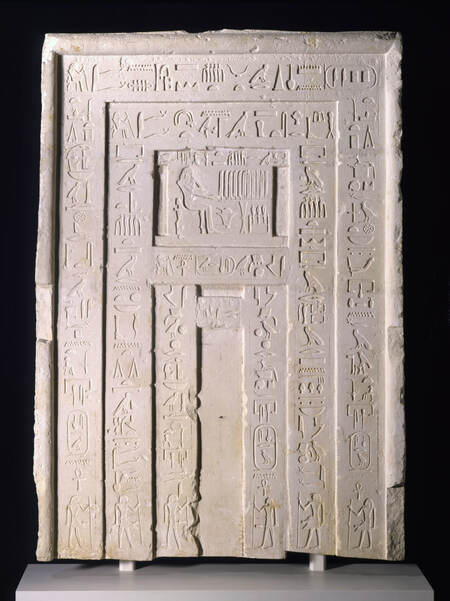
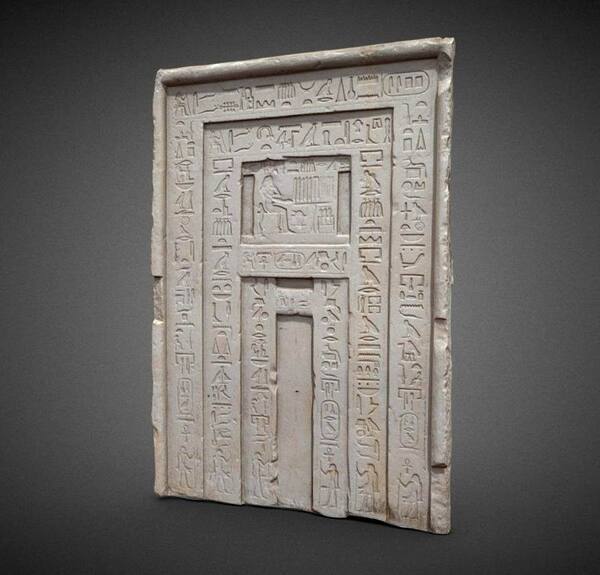
False Door from Ni-ankh-Snefru (called Tefi) Old Kingdom, 6th Dynasty (c. 2321–2278 BCE) Considered a symbolic passage for the Ka of the deceased
This door illustrates the great importance the Egyptians placed not on the object itself, but on its symbolic function. Even though it wasn’t real and couldn’t be opened physically, it held significant meaning within the funerary ritual.
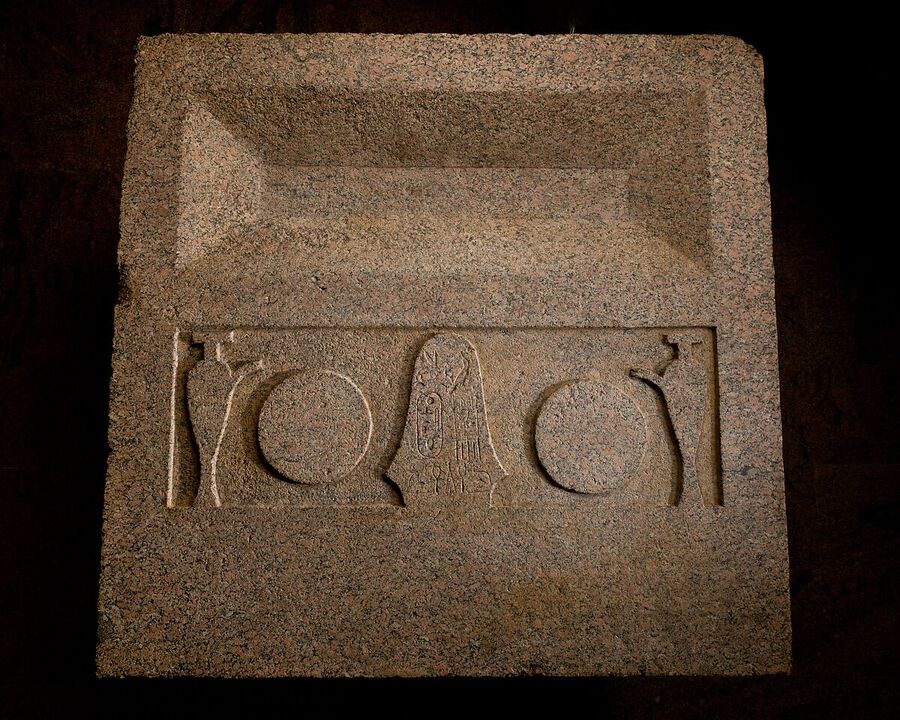
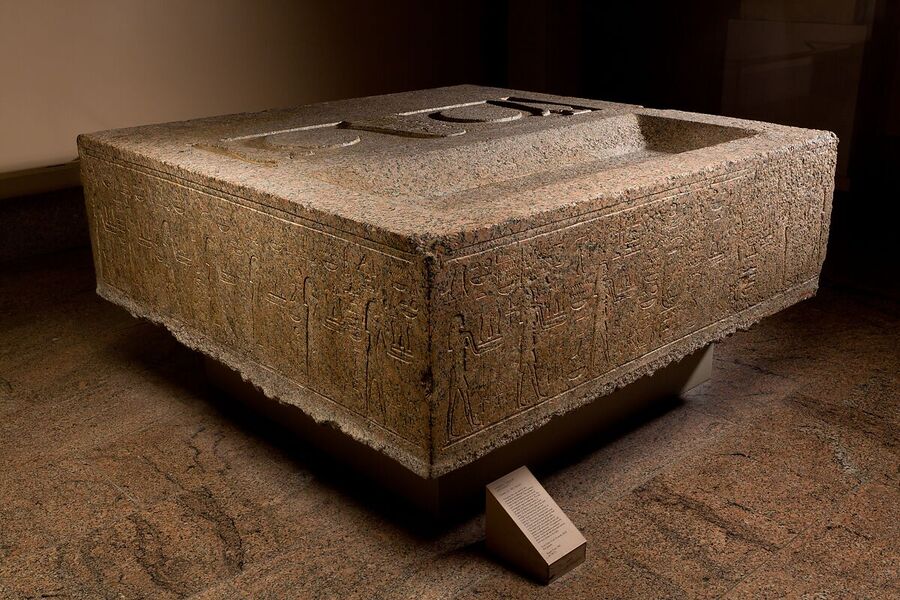
Altar from the Mortuary Temple of Amenemhat I Middle Kingdom (c. 2055–1981 BCE)
IV. Lab: Movement Between Worlds
In ancient Egypt, the Ba was associated with the individual’s identity and their potential to exist beyond the tomb. It was usually depicted as a bird with a human head, symbolizing the ability to travel between worlds.
Egyptians believed that the Ba could leave the burial site, visit the world of the living, and return. I find it interesting that the avian form helped convey the idea of movement and freedom after death. Thus, the Ba indicated that a person’s life was not confined solely to the tomb.
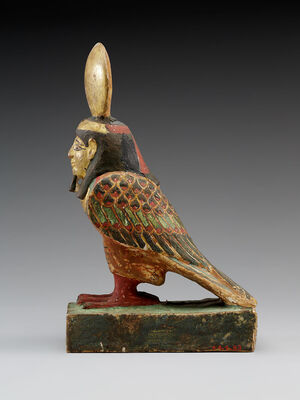
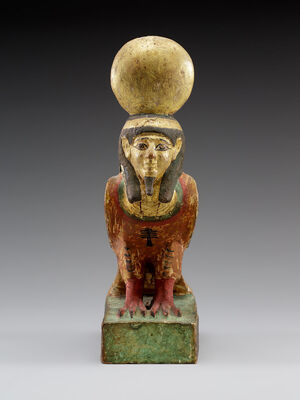
«Ба-птица» Период Птолемеев (332-30 гг. до н. э. или позже)
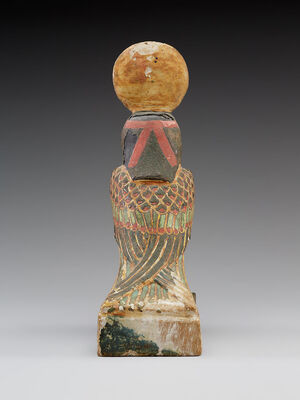
Funerary Papyrus (fragment with the Ba bird) Ptolemaic Period (332–30 BCE)
V. The Core: Memory and Judgment
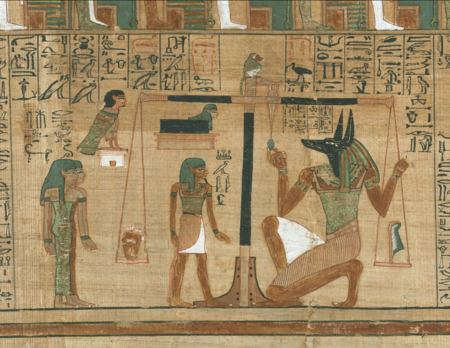
In Ancient Egypt, the heart was considered the seat where a person’s thoughts, memories, and deeds were stored. The Egyptians believed that after death, it underwent a special trial: the heart was weighed on scales against the feather of Ma’at, which symbolized truth and justice. The result determined the individual’s fate in the afterlife.
Heart Weighing Scene from Anubis' Book of the Dead (c. 1250 BCE)
If the heart of the deceased was light, it could continue its journey to the afterlife. If, however, it weighed more than a feather, it meant that the person had failed the ordeal, and their heart was devoured by Ammit (represented as a mix of a crocodile, lion, and hippopotamus).
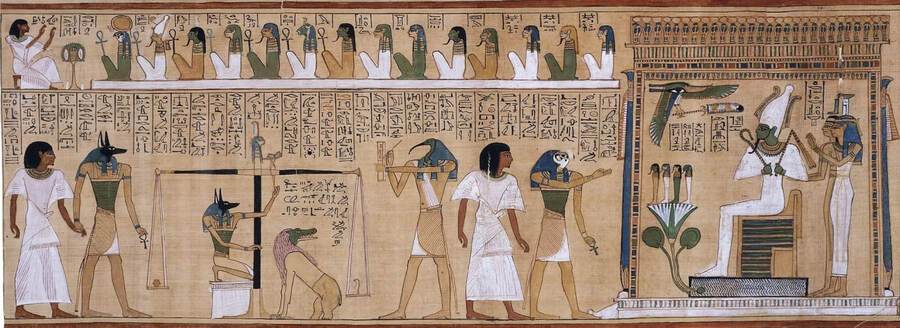
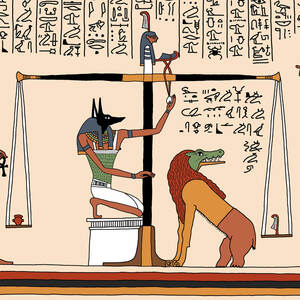
The Weighing of the Heart of Khunefra, a scene from the «Book of the Dead» 19th Dynasty (circa 1285 BCE) A fragment showing the scales, where the heart of Khunefra rests in the left pan and is weighed against the feather in the right pan
In truth, one can ponder for a long time that it is not appearance or wealth that determines a person’s fate, but rather the nature of their character during their life.
VI. Identity: Preserving the Self
What remains of a person after their body disappears? For the ancient Egyptians, the name played a vital role, connecting the individual to their personality and memory. The Egyptians believed that as long as the living remembered and spoke the deceased’s name, they continued to exist. Therefore, names were carved onto the walls of tombs, stelae, sarcophagi, and other funerary objects. In this way, the name became another means of maintaining a connection between the person and the world.
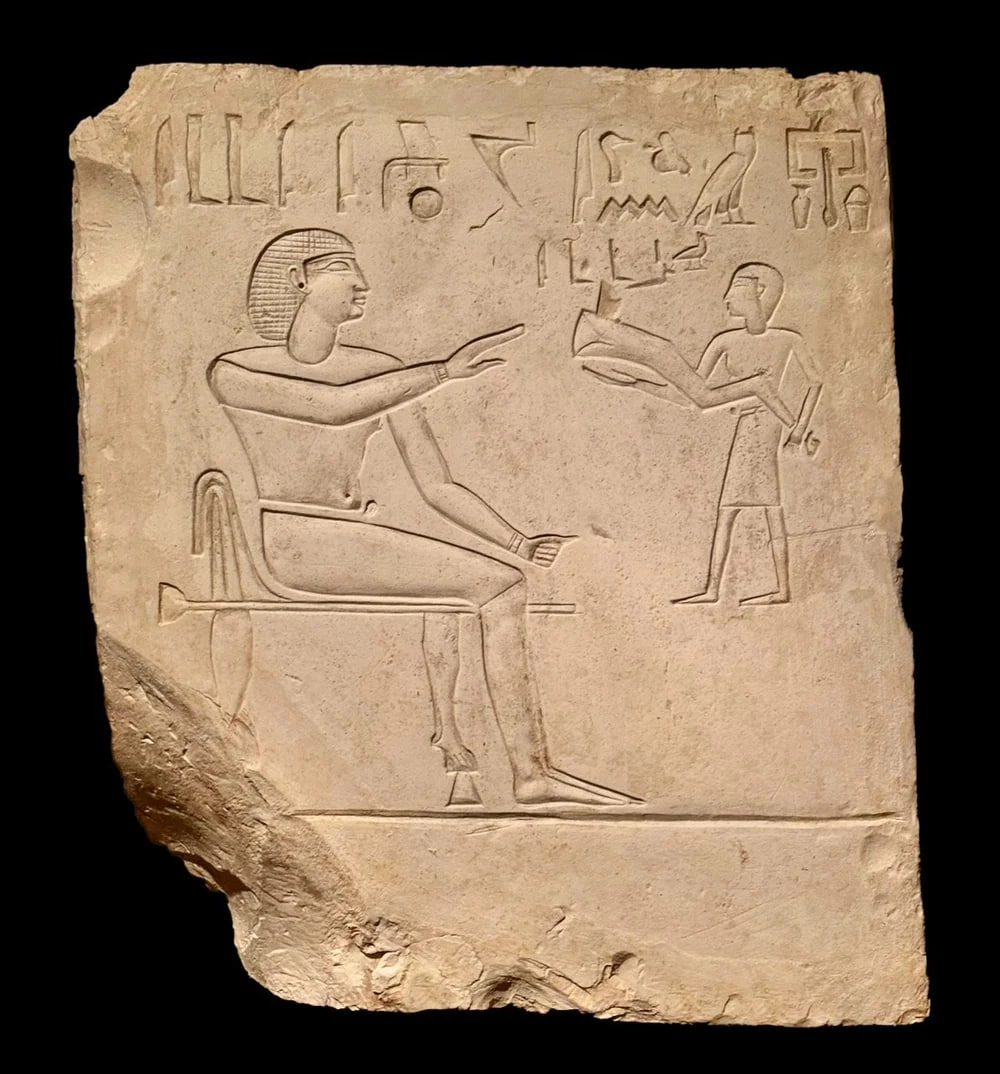
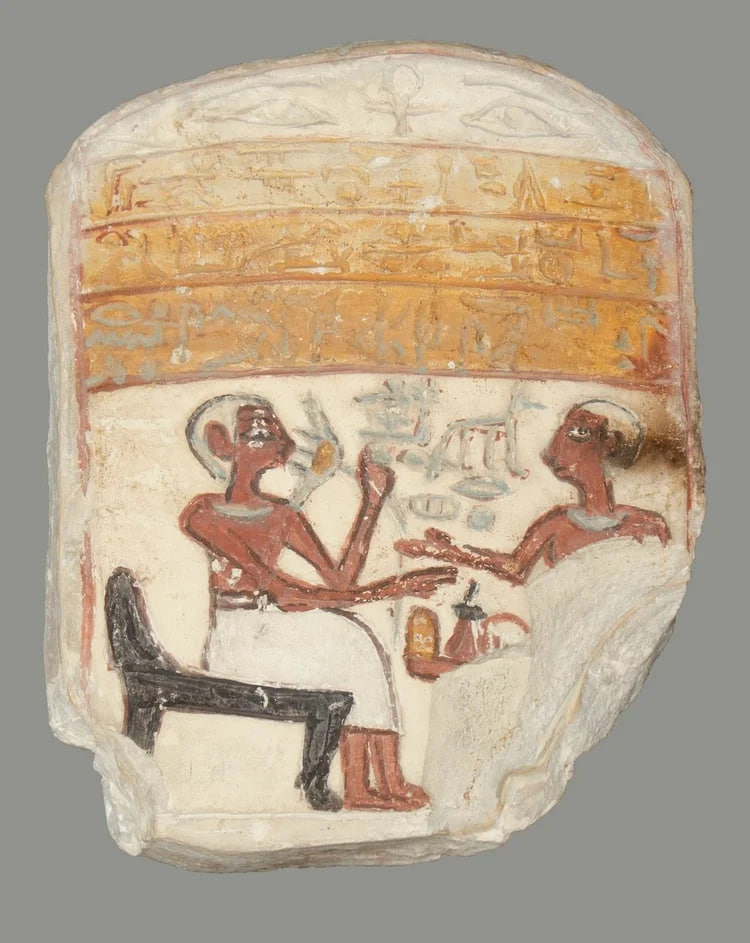
Погребальная стела посвящена человеку по имени Кемси из Абидоса, Второй переходный период (1630–1539 гг. до н. э.)