«Tomorrow will be better than today, ” science fiction writers like Jules Verne and Albert Robida promised us. Tomorrow, airplanes and airships would replace horse-drawn carriages; the day after tomorrow, the age of space travel and journeys to other worlds would begin. Yet, tomorrow never seems to arrive—there is only today. Today, Gavrilo Princip shoots Franz Ferdinand; today, barbed wire stretches from the North Sea to Switzerland; and the scientific achievements that were supposed to lift humanity to the heavens suddenly force us to huddle close to the earth, shielding ourselves from noxious gases and deadly zeppelins. And today, the future is not a utopia—it is a dark unknown. That very fear which once paralyzed primitive humans now grips contemporary humanity.
In this visual exploration through the lens of comic books, I examine how people’s perceptions of the future have changed over nearly two centuries, attempting to understand what these perceptions said about the people of their time and what they say about us today. The comic book is the perfect genre for such a conversation: it doesn’t just display the future in a single image; it places a character within it, forcing them to navigate the streets of a tomorrow city, wait for an elevator, or hide from the rain. However, my hypothesis is that the history of the image of the future is not merely a shift from light to dark. Its very function changes—sometimes it serves as a display case for progress, sometimes as a backdrop for adventure, sometimes as a warning, and sometimes as a way to talk about the present.
I compare iconic, influential, and unconventional comics from the United States, France, Belgium, Japan, the United Kingdom, and Argentina. To ensure the comparison is visual rather than narrative, I track recurring elements: the city and its architecture, the sky and transportation, the scale of the human figure next to machinery, color and light, and the composition of the page. Furthermore, I try to answer the question: „How has the visual image of the future in comics changed under the influence of historical events and the transformation of public perceptions regarding scientific and technological progress?“
Navigation:
1. The Golden Age.
2. Turning Points and Mass Science Fiction.
3. The Atomic Age and the Space Race.
4. The Cyberpunk Crisis.
5. The 21st Century.
1. The Golden Age.
This is how the future looked at the end of the 19th century. The pages of Robida, the «In the Year 2000» postcards, and the magazine caricatures resemble a world’s fair display: this is how people will travel for vacation, business, or shopping; this is how children will study, and homemakers will chat over the telephone. This is more advertisement than fantasy—no anxiety, only the promise that tomorrow will be more convenient, faster, and more fun.
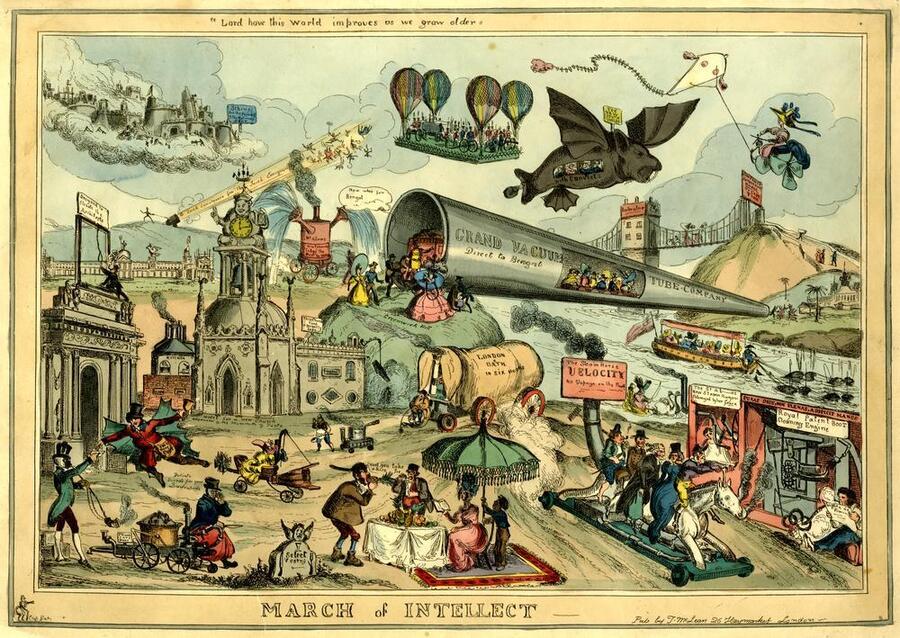
William Heath. «The March of Intellect.» 1828–1829
In the second image is featured one of the most compelling illustrations from William Hewitt’s series, «March of Intellect.» In the upper left corner, new Pegasus-Ulans from the aerial brigade are depicted, and to their right—an airship and a modern rabbit hunter, as explained in the engraving’s caption. Centrally located in the composition is a robotic servant performing domestic tasks. However, since the Czech word «robot,» which means «serfdom» or «forced labor,» has not yet entered common usage, Hewitt designates such an invention as the «Army of Human Inventions.» In the lower section of the image, one can observe a mechanical assistant indicating the time, and to the left—a gymnasium designed for walking on the ceiling. Another intriguing detail is hidden beneath the aerial Ulans: tunnels leading to the North Pole and South America are illustrated there.
William Heath. «The March of Intellect.» 1828–1829
The next important author who addressed the image of the future is Albert Robida. The drawings feature illustrations and pages from his work, «The Twentieth Century. Electrical Life.» At first glance, the world of the future created by Robida seems to be the embodiment of technological progress: people move through the air, communicate via phonographs, and use devices reminiscent of the precursor to modern video conferencing. However, as science advances, new problems also arise.
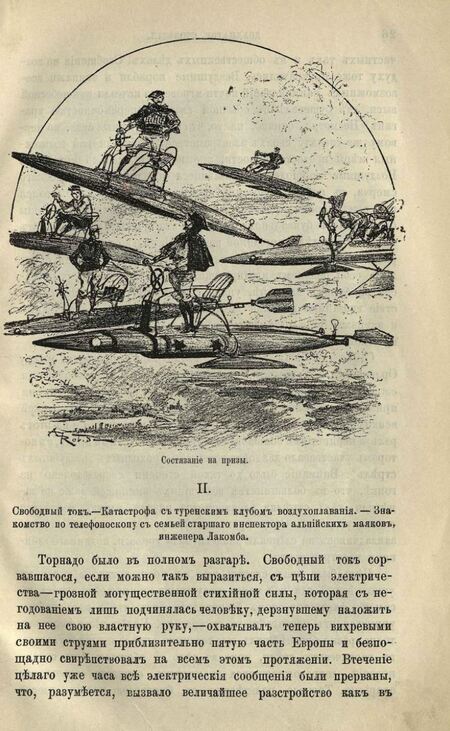
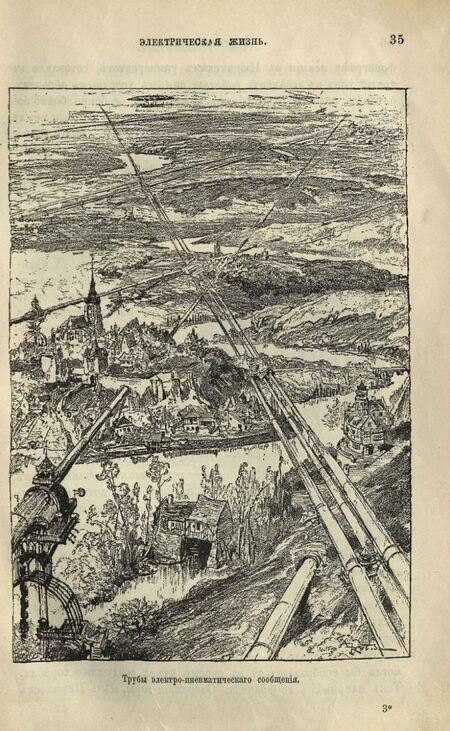
Albert Robida. «Le Vingtième Siècle. La Vie électrique, ” pp. 31 and 35. 1892
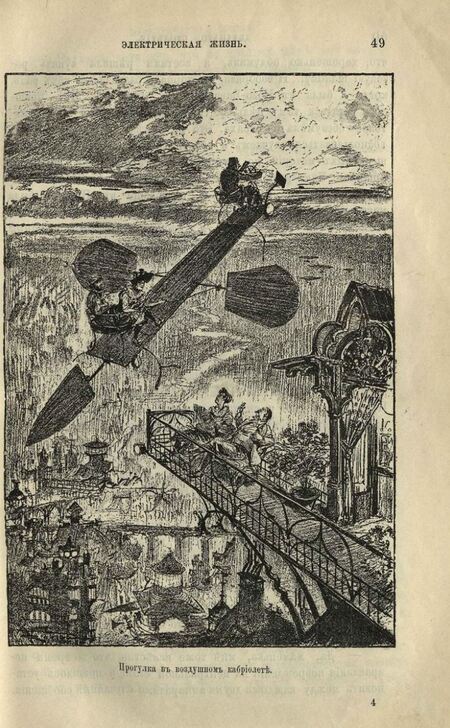
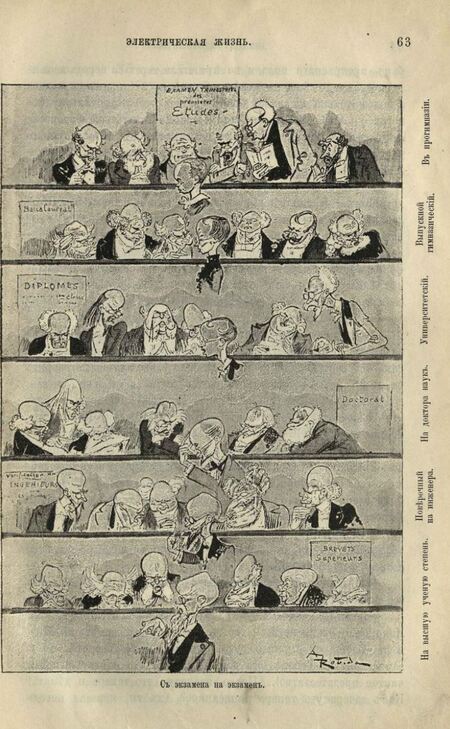
Albert Robida. «Le Vingtième Siècle. La Vie électrique, ” pp. 49 and 63. 1892
Water is contaminated with bacteria, viruses are spreading, and people are forced to wear special respirators. Furthermore, Costa Rican agents are encouraging French magnates to invest in chemical artillery, while China is encroaching on Europe. Even daily life has become more stressful: 20th-century people are forced to constantly learn, and by the age of forty, they are considered old. To restore their mental balance, they go to the countryside, where they can lie on the grass and relax.
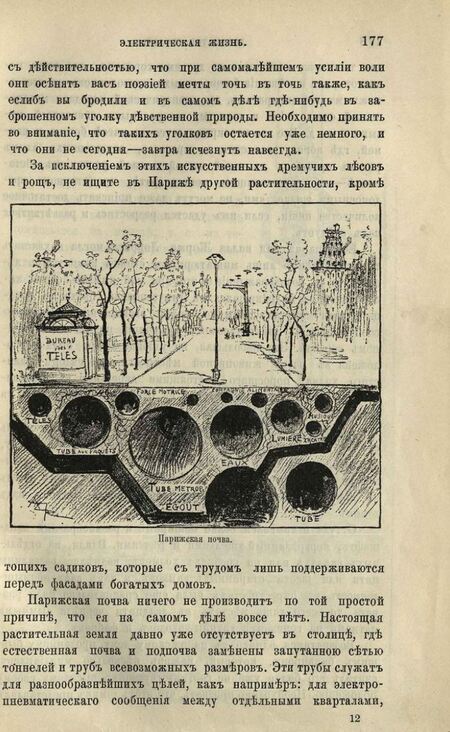
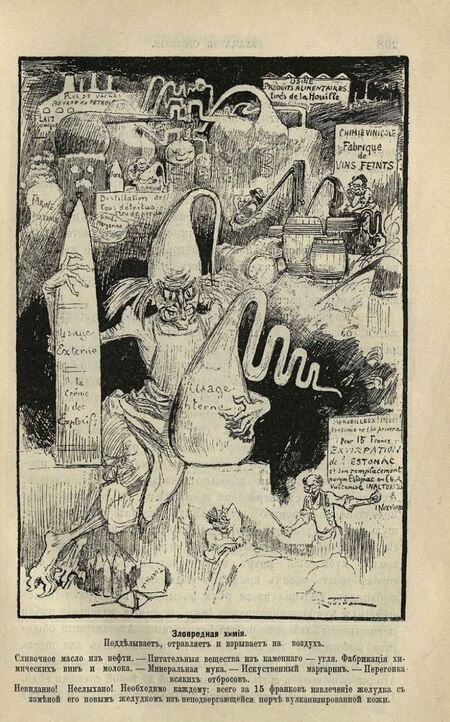
Albert Robida. «Le Vingtième Siècle. La Vie électrique, ” pp. 177 and 207. 1892
Albert Robida. «Le Vingtième Siècle. La Vie électrique, ” p. 241. 1892
One could argue that Robida was among the artists whose fantasies about the future surprisingly closely paralleled the subsequent evolution of reality. His depictions demonstrate not only a belief in technological progress but also an understanding that new inventions can spawn new threats. Thus, even in 19th-century works, the image of a bright technological future proves ambiguous: scientific achievements coexist with environmental, social, and military problems.
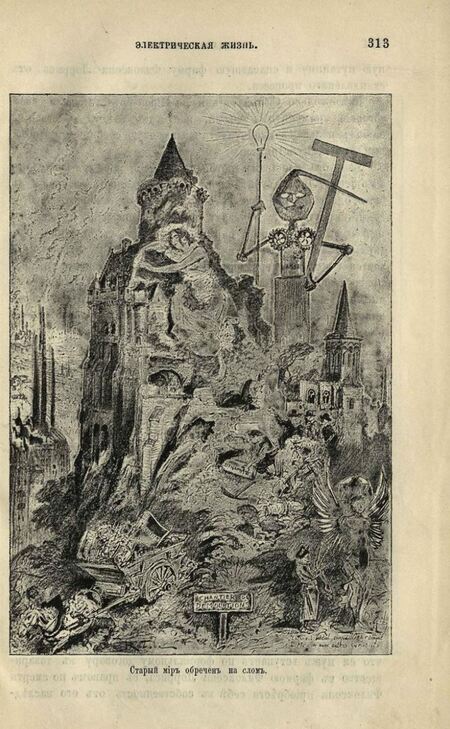
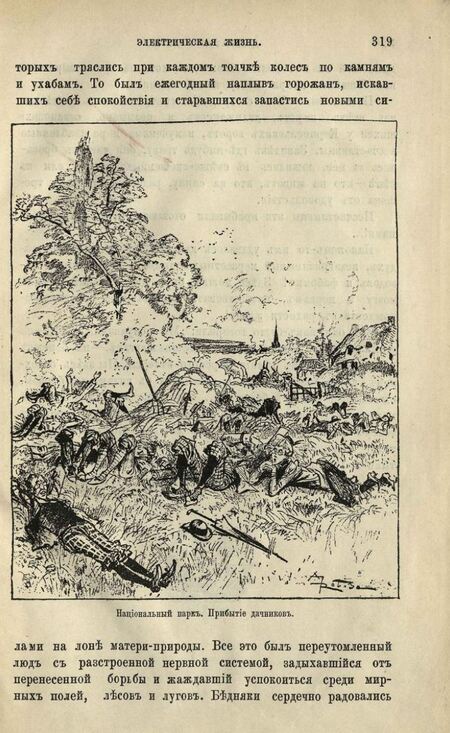
Albert Robida. «Le Vingtième Siècle. La Vie électrique, ” pp. 313 and 319. 1892
2. The Turning Point and Mass Fiction.
The first comic to go into space departs at the edge of the world. In 1924, New Zealander Noel Cooke drew a boy named Peter for the Australian Sunday Times, who wanders through other planets and boasts to the Jovian king about gravity-defying boots. This isn’t tomorrow; it’s a fairy tale about neighboring worlds, and it has no concern for the fate of Earth.
Noel Cook. «Peter and all the roving folk.» 1924
Noel Cook. «Peter and all the roving folk.» 1924
January 7, 1929, is tomorrow. On this day, American newspapers feature «Buck Rogers in the 25th Century, ” and the initial frames reveal the protagonist—a twenty-year-old pilot who was demobilized after World War I. He falls asleep in a mine, succumbs to gas, and wakes up five hundred years later to find America in ruins, conquered by Asian invaders, almost like Robby the Robot—but unlike Robby, this future comic doesn’t begin with aerial omnibuses, but with war and catastrophe. Yet, this is a catastrophe with an adventurous spirit: ray guns, robots, and rockets, which previously were confined to pulp magazines, arrive for the mass readership for the first time. The future ceases to be a display case and becomes an arena where victory is possible.
Philip Francis Nowlan, Dick Calkins. «Buck Rogers in the 25th Century A.D., ” cover. 1929
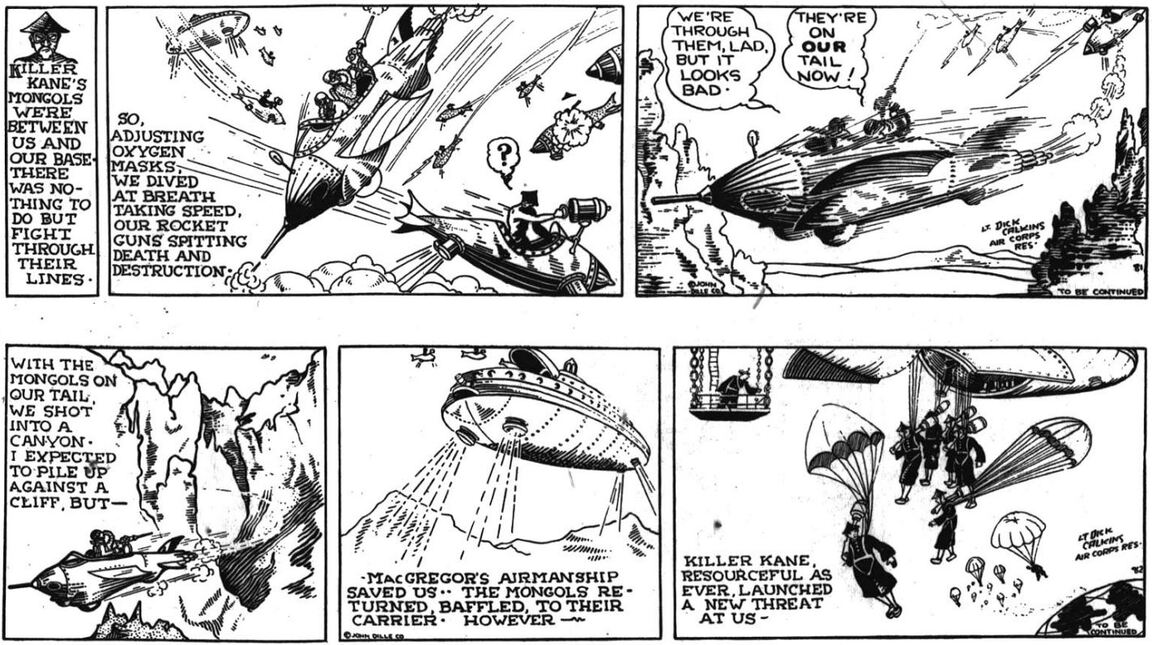
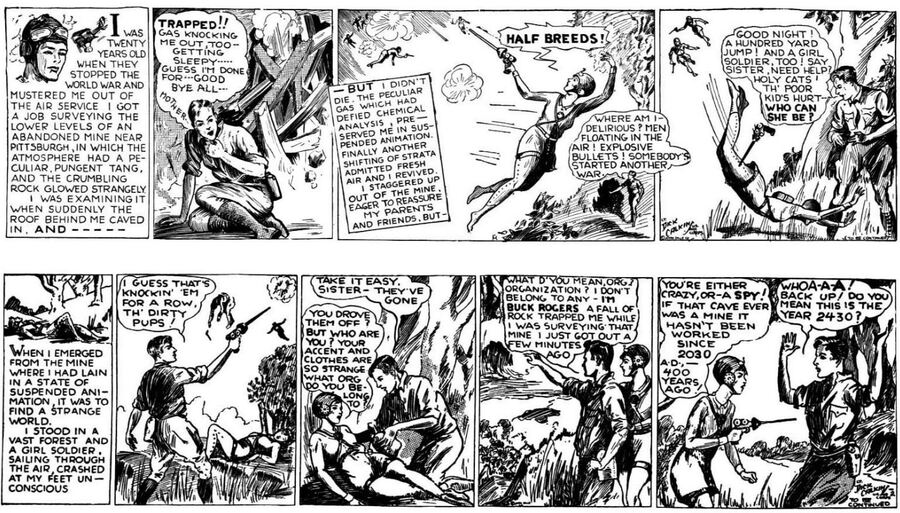
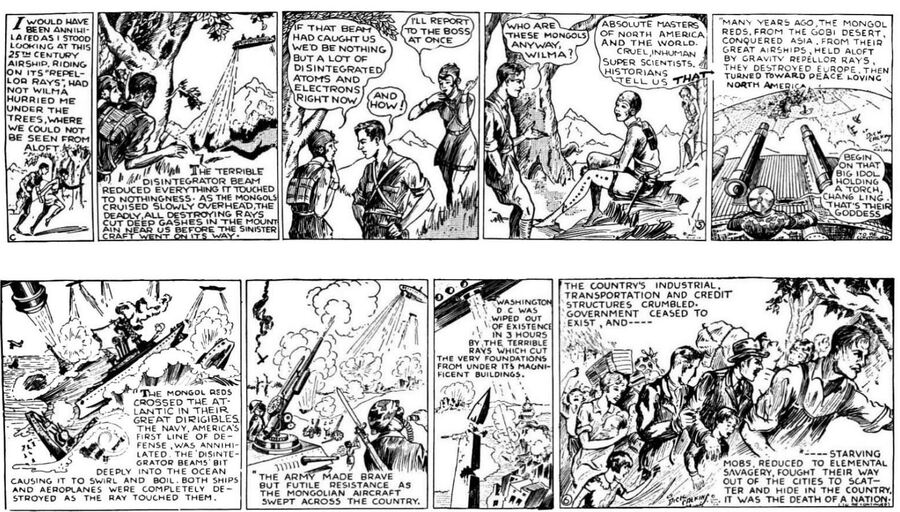
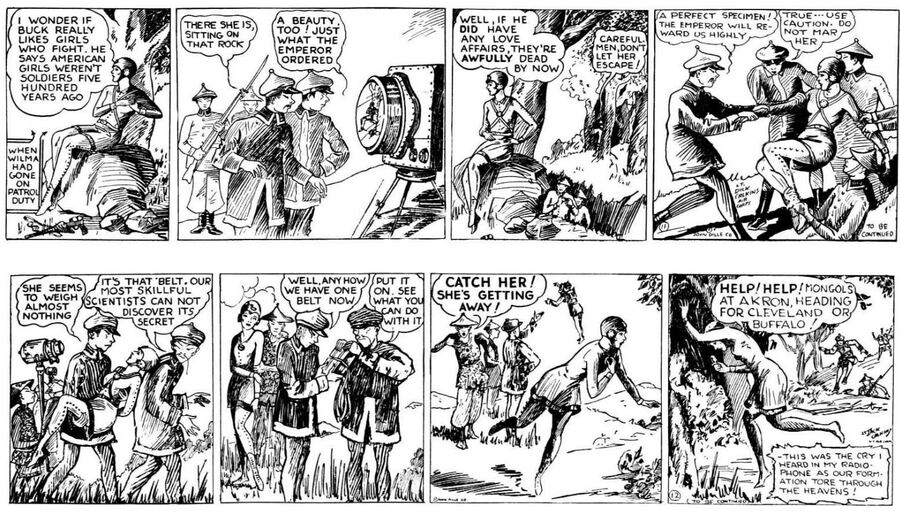
Philip Francis Nowlan, Dick Calkins. «Buck Rogers in the 25th Century A.D.» 1929
Philip Francis Nowlan, Dick Calkins. «Buck Rogers in the 25th Century A.D.» in The Evening Bulletin. 1929







