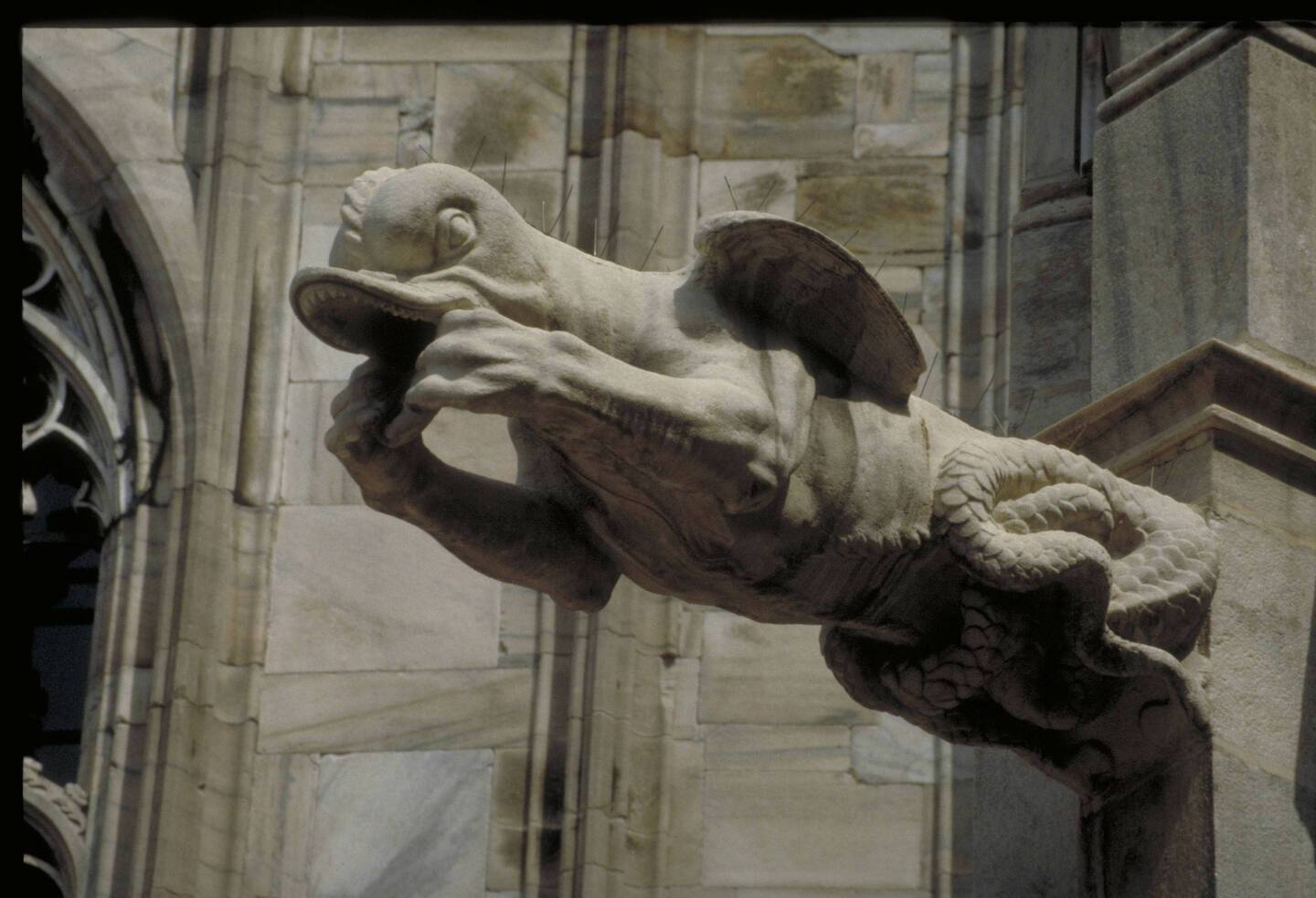
Зачем в церкви чудовища. Монстры на капителях, в рукописях и на фасадах храмов XI–XIV веков.
Why monsters in churches? Monstruous figures on capitals, in manuscripts, and on the facades of 11th–14th century temples.
When you enter a Romanesque church or look up at a Gothic cathedral, you expect to see Christ, saints, and angels. Instead, the capitals sport lions with human faces, grotesque creatures sit on the downspouts with tongues lolling out, and on the prayer book illustrations, rabbits fight snails. I became curious to understand why the era widely considered a time of profound faith so readily populated churches with monsters. The topic seems important to me because it disrupts the conventional image of the «dark» Middle Ages: the monster isn’t just a stonemason’s joke or a remnant of paganism; it is part of a complex system of meaning where fear, laughter, and theology coexist. Furthermore, this is a subject where the image speaks louder than the text—to answer the question, simply reading is not enough; one must examine it.
I am focusing on Western Europe from the 11th to the 14th centuries, primarily France, as well as Spain and England. The material is divided into three categories: Romanesque stone sculpture from churches, illuminated manuscripts and marginalia, and Gothic portals and rainwater spouts. I consider a monster to be a hybrid, demon, or fantastical creature not found in scripture but placed within a church or devotional context. I have excluded lions, eagles, and other animals with established symbolic meaning. The monuments were selected to ensure there are at least two comparable examples for each era and medium.
The work is structured as a path from dispute to resolution. It begins with Bernard Kleverosky’s objection, followed by the Romanesque, manuscript, and Gothic styles, culminating in a comparison of all three mediums.
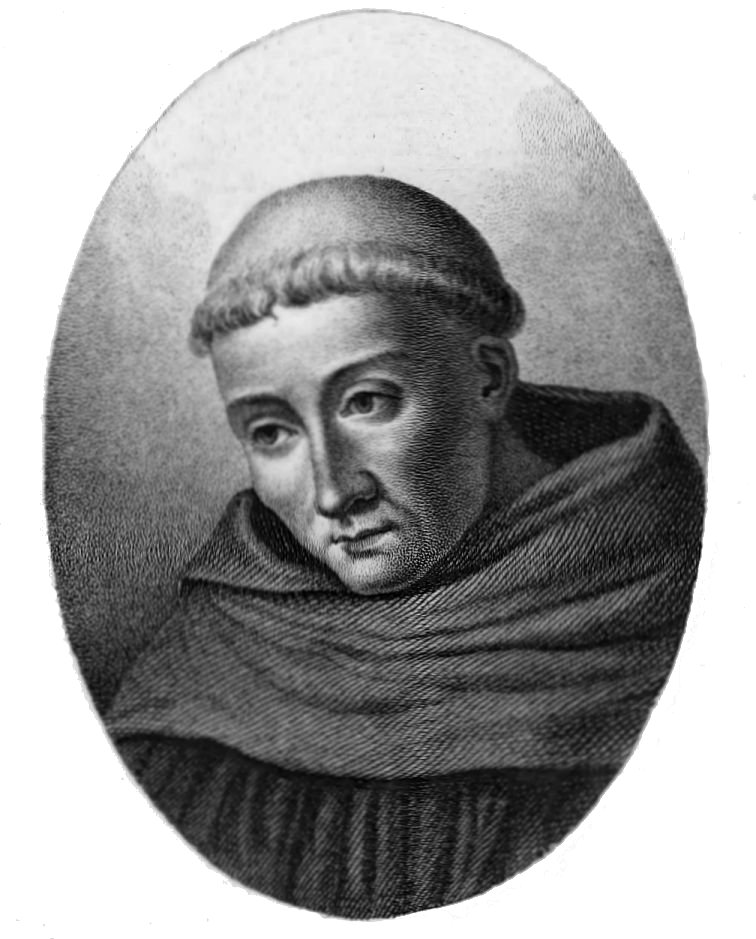
Bernard Clerwoods — From Alfred Wesley Wishart’s «A Brief History of Monks and Monasteries» (1865–1933).
Bernard Klervaux’s «Apology» serves as my primary textual evidence: it contains one of the earliest and most famous indictments of monsters in the monastery. Alongside it, I place texts that his contemporaries relied upon: Augustine’s work on why strange creatures enter God’s design, Isidore of Seville on the etymology of the word «monster,» Gregory the Great on images as a «book for the illiterate,» and the inscription of Abbot Suger. For interpretation, I draw upon the research of Yurgis Baltrušaitis, Emil Mall, and Michael Camille. They diverge: Mall sees monsters as a textbook, while Camille speaks of laughter and inverted order. I do not preselect a side; instead, I test these versions against specific images.
The key question is: why are there monsters in churches, and does their role change when transitioning from Romanesque to Gothic? My hypothesis is that the monster in the church functions as a boundary. It shows the viewer what lies outside the consecrated order, thereby making that order visible. In the Romanesque period, the monster stands near the viewer—on the capital—and acts almost physically. In the Gothic period, it moves to the exterior of the building and becomes a guardian, while humor and fantasy migrate to the margins of the manuscripts. I am testing this version in subsequent sections by comparing three mediums: the stone within the sanctuary, parchment, and the façade.
What is that funny monster, that strange ugly beauty and wonderful ugliness, being made in the classrooms, right before the eyes of the reading brothers? What is the point of the dirty monkeys, the savage lions, the monstrous centaurs, the half-men, the spotted tigers, the fighting warriors, the trumpeting hunters?
Artist unknown. Capital of the cloister of the Abbey of Saint-Pierre in Muasseque. Circa 1100.
Monsters in the church irritated contemporaries. It seems to us that fantastic beasts on capitals were the norm, given how numerous they were. However, as early as the 12th century, one of the Church’s most influential figures denounced them as an impediment to monks. This is an important fact for the entire study: if people complained about the monsters, it means they were not an invisible background. They were striking and had a strong impact on the viewer. Furthermore, this complaint was not about disbelief in demons, but about distraction—Bernard does not deny that the monstrosities are compelling; he fears that they are more persuasive than prayer.
It was in such cloisters, where monks walked and read, that stood the capitals which Bernard disliked so much.
They will sooner study the marble than the books, spending the entire day scrutinizing each piece in wonder, instead of contemplating divine law.
The debate surrounding monsters poses a central question for this entire project: why did the Church tolerate these beings in the first place? There are three main theories. The monster might have served as a cautionary teacher, showing what to fear. It could have offered protection by warding off evil. Alternatively, it might have simply been used for decoration and entertainment. Next, I will examine which of these theories holds up when confronted with the images themselves.
On the facades of Romanesque churches from the 10th to 11th centuries, the monster is at eye level. The column capital, the corbel under the cornice, the tympanum above the entrance—these are all places where the viewer encounters the carved marvel at two meters away. Here, the monsters are characters with whom humans face off directly. I begin with the most famous «hellish» portal, and then move on to smaller, almost mundane monsters. Simultaneously, I track exactly where each one is located within the building, because I believe the placement speaks to the function more than the image itself.
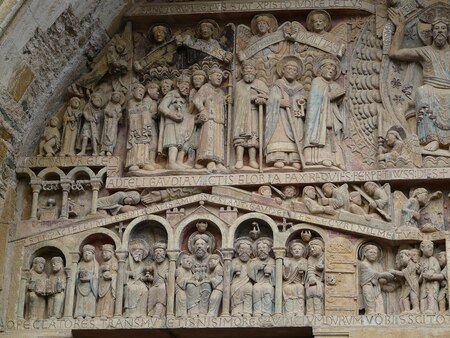
Artist unknown. Tympanum of the Last Judgment, Abbey of Saint-Ouen in Conques. c. 1130–1140.
In Conque, the tympanum is divided into tiers: on the right of Christ are the righteous, and on the left is hell, awaiting its time. The demons are depicted like minor officials of punishment—each busy with their own task. Importantly, the monsters do not disrupt the composition’s order but are integrated into it. The reader understands that hell possesses a hierarchy, meaning it is organized by God, not chaotic.
Artist unknown. Left tympanum of the Last Judgment (Hell), St. Fouay in Conques. c. 1130–1140.
This horror will frighten those held captive by earthly delusion.
Gislebertus. «Eve.» Fragment of the lintel from the northern portal of Saint-Lazare Cathedral in Autun. c. 1130. Musée Rolin, Autun.
For Giselle, the threat is shown by Eve, not the monster: the viewer sees themselves in her.
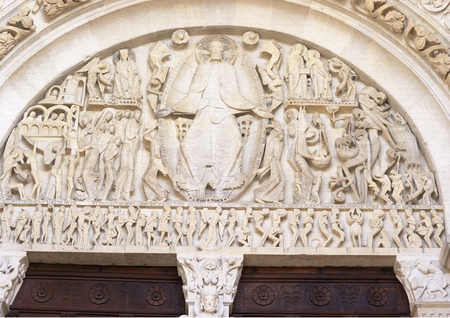
Gislebert and the Workshop. The Last Judgment, western portal of Saint-Lazare Cathedral in Autun. c. 1130–1145.
On the tympanum, demons and angels argue over the soul, and one of the demons pulls the scales down. It is satire, yet it carries theological meaning: the unclean deceives, which means that in the world, there are still rules being violated. The monster here represents order by attempting to deceive it. Next to the inscription on the tympanum, it is almost an open declaration—the monster is necessary to show what lies beyond the boundary.
Artist unknown. Capital of the nef of St. Mary Magdalene Basilica in Vezel. c. 1120–1135.
A capital at eye level is precisely the «sermon without words» that Bernard complained about.
Artist unknown. Cornice consoles of St. Mary and St. David’s Church in Kilpeck, Herefordshire: a monster with a snarling mouth in the center, a pair of birds on the left, and a bearded head on the right. c. 1140.
God, the creator of all, knows for Himself where and when to create or what has been created, and knows how beauty is composed from the likeness and difference of its parts.
Romanesque monsters inhabit three distinct observed spaces and perform three different actions. On the tympanum, they punish and thus educate. On the capitals, they frighten and command attention, as Bernard noted. On the external corbels, like in Kilpeak, they stand at the boundary between the temple and the world. Augustine gives this a theological foundation: the strange is also part of the design, because the beauty of the whole lies in its diversity. Thus, we have a working hypothesis—the monster in the Romanesque period is not «against» the Church, but rather part of its structure. It illustrates what lies beyond the boundary of the consecrated order.
Manuscripts: A Monster in the Margins
When monsters transition into the book, they change. In stone, they were large, static, and serious. On parchment, they become small, dynamic, and often humorous. It is the same range of imagery, but with a different tone. The book is read in solitude and up close, allowing the master to include jokes that might not be appropriate for a public facade. Therefore, manuscripts are particularly important for my hypothesis: they demonstrate that on the threshold, the monster is not necessarily frightening.