I. Concept II. Documentation, Archiving, and Parapraxis as Methods: II.I. Marcel Broodthaers' «Non-Art Museum» II.II. Documentary ASI II.III. Christiane Paul’s Autobiography III. Erik Jelezker’s Memorial Museum-Workshop IV. Conclusion V. Bibliography VI. Image Sources
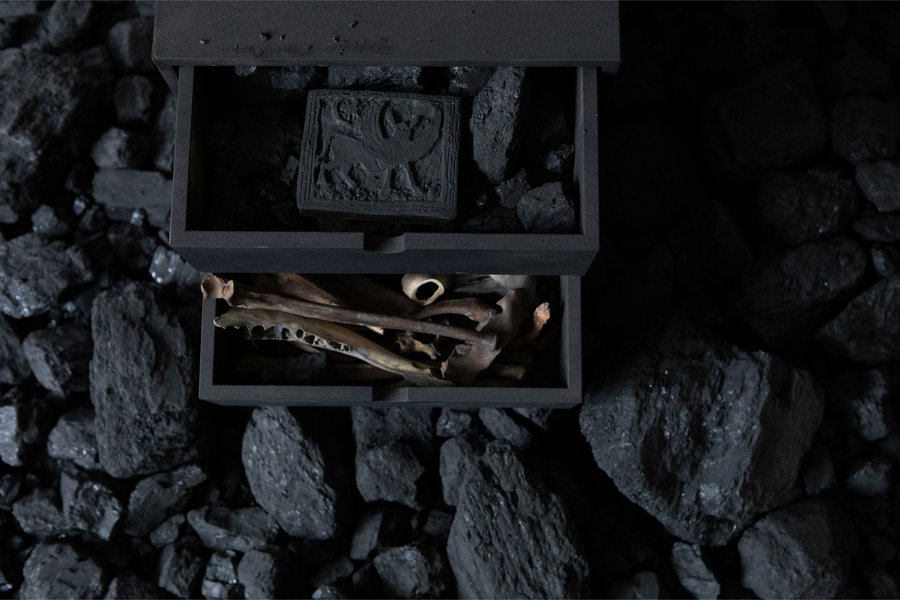
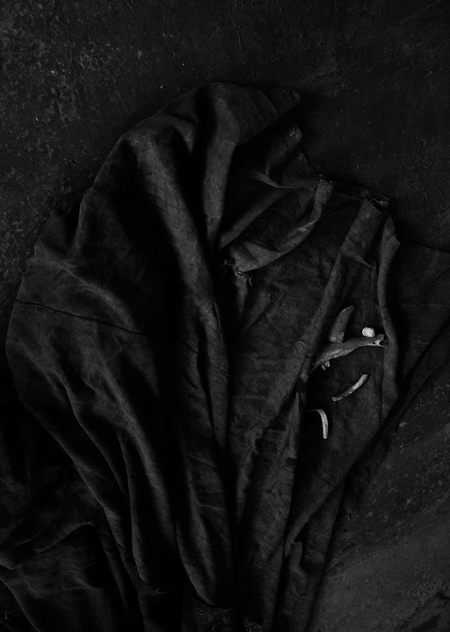
Eric Zhelezker Memorial Museum-Workshop, 2024. Photographs: Alisa Gil
I. Concept
The mechanisms of non-art museums and strategies for working with their collections are reflected within the walls of these institutions. From the second half of the 20th century onward, artists began engaging with the museum theme in its broadest sense, examining its structure, function, and role in discourses of decolonization, institutional critique, and the representation of memory.
This visual study examines how artists appropriate strategies for engaging with museum collections and archives to create fictional museum projects. What compels creators to turn to the format of an imagined institution? For what purpose, and how do they utilize the mechanisms and logic of the non-art museum in displaying works? These questions are key to understanding the subject matter.
This research examines how artists utilize the logic of working with archives from memorial institutions, ethnographic collections, and apartment museums. Special attention is given to projects that engage with fictional archives, falsified documentation, and parafiction.
The visual component of the research consists of photographs from exhibitions and projects realized by Marcel Broders, the Singular Research Agency, Christian Boltanski, and Erik Jezler. The narrative structure is organized as follows: using the work of the first three artists as a case study, we examine the isolated application of strategies for working with non-art museum collections. Erik Jezler’s recently completed project serves as a culmination, incorporating the largest number of mechanics and methods for interacting with the space of a fictional museum, synthesizing all notable elements from the preceding artists while adding the creator’s drive toward necrosurrealism.
The research engages with the critiques of Boris Groys, as a theorist of museification, and with texts written by the artists under consideration and the curators of their exhibitions, identifying common ideas and classifying motives and methods of interaction with the museum.
«After the death of God, the museum remains the only place for an afterlife transistorical encounter.» Boris Groys [1]
Boris Groys argues that museums isolate objects, transforming them from living elements of contemporary culture into historical documentation. This very quality is utilized by the creators of fictitious museums—"dead» spaces filled with artifacts that challenge the boundary between the present and the past, fact and fiction.
The hypothesis emerges that the museum, as an institution, becomes a platform for reflecting on the boundaries between fiction and reality. Contemporary artists employ fictional museification to question the relevance and viability of the museum, to challenge its authority and authoritarianism, and also its subjective role in constructing narratives of the past. Some authors, such as Eric Železker, use the context of the death of culture placed within the museum space to forge their own mythology. Others, like Marcel Broodthaers, emphasize the inevitable automatic sacralization of the museum collection’s «dead» objects and the uniformity of this mechanism across institutions of different collection types.
Erik Zhelezker Memorial Museum-Workshop, 2024. Photography: Alisa Gil
II. Documentation, Archiving, and Paraphyletic Methods:
As a fictitious, (self-)organized museum that operates as an autonomous exhibition space, its qualities are emphasized. The artists create a space of reality deliberately removed from its context, questioning the boundaries between the fictional and the real. To achieve this, they employ various methods, such as documentation and archiving. These approaches stem from strategies used within non-art museums. Speaking of fictional museums, artists also resort to paraphyction, falsifying both documentation and archives.
II.I. Marcel Broodthaer’s «Non-Art Museum»
Marcel Broders, Musée d’Art Moderne, Département des Aigles, Folkloric Section/Cabinet of Curiosities, 1970
Discussing history means constructing past facts; therefore, museums gravitate toward the right to absolute truth and authenticity, becoming instruments of power. Marcel Brotz, one of the proponents of institutional critique, emphasizes precisely this ability of museums to shape cultural memory.
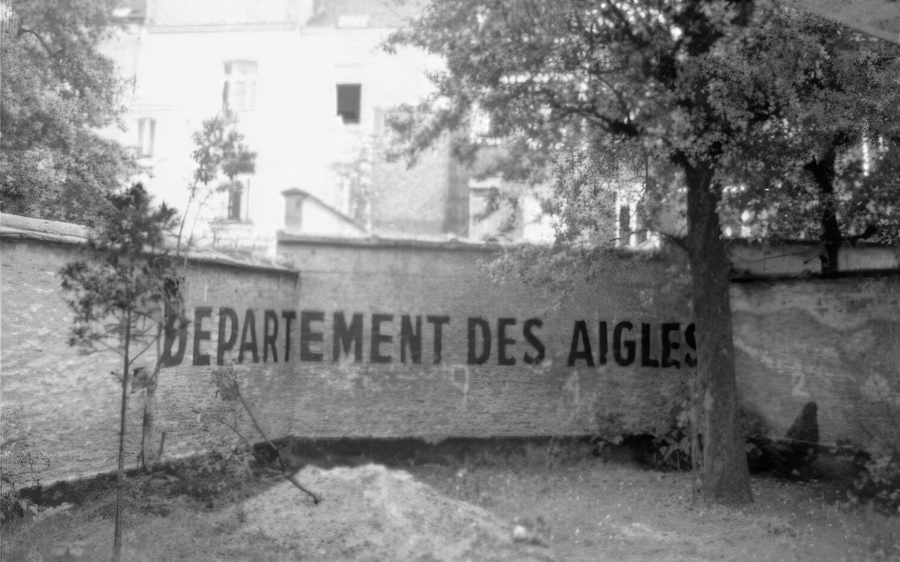
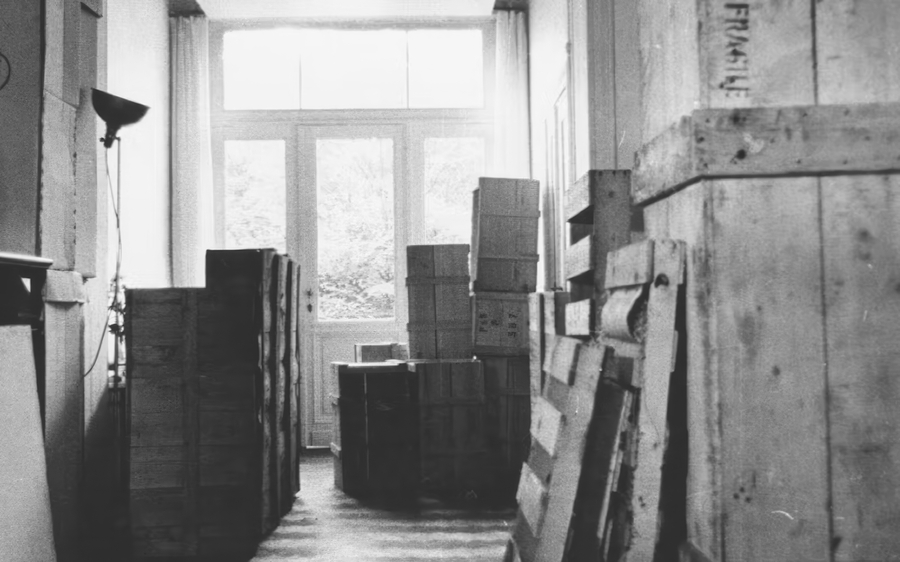
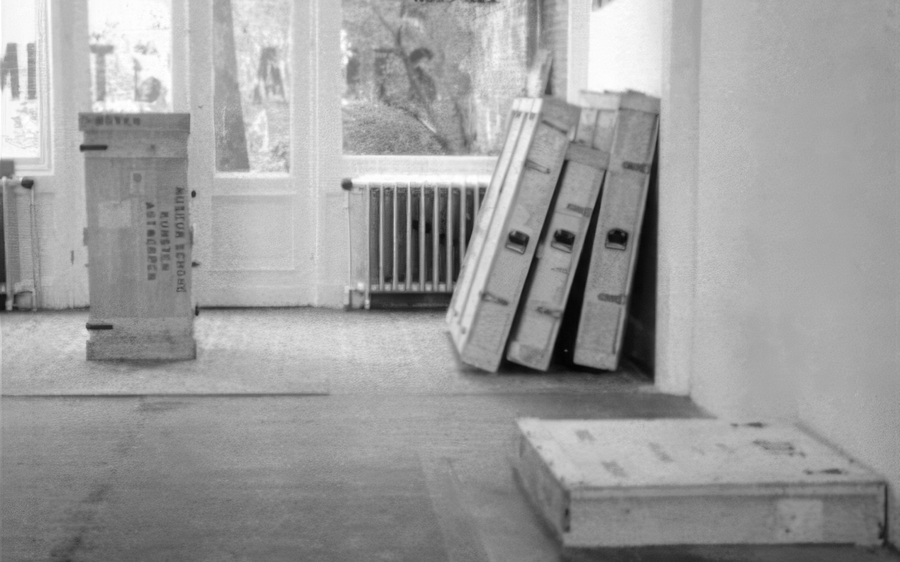
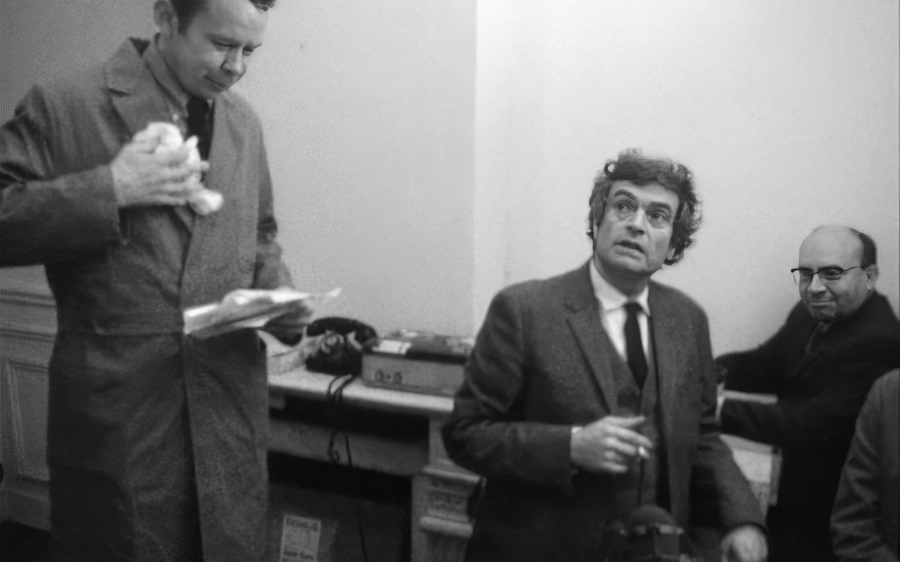
Marcel Broders, Musée d’Art Moderne, Department of Eagles, Folklore Section/Cabinet of Curiosities, 1970
Brothers creates a fictitious museum in his apartment and assumes the role of its director. The apartment exhibition gives birth to the project «Museum of Contemporary Art, The Eagles Department, ” which would later be presented multiple times in various art museums. However, the exhibition always borrows the form of an ethnographic, scientific, historical, or military museum.
«The Museum of Contemporary Art, Owl Division”—“this fabrication, this mess was connected to the political events of 1968, meaning a type of political event common to all countries.» [2]
Philippe De Gobert, reconstruction of Marcel Broodthaers' work, Musée d’Art Moderne, 2011
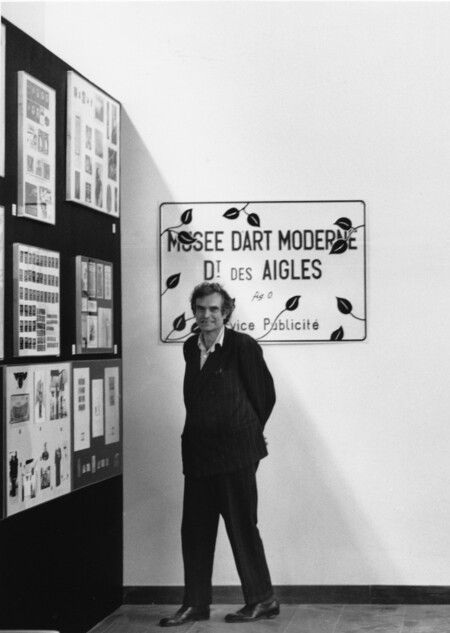
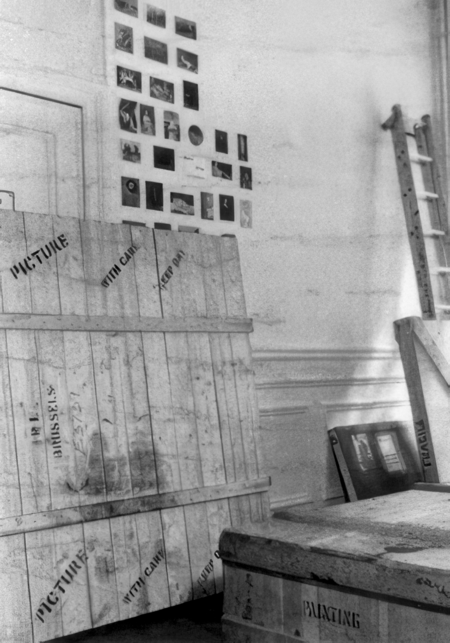
Marcel Broders, Musée d’Art Moderne, Département des Aigles, Publicité Section, 1972 / Marcel Broders, Musée d’Art Moderne, Département des Aigles, 1968
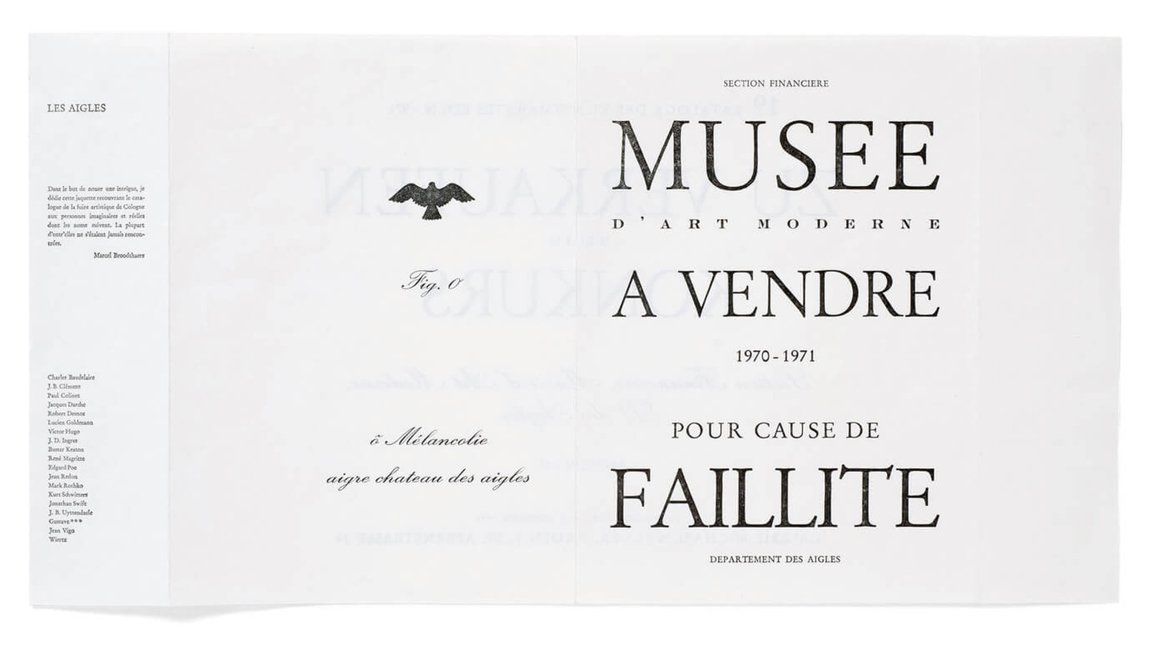
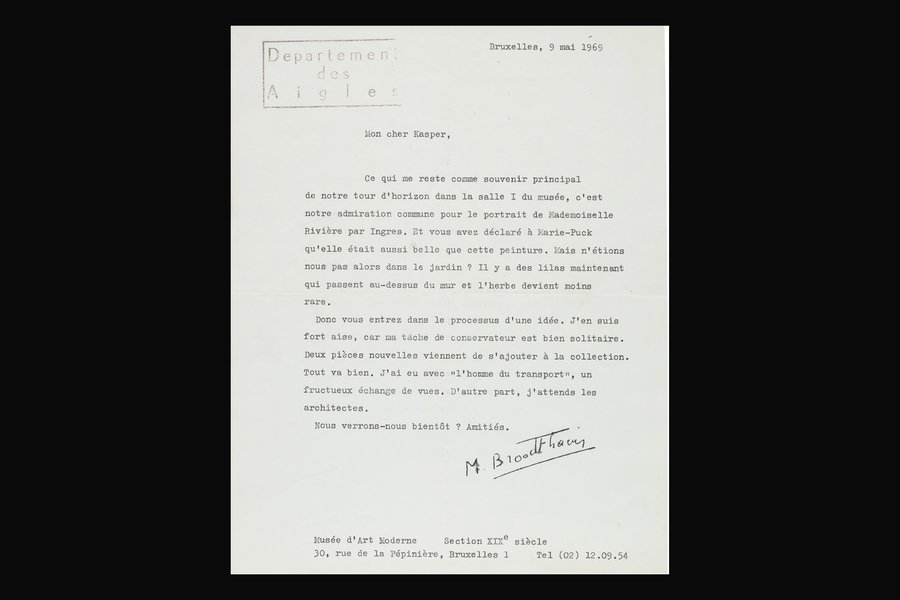
Marcel Broodthaers, «Untitled, ” 1969 / Marcel Broodthaers Exhibition Catalogue, Musée d’Art Moderne de Paris, sold due to bankruptcy (1971), 1975
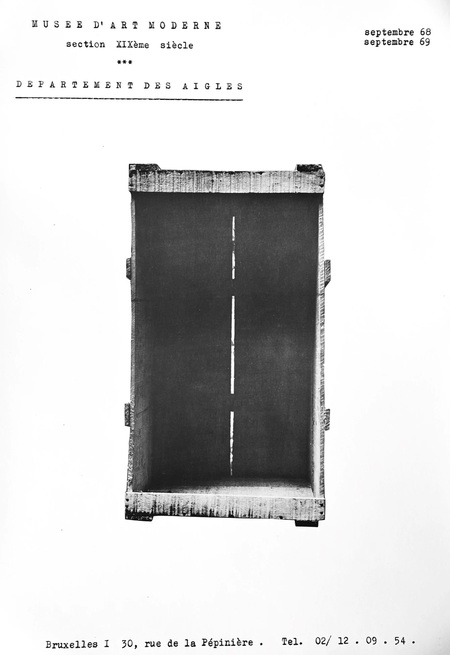
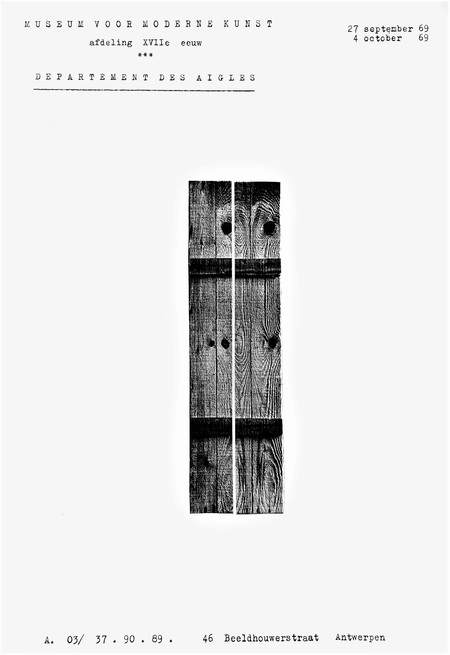
Documentation of the Marcel Broodthaers exhibition, Musée d’Art Moderne, Département des Aigles, 1968
Exhibition Documentation of Marcel Broodthaers at the Musée d’Art Moderne, Département des Aigles, 1968
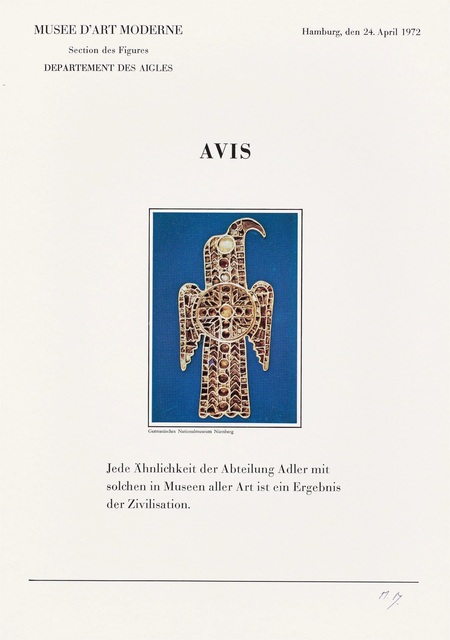
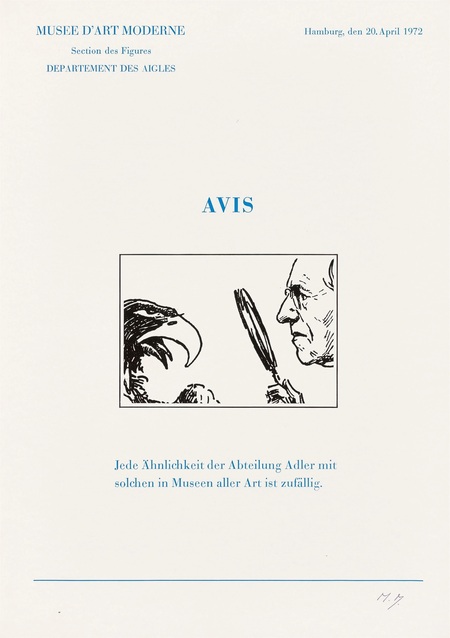
Exhibition documentation of Marcel Broodthaers at Musée d’Art Moderne, Department of Eagles, 1972
Eagles, as a symbol of any statehood, assuming the role of director to seize absolute authority from the museum to dictate cultural discourse, and extreme attention to creating museum documentation—all these moves are aimed at creating a plausible fictional museum.
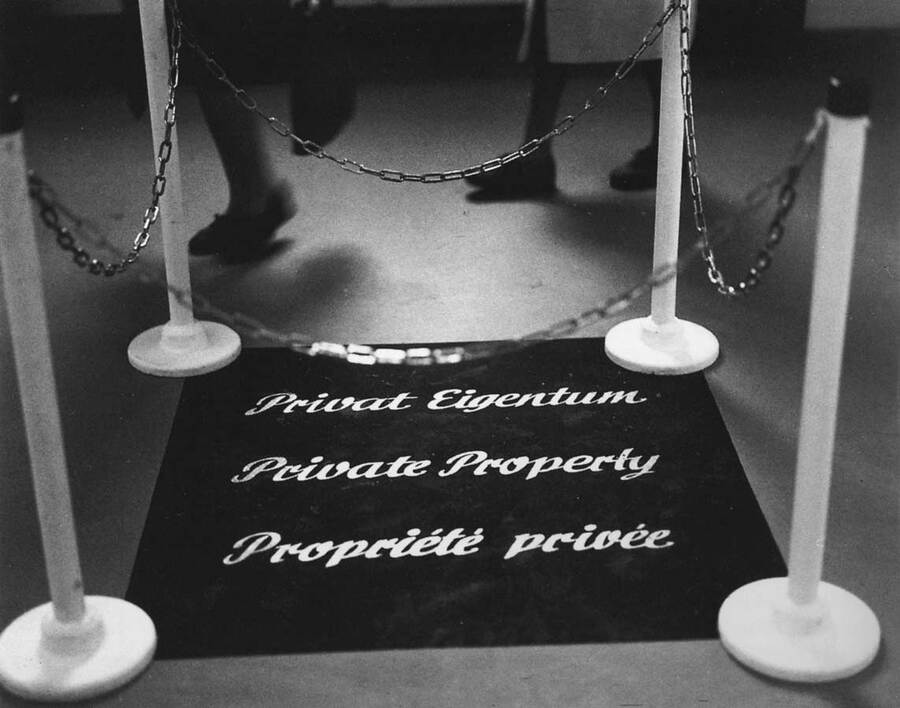
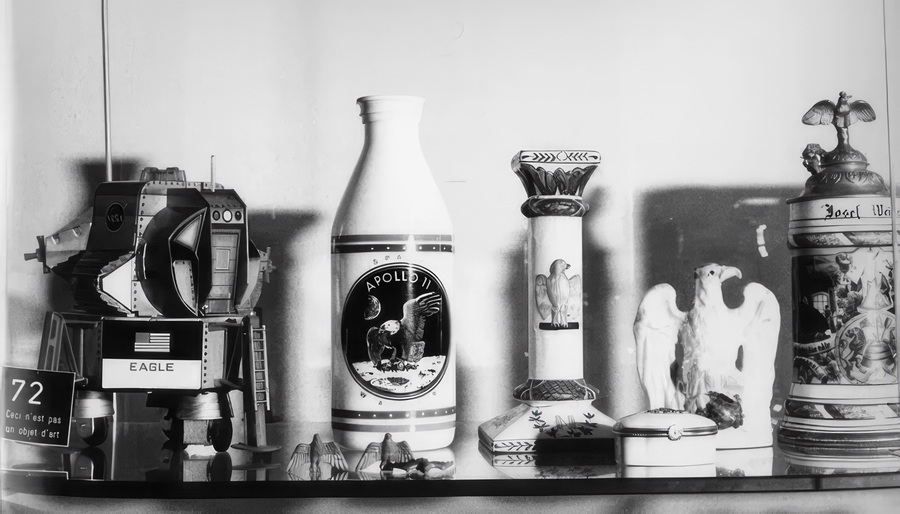
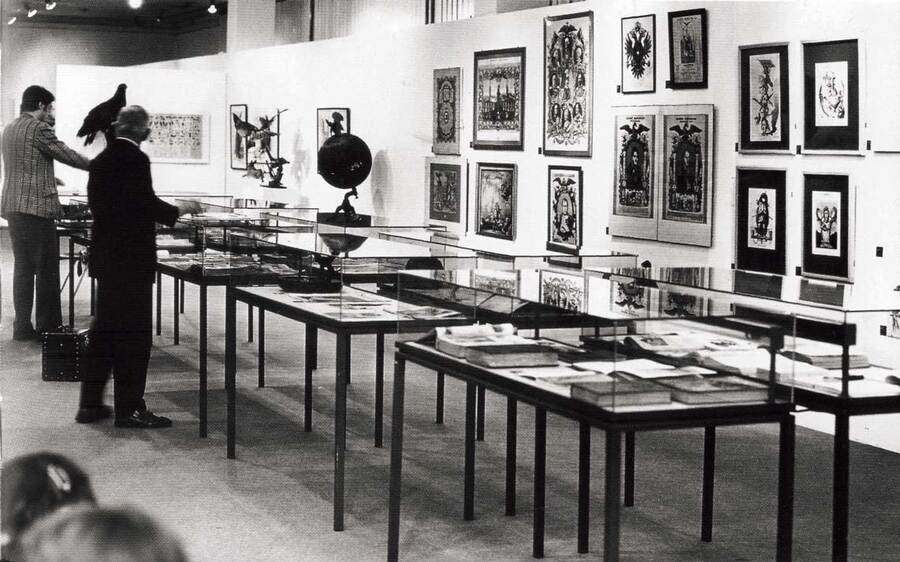
Marcel Brotars, Musée d’Art Moderne, Department of Eagles, 1968
Documentarity is Brotars' method. It is no accident that for the very first exhibition, the project’s exhibits remained in boxes—what exactly fills the fictitious museum collection is not as important as how the viewer perceives the artist and their firm stance on the discourse of Belgian art independence in the 1960s and 70s.
II.II. Documentary ASI
The Singularity Research Agency was founded by Anna Titova and Stanislav Shuripa, who refer to themselves as the agency’s «staff» in their manifesto [3]. The project deconstructs museum science and scholarly activity through pseudo-archives and pseudo-research, recreating the mechanisms of how museums operate. The boundaries of documentary evidence are questioned, and the artists present themselves as «serious» academics.
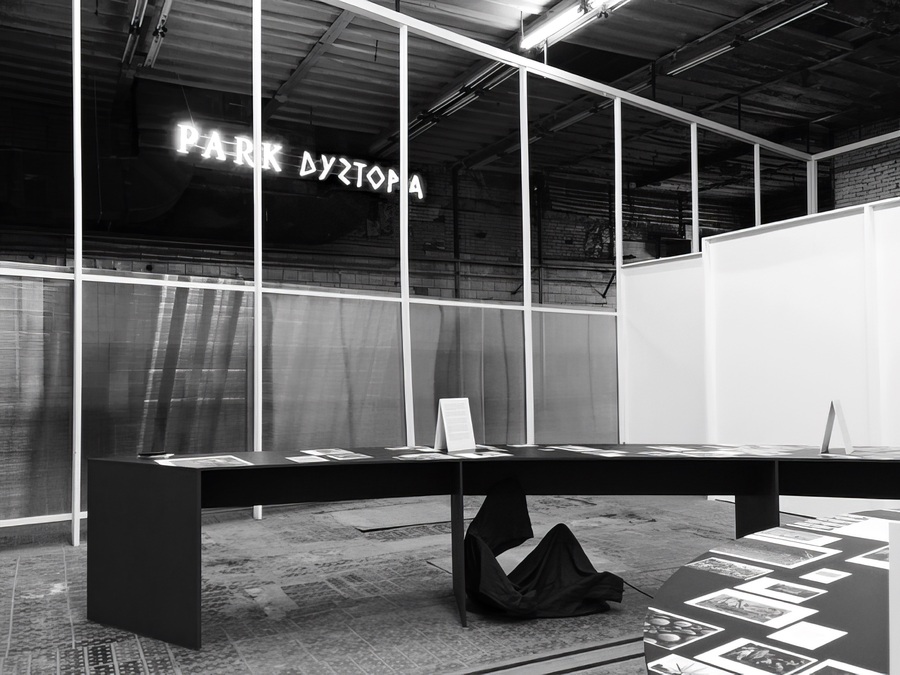
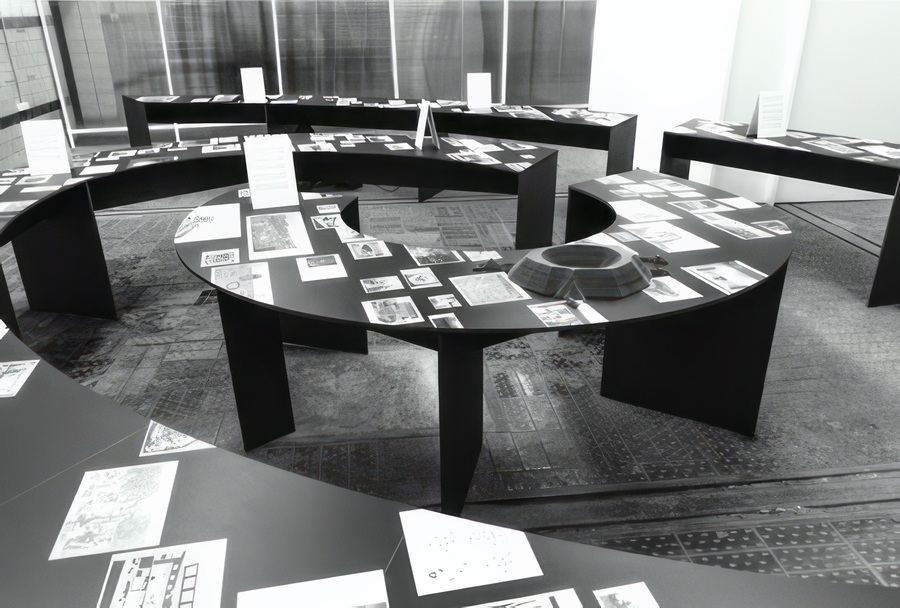
Singularity Research Agency, «Dystopia Park,» 2015
«The 'gray zone' of communication extends between fact and fiction, consuming cultural subsystems. In it, everything is reversible and interchangeable; the unique arises from the typical and cliché, and the universal—from the nonsensical.» «Document1», ASI [3]