Categories
1. Concept
2. Objective
3. Chapter 1. The Ancient World: Adornment as a Symbol of Power, Status, and Divine Patronage
4. Chapter 2. Early Middle Ages: Adornment as an Amulet and a Symbol of Faith
5. Chapter 3. High Middle Ages: Christian Symbolism and the Ideal of Femininity
6. Chapter 4. Late Middle Ages: Adornment as a Reflection of Social Status and Courtly Culture
7. Chapter 5. The Symbolic Language of Women’s Adornments.
8. Chapter 6. Women’s Adornments in Art: From Sacred Image to Earthly Beauty
9. Conclusion
10. Bibliography
11. Image Sources
Concept
The focus of this visual study is the symbolism of women’s jewelry in the art of the Ancient World and the Middle Ages. Primary attention is dedicated to how the meaning of adornments shifted across the visual culture of various eras and civilizations, and how they were used to convey concepts of femininity, beauty, power, social status, and spirituality.
Throughout history, jewelry was never solely an accessory to a woman’s appearance. It could function as an amulet, denote belonging to a specific social group, reflect marital status, or display material wealth. In some cultures, adornments were linked to religious beliefs and concepts of protection from higher powers. Therefore, jewelry can be viewed as a distinct visual language that helped convey information about a person without words.This study covers several historical periods: Ancient Egypt, Ancient Greece, Ancient Rome, Byzantium, and the early, High, and Late Middle Ages. This segmentation allows us to trace how the materials, forms, and symbolic meanings of jewelry evolved according to cultural and historical contexts. For instance, in Ancient Egypt, amulets and sacred symbols were associated with protection and the afterlife; in Ancient Greece, jewelry emphasized harmony and beauty; and in Rome, it increasingly became an indicator of affluence and social standing. In the Middle Ages, the spread of Christianity profoundly influenced the meaning of jewelry—it began to associate with faith, spirituality, and the image of the Mother of God.
The work examines two primary areas of symbolism. The first relates to a woman’s social standing: wealth, lineage, marriage, and belonging to a specific class. The second relates to the spiritual and religious significance of adornment: protection, faith, sanctity, and concepts of eternal life.
The visual component of the research is built upon the analysis of museum artifacts, paintings, and depictions of female figures. Special attention is paid to the form of ornaments, materials, patterns, and how they are presented within the artworks. This approach allows us to see that even a small detail of a costume could have held significant meaning for understanding the image of the woman and the culture of a particular era.
Objective
To study the symbolism of women’s jewelry in the art of the Ancient and Medieval worlds, to trace the evolution of its meaning, and to determine how adornments reflected concepts of a woman’s beauty, power, social standing, and spirituality.
Chapter 1. The Ancient World: Ornamentation as a Symbol of Power, Status, and Divine Patronage
Ancient Egypt
In Ancient Egypt, jewelry was not only an element of a woman’s appearance but also held deep symbolic meaning. It was believed that certain objects could protect a person from evil spirits, illness, and misfortune. For this reason, jewelry frequently featured images of sacred animals, gods, and various symbols. For instance, the scarab was associated with rebirth and eternal life, while the Eye of Udjat was considered a symbol of protection and healing.
broad Egyptian necklace
Udjat Eye Amulet
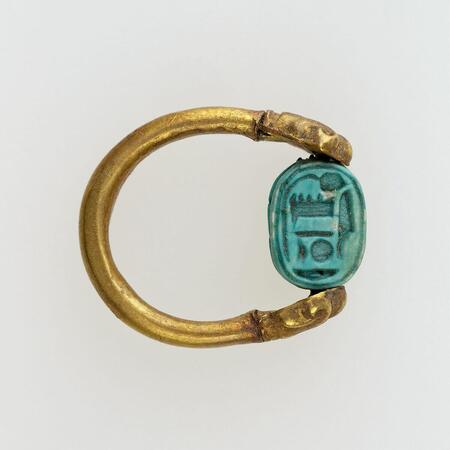
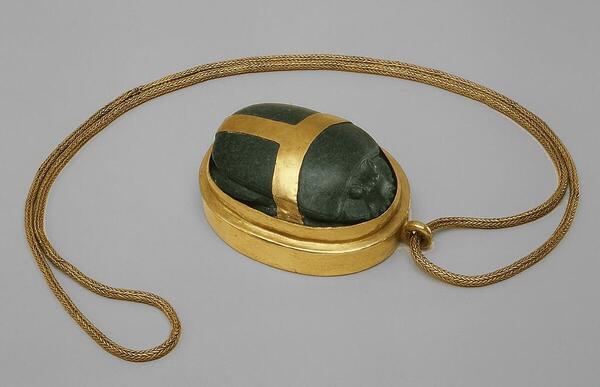
scarabs
Necklaces, bracelets, rings, and amulets held a special place. They were crafted from gold, colored glass, stones, and faience. The materials and intricacy of the adornments could indicate a woman’s social standing. Thus, the jewelry simultaneously served decorative, protective, and social functions.
Ancient Greece
In Ancient Greece, jewelry was closely connected to the concepts of beauty, harmony, and femininity. Unlike Egyptian artifacts, which often featured pronounced sacred symbolism, Greek jewelry was distinguished by the grace of its forms and meticulous attention to detail. It emphasized the natural beauty of the individual and complemented the woman’s image.
The Golden Diadem from Maditos
gold earrings with pendants
gold necklace with bead-shaped pendants
Popular items included earrings, necklaces, bracelets, and diadems. The ornamentation featured vegetal motifs, depictions of animals, and mythological figures. Some jewelry held religious significance and was used during rites or as offerings to the gods. Their shape and decoration reflected the Greeks' conception of beauty as harmony and proportion. During the Hellenistic period, jewelry became particularly intricate—artisans created diadems, pendants, earrings, and rings with finely detailed craftsmanship.
Ancient Rome
In Ancient Rome, jewelry gradually became an important way to display wealth and social status. One could judge a family’s prosperity and a woman’s standing by the precious metals, the quantity of stones, and the complexity of the craftsmanship. Goldwork, pearls, and gemstones were particularly valued.
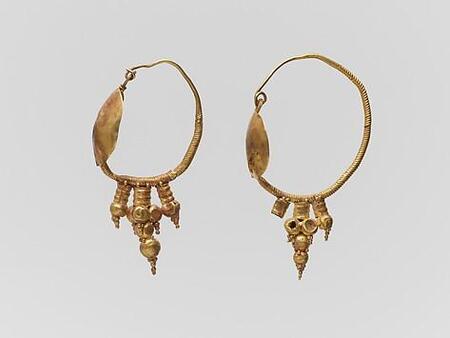
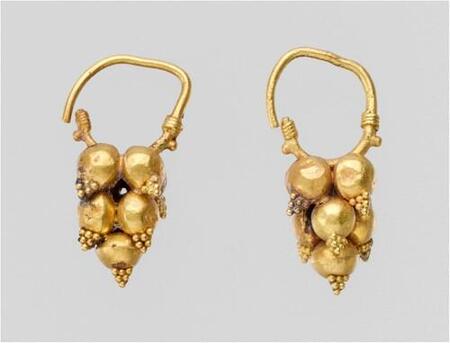
римские золотые серьги
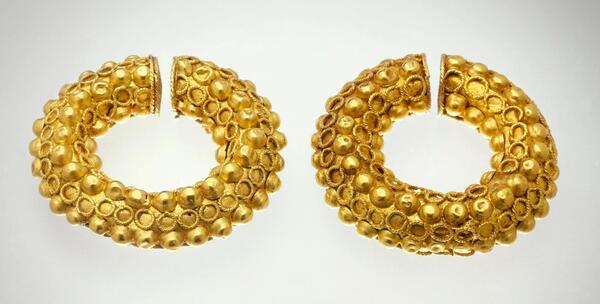
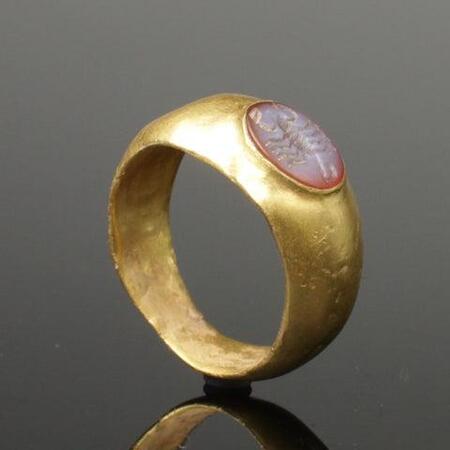
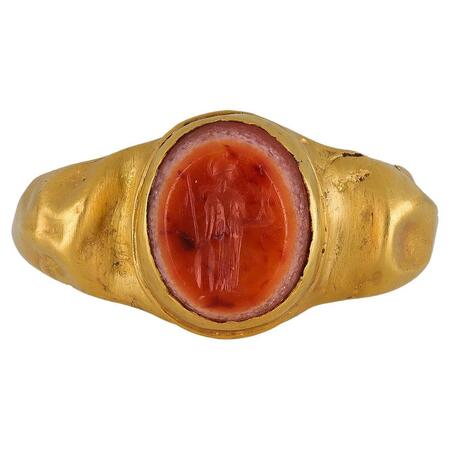
ring with a gemstone
Jewelry was also connected to marital status and social traditions. Rings could signify marriage or membership in a specific social group, while earrings, bracelets, and necklaces became part of everyday and festive attire. In Roman society, a woman’s appearance was often perceived as a reflection of her entire family’s standing.
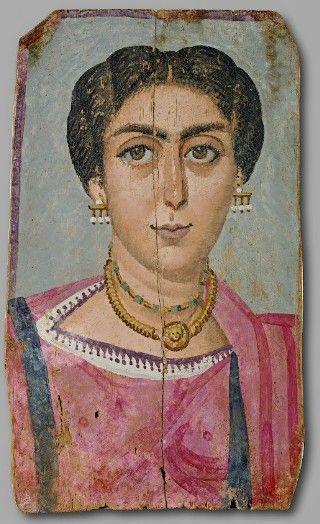
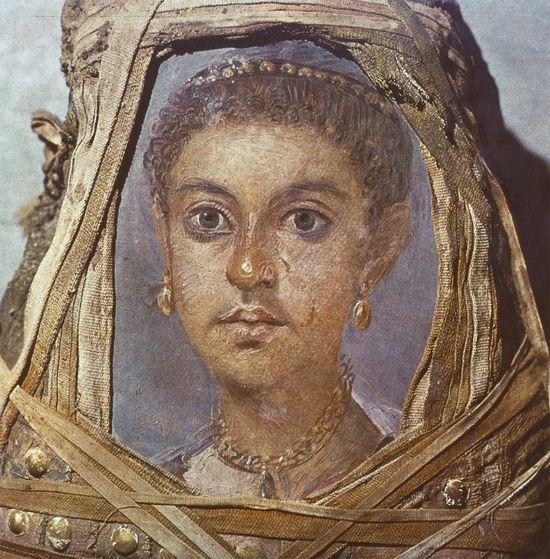
female Roman portraits
Chapter 2. Early Middle Ages: Adornment as Amulet and Symbol of Faith