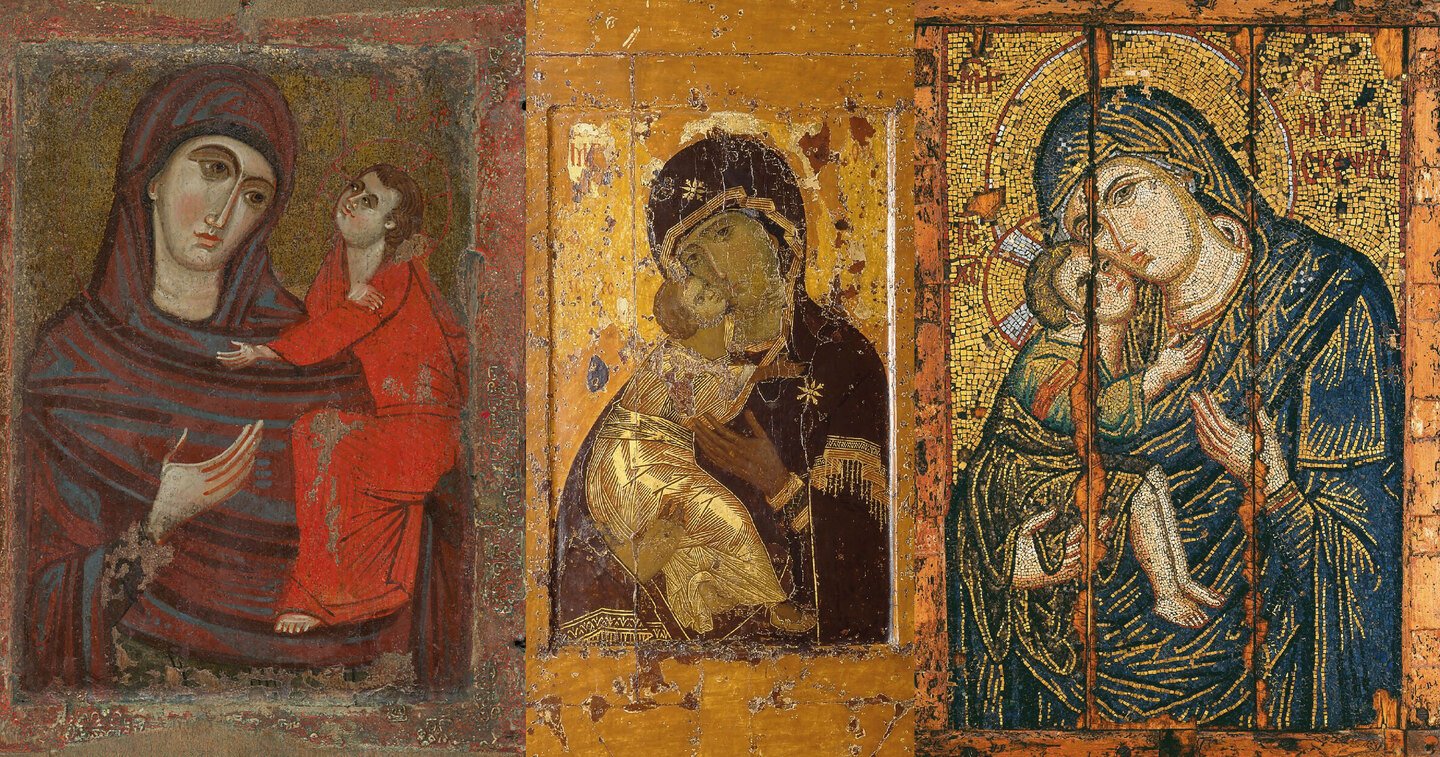
1. TOPIC
«Touch as the Language of Motherhood: The Image of the Mother of God and the Infant in Byzantine Iconography of the 11th–13th Centuries.»
2. CONCEPT
For my visual research, I chose the theme: «Touch as the Language of Motherhood: The Image of the Theotokos and the Infant in Byzantine Iconography of the 11th–13th Centuries.» I became interested in how maternal love for one’s child was expressed through touch, gestures, physical contact, and nonverbal communication. Particularly important to me is examining the image of the Theotokos not only as a religious symbol but also as the portrait of a loving mother.
First, the image of the Theotokos (Mother of God) with the infant holds a special place in Byzantine iconography. The most intriguing detail to examine is how artists managed to convey love despite the strict iconographic rules. Portraying the relationship between a mother and child is quite challenging, as it is the highest emotion in the world, but achieving this without losing its spiritual significance, while operating within certain constraints, is a truly masterful feat.
Secondly, I would like to focus specific attention on touch and body language. Through these physical gestures, the viewer can perceive the mother’s relationship with her child: whether she presses the child to her chest, holds them in her arms, embraces them, or presents them majestically to society. This is best analyzed within Byzantine iconography. Physical contact is fundamental to the relationship between mother and child, which is why I will be paying particular attention to the positioning of the Theotokos’s hands, the contact between faces, the direction of the bodies toward each other, and the tilt of the head.
Thirdly, in my work, I plan to compare two distinct iconographic types—Hodigitria and Eleousa. In Hodigitria, the Theotokos places much greater emphasis on physical contact. The Mother holds the infant in her arms and gestures toward him with her hand. Such gestures are perceived primarily as a sign of patronage, protection, and security. In Eleousa images, the Theotokos places greater importance on emotional intimacy. We see the mother and child pressing their faces close together and the mother leaning toward the child. In this interaction, we perceive more tenderness and sensuality.
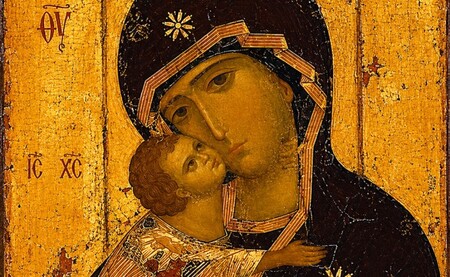
Fourth, a particularly compelling aspect of my research is the expression on the Virgin Mary’s face, which conveys fear, anxiety, and concern regarding her child Christ’s ultimate mission. I will pay special attention to this detail when examining the Vladimir Icon, where tenderness, love, and softness merge with a contemplative and focused gaze.
Thus, within the scope of my visual research, I am addressing Byzantine iconography from the 11th–13th centuries, focusing primarily on works from the 13th century. The main goal is to illustrate how touch becomes a distinct language of motherhood. Through the analysis of gestures, embraces, gazes, physical proximity, nonverbal language, and any other form of interaction, I aim to reveal precisely how artists depicted the Virgin Mary with a child. A key aspect of my work is the analysis of how creators conveyed such relatable human emotions within strict religious canons.
3. MAIN SECTION
3.1. The Theotokos of the Hodigitria. Constantinople, second half of the 10th century.
Theotokos Hodegetria. Constantinople, second half of the 10th century
Icon type: triptych icon. Material: ivory. At the center of the icon is the Mother of God with the Christ Child, flanked by figures of saints. Technique: bas-relief carving.
I selected this work to examine the earliest period of iconography. The composition maintains an extremely strict and controlled style. Physical contact and emotional connection are depicted with utmost fidelity. Looking at this piece, we sense stability, restraint, and steadfastness. This work exceptionally portrays Mary’s role as a mother. She supports the infant, Christ [1].
3.2. Icon of the Mother of God with Child. Egypt, 13th Century.
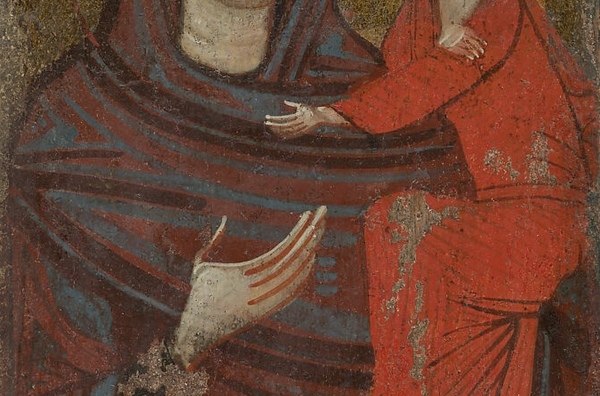
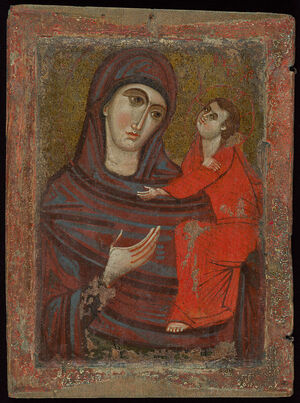
Icon of the Virgin and Child, Hodigitria type. 13th century. Egypt.
Vertical icon from the 13th century. Execution technique: tempera. Material: wooden board. Color: golden background framed by a red decorative border.
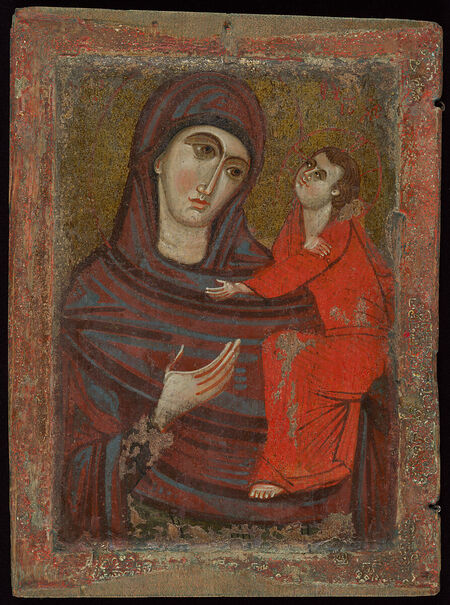
In this icon, I am drawn to the sense of maternal tenderness and awe. The Theotokos holds her child very carefully, pointing to him with her hand. The child, in turn, responds and reaches toward her. The connection is revealed through the positioning of their hands and their calm gazes. Their faces are slightly distant, yet there is no feeling of coldness or detachment. This beautifully illustrates the concept that Mary cares for her son—who is simultaneously Christ—whose fate is intertwined with future suffering [2].
3.3. The Virgin Hodegetria. Cypriot workshop, early 13th century.
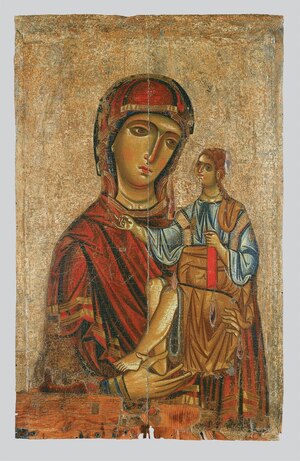
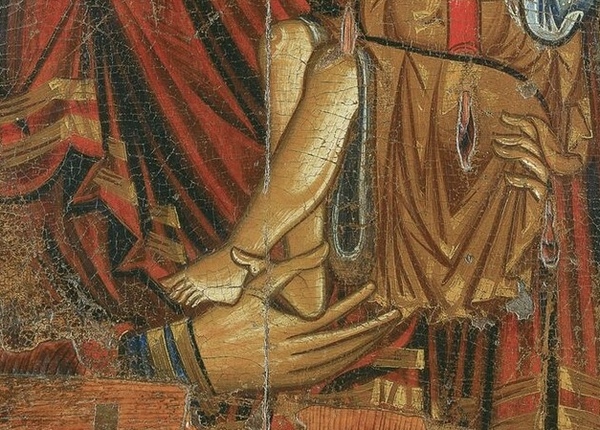
The Virgin Hodegetria. Cypriot workshop, early 13th century.
13th-century vertical icon. Wooden panel. Technique: tempera. Composition: golden background, figures highlighted with a strong contour. Colors: red, blue, ochre tones.
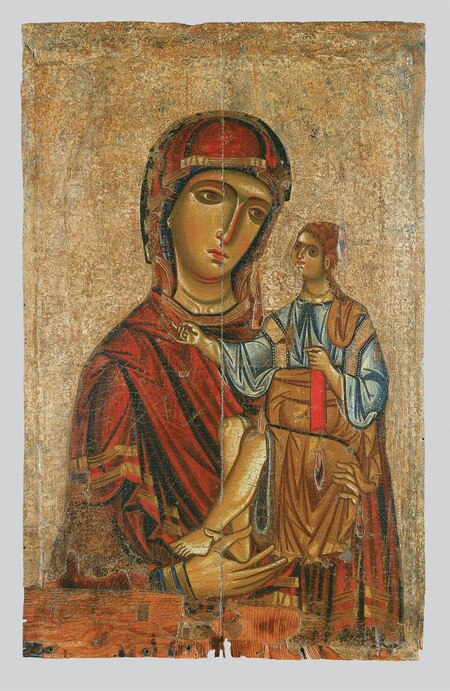
In this icon, I am particularly struck by the confidence and serenity with which the Mother of God holds the child. A sense of strength and support is beautifully conveyed here. The infant is depicted with remarkable stability—its posture is completely vertical. Furthermore, the vivid golden and ochre tones create a very solemn impression. Mary seems to present her son—Christ. The touches in this work can be characterized by words such as calmness, support, trust, and restraint [3].
3.4. Vladimir Icon. Early 12th Century — a comparative example.
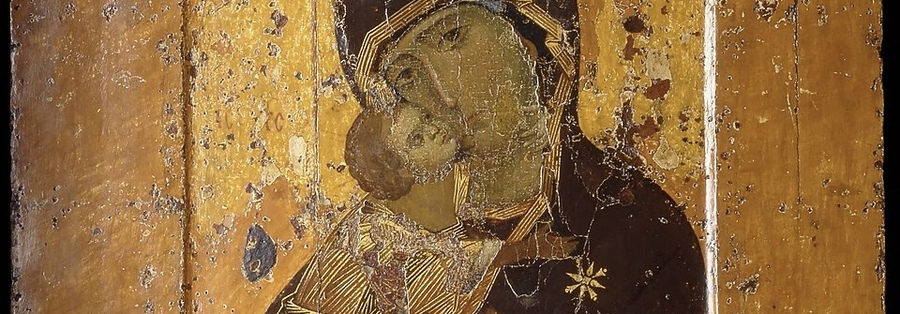
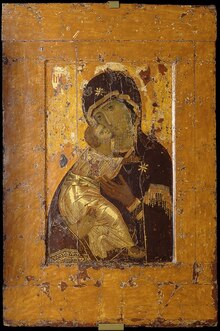
Vladimir Icon of the Mother of God. First half of the 12th century.
Vertical icon from the first half of the 12th century. Executed in tempera on a wooden board on a gold ground. Type—Eleousa. The surface is particularly damaged with cracks and abrasions.
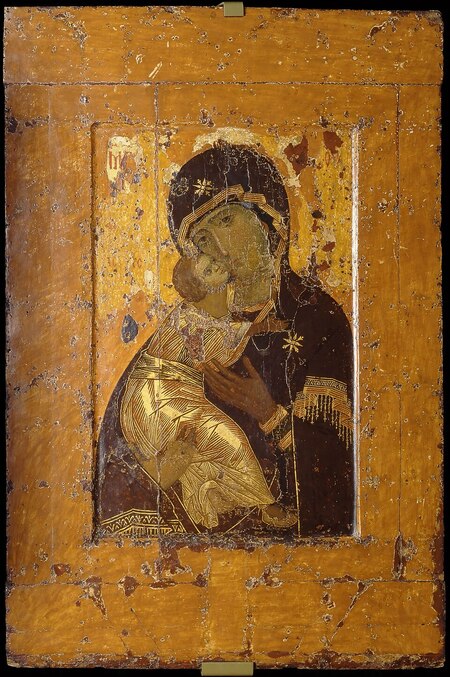
I specifically chose the Vladimir Icon for comparison because it dates from an earlier period, yet it excellently helps reveal the expressive capabilities of the Eleousa type. This icon is the most tender, sensual, and devotional of all the previous ones. The Mother of God and the infant press their cheeks together—in this gesture, the strong bond between mother and child is evident. If you look at their hands, they touch one another: gently and lovingly. The figures literally merge into one, creating an emotional unity. However, the Mother of God’s gaze is filled with sorrow, which allows one to discern deeper meaning. Maternal love merges with the premonition of Christ’s future suffering [4].
3.5. Mosaic Icon of the Mother of God Glykophilousa (Eclipsis). Late 13th century.
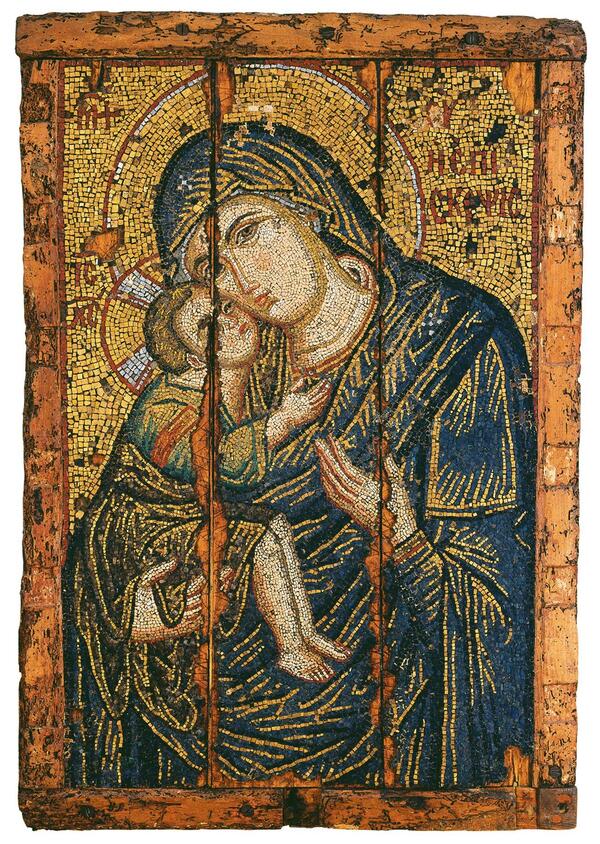
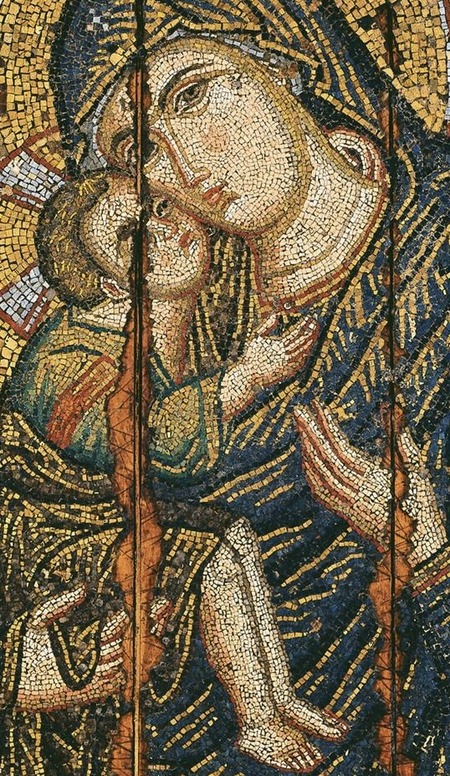
The Mother of God Glycophilus (Episkepsis). Late 13th century.
Icon from the late 13th century. Technique: micro-mosaic. Wooden base and wooden frame. The composition consists of small, colored, and gilded tesserae. Colors: blue, gold, ochre.