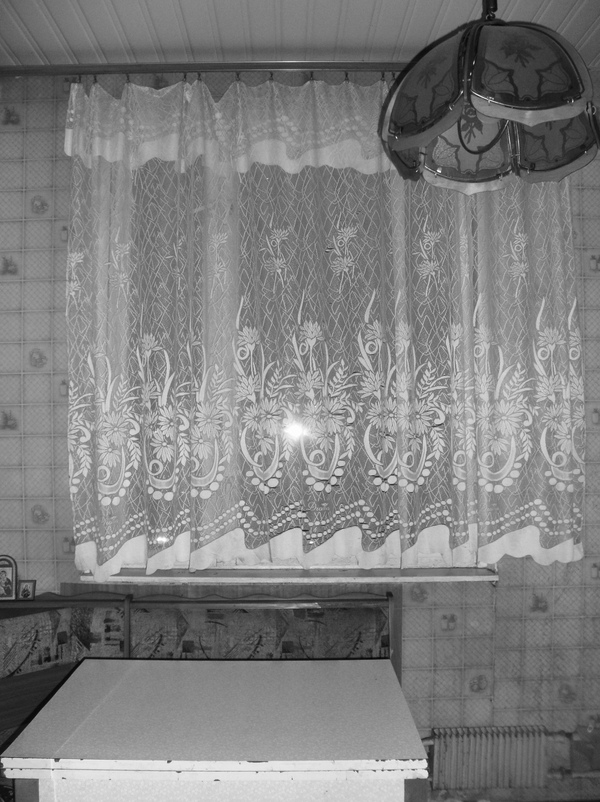
Living space is typically conceived as a sanctuary—a place of solitude and repose, protected from the outside world. However, acoustically, an apartment never exists in isolation. Sounds penetrate it through walls, ceilings, windows, ventilation shafts, and other building structures, carrying noise from neighboring units, the street, and the building’s utility systems. Day-to-day life is therefore shared, not just physically, but aurally as well. Sounds that one person perceives as a normal byproduct of life can become a source of irritation, anxiety, or a feeling of invasion into one’s personal space for another.
The selection of the research topic is driven by an interest in how the perception of silence is formed within residential environments, and how the boundary between acceptable human sound presence and the disturbance of neighbors' peace is defined. Noise is examined not merely as a physical phenomenon measurable in decibels, but also as a social and cultural category.
Key research question: how do quantitative sanitary norms and legal restrictions relate to the everyday experience of perceiving noise in residential spaces?
The research hypothesis is that the concept of silence in a residential environment is not merely the absence of sound or adherence to a specific decibel level.
It is shaped at the intersection of sanitary requirements, legal norms, and societal perceptions of privacy and appropriate behavior. Furthermore, the measured noise level does not always align with subjective feelings of disturbance: a sound may not exceed the sanitary standard but still be perceived as an intrusion into personal space. Conversely, some loud sounds may be considered socially justified or necessary. Thus, silence is not an absolute state, but rather the result of a constant negotiation of interests among people forced to share a residential space.

«Noise Battle League» logo, presented at the exhibition on noise reduction, at the Museum of Science, 1935
Who determines the boundaries of what is acceptable?
The conventional understanding of noise links it to excessive volume, disturbance of peace, and the need for restrictions. However, sound has not always been perceived as something that requires defense against. Across different historical periods, the same acoustic characteristics could receive entirely different societal evaluations. Loud sound could be a sign of authority, a religious signal, or a means of organizing the life of an entire community, rather than just a nuisance.
Canadian composer and sound environment researcher R. Murray Schafer suggests viewing the history of sound through the evolution of the soundscape. In the fourth chapter, he addresses pre-Industrial Revolution European cities, demonstrating how sounds were intrinsically linked to the organization of public life.
One of the primary auditory anchors of the medieval European city of Schefen is the church bell. Its sound defined the acoustic territory of the parish—the space within which residents could hear the bell ringing and navigate by it. It functioned as a unique public signal, uniting inhabitants not through physical presence in one location, but through a shared auditory experience. Later, in the 14th century, a mechanical city clock mechanism was added to the church bell. The sound of the clocks made time audible and projected it beyond the confines of a single building. In this way, the sonic environment became a means of organizing public time.
All of this suggests that volume alone does not determine whether a sound will be perceived as undesirable. Church bells and city clocks might have sounded very loudly and regularly, penetrating homes and disrupting the silence, yet their sound was perceived as a necessary part of the public order. Their acoustic presence was legitimized by the function and status of the institution they represented.
The relationship to street music and human voices is described in a completely different way. In European cities, buskers, vendors, and street hawkers were part of the everyday soundscape. Their voices announced wares, attracted buyers, accompanied commerce, and underscored public events. However, as urban culture evolved, these sounds increasingly became a source of annoyance. Already in the 18th–19th centuries, complaints against street musicians came not only from the educated and affluent segments of society but also from those whom the noise hindered in their work and intellectual pursuits.
«Garbage cart with a scavenger ringing a bell to notify residents about household waste collection, ” U. H. Paine, 1805
So, in 1864, Member of Parliament Michael Bass introduced a bill to the Parliament limiting street noise. His proposal was supported by representatives from the arts and literature, including Charles Dickens, Thomas Carlyle, and Alfred Tennyson. In their appeals, they described street performers as a source of constant disturbance, hindering work and rest in their own homes. That same year, the Metropolitan Police Act was passed, containing provisions aimed against street noise.
This episode is significant not just as an example of the emergence of restrictions, but it shows that defining an undesirable sound is tied to whose interests and ideas of comfort receive public acknowledgment. A street musician produces sound in a public space, but it is the person striving for silence in their own home who is empowered to frame that sound as an intrusion on their peace. Consequently, the urban street gradually ceases to be perceived as a space where diverse sounds are a natural part of shared life. Certain forms of public sound begin to be viewed as an invasion of the private sphere.
Based on this, Schäfer suggests distinguishing between two historical approaches to noise regulation: qualitative and quantitative. Early legislation was predominantly selective and qualitative. It targeted specific sound sources and certain types of activity that a segment of society deemed undesirable—street vending, music, shouting, and other manifestations of human presence.
«Enraged Musician, ” U. Hogarth, 1741
In modern European legislation, a quantitative approach is beginning to take hold: permissible sound levels are established in decibels. In this case, the object of regulation is no longer solely a specific source or type of activity, but rather a measurable acoustic characteristic. Sound is assessed using a numerical index that allows for the demarcation between an acceptable level and an exceedance of the norm.



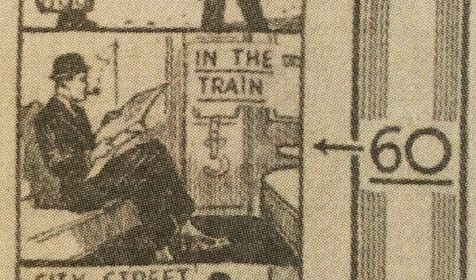
This change is significant: the basis for limitation is no longer solely public perception of a specific sound, but also its physical properties. In principle, the quantitative approach allows for the application of unified criteria across different noise sources, without being limited by assessing their social status or character.
So, Scheffer’s historical material raises a question that extends beyond acoustics and sanitation standards. If one loud sound is considered a necessary part of public life, and another is a disturbance, then the boundary between sound and noise is determined not only by its volume. The source, function, location, and social status of the produced sound are significant. A church bell could unite a city, whereas the voice of a street vendor became a subject of prohibition. One sound represented a socially recognized institution, while the other represented the daily activities of people whose presence in public space was gradually beginning to be perceived as undesirable.
«Noise is the sound we have learned to ignore.» [1]
The modern apartment is also a space where different conceptions of acceptable sound collide. The noise from running equipment, music from a neighboring apartment, children’s voices, or construction work can be evaluated differently, although each of these sounds has the potential to disturb a resident’s peace. Therefore, the issue of noise is not just about how loudly the environment sounds; it is also about who sets the rules for its soundscape, whose interests are protected by those rules, and what forms of everyday life are consequently restricted.
The historical shift from suffrage prohibitions to quantitative measurement does not eliminate this problem. It changes the regulatory tools but does not remove the need to define what sound society deems unacceptable.
A Home Without Sound Barriers
Home is typically perceived as a boundary between private life and the outside world. Its walls separate residents from the street, neighbors, and the urban environment, creating a sense of security and privacy. However, this boundary proves far less secure acoustically. Sounds continue to penetrate from one space to another through walls, ceilings, windows, ventilation shafts, and engineering systems. They serve as a constant reminder of the presence of others, even when there is no direct contact with them.

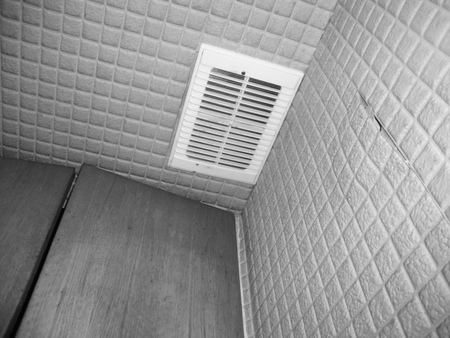
Heating pipes and ventilation shafts can transmit noise between rooms.
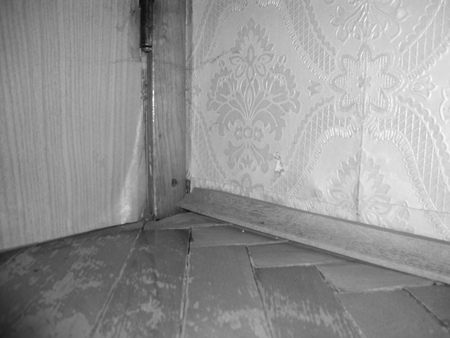
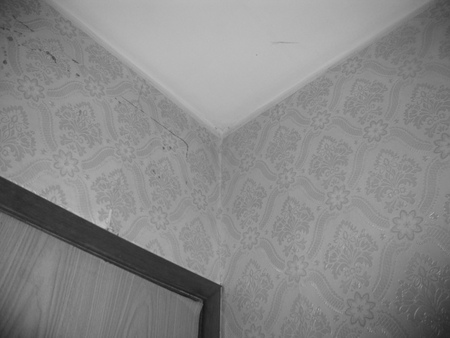
Wall, floor, and ceiling junctions can become paths for sound transmission.
Labell describes the home as a kind of sonic shell that fosters a sense of security and acoustic comfort. The interior space is organized so that sounds are perceived as part of a familiar domestic environment, while unwanted external influences remain outside its boundaries. Here, silence is one indicator of order: the ability to control the acoustic environment is linked to a sense of ownership over one’s space.