What did the city of the future look like in the imaginations of the 20th century?
The visual investigation draws on cinema from 1927–2020 to trace how the architectural appearance of future cities has evolved: from soaring skyscrapers and grand engineering feats to enclosed spaces and endless labyrinths of multi-level metropolises, where architecture reflects the fears, contradictions, and anxieties of its time.
Hypothesis
The image of the city of the future reflects the hopes and anxieties of its era: as technology advances, cinema architecture increasingly depicts not only the possibilities of progress but also its contradictions—social inequality, control, and human alienation.
A still from the film «Metropolis» (1927)
The image of the futuristic city in cinema has evolved over the last century—from industrial utopian modernism to a bleak cyberpunk megalopolis and decentralized post-industrial spaces. This evolution directly reflected the anxieties and hopes of each era in the face of technological progress.
If early films depicted the future as a symbol of technological progress and rational organization, later cities increasingly became spaces of social inequality, control, and alienation.
A scene from the film Blade Runner (1982)
In my visual study, the films are examined chronologically and grouped into four periods—from early conceptions of the future city to the imagery of 21st-century technological metropolises. Each film is analyzed based on the architecture and scale of the city, its technologies and infrastructure, the human position within the urban environment, and its visual language. Finally, the films are compared to reveal how perceptions of the future city have evolved.
«Architecture and cinema share several common traits: both fields allow us to move through space and interact with other art forms and sensations, ” states Steven Jacobs. [1]
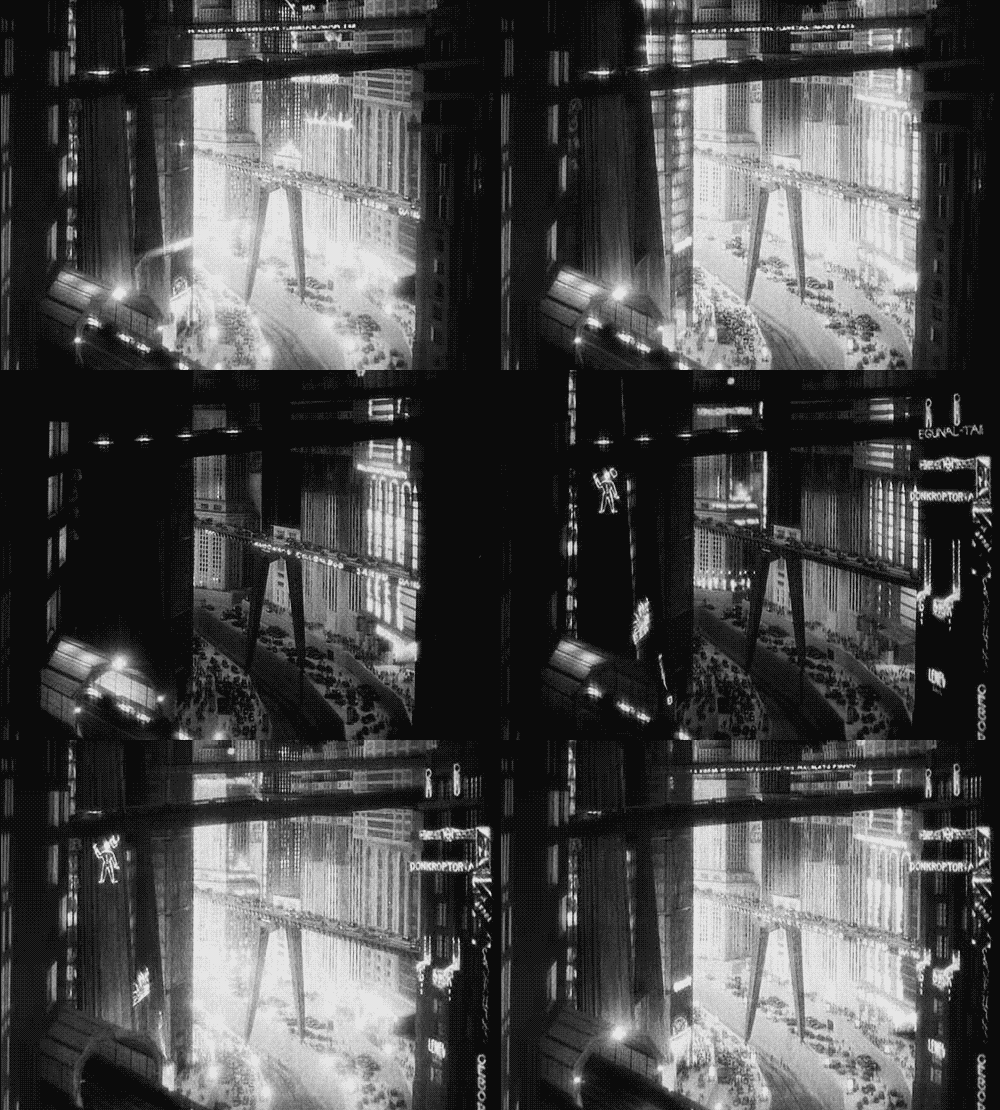
The initial point of our study will be Fritz Lang’s «Metropolis, ” released in 1927. Its depiction of a futuristic city sets the baseline for comparison: here, architecture does not merely illustrate the future—it reveals what a society built upon technological progress envisioned.
Still from the film «Metropolis» (1927)
The city is composed of gigantic skyscrapers, multi-level highways, and monumental structures. Its vertical architecture segregates different societal strata.
Transportation arteries, vehicles, and factories form a complex system that dictates the lifeblood of the entire metropolis.
The elite live in the upper city, while the workers service the machinery underground. Humanity becomes subject to the urban system.
A still from the film «Metropolis» (1927)
The contrast between the massive buildings and the small human figures creates an image of a future that is simultaneously majestic and frightening.
Even in early science fiction cinema, technological progress is shown to be linked not only to capabilities but also to social contradictions.
If the city of the future in «Metropolis» symbolizes inequality, then in «The Face of the Future, ” architecture expresses a more optimistic belief in technology’s ability to transform society.
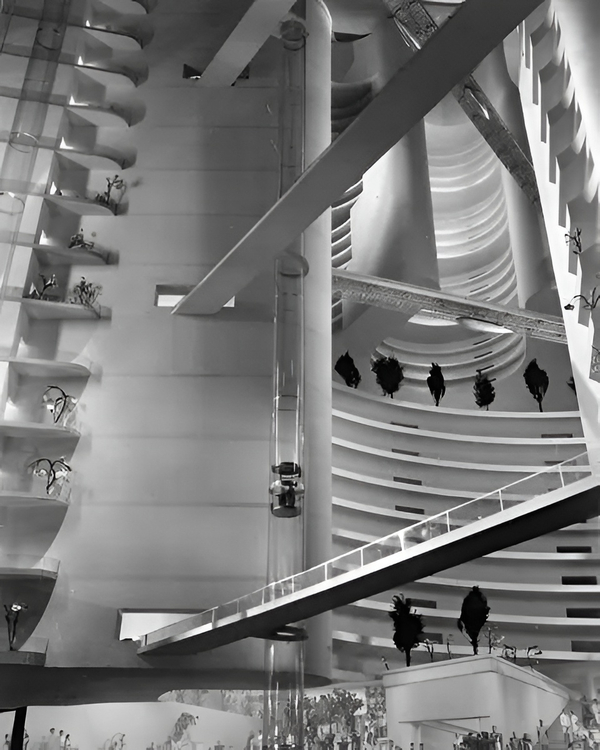
Still from the film «The Face of Tomorrow» (1936)
Replacing the familiar urban sprawl with bright modernist architecture, featuring smooth surfaces, geometric forms, and vast spaces.
Engineering solutions are changing the structure of the city: architecture is becoming part of a unified scientific and technological project.
People should have a more organized and comfortable environment. At the same time, the future is built on the conviction that scientific progress can determine the direction of the entire society.
Still from the film «Visage of the Future» (1936)
Light spaces, strict geometry, and clean surfaces create a sense of order, rationality, and faith in progress.
While «Metropolis» portrays the danger of a mechanical system, «The Aspect of the Future» offers an almost opposite image—a city as the embodiment of a scientific utopia.
However, by the mid-twentieth century, the belief in a rationally ordered future began to coexist with anxiety about a society where order and efficiency trumped human emotion. This shift is noticeable in «Alphaville.»
Godard shows that creating a convincing city of the future doesn’t require building fantastic sets—it is enough to film real streets and buildings in a way that makes the familiar environment feel alien and unsettling. [2]
A frame from the film «Alphaville» (1965)
Modern office buildings, hotels, and long corridors create a cold, functional environment. The fantastical city bears a suspicious resemblance to reality.