Образ Шивы Натараджи: как изобразить движение в неподвижной скульптуре
Navigation
I. Concept II. Introduction III. Historical Context IV. Formation of the Nataraja Shiva Image V. Iconography of Nataraja Shiva VI. Material and Technology of Sculpture Creation VII. Analysis of Works: Comparison of Images from Different Eras VIII. Conclusion
Concept
Theme Selection
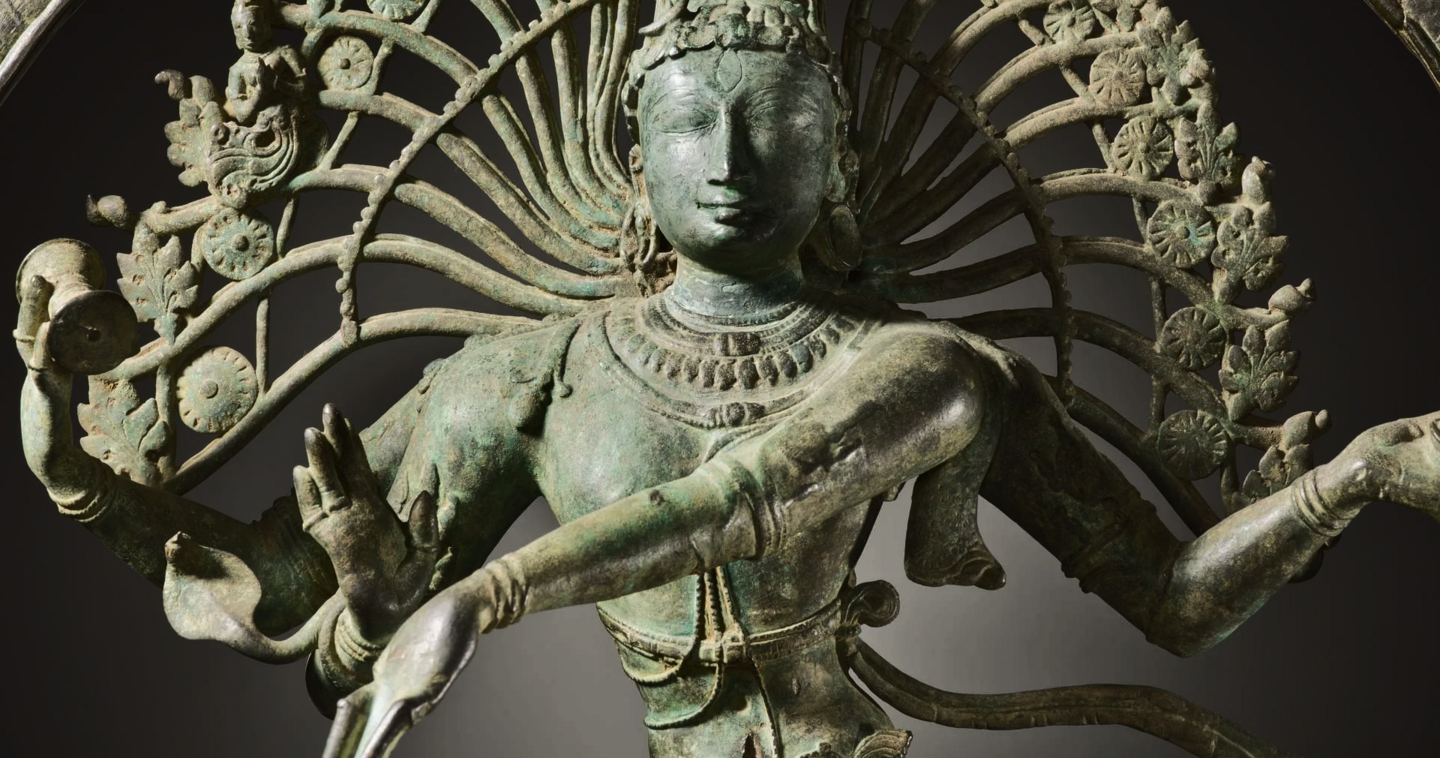
The choice of topic stems from my interest in how artists convey motion within a static form. The image of Shiva Nataraja in Indian sculpture, in particular, strikes me as a fascinating example. The complex posture, numerous arms, flowing hair, and fiery halo create a sense of continuous dance, despite the material’s stillness. I am interested in the artistic means sculptors employed to achieve this effect and how individual compositional elements interact to create the illusion of movement.
Material Selection Principle
The research is limited to images of the dancing Shiva and Nataraja created in South India between the 6th and 13th centuries. The study examines both early depictions of the dancing Shiva and later works featuring the established iconography of Nataraja. Primary focus is placed on sculpture—stone reliefs and bronze statues, particularly from the Chola period. Other forms of imagery are considered only if they help trace the evolution of the icon.
Selection criteria include the dating, place of creation or origin, material, and preservation state of the work. Preference is given to sculptures where the body posture, gestures, poses, and compositional characteristics are clearly visible. Images of Shiva unrelated to the theme of dance, as well as works lacking sufficient reliable information, are excluded from this study.
Principles of Research Structuring
Principle of Selecting and Analyzing Textual Sources
Textual sources are selected based on their relevance to the research topic and their capacity to illuminate the historical, religious, and artistic context of the Nataraja image. The foundation of this work comprises scholarly publications, monographs, and museum studies concerning the history of Indian sculpture, Shaivism, Shiva iconography, bronze casting, and the temple culture of South India. Additionally, research examining the symbolic meaning of specific elements of the image and the characteristics of its perception across different historical periods is utilized.When analyzing the sources, we take into account authorship, scientific validity, publication date, and the research methodology employed. Information is extracted from these texts that is necessary for understanding the image’s origin and evolution, the significance of its iconographic attributes, the specifics of sculpture creation, and their ritual function. The resulting information is then cross-referenced with visual materials to correlate historical and religious interpretations with specific artistic solutions.
Ключевой вопрос:
How did Indian sculptors convey a sense of movement in the static image of Shiva Nataraja, and how did the methods of depicting him evolve from the 6th to the 13th century?
Гипотеза исследования:
I hypothesize that the development of the Nataraja image in Indian sculpture during the 6th–13th centuries is linked to the gradual formation of a distinct artistic system capable of conveying the sensation of continuous movement through a static sculptural form.
The goal of this study is to trace the evolution of the Nataraja figure and to identify the artistic techniques used to create a sense of motion within a static sculpture.
Introduction
Shiva dances, creating and destroying the world; in the grand rhythm of his movements, infinite epochs of time seem to be contained…
Historical Context
Three dynasties—the Early Chalukyas, the Pallavas, and the Cholas—played a pivotal role in the development of South Indian art.
Badami Cave Temple dedicated to Shiva, 6th Century
During the Early Chalukya period (6th–8th centuries), rock architecture and stone relief art developed actively. Among the most famous monuments of that era are the cave temples of Badami and Ravana Phadi, as well as the temple complexes of Aidhole and Pattadakal. Sculptural expression was particularly significant, focusing on the expressiveness of postures, the placement of limbs, and the interaction between individual figures. These characteristics are especially noticeable in depictions of Hindu deities, including the dancing Shiva.
Coastal Temple Complex in Mahabalipuram, early 8th century
During the Pallava period (6th–9th centuries), stone temples were erected and numerous sculptural compositions dedicated to Hindu deities were created. This era marked a crucial stage in the formation of an artistic tradition, within which the image of Shiva dancing flourished.
Brihadeeswarar Temple, circa 10th century
Chola (9th–13th Centuries) became one of the most influential dynasties in South India. During this time, temple art reached a unique zenith, and bronze sculpture became one of the most significant directions of artistic creation. It was during this period that the image of Shiva Nataraja acquired its most recognizable form. The sculptures were distinguished by the complex organization of their posture, harmonious proportions, expressive gestures, and a meticulously balanced interplay between movement and the figure’s stability.
Bronze depictions of deities held not only decorative or cultic significance within temples. They were also used during religious processions: the statues were carried outside the sanctuaries so they could become part of festive parades and ceremonies. In this way, sculpture became a direct participant in the religious life of society.
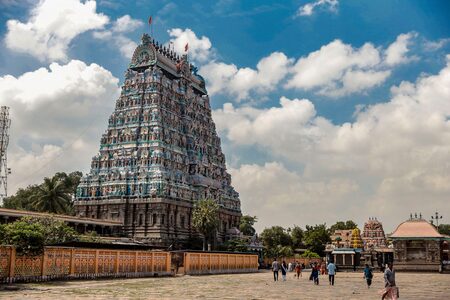
Alongside the evolution of temple architecture, the role of the temples themselves transformed. Gradually, they evolved into major religious and community hubs, around which settlements with developed urban structures formed. Chidambaram became one of the most significant centers of Shiva worship, known for its Nataraja temple complex. According to Hindu tradition, the myth of Shiva’s cosmic dance, which he performed before the gods and sages, is associated with this location. Therefore, Chidambaram holds a special place in the history and religious tradition of the Nataraja iconography.Chidambaram is the principal Nataraja temple; the date of its construction is unknown.
The Formation of the Image of Shiva Nataraja
1. Shaivism: What Is It?
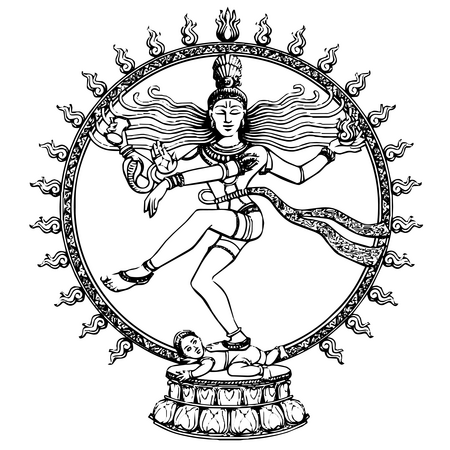
Shaivism — one of the primary schools of Hinduism, whose followers revere Shiva as the supreme deity. In this tradition, Shiva is perceived as the god of destruction, the source of cosmic change, spiritual knowledge, and liberation. Shiva is connected to several vital concepts, such as the destruction and transformation of the world, time and the flow of the Universe, death and rebirth, meditation and spiritual release, and the creative and destructive forces of nature.Image of Shiva NatarajaNataraj image by South Indian artist Arumugam Manivelu
2. Shiva Nataraja—Lord of Dance
Nataraja is one form of Shiva in which he appears as the Lord of the cosmic dance. His dance symbolizes the motion of the Universe, where creation, preservation, and destruction of the world converge.
Unlike many other depictions of Shiva, Nataraja is presented in vigorous motion. His figure is usually surrounded by a ring of fire, and the positioning of his arms and legs forms a complex yet balanced composition.