Concept
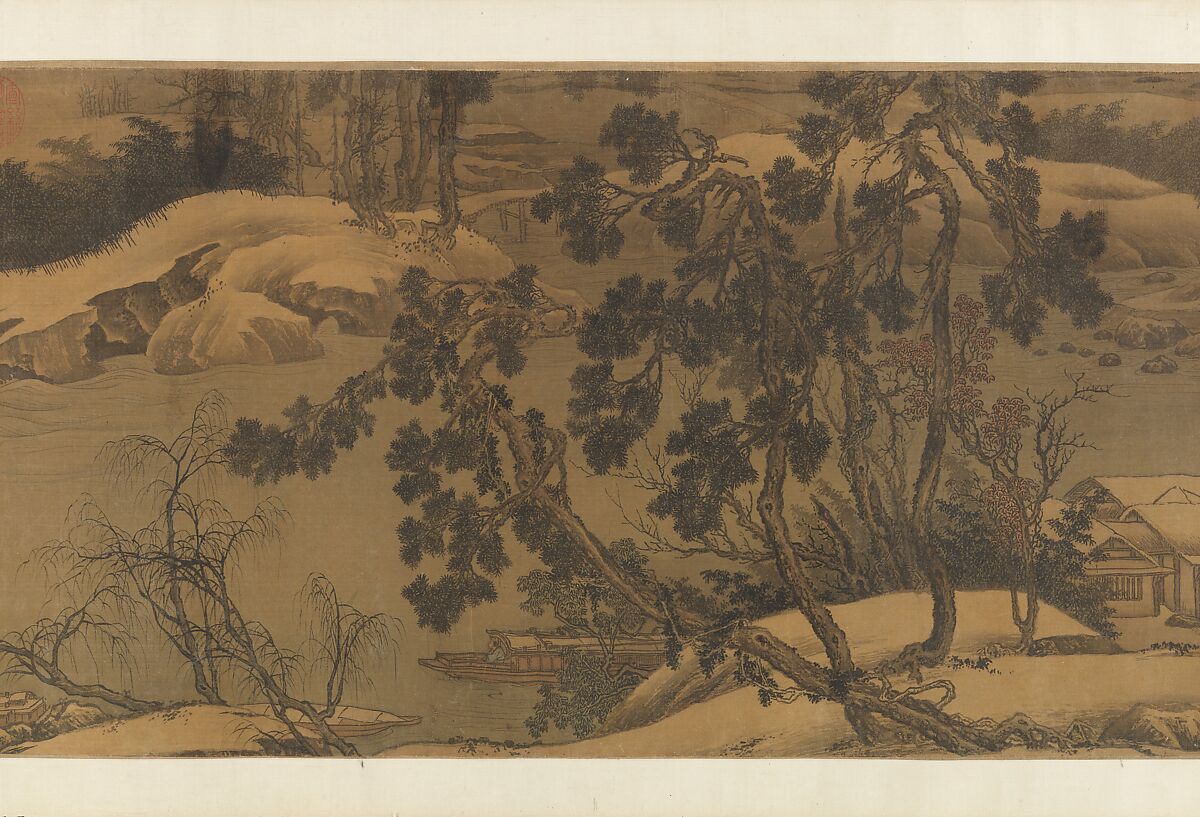
Chinese landscape painting is arguably the most intellectually dense tradition of depicting nature in the history of world art. Behind the outwardly tranquil ink scrolls—mountains shrouded in mist, a solitary pine, a tiny figure by the water—lies a sophisticated system of visual communication. For centuries, Chinese artists used landscape not merely to «show a view, ” but to articulate something that could not be stated directly: a philosophical stance, a political protest, a personal message, or a hope for salvation.
This subject is compelling because it challenges the conventional notion of landscape as a simple „picture.“ Chinese landscape is a rebus; decoding it requires knowledge of a language of symbols, rules of composition, and historical context. It remains highly relevant today: in an age of visual saturation, the ability to „read“ an image is critically important, and the Chinese tradition offers one of the most developed models for such interpretation.
This study covers the period from the Paleolithic era through the 14th century—the time when all the fundamental mechanisms of encoding were established, later only to be varied and complicated. We will trace a path from the earliest markings on rocks and ritual bronzes to the philosophical landscapes of the Song dynasty and the political allegory of the Yuan.
Navigation
1. Concept
2. Historical Context: Origins and Distinctions from Other Traditions
3. Encoding Methods: Why and How the Symbol Language Arose
4. Five Keys: Examples and Deciphering:
· 4.1. Phonetic Key
· 4.2. Iconographic Key
· 4.3. Compositional Key
· 4.4. Narrative Key
· 4.5. Contextual Key
5. Synthesis of Methods: When a Rebus Becomes Multilayered
6. Conclusion
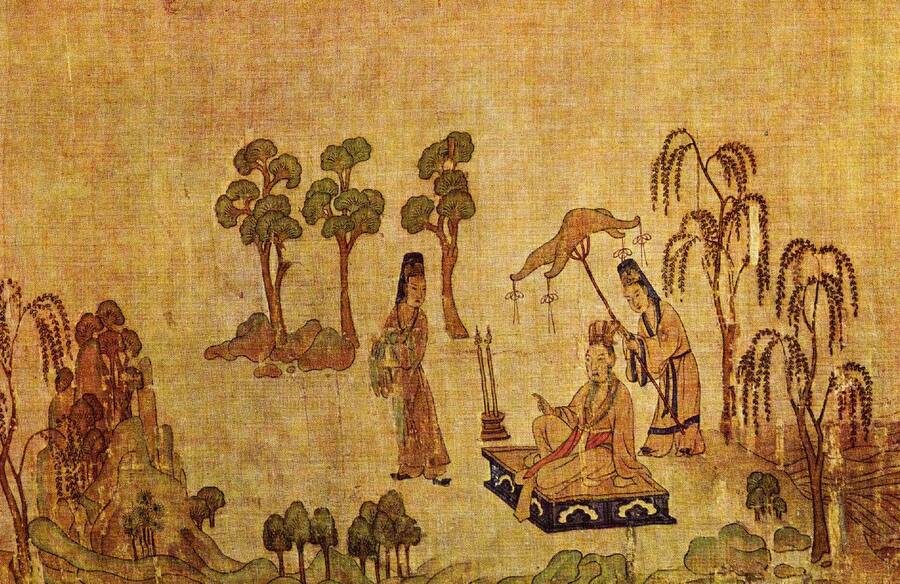
«Horse Scroll» by Gu Kaizhi; circa 344–406
Chinese landscape, as an independent genre, developed during the Wei and Jin Dynasties (4th century CE) and reached its peak in the 7th–8th centuries, whereas in Europe, landscape emerged as a distinct genre only in the 17th century. However, its roots run much deeper—into ritualistic symbolism. The genesis of Chinese landscape is a story of how the depiction of nature ceased to be a simple backdrop and transformed into a cosmic diagram. Long before the appearance of the first silk scrolls, the «landscape» existed in the form of symbols carved into rocks, ceramics, bronze, and jade. These early codes laid the foundation for the entire subsequent shanshui (mountain-water) tradition, where every element held a hidden significance.
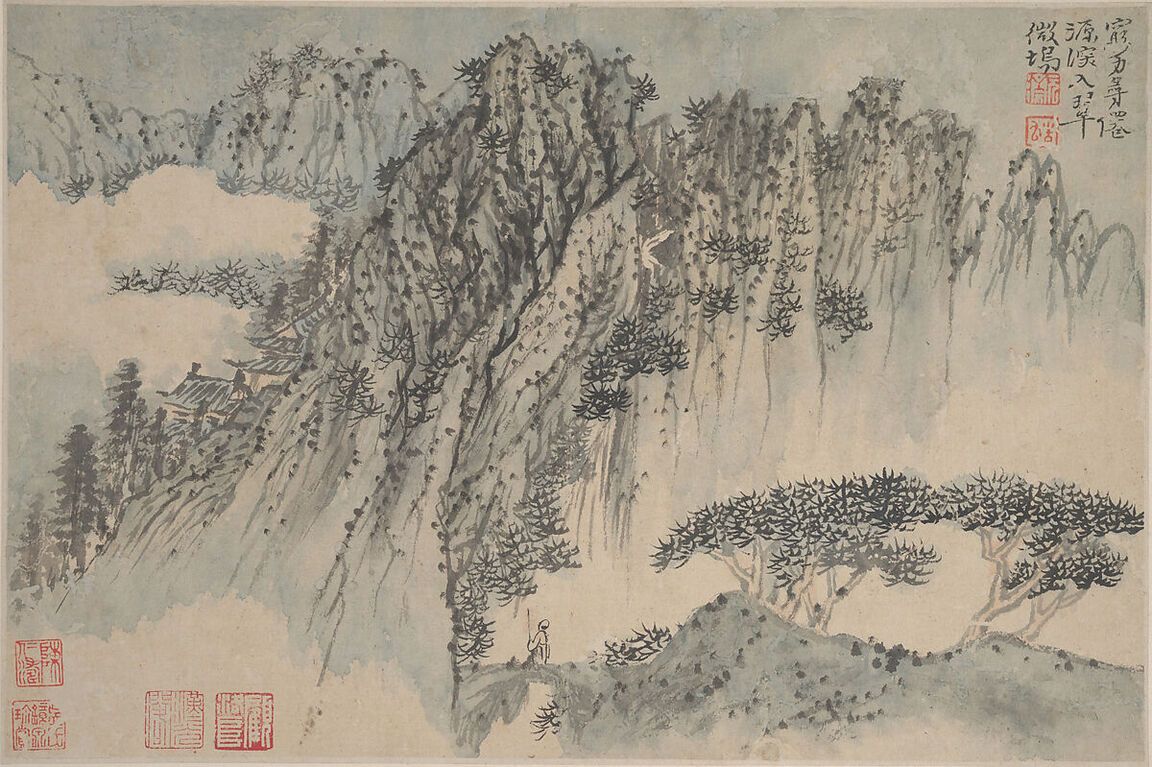
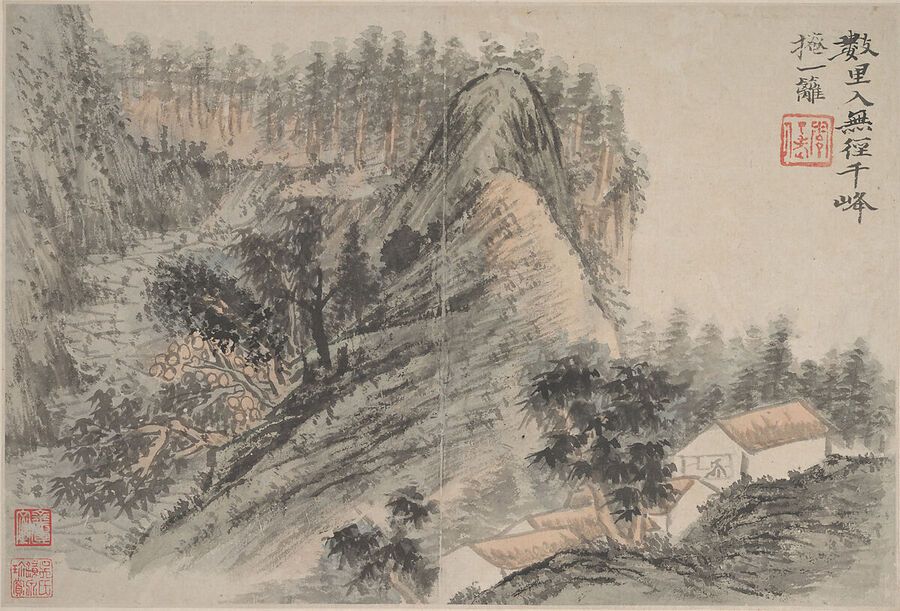
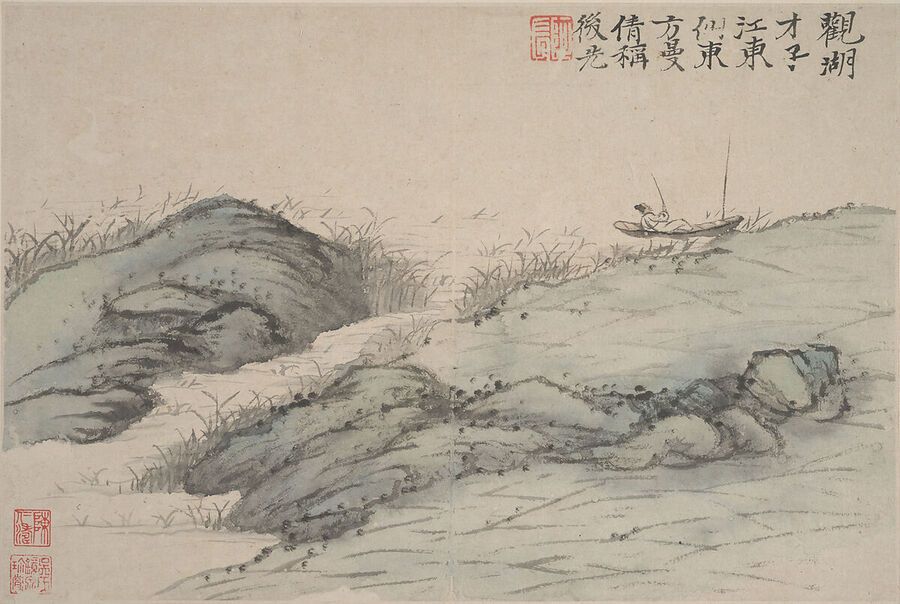
«Landscapes» by Zhang Fen (c. 1628–1662)
Cave Paintings
In China, as in Neolithic imagery from other territories, animals associated with nomadic life, hunting, and the reverence ancient people held for the surrounding creatures were present. However, these petroglyphs are interesting for far more than just that.
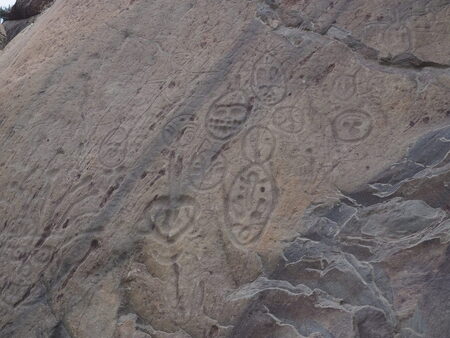
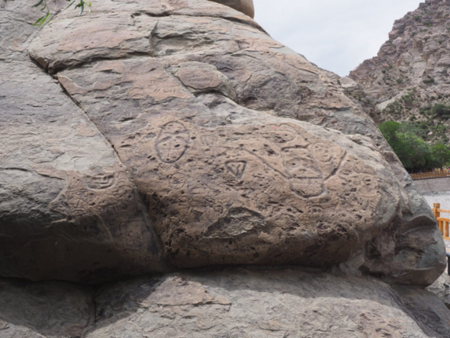
Petroglyphs of the Helan Mountain Range
Anthropomorphic Faces (Social Code): Around 60 faces are depicted on the Helanshan rock formations. Triangles represented women, while U and X-shaped figures represented men, reflecting the social structure and kinship system. The cross in these depictions is akin to the Yin-Yang concept, symbolizing the interaction of two opposite forces.
Handprints (Contractual Code): A composition featuring two handprints (large and small) beside a kneeling bull symbolizes the conclusion of a property transfer agreement between tribes.
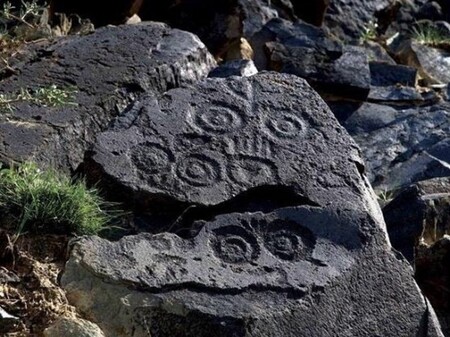
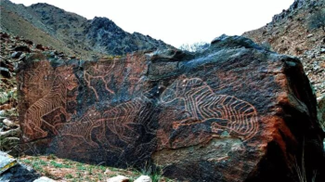
Petroglyphs of the Yinshan Mountains
On the cliffs, they carved not only figures of animals but also mask-like faces and abstract spirals. The Yinxian petroglyphs (over 50,000 images) formed a sacred map of the area, where the deer or mountain goat served not as prey but as a guide to the spirit world. Thus, nomadic and semi-nomadic peoples marked their «own» territories and power spots, solidifying the connection between humanity and the landscape through a stable visual sign.
Jingdezhen Ceramics
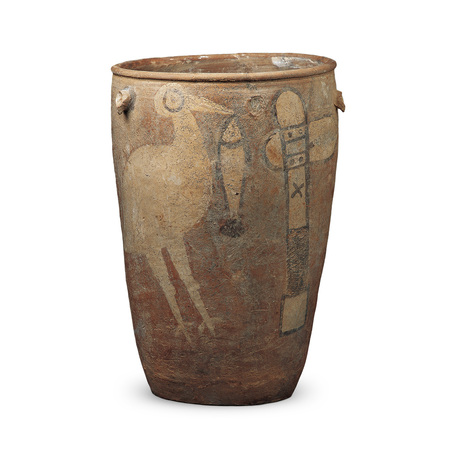
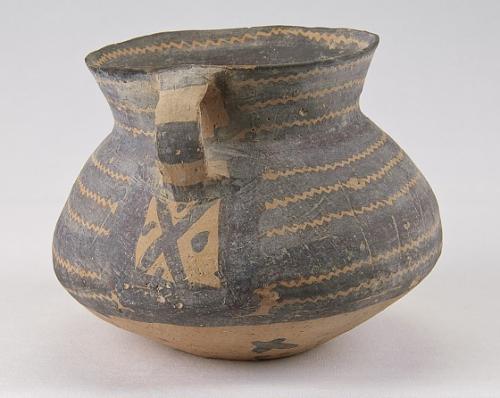
Painted jug «Stork, Fish, and Flint Axe, ” handled painted jug
The first vessel is one of the most ancient «historical documents» in painting. The white stork with a fish in its beak symbolizes the victory of one tribe (the stork totem) over another (the fish totem). Beside it is depicted a stone axe—a symbol of the military and sacred power of the leader. Together, they immortalize the feat and triumph of a leader. The execution technique (combining «unarmored» filling and contour outlining) is considered a precursor to Chinese painting.
The second piece features geometric patterns (waves, dots, arcs). In Yangshao, wavy and spiral lines were often associated with water, rivers, and vital energy, and they could also be stylized depictions of fish scales or bird wings. Such vessels were everyday utilitarian items, but their painted decoration reflected the cosmological beliefs and observations of ancient agriculturalists.