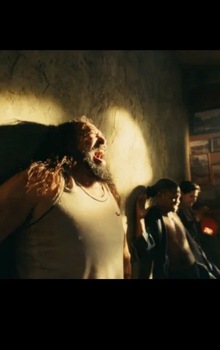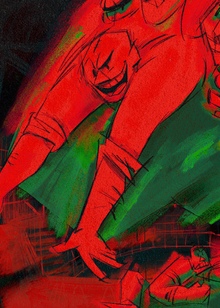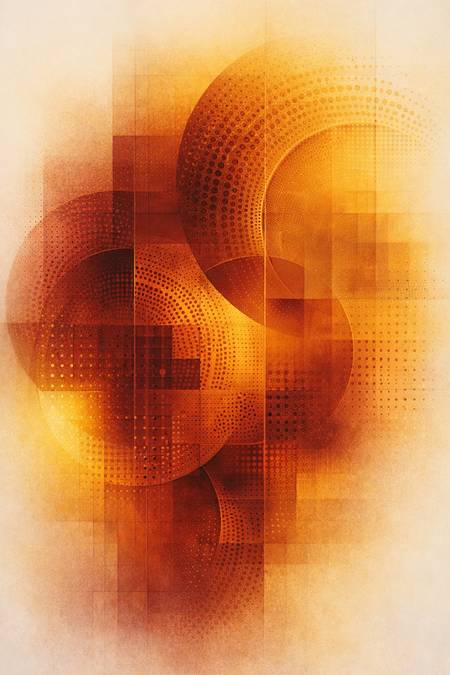
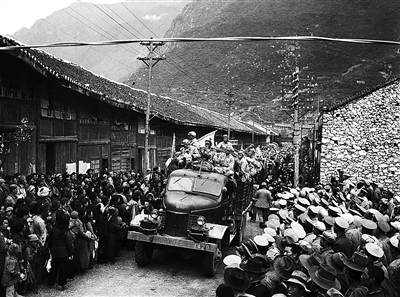
Tibet House Museum in Delhi was established as a cultural refuge during a moment of displacement, when Tibetan communities in exile sought to preserve their art, philosophy, and collective memory outside their homeland. Conceived not merely as a museum but as an archive of living culture, the building has evolved over time into an institutional space for learning, preservation, and dialogue. This dual role of sheltering fragile cultural artifacts while remaining open to the public forms the foundation of the facade intervention. The proposed design responds to this condition by reinterpreting the building as a «wrapped archive, ” where layers of protection, memory, and continuity are expressed architecturally rather than symbolically. (Fig. on left: PLA marching into Kangding, 1950)
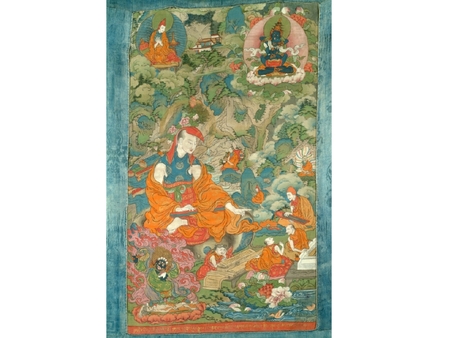
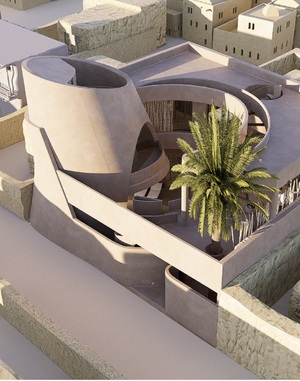
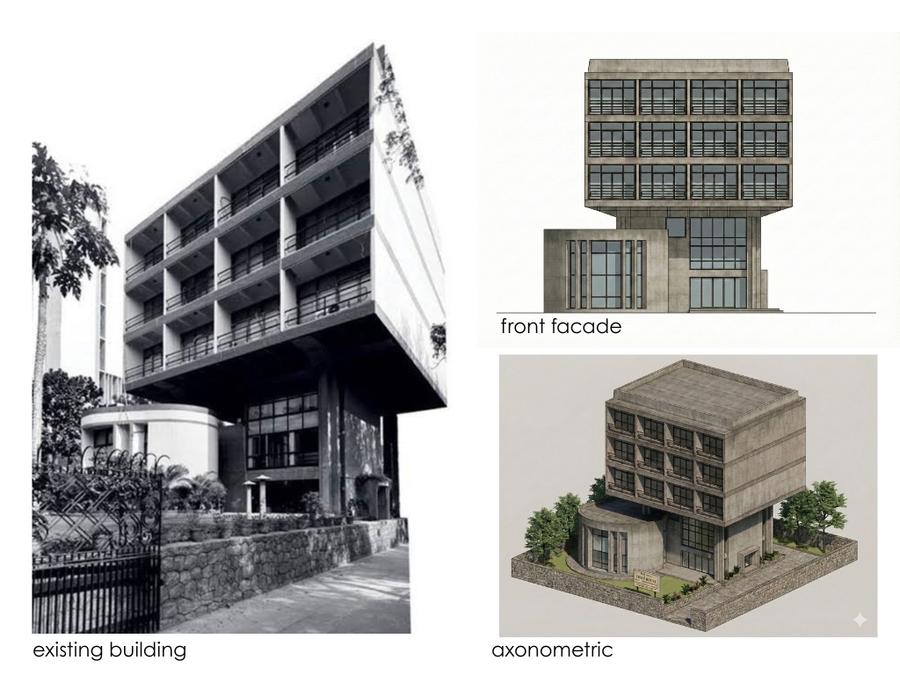
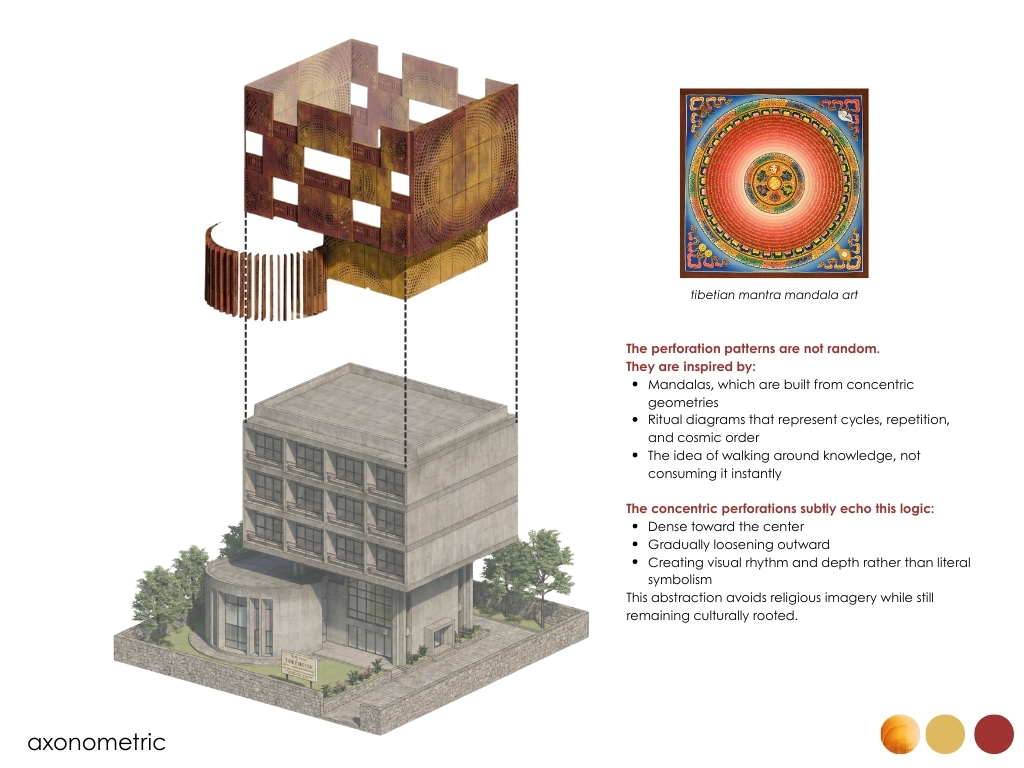
Tibetan art and artifacts housed within Tibet House—particularly thangkas (paintings), manuscripts, and ritual objects are inherently fragile and traditionally treated as layered, portable archives rather than static displays. These objects are wrapped, unwrapped, filtered through light, and revealed gradually, emphasising protection as much as visibility. This sensitivity to light is reflected in the original building itself; constructed in 1974 in a restrained Brutalist architectural language, the museum incorporates largely closed east and west façades to minimise direct sunlight and ensure controlled interior conditions. The proposed façade intervention builds upon this logic, not by altering the existing structure, but by introducing a secondary layer that extends the building’s original protective intent. Through perforation, depth, and gradient, the new skin operates as an architectural filter offering controlled light modulation and visual symbolism while remaining subordinate to, and respectful of, the original Brutalist massing. (Fig. Teacher (lama), Ground Mineral Pigment on Cotton, 1800 — 1899)
Existing Building
Facade Design
Animation