Navigation
- Concept
- German Animation
- British Animation
- American Animation
- Japanese Animation
- Conclusions
- Filmography
- Bibliography
Concept
In the contemporary world, cartoons are typically perceived primarily as entertainment. However, within the period under study—the first half of the 20th century—it becomes evident that they were often employed to serve other purposes: conveying social ideas, shaping attitudes toward political events, and creating representations of other countries and peoples.Of particular interest are the ways in which these ideas were expressed specifically through the visual language of animation. Unlike live-action film, animation is practically unconstrained by the limits of the real world. Artists can create unconventional characters, use animals in place of humans, draw upon fairy-tale narratives, and exaggerate specific features of the depicted objects. All of this allows for the communication of rather complex ideas through simple and accessible imagery.
This study will examine animation from 1926 to 1943, a period of rapid development against a backdrop of profound political and societal change. During this time, animated films in various countries engaged with national symbols, folklore, representations of collective society, and the external enemy. This raises the question of what visual techniques were employed to construct these images and how the approaches of different countries diverged from one another.
It is also interesting to trace how the visual identity of a nation is formed and the role that cultural and national symbols, historical narratives, and artistic choices play in this process. In a way, this intersects with contemporary practices of creating national and territorial identities.
For this study, foreign animated films created between 1926 and 1943 were selected. The work will examine productions from Germany, the United Kingdom, the United States, and Japan.When choosing the films, attention was paid to how effectively they could explore the chosen theme. Therefore, the units of analysis were those works where national and cultural motifs play a noticeable role in the narrative or in conveying specific ideas.
The research will be divided into several sections based on geographical criteria. First, I will examine German animation, followed by British, American, and Japanese animation. This sequence will allow me to focus specifically on the characteristics of each country before comparing the artistic techniques employed.
For this research, materials directly related to the animated films under review, along with broader publications on the history of animation, visual culture, and national identity, were utilized.The first group includes archival film descriptions, information about their creation, filmographies, and studio materials.The second group of sources encompasses academic articles and studies dedicated to the history of animation, national identity, visual propaganda, and mass culture. These will help provide a deeper understanding of the historical circumstances surrounding the films' creation and prevent analyzing them outside the context of their era.
A key question when working with materials is: what visual means did early 20th-century international animation use to shape notions of national and foreign identity?
I hypothesize that animation from this period did not merely reflect existing views of national culture, but actively participated in shaping them. To achieve this, creators employed folklore characters, animals, national symbols, recognizable cultural imagery, and the contrast between «us» and «them.»
Germany. The Image of Culture Through the «Other»
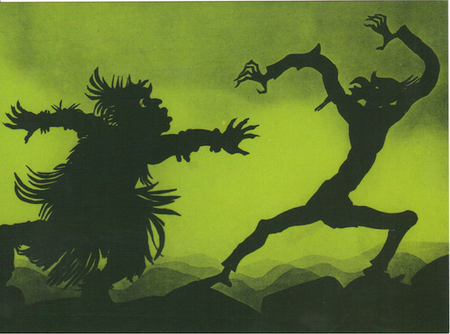
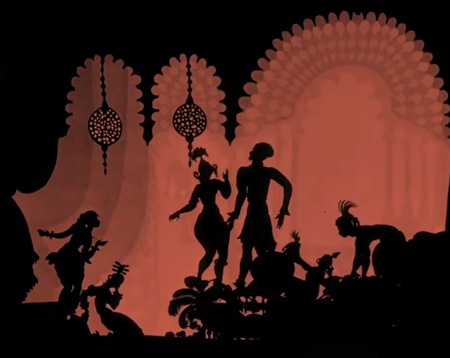
Stills from the animated film «The Adventures of Prince Ahmed,» directed by Lotte Reiniger, 1926.
«Prince Ahmed’s Adventures» is a feature-length animated film by German director Lotte Reiniger, created in 1926. Her husband, Carl Koch, assisted her with the work. The cartoon entered history as the first feature-length animated film, and its plot is inspired by motifs from «One Thousand and One Nights.»
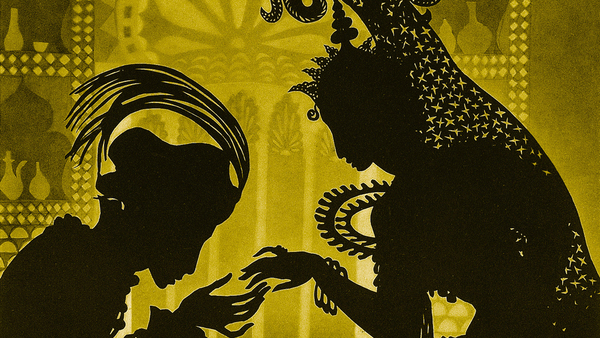
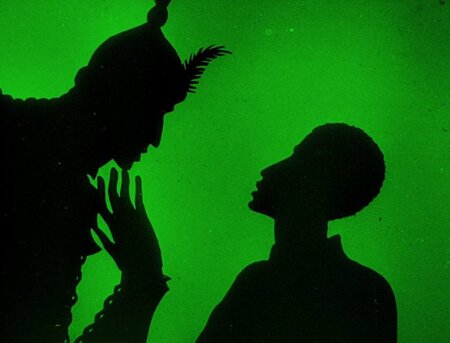
The film’s defining feature is silhouette animation. Characters and objects are cut from cardboard and foil, then animated frame by frame. Their stark black contours stand out against colorful backdrops, directing the viewer’s attention not to facial details, but to the shapes of the figures, their clothing, gestures, and movements.
It is fascinating to consider how the film’s world is structured. The animation features palaces with numerous towers and domes, ornamental elements, exotic flora, and fantastic creatures. All these elements must coalesce to form a recognizable, fairytale image of the East for the viewer. For instance, in the scene celebrating the caliph’s birthday, one can see processions, elephants, acrobats, and richly decorated architectural structures. These details all work together to create an impression of opulence and the extraordinary nature of the depicted world.
It is important to note, however, that Rainger does not aim for historical or even cultural accuracy. While the cartoon concludes with a call to morning prayer, Rainger’s primary goal is not to tell a story about Islam, but rather to create a generalized impression of a distant and magical East for the European viewer. Therefore, the architecture, costumes, and other elements function more as conventional markers of a foreign culture than as an exact reflection of its characteristics.
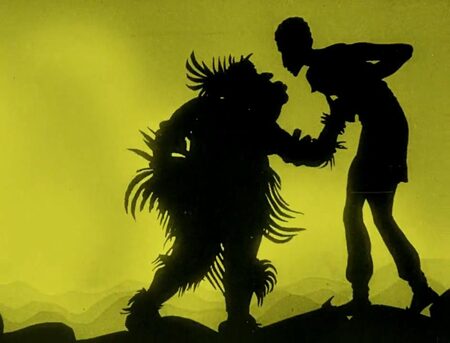
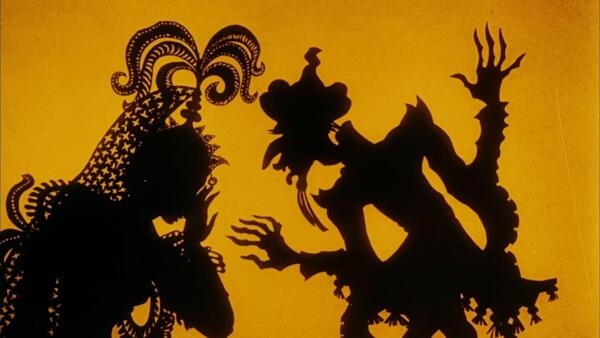
Lotta Reininger portrays people as theatrical characters whose personalities are entirely revealed through silhouette graphics, movement, and costume. Due to the absence of facial expressions, the figures are shown predominantly in profile, while the director employs a distinct visual contrast. Thus, positive heroes are endowed with slender proportions and graceful features, whereas villains and comedic characters have distorted, pointed profiles and hunched backs. The clothing—lace, veils, feathers on turbans—lends a particularly striking expressiveness to the images. Here, the role of clothing is more significant than just creating an oriental ambiance; Reininger also allows the viewer to discern the hero’s social status.
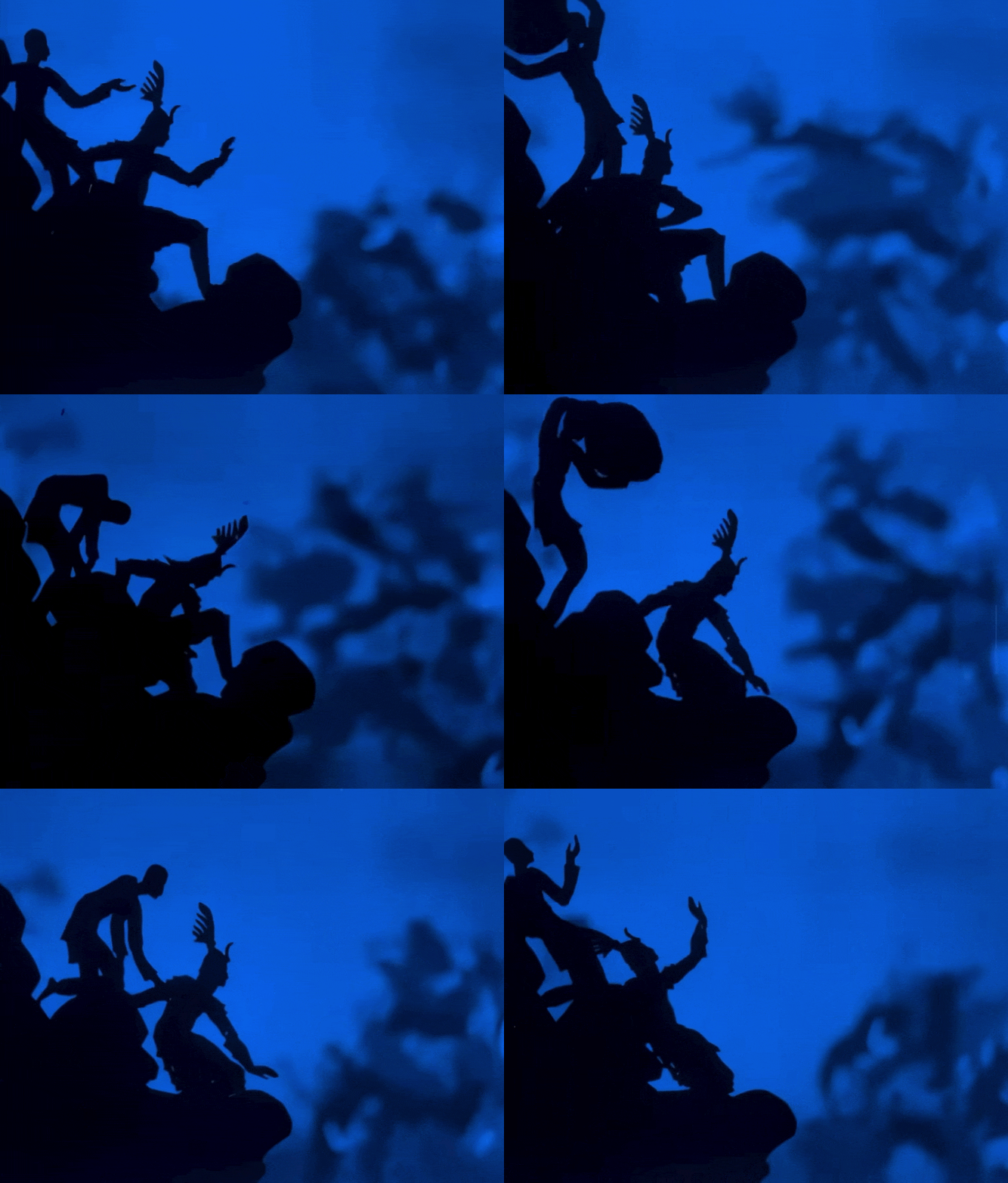
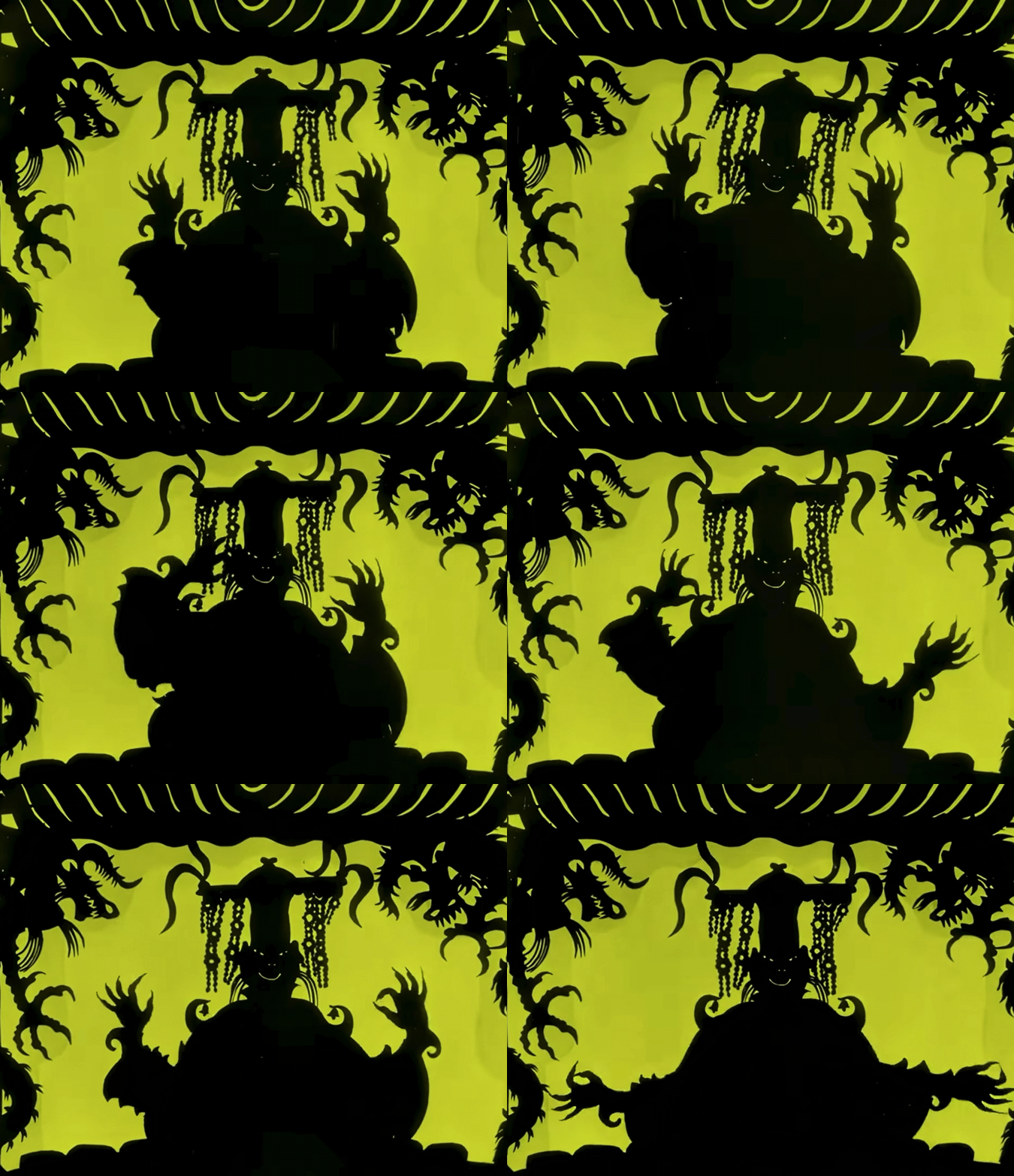
Character plasticity plays a vital role in shaping human figures. Rainer’s passion for opera and dance transformed the characters' movements into choreography, where each figure is composed of dozens of movable details, including individual finger phalanges. Love, anger, fear, or cunning are conveyed not through dialogue, but through posture, a subtle tilt of the head, or a sudden recoil. Thanks to this fine attention to plasticity, the black paper silhouettes are perceived as living, emotional protagonists.
«Prince Ahmed’s Adventures» demonstrates how the concept of national and cultural identity was formed in early 20th-century European animation through the depiction of the «Other.» The East in the film becomes a space of fantasy, set against the familiar European world, and is imbued with a set of recognizable characteristics, including luxury, mystery, unusual architecture, and exotic characters. Moreover, various Eastern cultures are virtually unified into a single, conceptual image, devoid of specific national belonging. The identity of the depicted world is determined less by its own cultural attributes and more by the external gaze.
Japan. The Militarization of Animation Narrative
Following an analysis of a German film, we suggest looking at Japanese animation from 1943. This choice allows us to broaden the geographical scope of the research and examine how national identity was portrayed outside of Europe and the United States. Moreover, in the early 1940s, animation increasingly became a tool of military propaganda.
«Momotaro’s Sea Eagles» is an animated film by Japanese director Mitsuyo Seo. In this animated work, Momotaro, a traditional hero from Japanese folklore, becomes the central figure of military propaganda. The film was produced with the support of the Japanese Navy Ministry and is dedicated to the attack on Pearl Harbor, which is presented as a fairy-tale adventure.