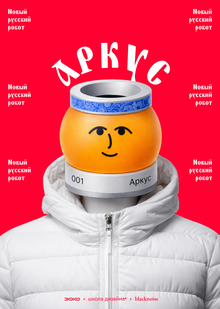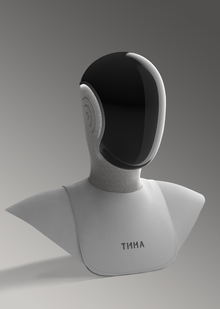
We are creating a robot for daily interaction with humans in a domestic environment. Three principles guide every decision.
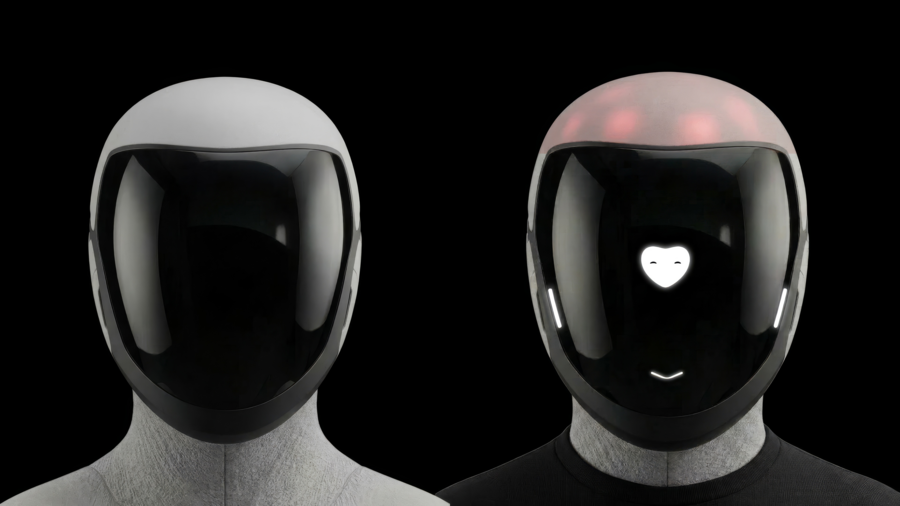
- Humanism Trust is built through emotional connection.
Emotional Display. A transparent frontal zone reflects the robot’s internal state—what it is processing, what it «thinks.» We can see it; it is not hidden behind an impenetrable shell.
Wardrobe. Options for clothing and textile coverings for the body. The robot fits into the owner’s interior design and character.
2 Predictability
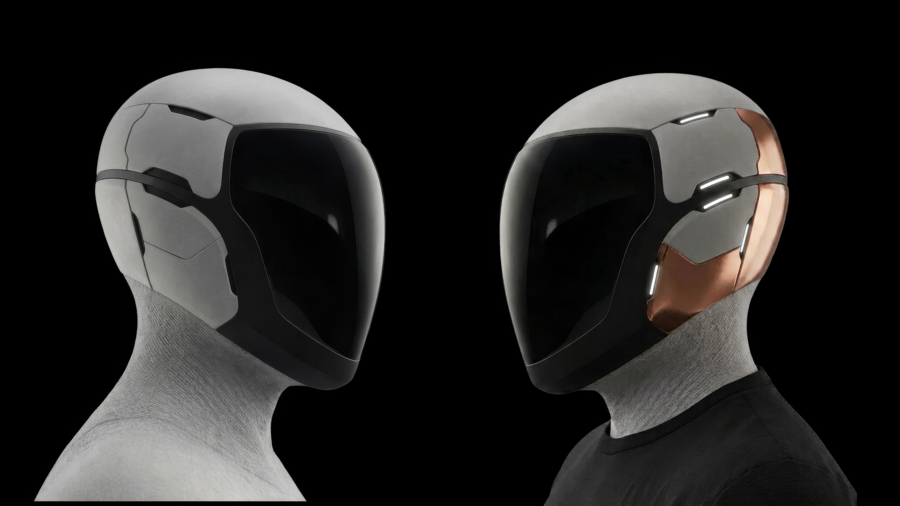
A person must understand the robot without words—from a distance, with peripheral vision, without having to think. Color glyphs function like headlights on a road: they indicate the direction of movement and transmit the operational status in real time. The system is read intuitively—like a traffic light, like a battery indicator.
Removable body panels allow the user to make the robot their own. A unique color, material, panel combination. Technology truly becomes mass-market when it starts to be customized—that is a sign of adoption.
- Appropriateness
The robot must not look alien in a home setting. The design should align with contemporary trends: a monolithic form without extraneous details, a deep front display as the primary point of interaction, and materials and proportions that feel familiar.