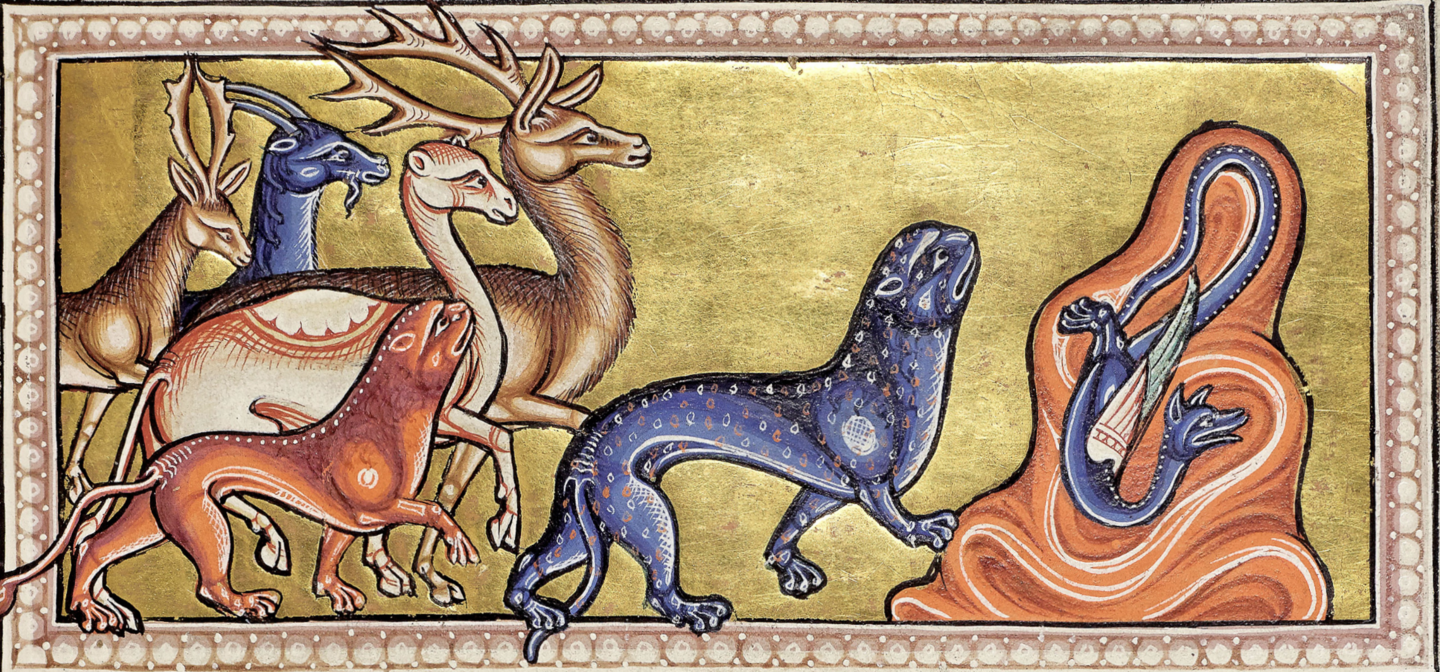
Технические особенности миниатюр бестиариев в IX–XIV вв.
Concept
Bestiaries preserve not only didactic writings about fauna, flora, and mythical creatures but also unique examples of one of the most ancient genres of book illustration. The illustrations possess a distinctive style that continues to captivate audiences with its unconventional solutions. Despite their apparent primitiveness, it cannot be said that the visual traditions of the artists remained unchanged. On the contrary, the history of bestiary illustration spans several centuries. Of particular interest are the techniques and approaches that authors employed across different eras. The evolution of the visual language in these manuscripts between the 9th and 14th centuries is especially fascinating. During this period, not only the stylistic characteristics of the images changed, but also the very principles of their organization: methods of composition, line quality, use of color, depiction of volume, and the interaction between the illustration and the page’s text space. Thus, bestiaries allow us to examine the development of medieval book miniatures through the specific formal solutions of the artists. The aim of this study is to analyze the visual characteristics of bestiary illustrations from different periods, specifically the 9th through the 14th century. I chose this topic because its study helps us understand the influence of this genre’s visual components, which is clearly traceable in modern times: the imagery and stylistic elements formed by the artists are reflected in the fantasy genre and are actively used in literature, film, tattooing, and games. This means that studying bestiaries is relevant for understanding contemporary visual trends. The selection of this topic is motivated by the ability to trace these changes using manuscript imagery and to discover how artistic means influence the perception of the depicted creatures. Comparing illustrations from different centuries not only allows us to uncover differences between individual artifacts but also to identify general trends and features that were preserved or coexisted within the studied period.The relevance of this research lies in its engagement with the visual aspects of medieval manuscript culture and its treatment of bestiaries not merely as sources of religious and natural-scientific knowledge, but also as works of book art. This approach allows for a focus on the evolution of pictorial techniques and helps us understand how the artistic perception of the animal world changed in the Middle Ages.
Ключевой вопрос визуального исследования таков:
How did the visual language of book illustration in medieval bestiaries, from the 9th to the 14th century, transform in terms of composition, technique, and relationship to the text?
The hypothesis of the visual study is as follows:
The evolution of the visual repertoire of bestiaries from the 9th to the 14th century represents a sequential transformation—from a minimalistic, linear pictogram organically integrated into the text block to an autonomous, decorative-pictorial miniature. These changes are systematic and are expressed through the isolation of the image using frames, the shift from a flat outline to chiaroscuro volume, the replacement of the parchment’s neutral background with complex ornamentation or gold, and the increasing narrativity and detail of the figures.During the period from the 9th to the 14th century, the visual language of medieval bestiary illustrations undergoes changes characterized by the increasing complexity of compositional organization, the expansion of color usage, and the development of decorative image embellishment. Moreover, these changes do not represent a sequential transition from symbolic representation to naturalism; rather, various graphic and pictorial strategies coexist, defining the unique character of individual manuscripts.Miniature from the Royal Bestiary, c. 1200–1210
The organization is based on a progression from analyzing individual visual elements to examining the miniature within the context of the entire manuscript:
- Line and Form — analysis of the graphic construction and stylization of the animal image.
- Color and Decorative Quality — analysis of the color palette and expressive decorative elements.
- Composition and Space — analysis of the figure arrangement, the organization of the pictorial field, and the depiction of interaction between characters.
- Image and Book Page — analysis of the relationship between the miniature, the text, the ornament, and the overall structure of the manuscript. A chronological principle serves as an additional foundation for the analysis: within each chapter, the images are compared by period—from the 9th to the 14th century. This allows us to trace the evolution of specific artistic techniques over the examined period.Thus, the research is organized thematically, with elements of chronological comparison. Its main objective is to identify the features and changes in the visual language of bestiaries through a sequential analysis of line, color, composition, and the image’s relationship with the book page.
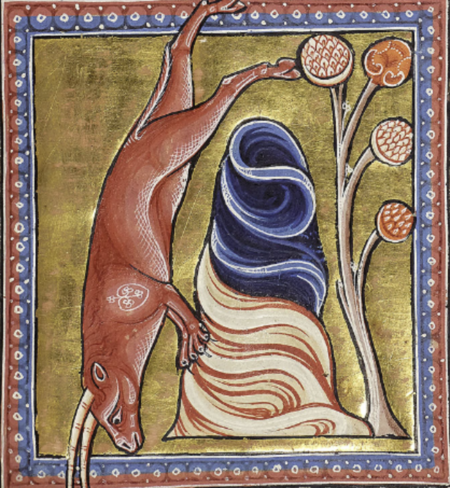
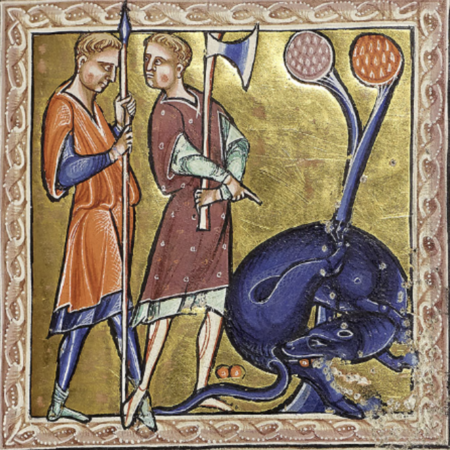
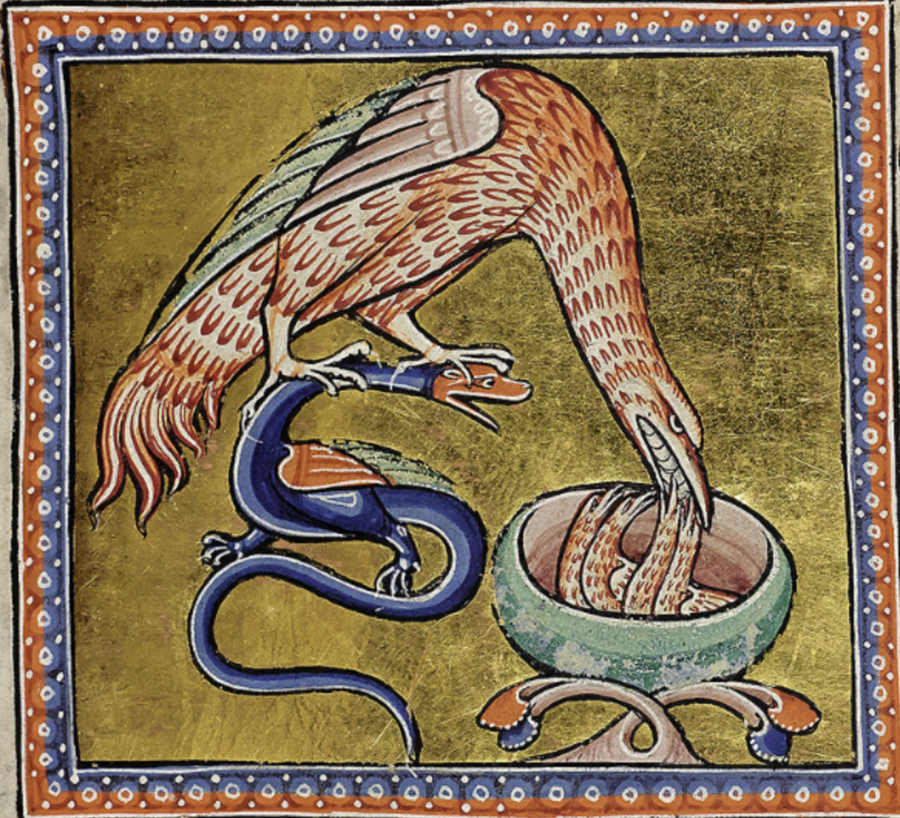
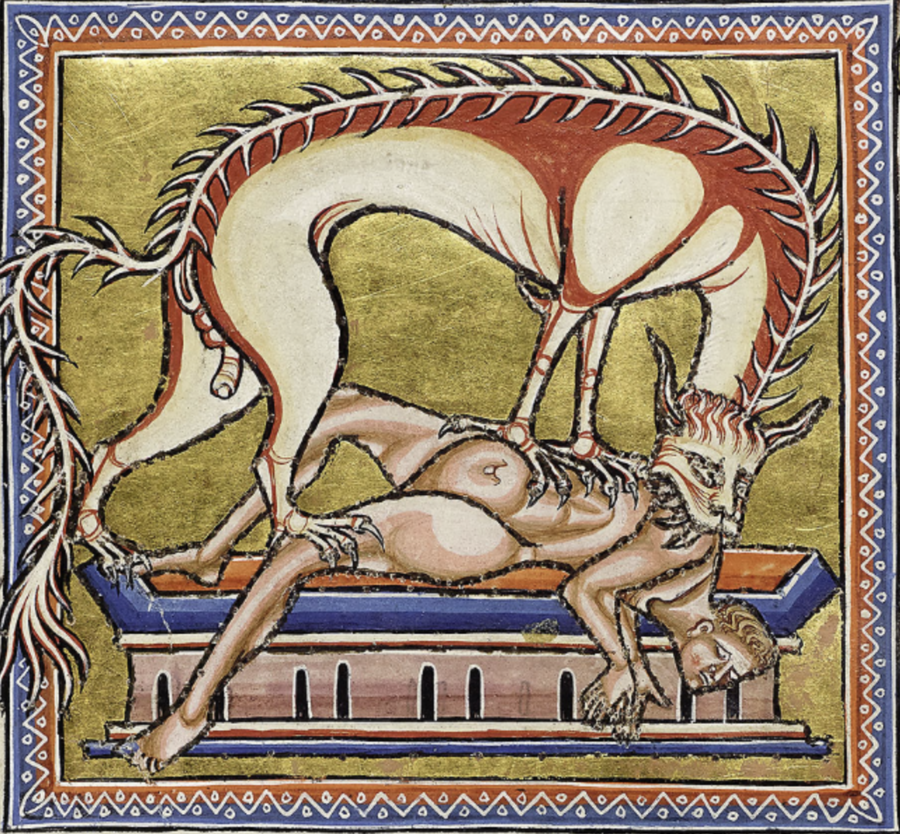
Miniatures from the Aberdeen Bestiary, late 12th — early 13th century.
The selection of textual sources is based on the principle of selective contextual analysis. Fragments from bestiaries directly related to the illustrations under examination are included in the study. The textual materials are used to establish the content of the depicted episodes, clarify their semantic context, and analyze the relationship between verbal and visual narrative. Particular attention is paid to the interplay between textual description and pictorial solution: we consider which narrative elements the artist reproduces, omits, supplements, or transforms. Furthermore, differences in the textual editions of individual manuscripts are taken into account. The textual sources serve as auxiliary material for interpreting the images, while the visual sequence of the bestiaries remains the primary object of study. Visual material selection is conducted using the principle of targeted comparative sampling, taking into account chronological representativeness and the formal-visual characteristics of the images. The research corpus includes illustrations from medieval bestiaries dating from the 9th to the 14th centuries, which allow us to trace the specific features of the animal’s graphic construction, color palette, composition, and the organization of pictorial space. The main criterion for selection is the image’s analytical significance and the possibility of comparing artistic techniques used in manuscripts from different periods. Preference is given to materials that allow for the comparison of images of the same animals and similar scenes, as well as for revealing differences in the organization of individual miniatures and folios. The corpus includes both solitary animal depictions and multi-figure compositions. An additional criterion is the quality of the digital reproduction, which allows for a detailed examination of the artistic execution. Additionally, the authenticity of the manuscript’s dating, its identification, and the ability to pinpoint the specific folio containing the image are taken into consideration.
Chapter 1. Line and Form
The line is originally primary: first it was applied, and then the color.
9th–10th Centuries
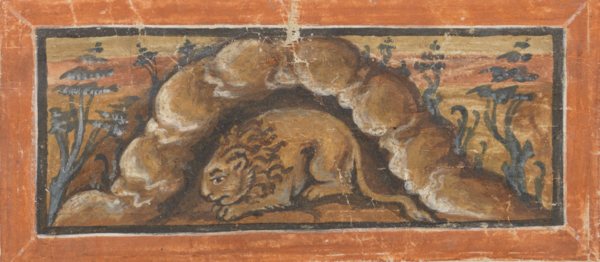
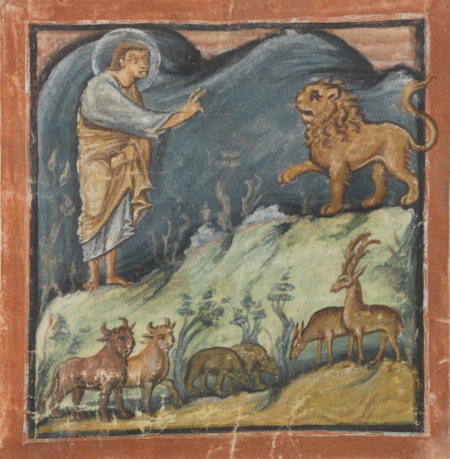
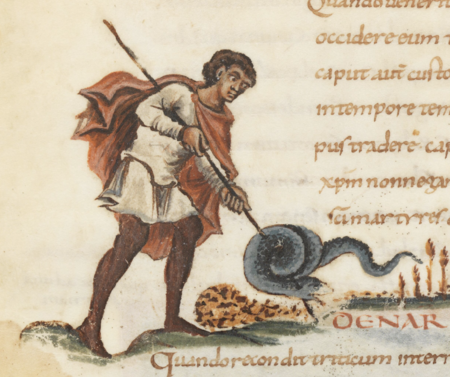
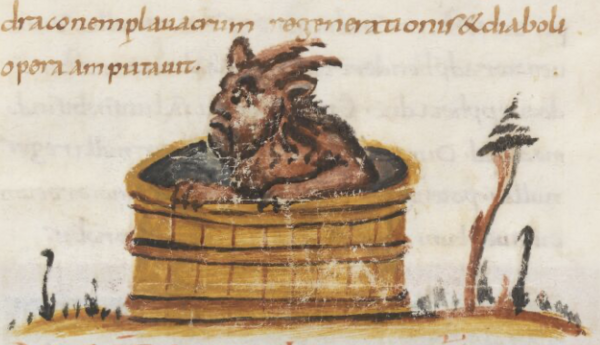
During this period, line is used as a supporting element in various instances.
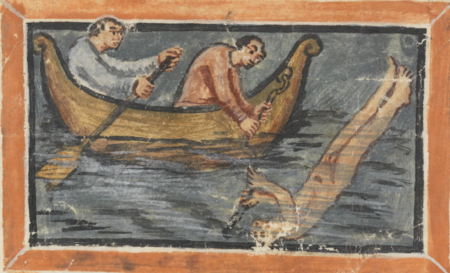
adlvldvamz
11th–12th Centuries
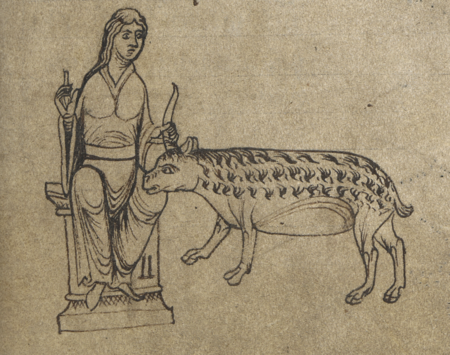
[No translatable content provided.]
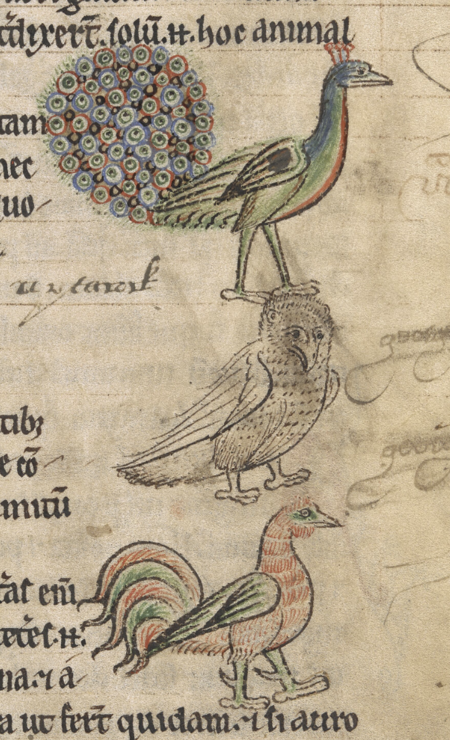
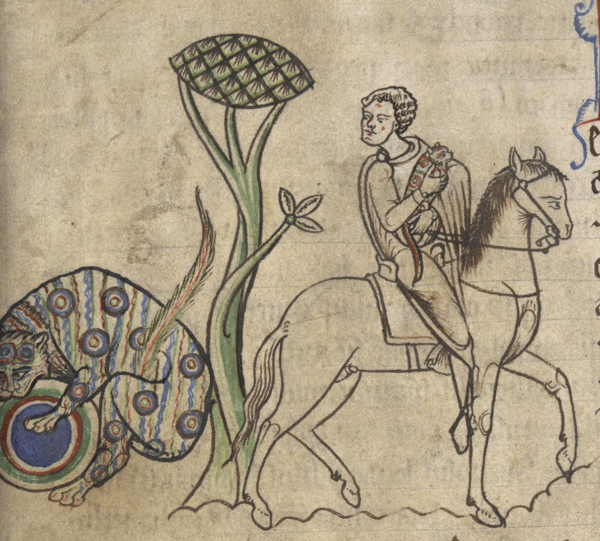
13th–14th Centuries
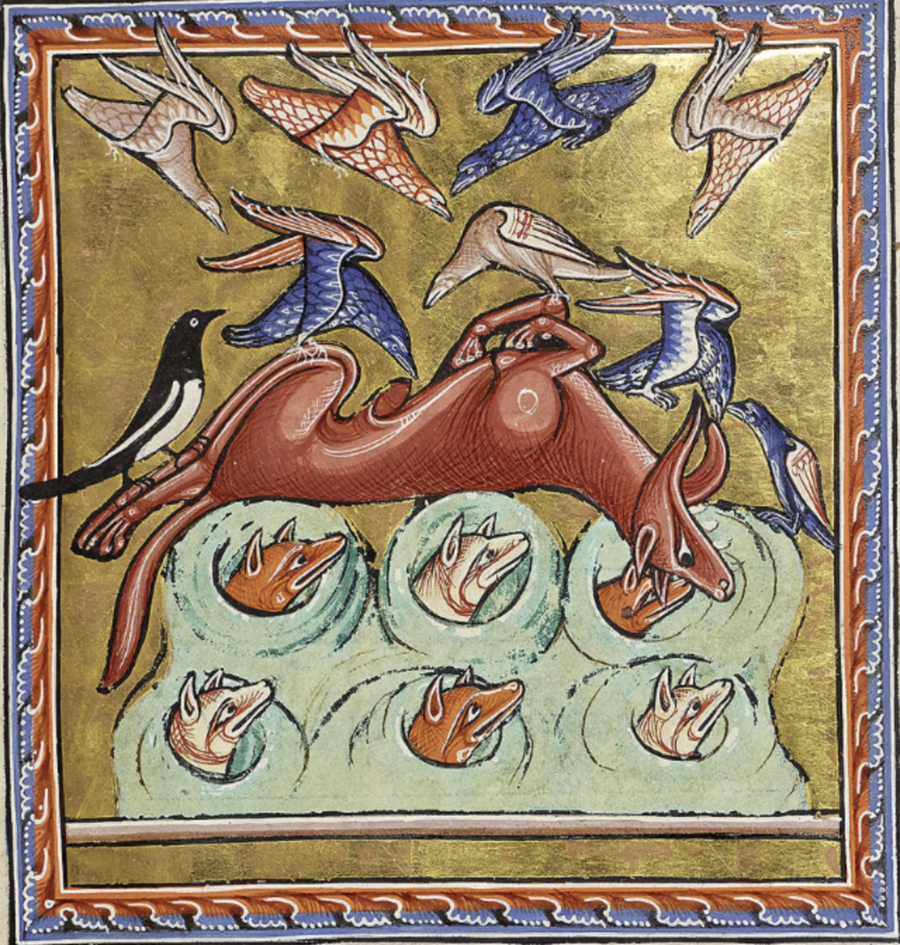
Chapter 2. Color and Decorativeness
9th–10th Centuries
11th–12th Centuries
13th–14th Centuries
Chapter 3. Composition and Space
9th–10th Centuries
11th–12th Centuries
13th–14th Centuries
Chapter 4. Imagery on the Page
9th–10th Centuries