Concept
Joe Minter (b. 1943) — an American Afro-American self-taught artist and sculptor, a representative of outsider art. He was born and raised in Birmingham, Alabama, during the era of racial segregation, which heavily influenced the themes of his work; his pieces frequently address the history of the African diaspora in America and the collective memory of the African American community. The artist’s central project is African Village in America—a sculptural environment created since 1989, composed of numerous assemblages dedicated to reflecting the historical journey of Africans in America.
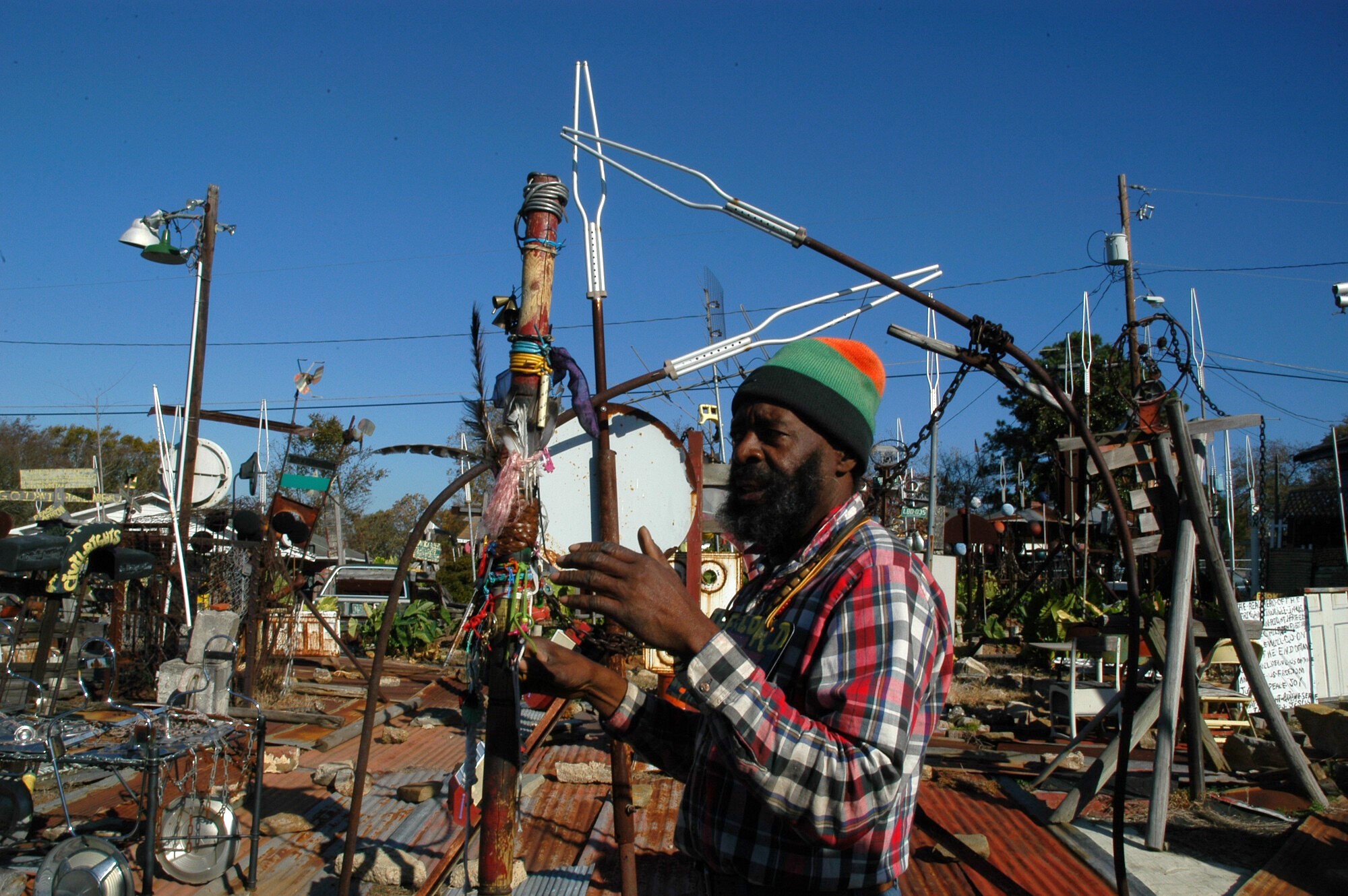
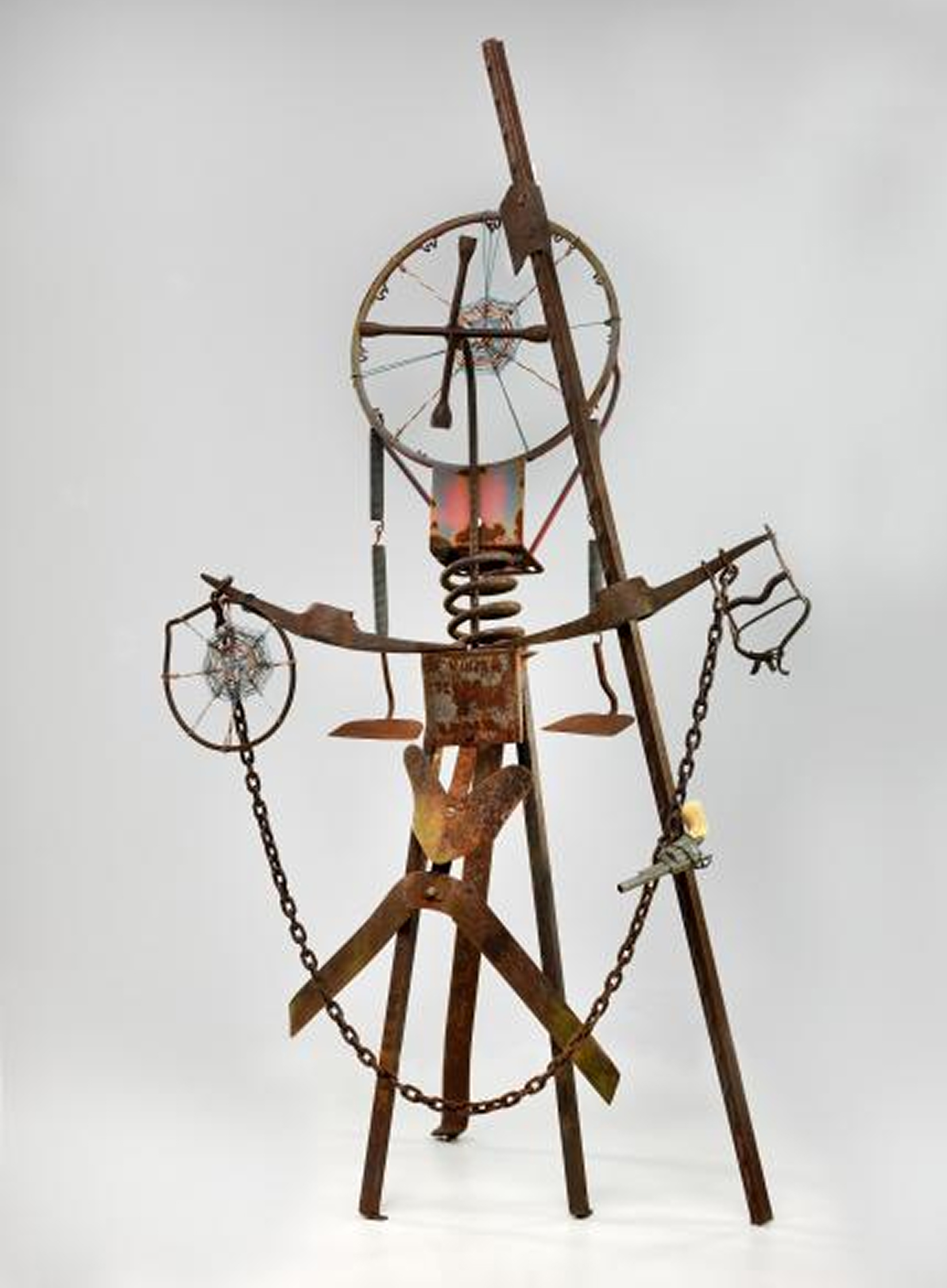
The distinctive quality of Mintter’s artistic method lies in his use of everyday and industrial materials when addressing the history of the African American community. Memory culture typically seeks to make visible forgotten or suppressed histories by relying on their surviving material evidence or recollections []. However, Mintter creates his sculptures from scrap metal, machine parts, tools, chains, and other found objects that are not always directly linked to specific events in African American history. Nevertheless, it is from these depersonalized objects that the artist constructs images of the African American past, reinstating its visibility through the surrounding material environment. This constitutes a peculiar paradox of his method: history is represented through objects that are not originally its obvious material testimony.
As a result, we lost our African language, our culture, our family, our hairstyle, and our drum for communication. We lost our pride and dignity.
Minter does not so much reconstruct the past through surviving artifacts as he reconstructs it anew, enriching familiar objects with historical and symbolic meaning, and significantly expanding their cultural context. Using American industrial material—material familiar to him through his life and work experience—the artist forges an individual sculptural language through which he addresses the theme of African heritage. Of particular interest is how his personal biography and cultural identity influence the reinterpretation of his material environment and the formation of the visual imagery in his works.
This work aims to trace how the visual language of Joe Minter constructs the forgotten past of Africans in America and what role his independent artistic practice plays in this process—specifically, its distance from academic and institutional canons. It is hypothesized that the position of the self-taught artist and the autonomy of his sculptural environment allow for the development of a unique method for engaging with cultural memory, one in which the meaning of objects is determined not by their original provenance or conventional perception, but by the artist’s interpretation. Particular attention will be given to the possible influence of African spiritual beliefs and artistic traditions on the formation of this visual language.
Sources and Categorization
[Content not provided]
Module