«LEADER» TODAY
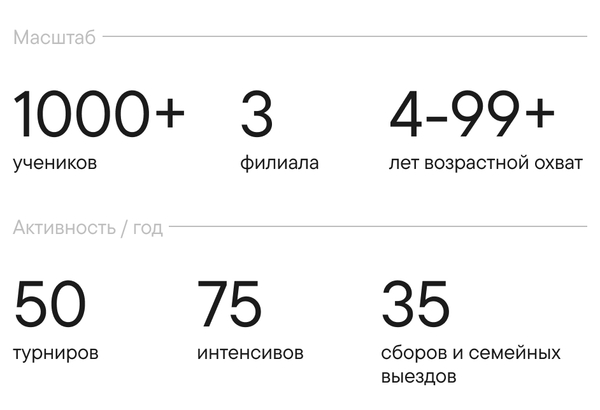
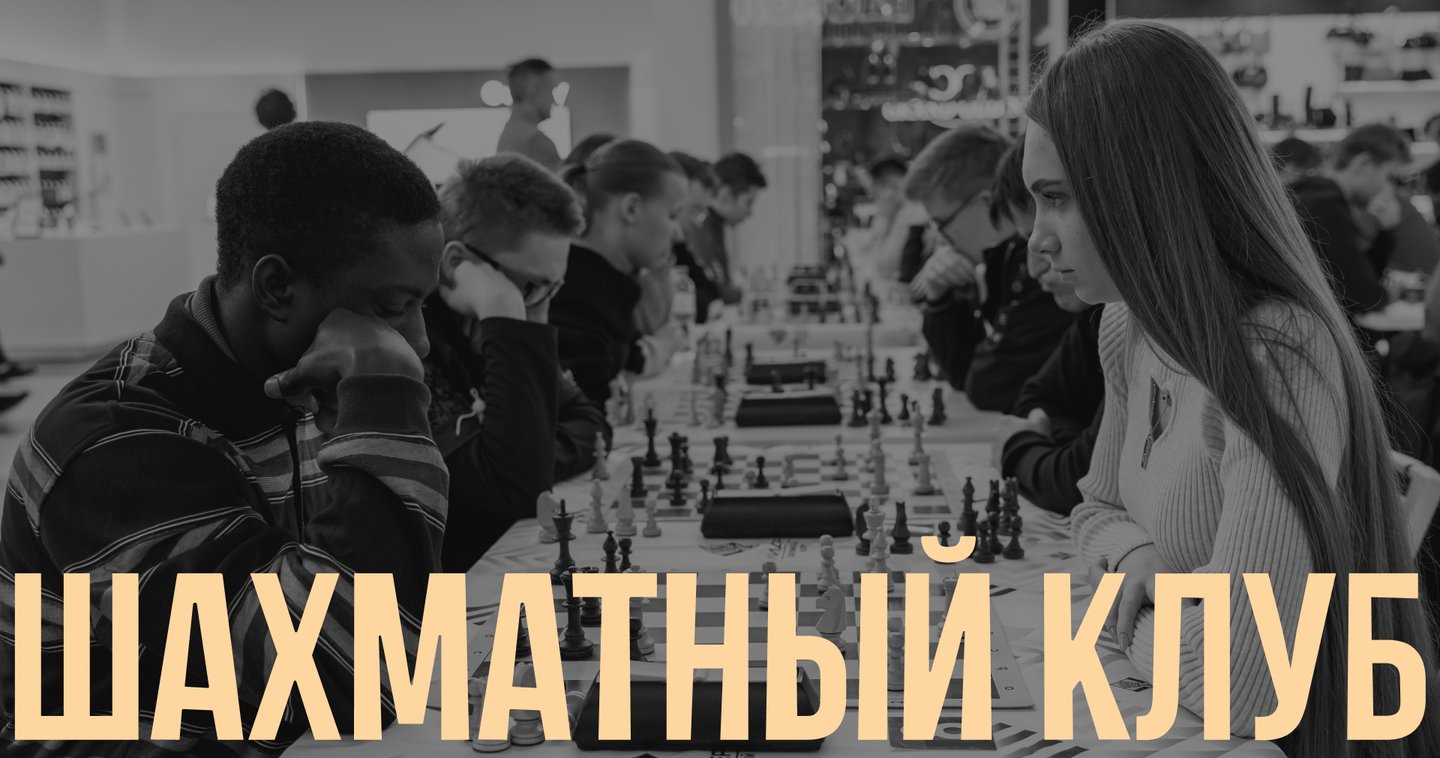
«Lider» is a chess club from Nizhny Novgorod, established in 2018.
WHAT HAS CHANGED?
«Leader» is at a transition point—moving from a localized project heavily reliant on an individual approach to a scalable, developable model.
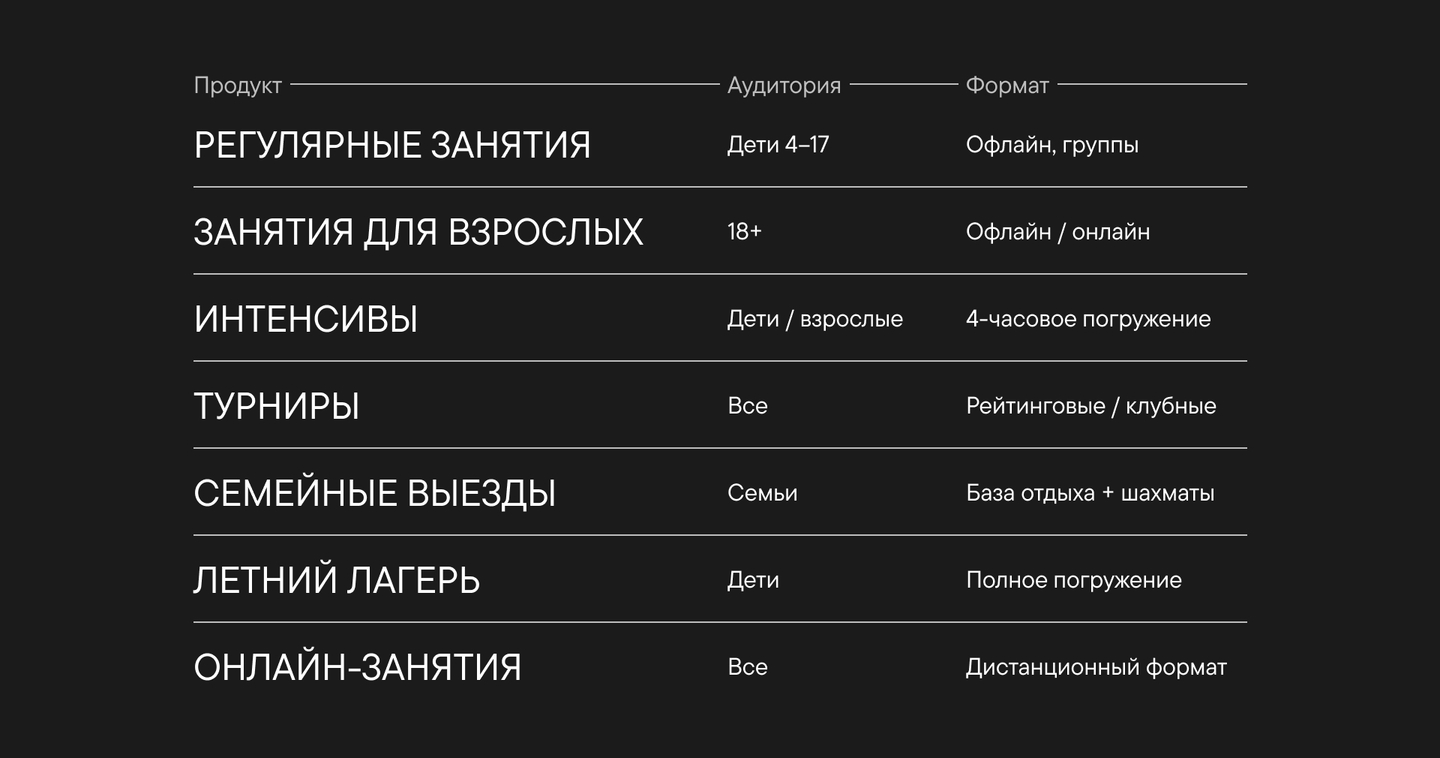
What has changed: 01 / The club has grown. From a simple chess school to a multi-format system. 02 / The product line has expanded. Regular classes, adult programs, intensives, tournaments, family trips, camp, and online offerings. 03 / The audience has broadened. It is no longer just «children brought by parents.» It now includes adults and teens. 04 / A strategic goal has emerged. The director speaks about scaling while maintaining quality as the organization grows.
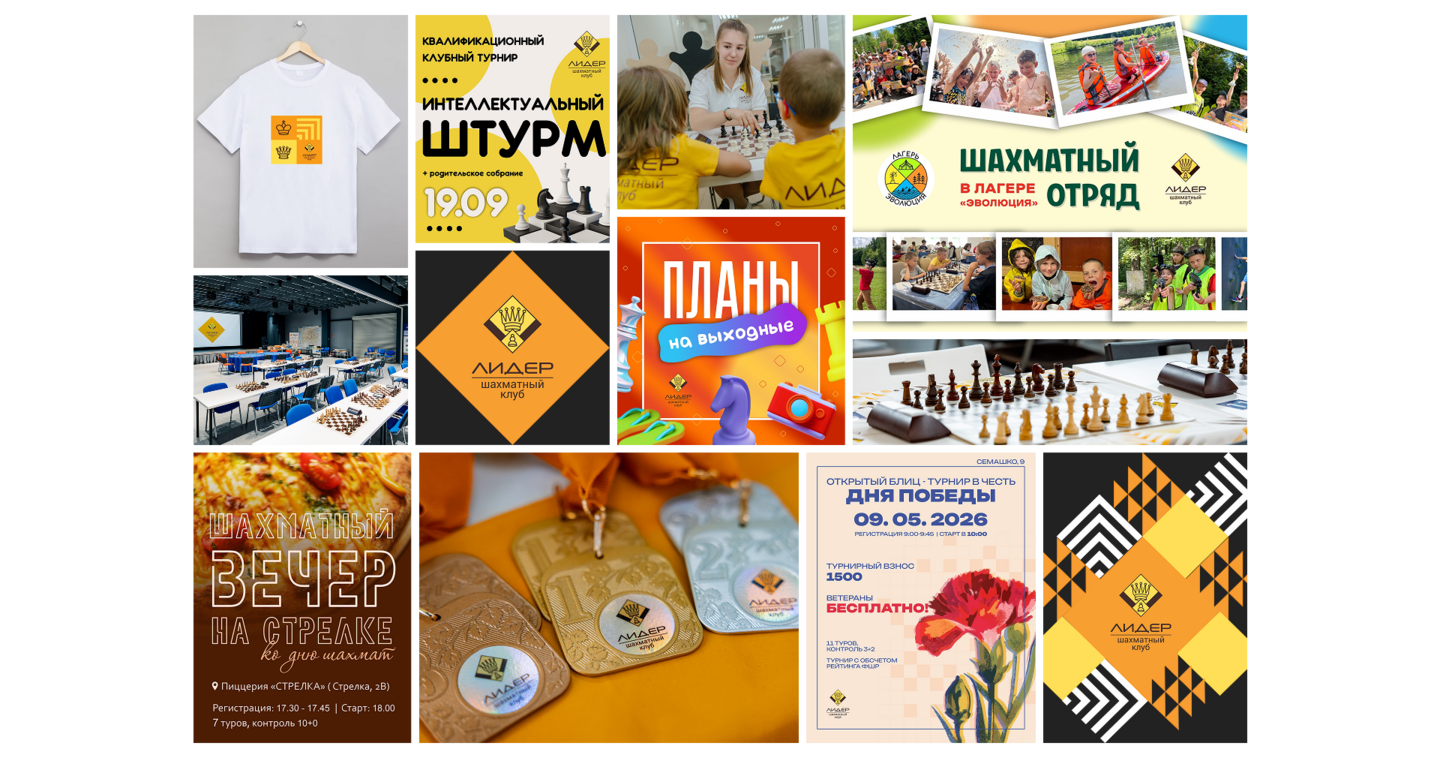
The club’s primary visual identifier is the color orange. However, communication across different products and events noticeably varies while remaining predominantly geared toward children.
THE IMAGE OF CHESS CREATES A BARRIER
Chess is perceived as an activity for «those who already know how to play.» This creates a barrier to entry—especially for adults.What this means: 01 / Adult: «I don’t know how to play. What will people think of me?» 02 / Parent: «Will there be results? Will they get along with the coach?» 03 / Teen: «This is boring; it’s for nerds.»
TARGET AUDIENCE
How Parents Choose
01 / First—location and budget. 02 / Then—format and environment. 03 / They look at the experiences of others (chats, reviews, photos). 04 / They reduce the risk of taking the first step (a trial class). 05 / The older the child, the more important their own desire is.
How Adults Choose
01 / They are looking for a «place, ” not a „course“ (atmosphere, people, consistency). 02 / They fear judgment—they need an accessible entry point. 03 / They want to know what the first class will be like. 04 / They decide based on whether there is a community—a sense of belonging.
«Quality» is also an important word for this project.
The Club is confident in producing high-quality work. However, an outside observer cannot perceive that quality. The director admits this: «It is very difficult for outside people to evaluate the quality of the product.» Why? Because «quality» isn’t one thing—it encompasses four distinct concepts, depending on the segment. — For a parent of a 4–7 year old, it is important that the child feels comfortable and wants to return. — For a parent of an 8–12 year old, it is important to see progress and a positive relationship with the instructor. — For a teen, it is important to be among peers and to grow. — For an adult, it is important not to feel like an outsider and to find their own way of playing.
AUDIENCE MOTIVATIONS
INSIGHTS
PARENT (Ages 4–7)
I want to introduce my child to chess because it’s about intelligence, critical thinking, and focus. But I don’t want to force it on them. I don’t know if it’s for them or for me.
PARENT (Ages 8–12)
I want my child to grow up with chess because it develops thinking skills, character, and the ability to handle defeat. But I don’t want to pressure them.
TEENS (Ages 13–18)
I want to be with my peers and grow—but I don’t want chess to feel boring or childish. I want to be cool through my intellect.
ADULTS (Ages 18+)
I want to play chess and be around people—it’s an intellectual hobby that develops the mind and offers social connection. But I worry that I’ll feel like an outsider here.
COMPETITIVE ANALYSIS
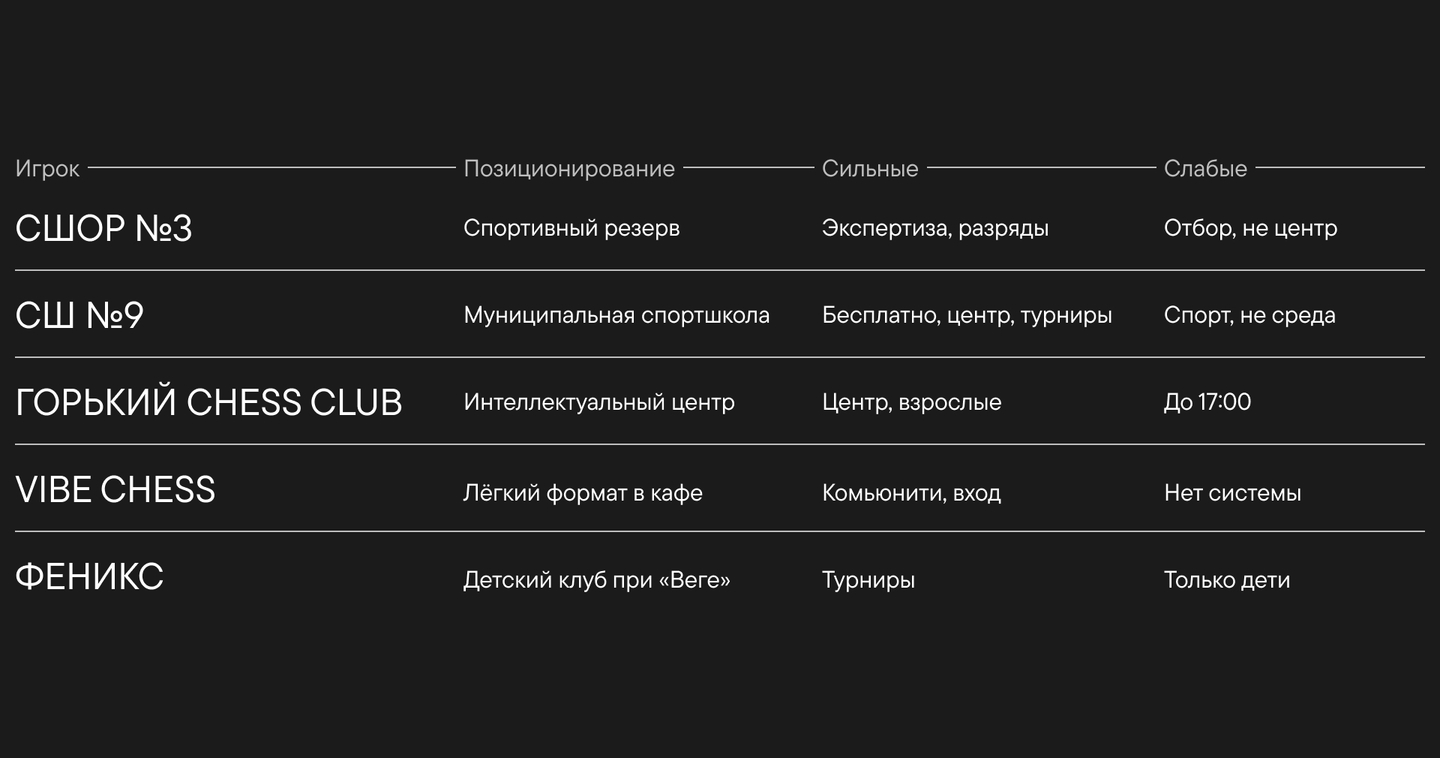
DIRECT COMPETITORS
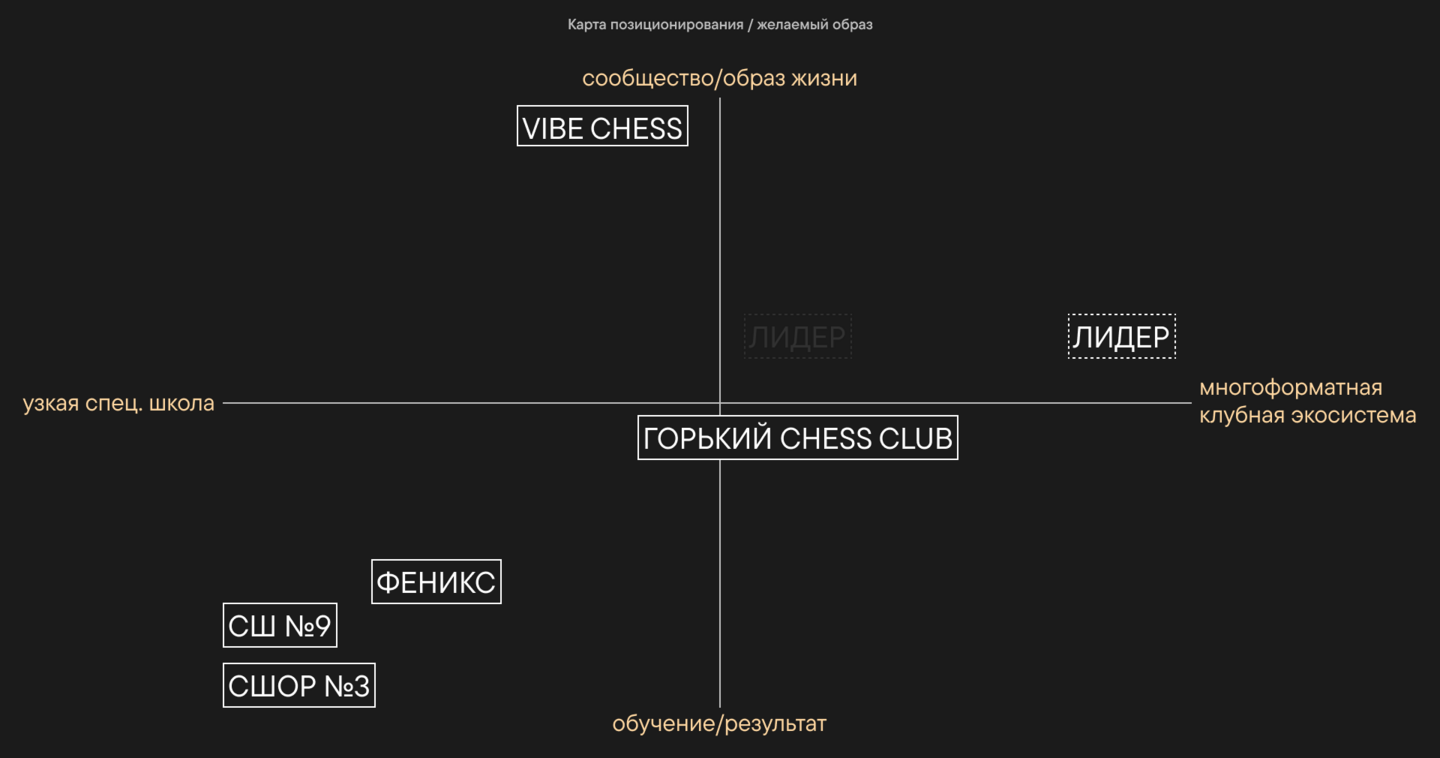
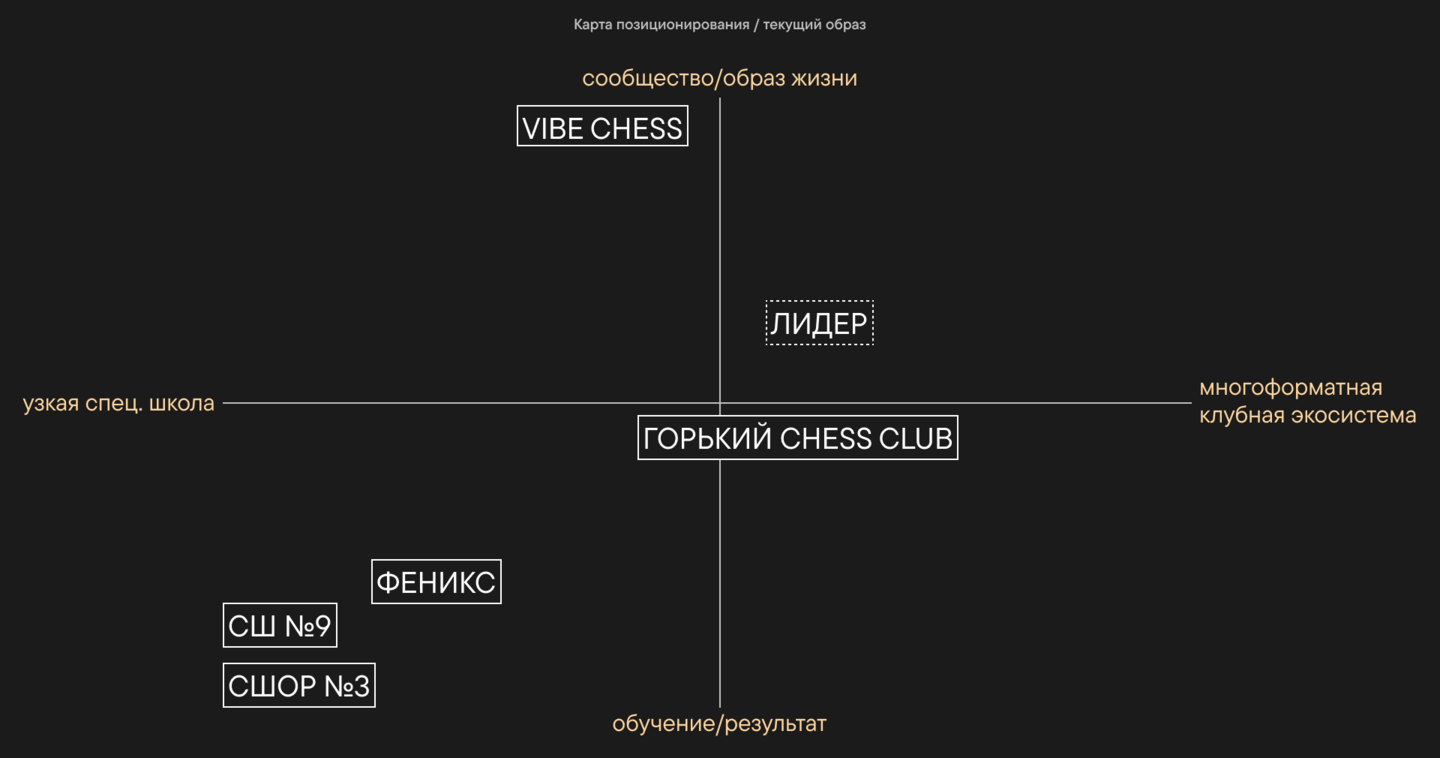
INDIRECT COMPETITORS
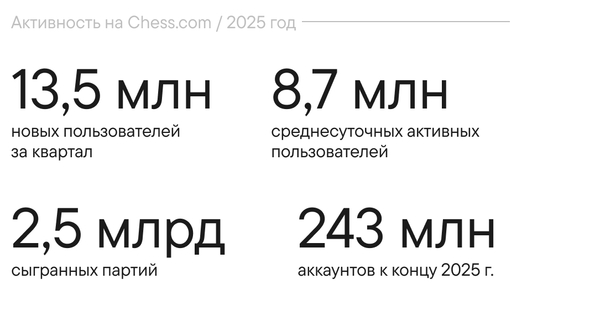
Online ChessThe online format eliminates the possibility of play itself; an offline club can compete for other participation scenarios: community, events, space, and belonging.
ANTICAFE / TABLE GAMES
«Tachometer» · «Mosigra» · time clubs
They take the evening and offer social connection—but not chess.
«An anticafe is a space for socializing, relaxing, and working. People come here for the cozy atmosphere and a calm environment.»
MARKET TRENDS
GROWING INTEREST IN CHESS
46% of Russians play intellectual games at least occasionally. Chess ranks first—29% choose it.
«Chess tops the ranking of intellectual games.»
INFRASTRUCTURE GROWTH
In two years, the number of chess clubs in Russia has grown by 38%—from 360 to 496.
304 of 496 clubs are located outside of million-plus cities.
«The growth in unique users viewing club profiles exceeded the overall service dynamics by 44%.»
CHESS — A MODERN FORMAT
Karyakin: «Actively popularizing chess among youth.» Over 130 clubs across the country are open.
25% of Russians would like to teach their children or grandchildren how to play chess.
«If a child spends time on their phone anyway—they should at least play chess.»