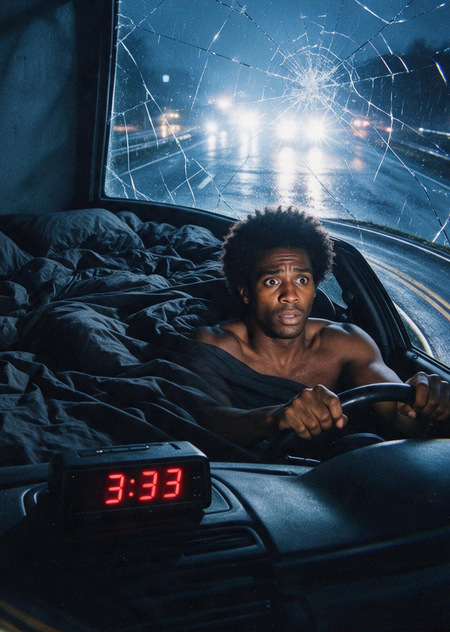
Study Concept:
This is a sound study on false awakening. A person wakes from a nightmare, gasping for air, and begins a typical morning routine: getting out of bed, going to the bathroom, washing up, grabbing keys, leaving the house, and getting into the car. There are no words, no musical notes—only sounds that everyone hears every day. The microphone is placed so close that the listener is not standing beside the protagonist, but inside him. He hears his breathing, his footsteps, his fatigue. As the protagonist gets ready, time flows thickly and sluggishly. But when the windshield wipers turn on, the study gains a pulse—the only real rhythm in the piece—and from that moment, the count begins. The car drives down a wet road; in the distance, a siren rises. It approaches, it grows louder, and at the moment the impact should occur, everything cuts out. There is no impact; the listener must complete it themselves. And immediately, the breathing returns, the bed returns, the same morning returns. The second loop repeats the first almost sound-for-sound, but it is tighter, louder, the siren is closer—as if the circle is contracting and tightening. At the peak, instead of a collision, the alarm clock blares, and it feels like the real awakening has arrived. Yet, the study started with awakening, and if played on repeat, the alarm’s chirp blends back into the same panicked breathing. The horror here is not the accident, but the routine from which one cannot escape: the person does everything as usual and always returns to the same place.