1. Brief
The Problem
The coffee machine market competes on technical specifications: pressure, speed, automation, and touchscreens. However, few appeal to human feelings and emotions or engage with them.

Ultimately, the main thing is lost: the predictable and comforting ritual that sets the tone for the day. The user doesn’t just need caffeine; they need a feeling of care without unnecessary complexity.
5W
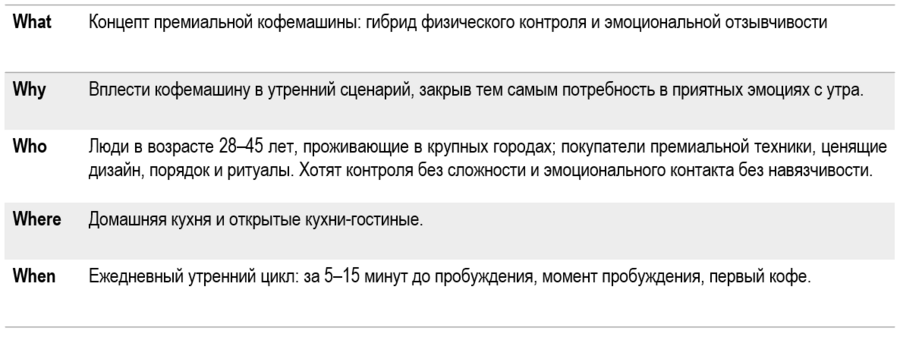
Brief:
Emotion is not ornamentation—it is a function. We are not designing a coffee machine; we are designing the first five minutes of the day.
2. User and Product Interaction
JTBD
When I want to drink coffee, I want to transform a routine into a pleasant morning ritual—that is, to directly control key variables through a tangible physical interface that creates the right mood to achieve a consistent result in a predictable amount of time, all within a visually restrained yet creative apparatus.
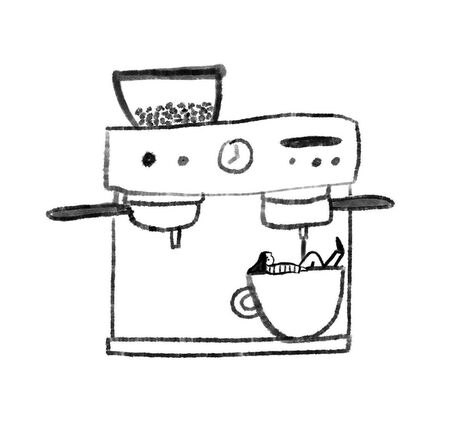
Conclusions:
- An intuitive interface
- Indicators and sensors displaying time, temperature, and other parameters
- Emotionally responsive design or a daily message
- A restrained style—the foundation for accents
Object Decomposition
To begin, we will compare different types of coffee machines, after which we will identify the general workflow process.
Despite the differences, a coffee machine operates according to a common logic. It can be roughly divided into three components:
- Thermal — responsible for heating the water to the desired temperature.
- Hydraulic — creates and controls the pressure.
- Extraction — where the coffee brewing takes place.
In automatic models like Saeco or De’Longhi, all these processes are managed by electronics. In semi-automatic machines, most of the control remains with the user.
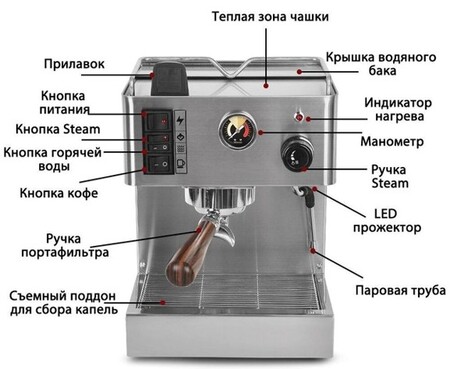
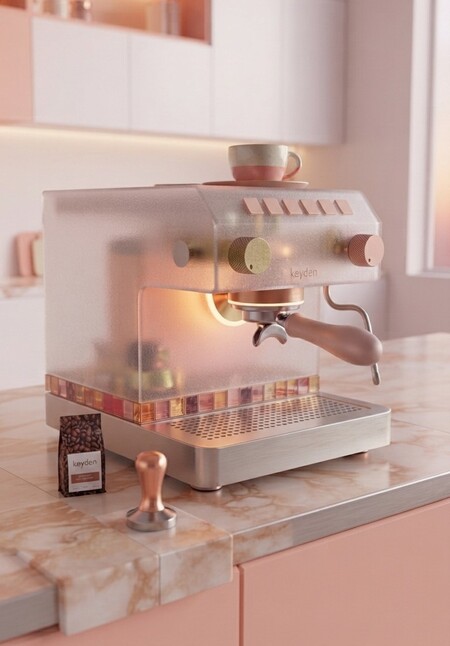
Based on subsequent analysis, a portafilter-style coffee machine was selected.
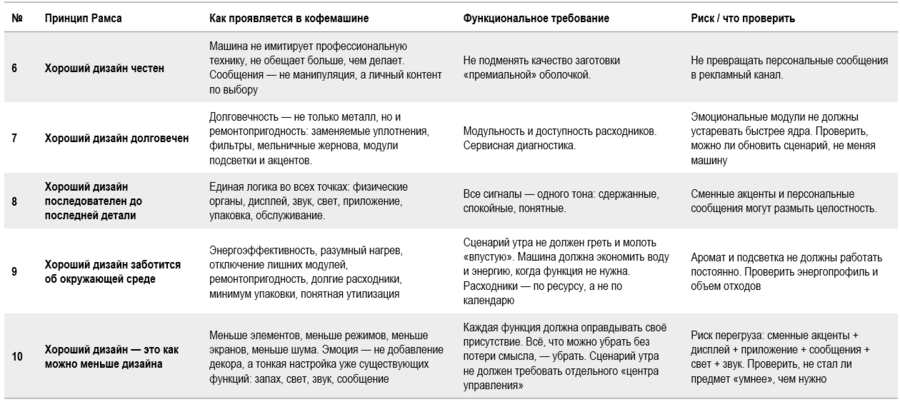
10 Principles of Good Design
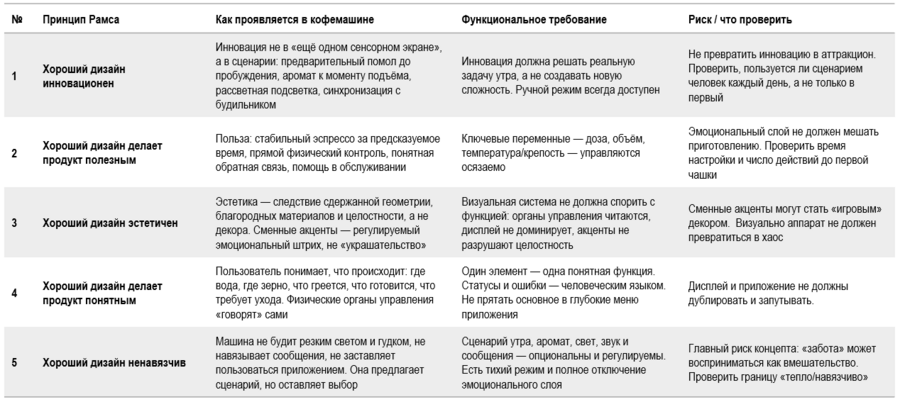
3. Market Analysis. Finding a Niche
Competitor Analysis
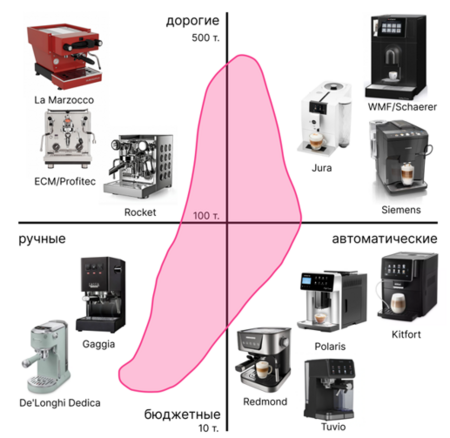
- Upper right corner — premium automatic machines. This is the «press a button, get coffee» experience, but the price point is high.
- Upper left corner — high-end manual/semi-automatic machines. For professionals and enthusiasts.
- Lower right corner — budget automatic machines. For the mass home segment.
- Lower left corner — affordable manual machines. A compromise between price and control over the espresso.
Finding a Niche
If you add a third dimension—emotional involvement/a loss scenario—a vacant area becomes visible: the premium home segment with physical control, but without professional complexity.
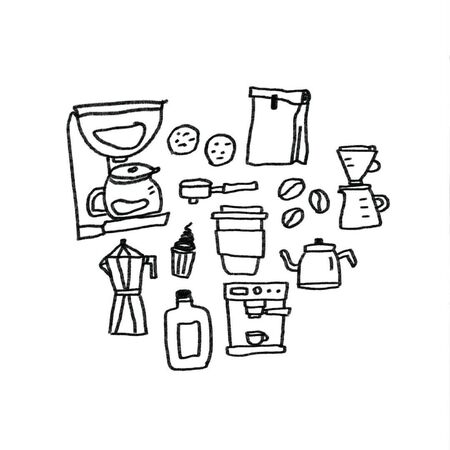
Market analysis reveals a gap between «convenient automation» and «skill-based control.» Our objective is to transform the morning into a satisfying ritual with a predictable result and tangible control. Among the available options, a home espresso machine with assisted control and an optional emotional scenario best fulfills this need.
Unique Selling Proposition
«Allow yourself to be an energetic vampire. We don’t sell coffee; we sell morning mood.»
«Savor a cup of coffee, and let us handle the rest.»
4. Ideation Methods
Reframing
Original task: design a coffee machine that brews coffee quickly.
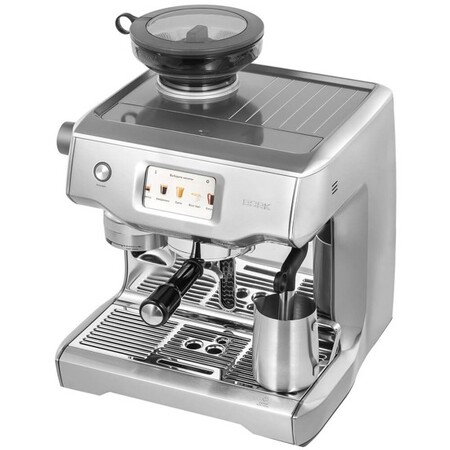
Conventional approach:
- 15+ bar pressure and stable temperature
- rapid heating
- automatic rinsing and descaling
- touchscreen, smartphone control, convenient bean container
Reframing the problem: not «a coffee-providing appliance, ” but „a parameter of morning mood“
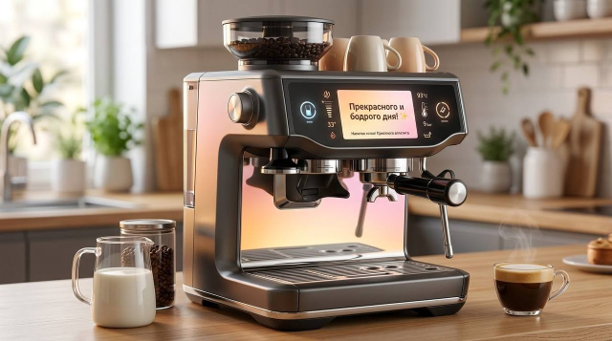
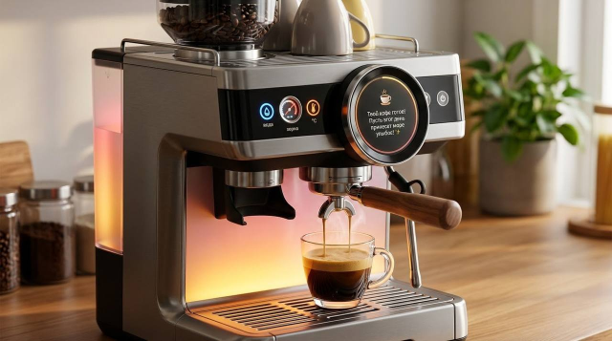
1. Proactive Wake-Up (the machine syncs with a smart alarm clock. The user wakes up not to a jarring sound, but to the scent of fresh coffee)
2. Sensory Dawn (integrated lighting mimics a sunrise, and instead of a standard beep, the machine plays a soft melody)
3. Morning Compliment (the machine’s display shows not just «Ready, ” but a personal message from a loved one, uploaded via an app, or a fun fact of the day)