NON GRAD
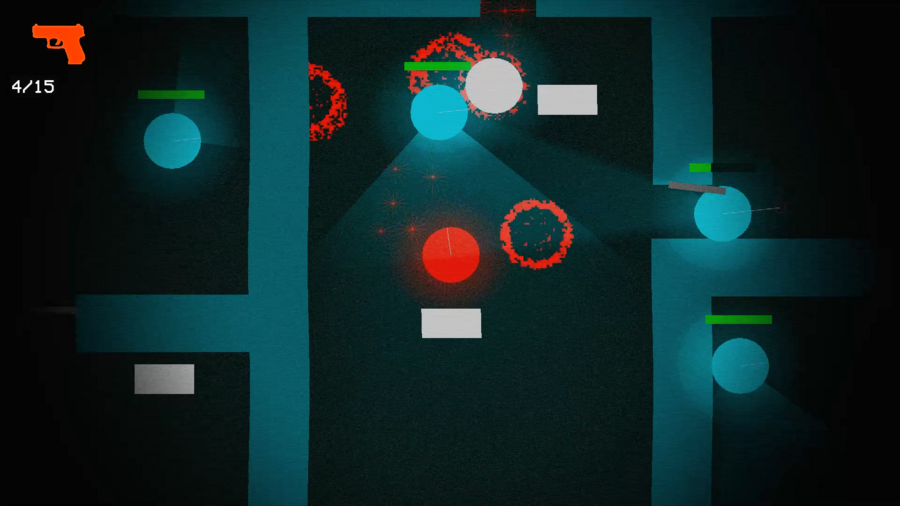
The game takes place in an alternate America where the CIA has become the puppet master.
In an alternate history where the 1962 Cuban Missile Crisis escalated into nuclear war, the United States dropped an atomic bomb on Cuba and, influenced by the CIA, morphed into a militaristic dictatorship.
The player is the head of a dormant Non-Grad cell in Savanna, Georgia, a city that has just been activated.
In this city, order only exists on the storefronts. Behind them lies control, fear, and blood.
GAME LOOP
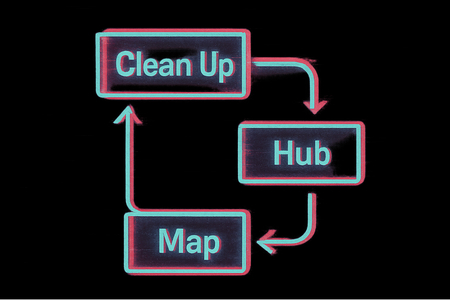
The gameplay can be broken down into three separate stages: 1) Clean Up Stage 2) Hub Stage 3) Map Stage
PHASE 1: CLEAN UP
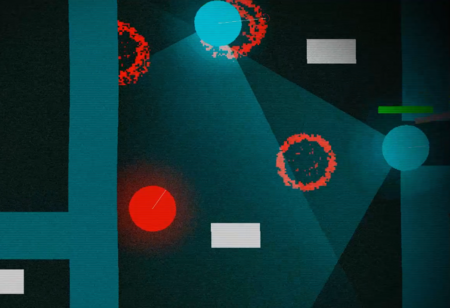
This stage is a dynamic top-down shooter accompanied by an aggressive soundtrack that encourages the player to take risks. The more combos he accumulates, the more «inspiration» resources he can earn.
Resources and Combo System
Number of agents sent to a level = number of attempts to complete the level.
The more combos, the more «Inspiration» the player receives.
The combo multiplier increases if the player: 1) Uses different weapons 2) Destroys enemies in short bursts of time
The combo breaks if: 1) The player does not attack for too long 2) The player takes damage
Goal: to incentivize a fast and risky playstyle, minimizing slow and cautious progression.
Key Mechanics
1) Block Attacks (Right Click) Allows you to parry enemy strikes with precise timing. It has a cooldown so you cannot maintain constant defense.
2) Sprint (Shift) Increases movement speed at the cost of stamina. You can quickly disengage from combat, but you cannot run indefinitely.
3) Charge While Sprinting If you collide with an enemy while sprinting, they are knocked back and stunned for a duration. Useful for breaking up enemy groups.
4) Environmental Interaction Knocking enemies into destructible objects enhances the stun effect. This allows for crowd control.
5) Unarmed Combat System Strikes without a weapon do not result in an instant kill (for either the player or the enemies). This adds realism and difficulty balance.
6) Stun and Finishers After three unarmed strikes, an enemy is stunned. The «Space» key enables a finisher move, during which the enemy cannot attack or move.
7) Absence of Crosshair The cursor is hidden for greater immersion. The player sprite features a directional view marker.
Stage 2: Hub — Improving the organizational database
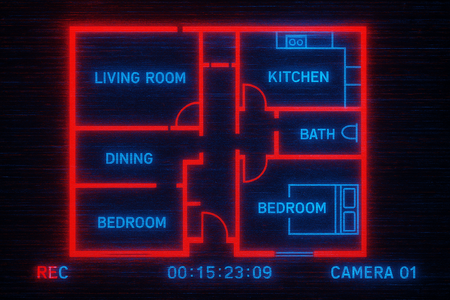
Phase 2 — Hub
In the «Hub» phase, the focus is on improving the organization’s base. The gameplay in this segment resembles simple tycoon games involving constructing new buildings that affect gameplay (for example, hiring new agents or manufacturing weapons, which allows agents to start a level immediately with firearms), as well as upgrading agents and managing resources.
(demonstration image)
Key Resources
1) Inspiration — One of the game’s primary resources. — Used for hiring: a) Agents—combatants participating in expeditions (the number of agents equals the number of attempts to complete the level). b) Personnel—staff working at the base who increase building efficiency (productivity multiplier).
2) Experience — Gained only during the Clean Up phase. — Used in the Training Facility to increase agent damage and speed.
3) Money — The second most crucial resource. — Necessary for constructing new buildings and upgrading the base.
4) Materials — Required for building facilities and creating weapons/equipment for agents.
5) Technology — Used for developing and producing weapons, armor, and special gadgets.
The essence of the stage’s gameplay
The Hub stage is closest in spirit to tycoon games: — Players must establish production and optimize resource generation. — Thoughtful base development significantly increases the chances of success in missions: — Agents begin levels equipped with firearms. — They receive armor and specialized gadgets. — Their attributes are increased.
Buildings (preliminary list)
1) Communications Center — recruiting «agents» and «personnel» 2) Armory Center — manufacturing weaponry. 3) Armor Center — crafting defensive gear (allowing agents to wear armor, which enables them to survive gunfire). 4) Special Gadgets Center — developing unique devices (e.g., smoke/flashbang grenades). 5) Training Facility — enhancing agent attributes. 6) Passive Income Building — generating regular income. 7) Passive Material Income Building — maintaining a constant flow of resources. 8) Passive Technology Income Building — accelerating scientific progress. 9) Warehouses — storing weapons, armor, and gadgets (for high-capacity inventory). 10) Barracks — housing agents (to recruit a larger number of agents).
Phase 3: Map — Planning and Strategic Management
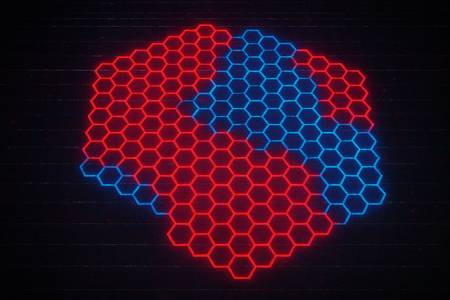
Map is the strategic segment of the game where the player plans further actions, manages conquered territories, and selects targets for attacks.
The game board is represented by a map of the city, divided into hexes. Each hex is a separate territory with unique value to the organization.
The Importance of Hex Codes
Capturing a Hex can: 1) Increase the production of a specific resource:
— Factory → Material increase — Laboratory → Technology increase. — Warehouse → Money increase.
2) Influence future missions:
— Change the number of enemies on a level — Alter the quality of their weaponry. — Completely remove certain enemy types.
If a player attacks a hex but fails to complete the Clean Up phase, the following will occur on the next attempt: — The hex’s defenses are strengthened. — Combat becomes more difficult.
Capture requires caution and preparation.
Main Goal of this Phase: Capturing a hex from the enemy headquarters = winning the game.
Simultaneously, you must defend your own territory, as the enemy will also attack your hexes.
Hex Defense and Auto-Attack
— The player assigns agents for defense.
— During an enemy attack, combat is calculated automatically (auto-battle) based on:
- Number of fighters.
- Equipment quality.
- A roll of a six-sided die. Formula: ((number of people)+(number of equipment*2)) * (dice roll result)
If a hex is lost: — The player loses some or all of their agents and staff on that territory.
Logistics and Supply Chain