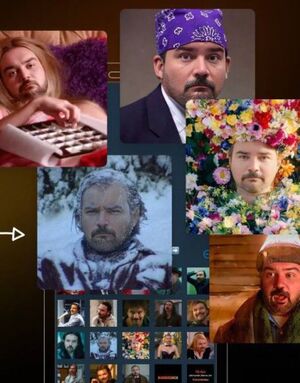
Sometimes a professional path doesn’t move in a straight line, but through a series of bold decisions. The story of HSE Art and Design School alumna Olesya Vashchenko is precisely about that. Her trajectory moved from a humanities background and an interest in classical philology—into the worlds of design and theater, and from there—to neural networks and working with Sber’s team focused on promising AI technologies.
From HSE Lyceum to the School of Design
Before enrolling at the university, Olesya attended the HSE Lyceum with a focus on humanities. She participated in literature and art history olympiads and was seriously considering enrolling in classical philology.
But at the moment of choosing her path, her trajectory shifted:
«At some point, I realized I wanted to be creative—and I decided to apply to the design program, even though I had no preparation or experience.»
Olesya enrolled in the HSE Art and Design School for the «Theater and Film Artist» program (now the «Event, Theater, Performance» specialization within the «Contemporary Art» program — editor’s note).
The curriculum centered on practical skills and, more significantly, on thought processes: working with space and form, developing concepts, creating art objects, costumes, and set designs, and collaborating in teams on real-world projects.
«We were taught not just to make things, but to think—to think like artists who can work in the real world.»
First professional experience: Praktika Theatre
While studying, Olesya began working in her field. Her first project was assisting with pitch presentations for plays at the «Praktika» Theater. The tasks were highly practical: sourcing and purchasing props, collaborating with the artistic team, and, of course, making quick decisions under tight deadlines.
«I was looking for chemical protective suits, buying vintage lamps on Avito, renting Soviet-style trousers with the right texture—everything needed for the set design.»
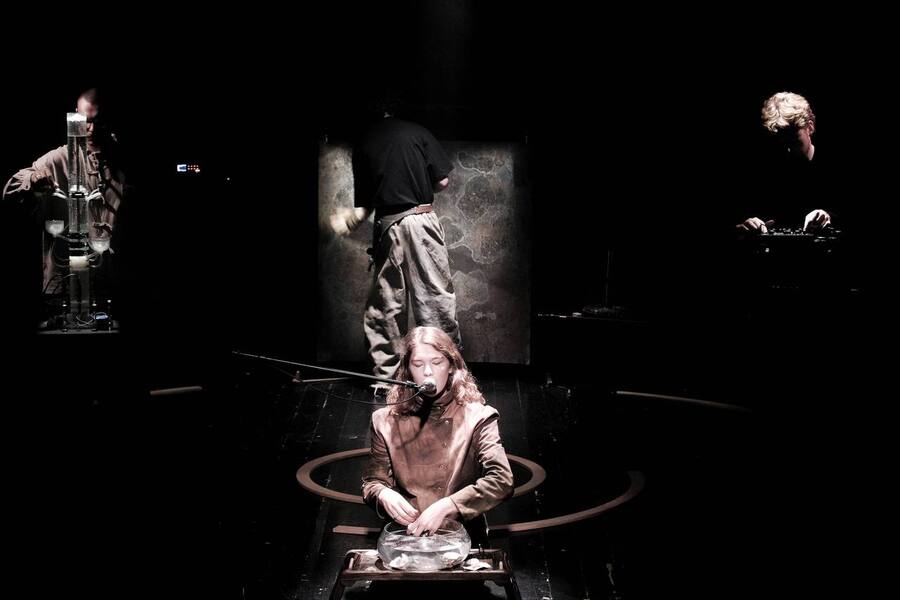
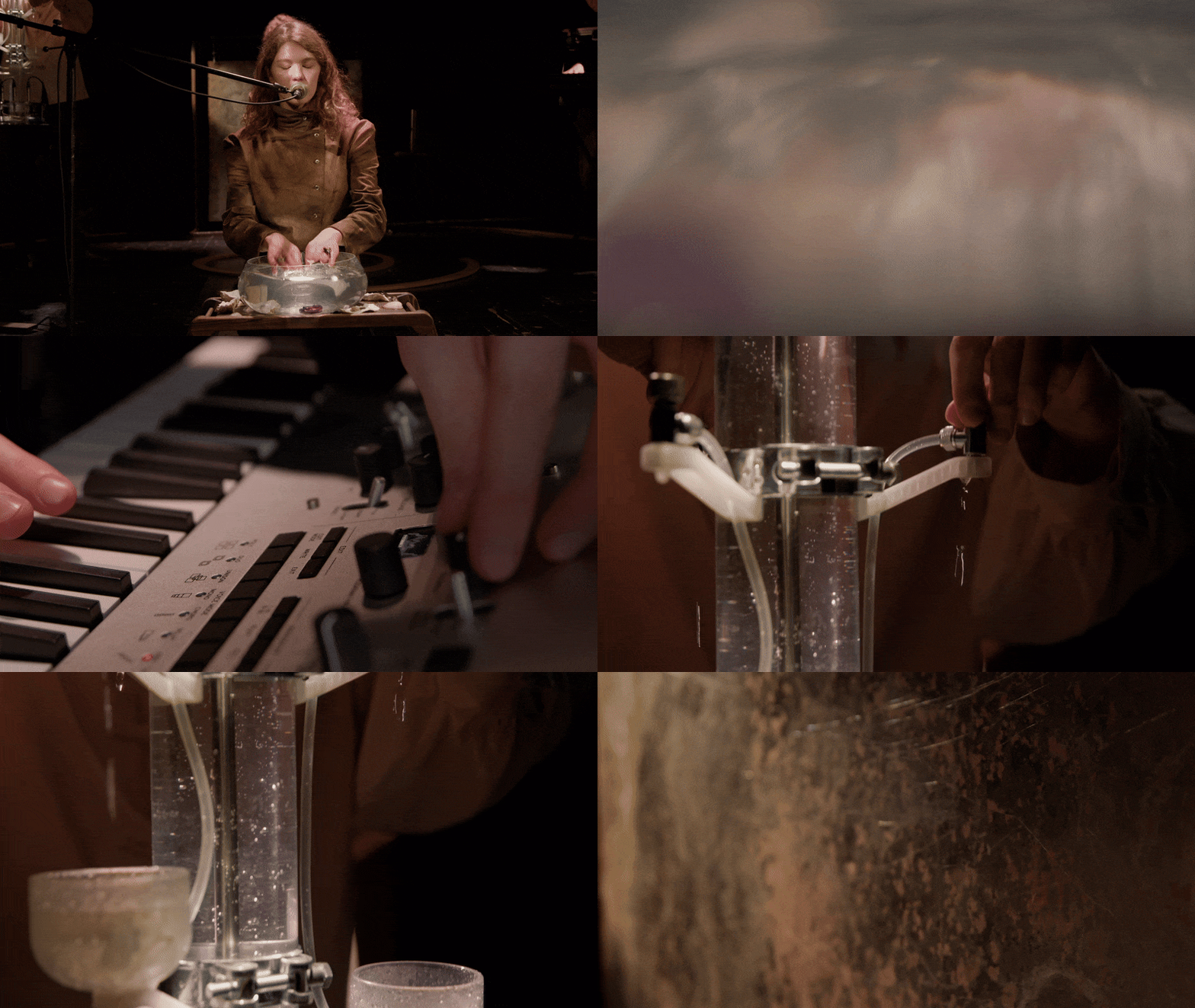
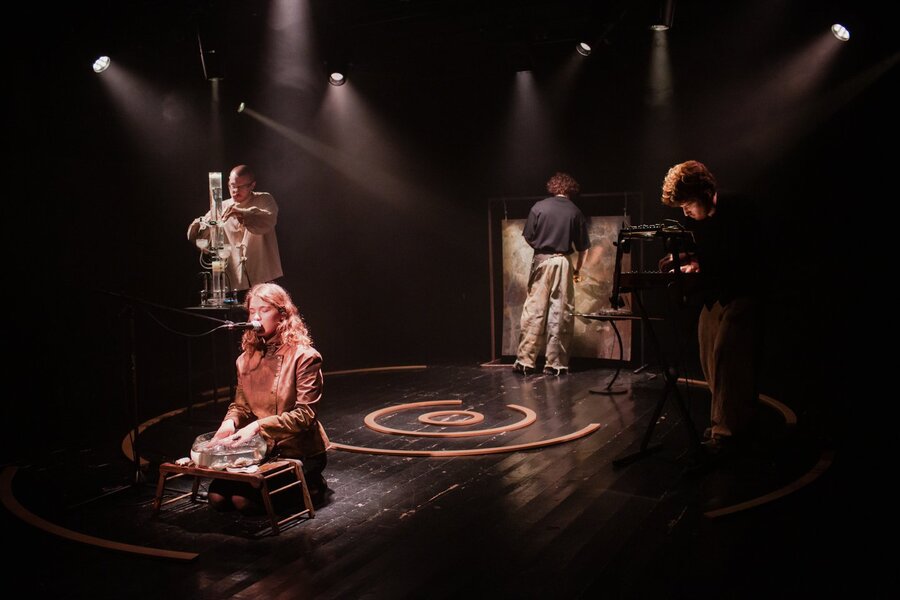
The project eventually grew into a full production, and several years later, Olesya returned to the theater as an author with her diploma performance, Luscinia.

Education that transforms into a profession
During her studies, Olesya was particularly drawn to courses focused on visual thinking and storytelling.
The format closely mirrored real-world practice: developing concepts and compiling projects into presentations. This was followed by defending ideas through pitching sessions and collaborative team work.
These skills translated directly into her professional work:
«Right now, I’m doing something very similar—packaging complex ideas into a visual language, but specifically for AI products.»
The course on visual neural networks played a significant role, where Olesya became acquainted with Midjourney and Runway. This proved to be a turning point as generative technologies transitioned from artistic practice into commercial projects—ranging from creating neural avatars to working at a startup developing AI-driven creative assets for advertising.
This experience allowed Olesya to define her career path.
How Olesya Got Into Sber
Her journey to Sber is a prime example of how initiative can play a decisive role. After completing a course on neural networks and a series of commercial projects, Olesya built a portfolio and began targeting companies that create and develop artificial intelligence. Sber was among them. She caught their attention—and was invited for an internship at Sber AI.
«There was no designer opening on the Sber AI team. I applied for a different position, attached my portfolio, and simultaneously wrote to the partners' form. I am very proud that they effectively created the internship, and then the position, around my skills.»
Internship: adaptation, full range of creative tasks
At the start of the internship, the main goal wasn’t so much «to make design» as it was to integrate into the environment. To do this, Olesya needed to understand the processes of a large company, build communication with the team, adapt to working alongside developers, and also form a perception of herself as a skilled specialist.
By the way, concurrently, Olesya was involved in developing the visual style, designing presentations, and explaining design decisions to the team—she tackled every task offered with enthusiasm.
Today’s Topic: Visual Language for AI
Olesya has been working at Sber for over six months, where she is responsible for visual creativity within the team developing cutting-edge AI technologies.
Her responsibilities are divided into two areas:
- Operational tasks: creating presentations, designing product solutions, and visualizing complex ideas for various audiences.
- Creative projects: developing concepts, designing interactive zones for tech events, and establishing a cohesive visual language for the entire team.
To support the realization of these ambitious goals, Olesya hired a junior designer. Together with her new colleague, she developed a full corporate identity that is now used by the team.
Connection to the University and the Community
Despite her work, Olesya continues to pursue art. The woman creates installations, works with generative art, and even participates in exhibitions. Thus, the School remains an important part of her life:
«The community is very supportive: they share projects, invite each other to exhibitions, and recommend one another.»
It was through this community that she, for example, found a junior designer for the Sber AI team. Furthermore, her art piece, Lacrima, created with a colleague, is currently exhibited at the Multimedia Art Museum as part of the «Art of the Future» biennale.
The most important thing is not to be afraid to change your route
Olesya’s story is an example of how various stages coalesce into a single narrative. It began with a humanities education, followed by immersion in the fields of design and theater, and most recently—the world of neural networks, which earned her entry into one of the country’s largest tech companies.