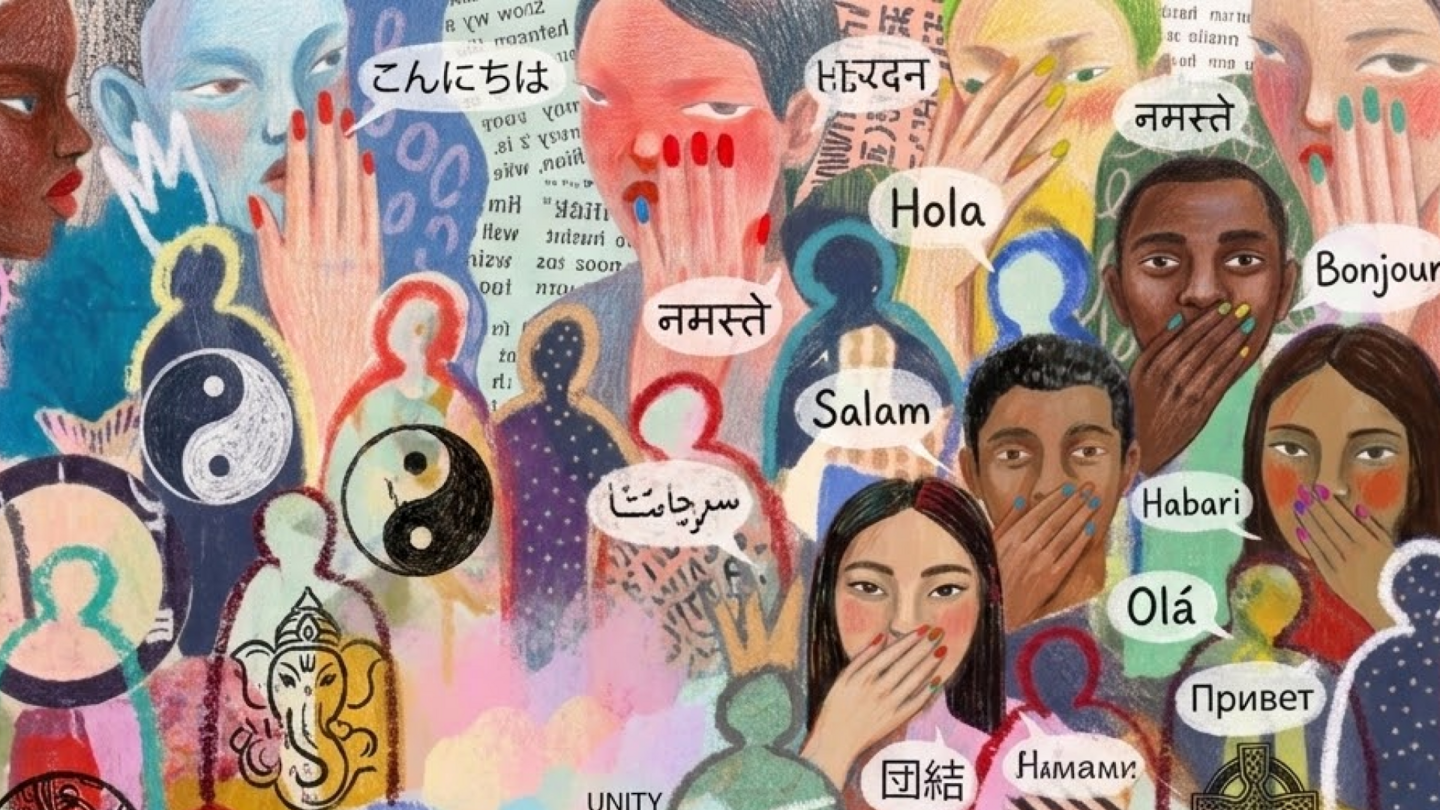
We are accustomed to perceiving language as a tool for communication: we use it to express thoughts, convey information, and understand one another. But what if language is also a way of viewing the world?
Why is it difficult to describe certain feelings with words? Why does one language have a specific word for a particular state, while in another, you have to explain it in an entire sentence? Can a person experience things differently when speaking another language? And how do the words we use every day reflect the culture in which we live?
The media project «Between Words» explores the space between language and human experience. Through stories, scientific research, cultural phenomena, and everyday observations, it offers a new perspective on familiar words and phrases, prompting us to consider how we understand ourselves, other people, and the world around us.
media objective
The media’s goal is to demonstrate how language relates to thought, culture, and the perception of the human experience, and to help the audience look at familiar words, expressions, and modes of communication in a new light.The media strives to make complex questions about language and humanity accessible to a broad audience, stimulating curiosity and encouraging readers to notice what usually goes unnoticed in everyday speech.
Future Media Themes
The core content addresses questions that arise in everyday life but lead to deeper reflections on language and humanity.
competitors
Competitive analysis helps us understand how other media approach linguistic, cultural, and popular science topics, what formats they use to attract an audience, and how they explain complex ideas.
direct competitors
The Allusionist — Helen Salzman’s English-language podcast about language, words, and linguistics. She explores the origins and meanings of words, speech patterns, linguistic phenomena, and their connection to culture, psychology, and daily life. Its audience consists of people interested in learning new things about language without needing a specialized education.
The primary format is audio podcasts, supplemented by written episode descriptions and transcripts. Each episode is typically built around a single theme, which is explored through examples, stories, and conversations with invited experts. The website’s visual presentation is quite minimalist: the focus is primarily on episode titles, imagery, and text. The tone of the communication is lively, inquisitive, and occasionally ironic.
Lingthusiasm — a podcast by linguists Gretchen McCallock and Lauren Goon, dedicated to linguistics and the diversity of language phenomena. The hosts discuss grammar, the structure of speech, linguistic patterns, sign languages, language preservation, and the relationship between language and society. The project’s audience includes people interested in languages, culture, and popular science content.The main format consists of conversational podcast episodes where the hosts examine specific topics and invite experts. The website also features transcripts, supplemental materials, a mailing list, and thematic zines. The visual and editorial presentation is oriented toward accessibility: complex linguistic topics are explained through examples, analogies, and humor. The communication tone is friendly, passionate, and educational.
Indirect competitors
The New Yorker is a magazine that publishes content on culture, society, science, literature, and politics. While language is not its primary focus, the publication addresses the relationship between language, thought, and culture. For instance, the article «How Much Does Our Language Shape Our Thinking?» explores how language can influence the perception and categorization of the surrounding world. The magazine’s readership is interested in cultural and societal phenomena, scientific discoveries, and analytical features. Main formats include long-form articles, essays, interviews, reviews, podcasts, and illustrated features. The visual style combines signature editorial illustrations, expressive typography, and polished magazine layout. The communication tone is intellectual, analytical, and journalistic.
The Pudding — a digital media platform that explains cultural phenomena through visual essays, interactive narratives, and data. The project investigates a wide range of topics: music, society, pop culture, human behavior, and other phenomena that can be explored through visual inquiry. Its audience consists of readers interested in unconventional explanations of familiar occurrences and interactive digital content.The core format is visual essays, where text is combined with graphics, illustrations, diagrams, and interactive elements. Design here serves more than just a decorative function: the visualization aids in explaining the topic and engaging the reader in the exploration. The communication tone is investigative, accessible, and curiosity-driven.
Potential Competitors
Throughline — an NPR podcast that helps listeners understand contemporary events and ideas through their historical context. Language is not the central theme of the project, but its approach is applicable to exploring how words, expressions, and linguistic norms are shaped by history and society.The podcast’s audience is interested in history, culture, and the reasons behind common societal phenomena. The primary format consists of audio episodes structured as narrative explorations, utilizing archival materials, commentary, and historical context. The communication tone is journalistic, narrative, and analytical.
TED-Ed is an educational project that creates short animated lessons on topics ranging from science and culture to history, language, and other fields. For example, the project publishes content about what differentiates one language from another and how language can influence thought. The TED-Ed audience consists of people who prefer learning new things in a short, accessible, and visually rich format. The primary format is animated videos accompanied by educational materials and discussion prompts. The visual style relies on illustrations and animation to explain complex ideas in just a few minutes. The tone of communication is educational, inquisitive, and curiosity-driven.
what is important to consider in media
distribution channel
Dissemination StrategyYouTube/ VK Videos — Primary Channel for Podcasts and VideosPublishing conversational podcasts with linguists, psychologists, translators, and multilingual individuals, as well as thematic video essays.Telegram — Channel for Regular Audience EngagementTelegram is suitable for short posts, linguistic observations, discussions, and announcements of new materials to maintain audience interest between major releases, gather feedback, and build a community around the topic of language.Website — Archive and Main Media HubA space where all materials are gathered: articles, podcast episodes, interview transcripts, and visual studies—to form a cohesive image of the media and create a usable library of content long after publication.External Text Platform — Supplementary Channel for ArticlesAs an alternative to operating our own website in the initial phase, we could consider Dzen. On such a platform, articles can be published and tested to see which topics resonate with readers.
Target Audience