Navigation
• Research Concept• Historical Memory• Social Marginality• Individual Artistic Language• Bibliography• Image Sources
Concept
In the late 19th century, there was a mass migration of Japanese people to the United States. Several reasons for this event can be identified. Primarily, it was economic: people were heading to places where they could earn money and support their families. Secondly, starting from the second half of the 19th century, Japan’s borders began to gradually open, and its isolation started to diminish, meaning the country’s own policies were changing. Their creativity traveled with them; however, they were able to create it without the goal of achieving fame or dedicating themselves to the pursuit. For them, it could have been one way to earn a living, as their works appealed to buyers through what was known as their exoticism.
It is important to note that labeling all creators of Japanese descent as outsiders is inaccurate, yet ethnicity and nationality are vital components of identity. Consequently, an individual acquires a unique experience that informs their creative work. Within this visual study, I intend to explore precisely how this group developed within American art and what set them apart from the mainstream. I also felt motivated to popularize the idea of studying this topic.
For this project, materials were selected based on several criteria. Primarily, the authors must align with the stated theme. The Japanese artists featured below: not all of them were born in the United States; what is far more important is that their active working years were spent in America. I also had to establish a time frame to maintain the integrity of the analysis. The research will cover the 20th century. Additionally, works created either graphically or pictorially will be examined.
For the visual study, materials were selected not only visually but also textually. Selections included articles by students and professionals from fields such as art history and creative industries. The number of citations and the quality of the texts were considered to ensure the study was comprehensive and more robust.
The principle of research rubrication involves dividing the authors and their works into semantic groups. Each block is dedicated to a specific artistic practice, where the peculiarities of the handwriting and the exact factors that influenced the creation of the paintings are examined. This makes it easier to conduct analysis and draw clear conclusions.
«What influenced artists of Japanese descent and what themes did they explore in 20th-century American outsider art?”—this question is central to this visual study.
My hypothesis is that isolation was the fundamental basis for the development of individual style among creators. This solitude could manifest both in the social and professional spheres.
Historical Memory
When discussing outsider art, we will inevitably arrive at the themes of society and how it has influenced creators. The Japanese Empire participated in World War II on the side of the Axis powers. This undoubtedly impacted the national sentiment within the countries where Japanese immigrants lived. During that time, it was not uncommon in America to arrest people and send them to internment camps; many of the detainees were innocent. Even after their release, such sentiments persisted, meaning that the motives of isolation and memory will continue to haunt artists.
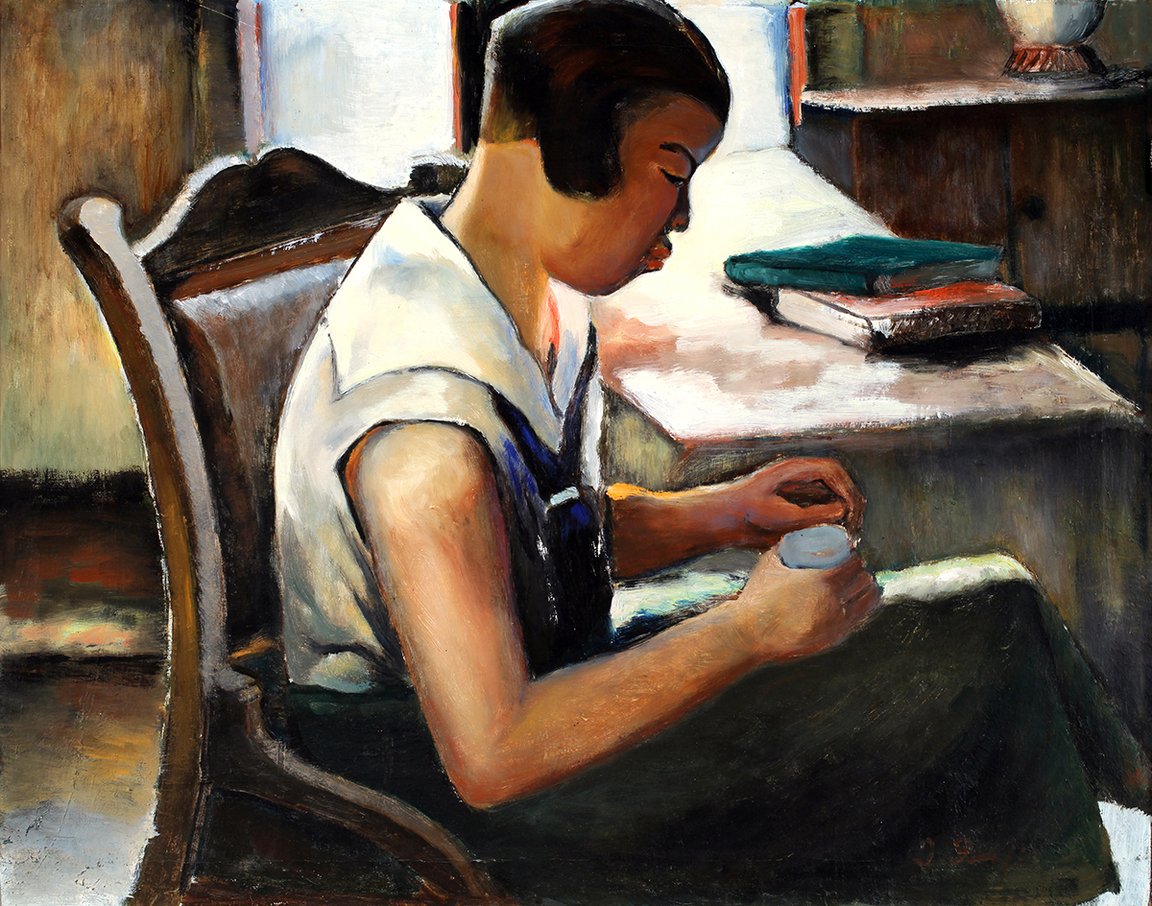
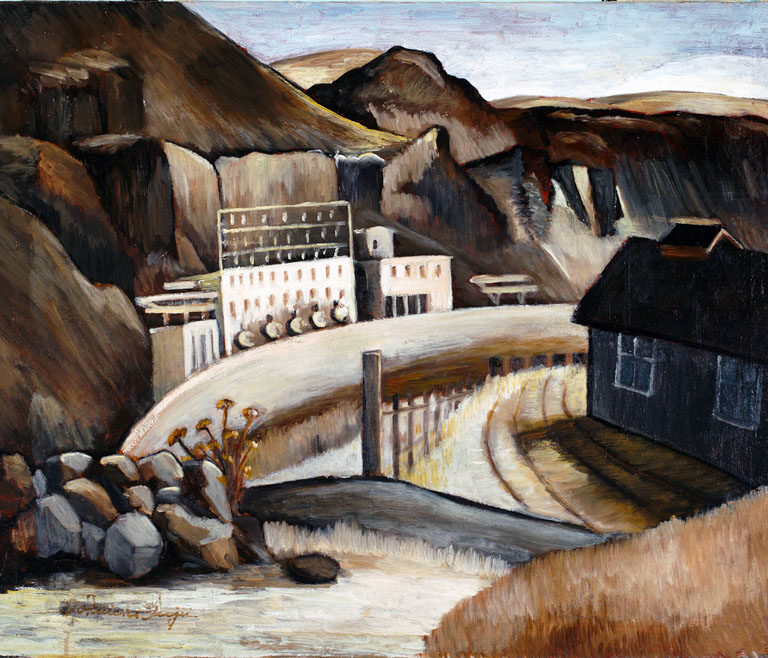
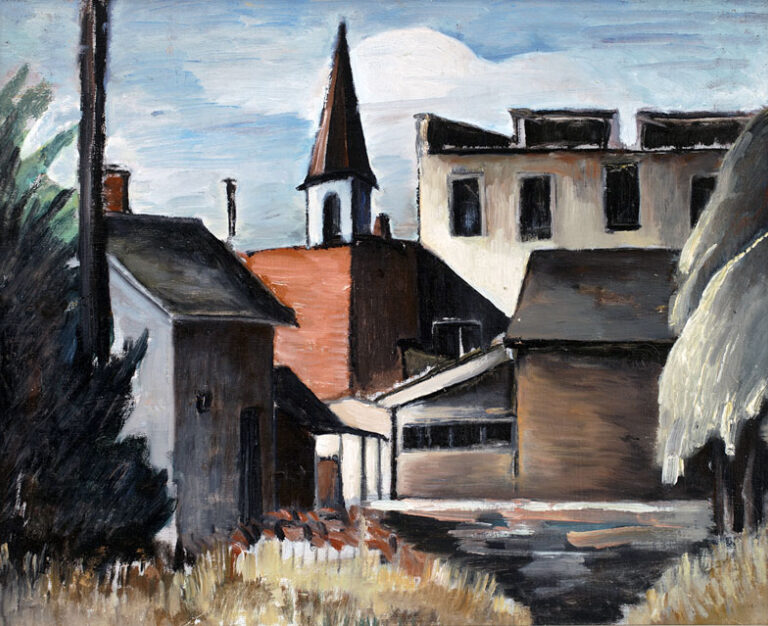
«View of the Church of Our Lady of Good Help bell tower from Nihonmachi/Seattle’s Japantown», «Rock Island Dam», «High School Student», 1934–1935, Takeuchi Fuji
Takuichi Fujii was no exception. The artist was born in Hiroshima in 1891, but when he was just a fifteen-year-old teen, he moved to Seattle where his father and older brother worked. Takuichi Fujii, his wife, and his daughters were incarcerated in one of the camps. Although it is known that the artist engaged in painting in his youth, the beginning of his creative journey dates back to the 1930s [1]. He worked in American Realism with elements of Modernism and achieved a certain level of recognition, but his success was short-lived.
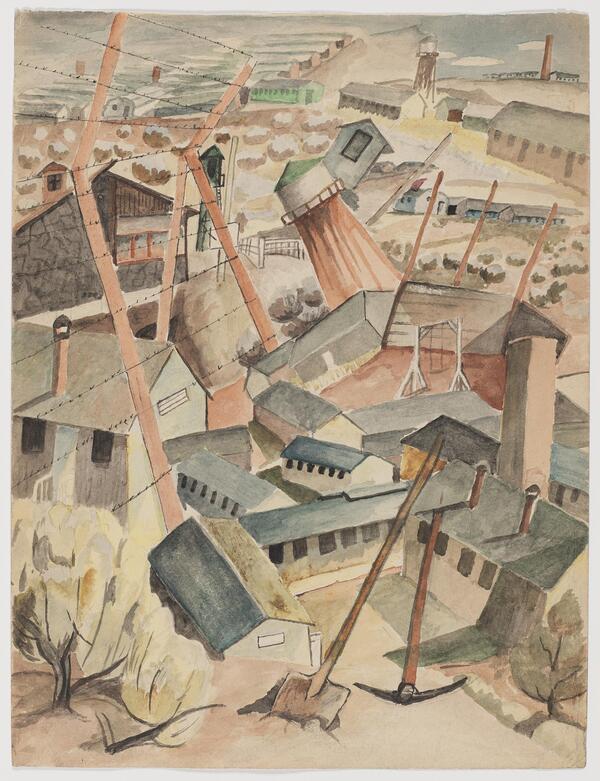
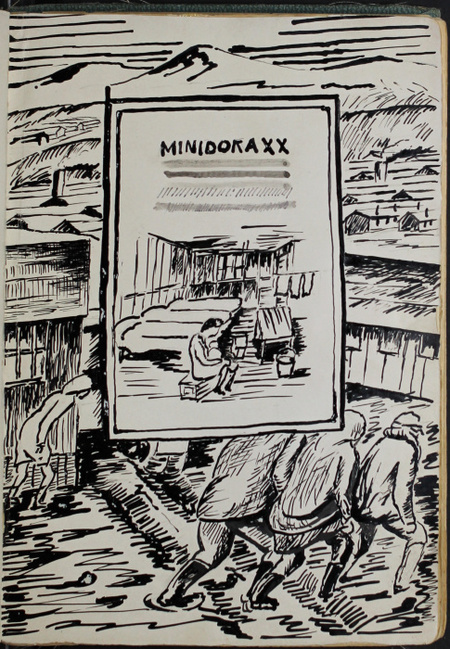
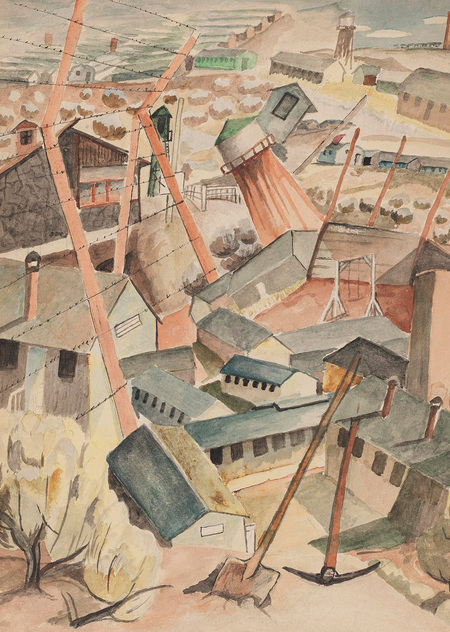
«Minidok: Frames with a barbed wire fence, ” „Title page of a Fuji forest diary, ” Takuichi Fuji, 1942–1945
In 1942, while in captivity, Fuji began keeping a diary, sketching memories of his own life in watercolor. The drawings were accompanied by short notes. The artist identified himself as a witness to certain events, recording his perception on paper.
«20,000 Japanese Lost, ” Takeuchi Fuji, 1944
After his conviction, the artist continued to create paintings, though he turned toward abstraction and rarely exhibited his work. Art was never his primary source of income. If one views his creative work as a way to capture his sensations, clear shifts in his pieces can be traced. Of course, even before his arrest, the author referenced modernism, but this was only partial. Such a traumatic event—one involving not only him but also the people he loved—intruded upon his creativity. Although Takeuchi Fuji was not an open person, his family preserved his journals and other personal belongings after his death. His grandson, Sandy Kita, took on the task of studying these records and described the artist as someone who engaged with the poetic sensibility characteristic of Japanese art.
Another custodian of memory could be named Hisako Hibi. Unlike Takuichi Fuji, the artist studied drawing her entire life. While creative work was not always a source of income, she never stopped creating. Early in her career, she primarily worked in the Western style, focusing on oil paintings of landscapes. The artist began participating in exhibitions back then, which undoubtedly speaks to her success. However, many of her works were lost following the issuance of Executive Order 9066 [2].
The creator gained significant renown for her work while imprisoned in «Topaz.» She captured daily life within the camp and continued working in styles such as Impressionism and Abstract Expressionism. At their core, these named movements may seem similar, but they embody different ideas. If Impressionism is about capturing a moment, then Expressionism is about feeling.
After Hisako Hibi’s release, she shifted her focus not abruptly, as some suggest, but gradually, in response to changes in her life. First, her husband died of cancer, and she had to work as a seamstress in a factory, supporting not only herself but also her two daughters. The woman managed to attend evening painting classes. One of her instructors was the Post-Impressionist Victor D’Amico, who encouraged the artist to create «personal statements,» something Hibi found difficult [3]. For her, this was a trial because she was raised in an era built on complete obedience, where individuality tended to recede into the background. Eventually, the creator found inspiration in her beginnings—in who she was. Following this, the artist began utilizing abstraction and spirituality. Hisako Hibi started skipping the sketching stage and moved directly to the canvas.
Both artists we examined dedicated their work to the days spent under arrest. For them, art was vital—it served as a means to express their emotions and thoughts about the events unfolding in their lives. While they engaged directly with tradition, they ultimately created something new.
Social marginality
Tsutomu «Jimmy» Mirikitani shares a similar fate with previous artists, but he is distinguished by his detachment from society. While Hibi and Fuji had families that occupied a certain place in society, Mirikitani did not. Delving into the artist’s history, one might conclude that he is stuck on the border between Japan and America.
The creator’s life was full of tragic events. He was born in Sacramento, but at an early age, Mirikitani moved with his family to Hiroshima, where he lived until he turned eighteen. The artist returned to the United States due to the rise of militarism in his homeland and a desire to develop his artistic practice. He was imprisoned in the Tule Lake camp, and after his release, he constantly struggled to find work—by the 1980s, the creator was homeless. During this period, Mirikitani returned to art, as drawing became his livelihood. In his works, the artist utilized colored pens, newspaper clippings, and other materials that he could freely acquire on the streets.
His work reflects themes of the bombing of Hiroshima and the September 11th attacks—two places he could call home, and these events influenced him and his perception of America. Furthermore, Mirikitani’s creations featured spiritual and religious elements. Kanon, a figure from Buddhism, promised to save all living beings from suffering; she stood above the sites of destruction.
Art historian Maki Kaneko noted: «In his works, these two events are often visually connected, suggesting he viewed them as different moments within the broader history of catastrophic violence and human loss. Especially in his collages, the atomic bombing, 9/11, the Iraq War, and the events of the Asia-Pacific War, among others, frequently appear side-by-side. This juxtaposition points to deeper structures of racism, imperial conflict, and political interconnection underlying these seemingly separate events» [4]. Once again, he can be viewed as a preserver of memory, but one cannot deny how isolated this individual was and how that state influenced his creativity. Yes, he utilized traditional Japanese techniques, but he blended them with American tools. He saw the problems of both Japan and America, yet he could not completely divest himself of either side.
In turn, Ben Sakoguchi delved deeper into the criticism of American society. In his work, he combined elements of pop art, figurative, and historical painting.
Little is known about Sakoguchi. The artist was born in California in 1938 and experienced internment in a camp as a child. This event influenced the cynicism evident in his later work, a dedication he devoted his entire life to. His pieces seem to depict the American Dream, but the creator subtly weaves in themes of racism, xenophobia, state violence, and more.
This irony and contrast form a rather clear statement: the artist is not impulsively expressing their thoughts, but rather in a highly organized manner. In this way, they distinguish themselves from the aforementioned artists. The author has constructed a clear persona around themselves, separating themselves from the others [5].