Concept
The human body was the central theme of ancient Greek art: it was intrinsically linked to concepts of beauty, harmony, and physical perfection. The figure of the athlete embodied all these qualities. Ancient Greek vases frequently depicted runners, wrestlers, discus and spear throwers, and scenes of training and competition. Through these images, one can determine which aspects of the human form were considered important and what artistic methods were used to convey the body’s proportions and plasticity.
In my research, I examine the image of the athlete in Black-Figure and Red-Figure vase painting from the Archaic period. I specifically selected these two techniques for comparison because they approach the challenge of depicting the human figure in distinct ways. In Black-Figure vase painting, the figures were filled in with black paint, and muscles or facial features were scratched in with a special stylus. In Red-Figure, the opposite was true: the artist filled the background with black paint and detailed the fine elements, leaving the human silhouette red.
Key research question: What are the differences in the depiction of athletic figures in black-figure and red-figure vase painting?
The emergence of red-figure vase painting around 530 BCE changed the conventional way of depicting the human figure. By replacing the pointed brush (stylus) with a brush, creators gained greater opportunities to refine complex poses and individual body parts. The differences between the two techniques were reflected not only in the representation of the body but also in the artistic portrayal of the athlete. It is worth noting, however, that both techniques existed concurrently for a period, which allows for a comparison of their characteristics using vases created around the same time.
The research is divided into three chapters.
Chapter one examines the characteristics of depicting the athletic body in both techniques: silhouette, proportions, and detail. Chapter two focuses primarily on the movement and posture of athletes. Chapter three is dedicated specifically to the image of the athlete and the particular features of the male physique that the ancient Greeks associated with physical perfection. This structure allows for the athlete’s image to be analyzed from multiple perspectives: first, focusing on the features of the figure’s representation, then on the conveyance of movement, and finally, on the conceptions of the ideal human body.
I selected Attic vases from the Archaic period that depict athletes training or participating in sporting competitions. When choosing the vases, I paid close attention to how well the imagery was preserved so that the details of the painting could be examined closely. I also considered the creation date of the works and the availability of photographs and information about the objects in museum catalogs. This allowed me not only to gather information on individual vases but also to better understand the nuances of the two techniques.
Chapter 1. The Human Figure: Technique, Silhouette, and Proportion
The silhouette is the foundation of the human figure in black-figure vase painting. The artist filled the figure with a special liquid material (slip) that turned black after firing, while the background remained the color of the clay. Internal details were incised using a special tool, which created thin lines of clay color—these marked muscles, facial features, hair, and other characteristics of the figure. From this, it follows that the external outline of the athlete was determined by the boundary between the dark silhouette and the red background, while the incised lines were situated inside the figure, helping to distinguish individual body parts and thereby complementing the silhouette.
This is clearly visible on the next amphora:
Amphora depicting wrestlers, c. 555–540 BCE
We see two athletes locked in combat. Their figures are closely intertwined: arms are clasped, and legs are spread wide. The dark figures stand out against a bright background, and the scratched lines within the black silhouettes denote hair, facial features, and musculature, allowing us to examine the structure of athletic bodies.
Another example is the Panathenaic prize amphora by the vase painter Euphletores:
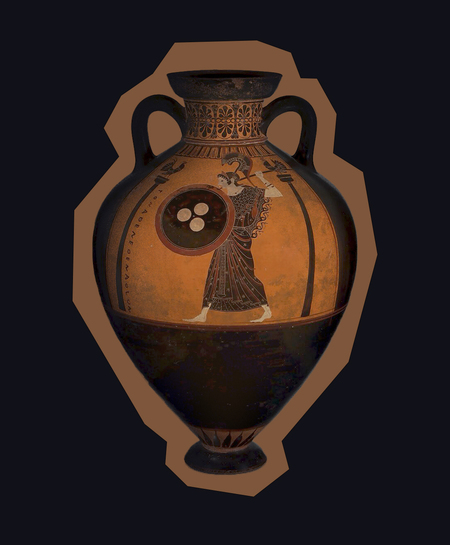
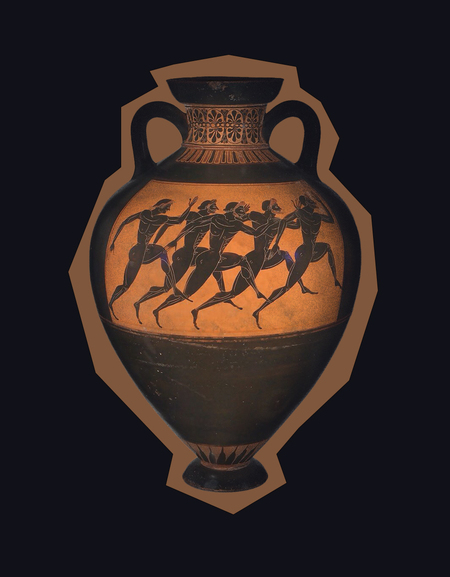
Terracotta Panathenaic prize amphora of Euphyllotes, 530 BCE
On one side of the vessel is depicted the goddess Athena, and on the other are five runners. All the athletes move in the same direction, and their similar poses create a distinct rhythmic pattern.
The posture of each athlete is defined by a clear silhouette, while the etched musculature conveys the fleeting positioning of the runners' arms and legs.
Thus, in black-figure vase painting, the primary focus was on the athlete’s silhouette, with etched musculature supplementing it to denote anatomical features.
It was the contrast between the dark figure and the light background that formed the basis of the image’s artistic expression.
The technique of red-figure vase painting was significantly different: the background of the vessel was covered in black, while the figures remained the color of the clay. Details were drawn with a fine brush, which allowed for a clearer depiction of the human body’s features.
One example of early red-figure vase painting is the Psalter of Oltos.
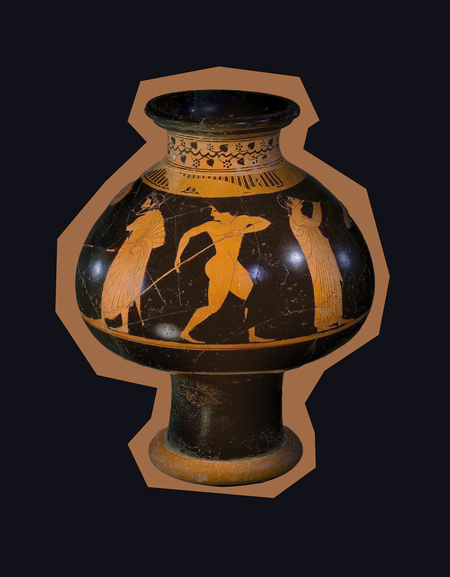
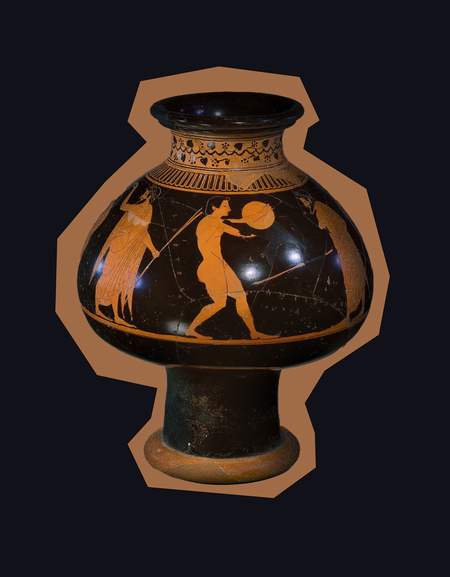
Terracotta psychter from Olthos (wine cooling vase), circa 520–510 BCE
The vessel depicts athletes engaged in various activities: disc throwing, javelin throwing, and long jump. The names of some figures are written next to them, which allows one to identify their activity. The figures stand out against a dark background, and the brushstrokes add greater detail to the image.
Another example—an amphora by a certain Edinburgh artist
Terracotta neck amphora by an Edinburgh artist, circa 500 BCE
The vessel depicts athletes and a coach. The central figure is a young man practicing the discus throw. In this image, the attention to detail is particularly evident: the master renders the folds of the clothing, facial features, and musculature.
Red-figure technique gave artists greater freedom in depicting the human figure; the brush allowed for more detailed rendering of the body’s anatomy.
This implies that the main difference between the two techniques lies in the way the athlete’s figure is rendered. In black-figure vase painting, artists sought to convey the athlete’s body through sharp, dark silhouettes. Incised lines served as an element for refining the composition. In red-figure painting, the brush allowed for more detailed rendering of anatomy and musculature, which caused the importance of the silhouette to recede.
Consequently, the images rendered in the two techniques differ not only in color palette but also in the degree of refinement applied to the human figure.
Chapter 2. Form and Movement