Concept
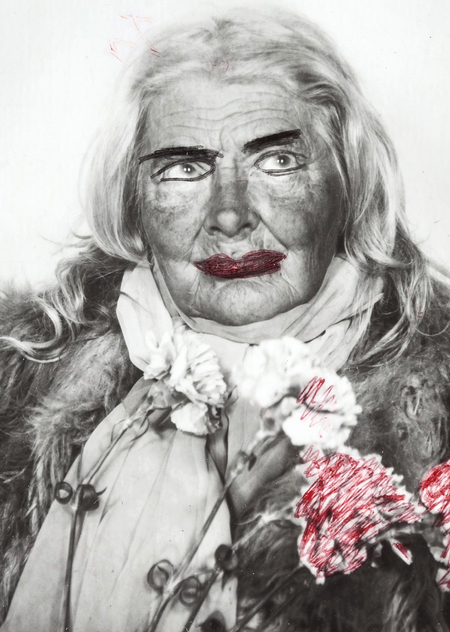
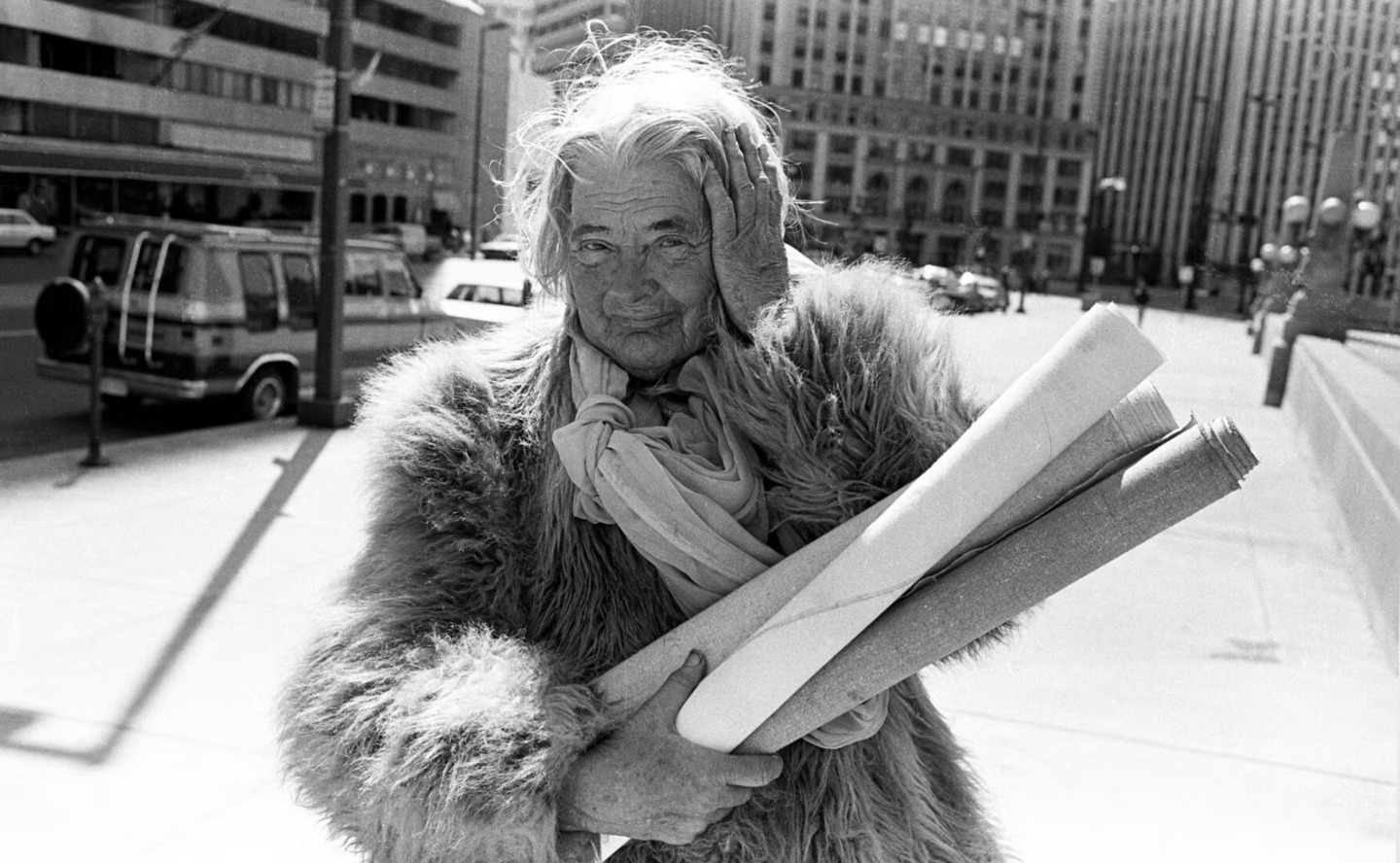
In the late 1960s, Lee Godie appeared on the campus of the Art Institute of Chicago, declaring herself a French Impressionist. She sold paintings on the street, chose her own clientele, and preferred to operate by her own rules [1]. Equally fascinating aspects of her work were the photographs taken in Chicago photo booths: in these photos, Godie transformed herself into a wealthy lady, a movie star, or a child, sometimes finishing or attaching these ready-made shots to her paintings [2].
The choice of theme is related to the fact that in these photographic self-portraits, the subject of the artistic statement was literally Li GoDi herself.
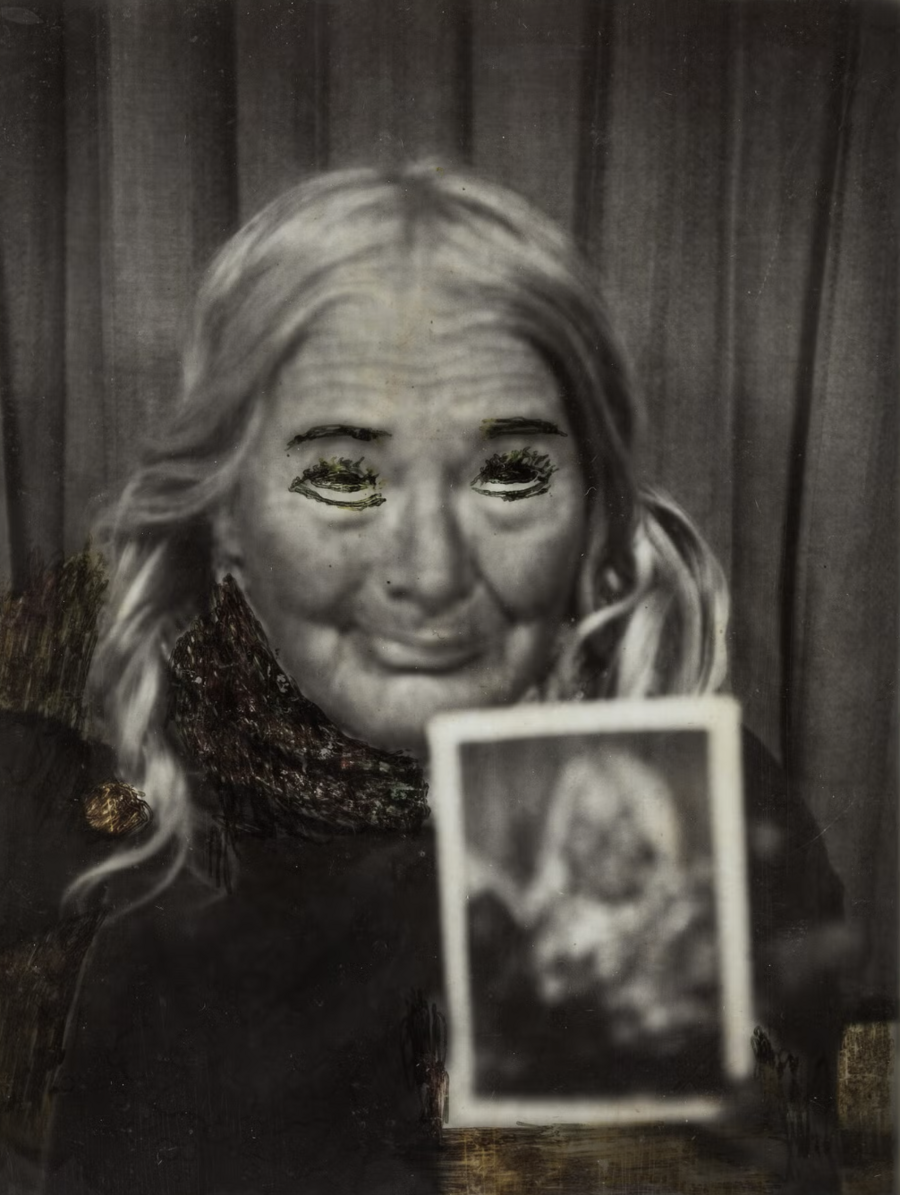
Godi’s photo booth transformed into a personal studio where she could conceive new versions of herself. The artist worked with pose, facial expression, objects in the frame, and the photograph itself after shooting, utilizing various materials. Research Objective—to determine the visual means Godi used to construct her own identity and the role the photo booth space played in this process.
The foundation of the visual material consists of photographic self-portraits by Godi, primarily from the 1970s and 1980s, and works into which she incorporated photography. Photographs of Godi taken by others will be used for biographical sections. The selection of material is based on the diversity of artistic techniques and the recurrence of motifs, which allows for tracing their evolution.
The study’s structure proposes a transition from the artist’s biography to an analysis of photography as a distinct element of her work.
The first section will briefly examine Godi’s life and the formation of her public persona. The second section is dedicated to the photo booth as a liminal space between the public and private, where the artist found freedom to experiment with her own identity [3]. The main part of the study will consist of an analysis of self-construction methods. The research will conclude with a return to Godi’s biography, her final years, the subsequent fate of her creative legacy, a conclusion on the key research question, and the study’s hypothesis.
As textual sources, articles by Michael Bonestile and Nadia Monem were utilized to reconstruct biographical details and the work of Godi [1; 2]. Matt Morris’s article will serve as the foundation for examining the photo booth as a liminal space [3]. Museum publications and exhibition catalogs were used to analyze individual works. When working with these sources, it was crucial to differentiate between the artist’s documented life facts and their interpretations.
The key research question is: how did Lee Go-di utilize the space of the photo booth and other methods for artistic self-construction?
Research Hypothesis lies in the idea that the photo booth was not merely a place for taking pictures for Godi, but rather a kind of personal studio where she could freely try on various personas and social roles. Thus, self-construction can be viewed as one of Godi’s key creative methods, in which the artist simultaneously functioned as the author and a character within her own works.
1. How Jamot Emily Godie Became Li Godie
Lee Goddi was born on September 1, 1908, in Chicago, under the name Jamot Emily Godee. In the 1930s, Goddi married for the first time and had three children, two of whom passed away. She remarried in 1948 and gave birth to another daughter, but soon left her family. The next fifteen years of her life are scarcely documented. There is a theory that it was these personal tragedies that eventually pushed Goddi toward art. [3]
Chicago’s streets gradually became her studio. Li Godi worked in parks, used found materials, and sold her pieces directly to passersby.
Furthermore, she set her own prices and could refuse a sale even if the person was willing to pay. The purchase turned into a kind of performance, accompanied by conversation, songs, and the artist’s unpredictable reactions. Later, the researcher and contemporary of Godie, Michael Bonestil, termed this process «the Lee Godie experience.» [2, 4]
Collectors and critics gradually took an interest in the artist. A publication in The Wall Street Journal in 1985 brought her recognition beyond Chicago, and in 1993, a retrospective exhibition of her work opened at the Chicago Cultural Center. [1, 3, 5]
A distinguishing feature of Godi’s work was that her public persona was virtually inseparable from her art. She not only created pieces but also became one of the central characters in her own artistic world. This was particularly evident in her photographic self-portraits.
2. Between Reality and Self-Image
Photographic self-portraits allowed Godi to transform his own appearance into a subject of creation. While photography is traditionally perceived as a means of capturing reality—especially in the case of identification photos—it also offers the possibility of creating images that do not necessarily reflect a person’s daily life.
The photobooth provided particularly interesting conditions for such experiments, as it can be viewed as a liminal space existing at the boundary between public and private.
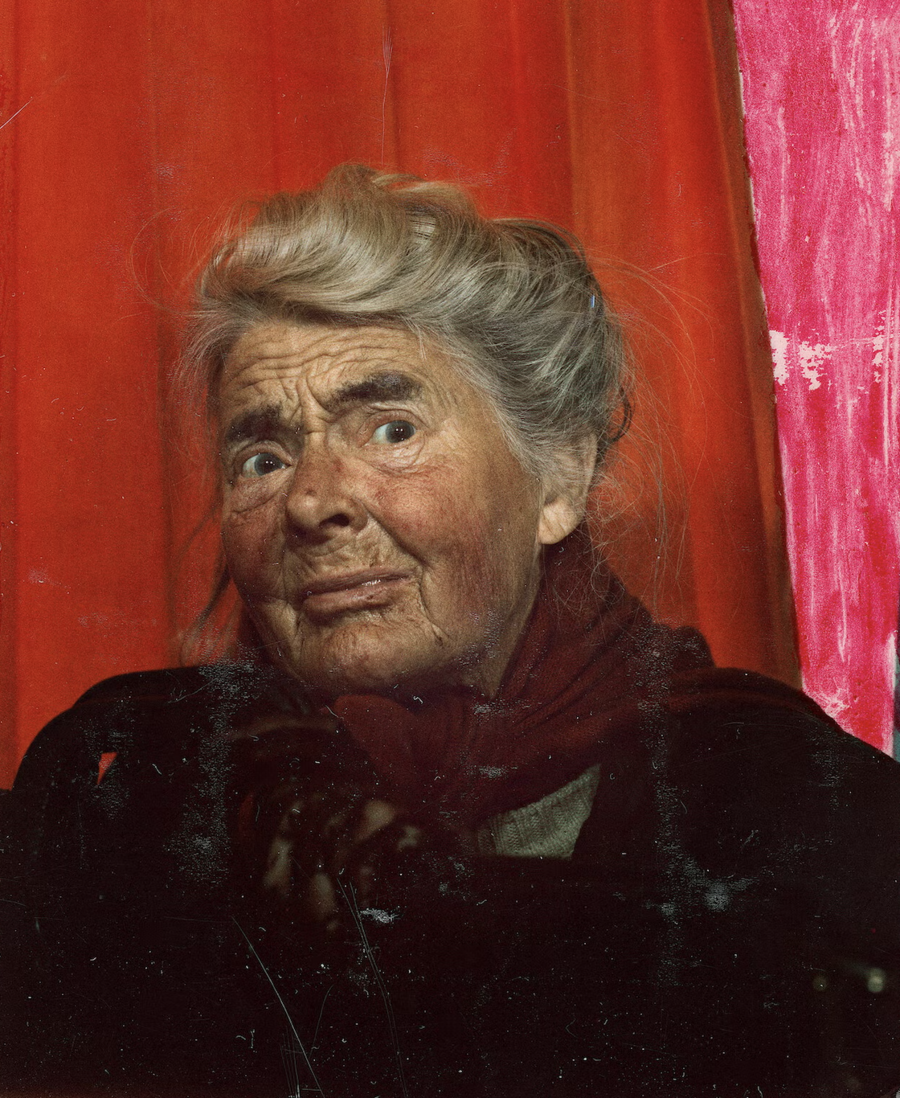
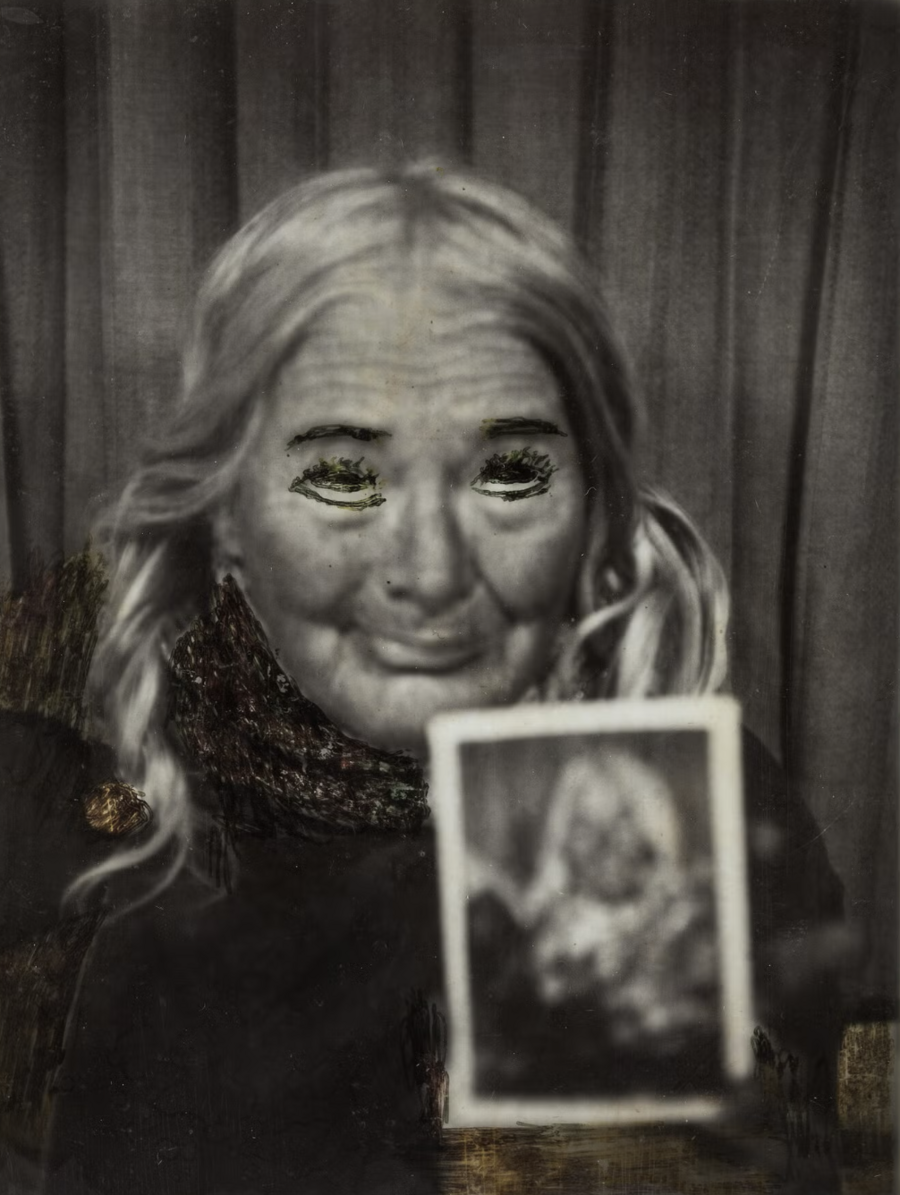
Matt Morris notes that the curtain concealed only the upper half of Godi’s body, leaving the lower half visible to passersby. In this way, the artist was literally both inside and outside her temporary shelter simultaneously.
It was precisely this blend of public exposure and private seclusion that allowed Godi the freedom to experiment with her own identity. Inside the booth, she could independently determine who she would present to the camera. The photo booth became a distinct space for self-formation and a way to reinterpret the self.
3. Several Versions of Lee Godi
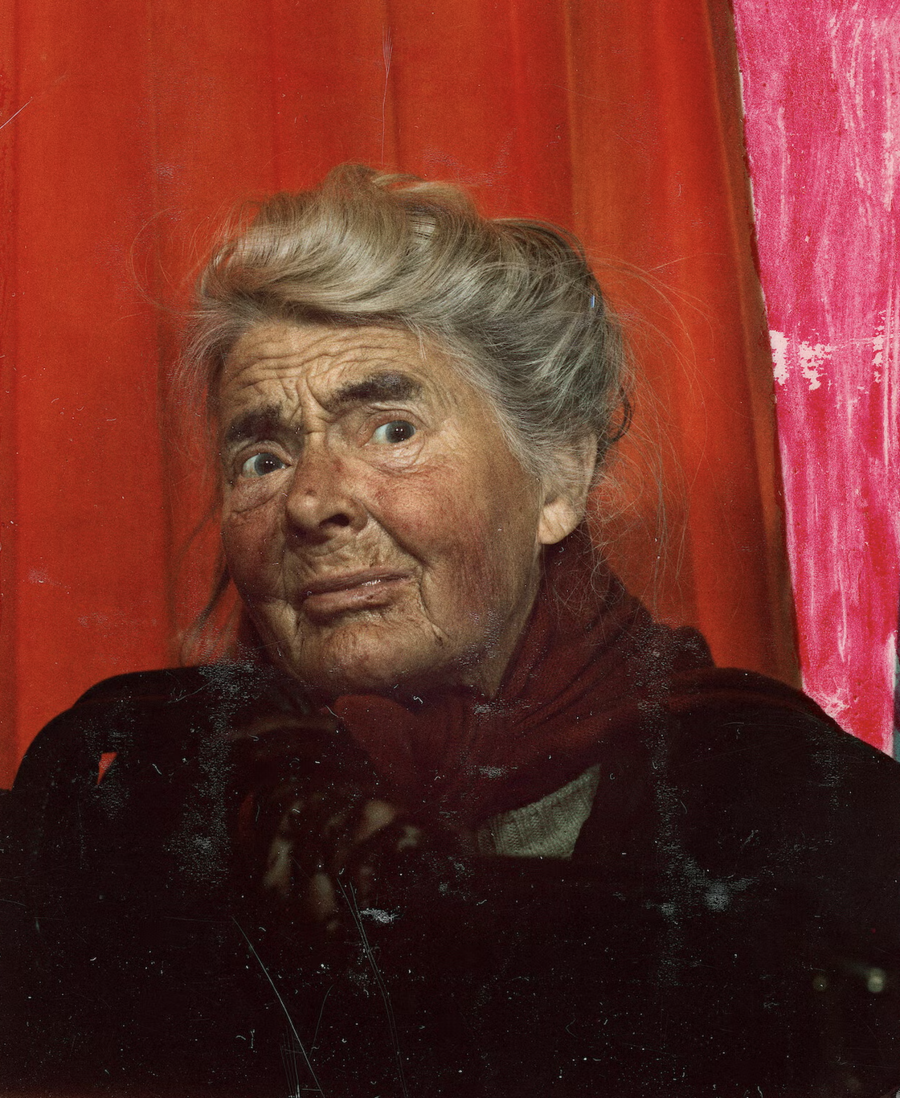
Over several decades, Lee Godie created hundreds of photographic self-portraits. Despite similar shooting conditions, these images differ significantly from one another. In some shots, Godie appears as a wealthy lady; in others, she portrays herself as a businesswoman, a Hollywood actress, or an artist. For these transformations, she utilized clothing, makeup, various props, and sometimes augmented finished photographs with paints and other materials. [1, 2, 4]Godie constantly experimented with ways of presenting herself. Many of her personas recurred, forming a distinct repertoire of characters to which the artist returned over many years.
3.1. Role-Playing Scenarios
One of Годи’s most notable techniques was her reference to recognizable social archetypes. She was especially interested in images of independent, attractive, and successful women. According to Carole Tansey, the artist drew inspiration from Hollywood actresses Clara Bow and Katharine Hepburn. Other studies also mention Joan Crawford and the «Gibson Girl» archetype—a popular early 20th-century ideal of femininity that combined allure with self-assurance and independence. [1, 2]
Godi did not strive to literally reproduce the appearance of specific celebrities. Rather, she borrowed characteristic features from their public personas: their hairstyles, clothing, poses, and mannerisms in front of the camera.