Pattern, throughout the history of art, was not merely a means of decorating the surrounding space; it was also a unique reflection of humanity’s perceptions of how the world is organized. Through repeating forms, symbols, and images, people conveyed their beliefs, fears, and ideas about nature and the supernatural.
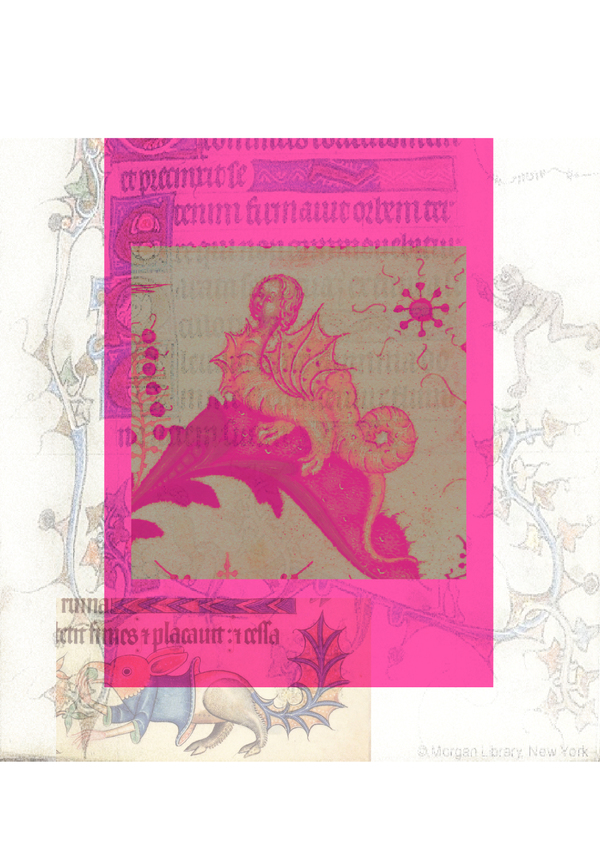
A particular place in this system is held by depictions of creatures that merge the characteristics of humans, animals, and plants. Sphinxes, griffins, chimeras, dragons, centaurs, and other fantastic figures appear in the art of various peoples and eras, gradually acquiring new forms and meanings.
The interest in this topic is primarily tied to the unusual nature of such imagery. Hybrid creatures seem to defy conventional notions of the boundaries between the living and the inanimate, the human and the animal, the natural and the fantastic. A single image might combine a human face, the body of a beast, bird wings, a serpentine tail, and plant tendrils. This kind of combination was not always the result of sheer artistic fantasy; often, it was rooted in specific mythological and religious beliefs, attempts to explain unknown natural phenomena, or a means to express complex ideas for which no conventional symbols existed.The relevance of this study lies in the opportunity to trace how human attitudes toward the surrounding world have changed through the depiction of hybrid beings. In different historical periods, they served various functions. Their significance depended on the cultural context, religious convictions, and social perceptions of that particular era. Therefore, studying these images allows us to examine ornamentation not only from an artistic perspective but also from a historical and cultural one.
The primary objective of this work is to investigate the evolution of hybrid creatures in the history of ornamentation, identify the characteristics of their artistic representation, and trace the change in their symbolic meaning from ancient civilizations to the modern era. To achieve this goal, we propose to examine works from different periods, analyze the most characteristic imagery and the conditions of their emergence, and study the methods of their integration into the ornamental system.
Special attention will be paid to the artistic qualities of constructing such compositions. Of interest is not only the appearance of the creatures themselves, but also how their forms interact with surrounding elements: how they intertwine with plant shoots, form repeating rhythms, adhere to symmetry, or, conversely, create complex asymmetrical structures. In some cases, the boundary between figure and ornament virtually disappears: the body of a fantastic creature becomes an extension of the vegetative pattern, and individual leaves, branches, and curls take on the contours of living beings. It is this capacity of forms for mutual transformation that makes hybrid imagery particularly fascinating for art analysis.
The study also intends to examine the symbolism of the most common hybrid archetypes, since their external unusualness is often connected to a specific semantic content. It will be considered what qualities were attributed to individual creatures, what role they played in religious and social life, and how their meaning changed when transitioning between cultural epochs.
Thus, this work aims to explore the hybrid creature as a distinct artistic and symbolic phenomenon in the history of ornament. Through the fusion of human, animal, and plant forms, it reveals humanity’s drive to comprehend the diversity of the surrounding world, to find connections between different manifestations of life, and to express these in art. From ancient mythological archetypes to contemporary decorative experiments, hybrid creatures continue to be a potent means of intersecting imagination, nature, and artistic thought.
Categories
- Concept
- Historical Development of Hybrid Imagery in Ornamentation
- Artistic Features of Fantastic Creatures
- Symbolism
- Conclusion
The Historical Development of Hybrid Motifs in Ornament
Some of the earliest examples of fantastic creatures in European art date back to antiquity. Hybrid creatures, in particular, held a prominent place in ancient Greek vase painting. Their depictions were incorporated into decorative bands, positioned alongside botanical motifs, and repeated throughout vessel compositions. For instance, sirens and sphinxes could be placed in separate friezes, while centaurs became participants in mythological scenes. Thus, fantastic characters simultaneously served both narrative and decorative functions.
Antiquity
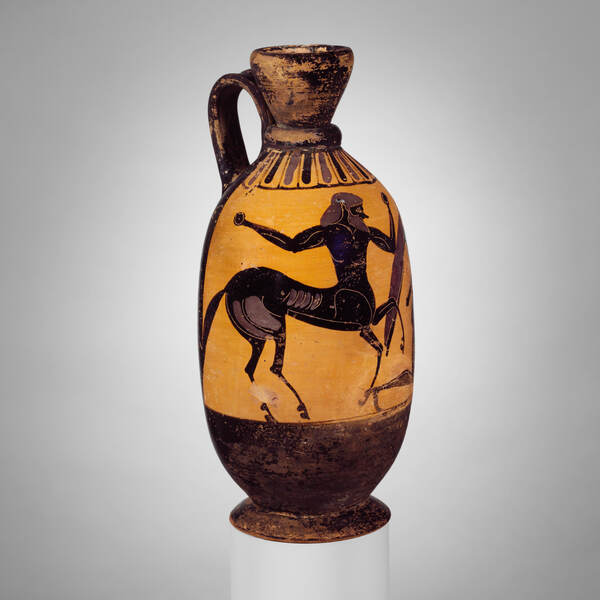
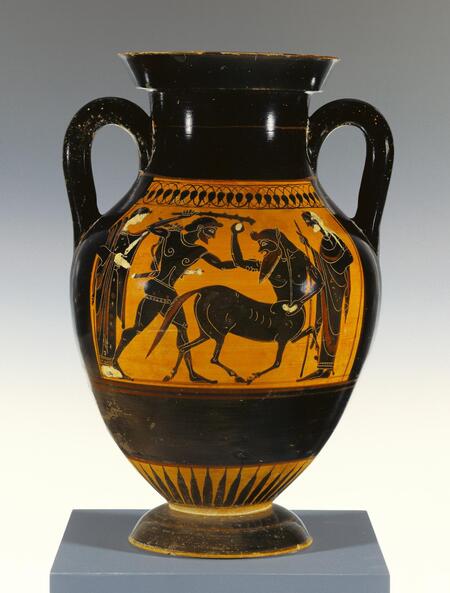
Centaur: Attica, Ancient Greece, c. 575–550 BCE; Attica, Ancient Greece, c. 560 BCE.
In ancient ornamentation, the centaur balances between myth and decoration. In 7th century BCE Greek vase painting, its figure still illustrated specific narratives (Hercules' battle with Nessus). Later, in black-figure and red-figure pottery, the centaur became part of ornamental friezes and compositional schemes, retaining a narrative quality: he was depicted carrying branches or stones. Thus, he remained a carrier of mythological meaning woven into the rhythm of the vase painting pattern.
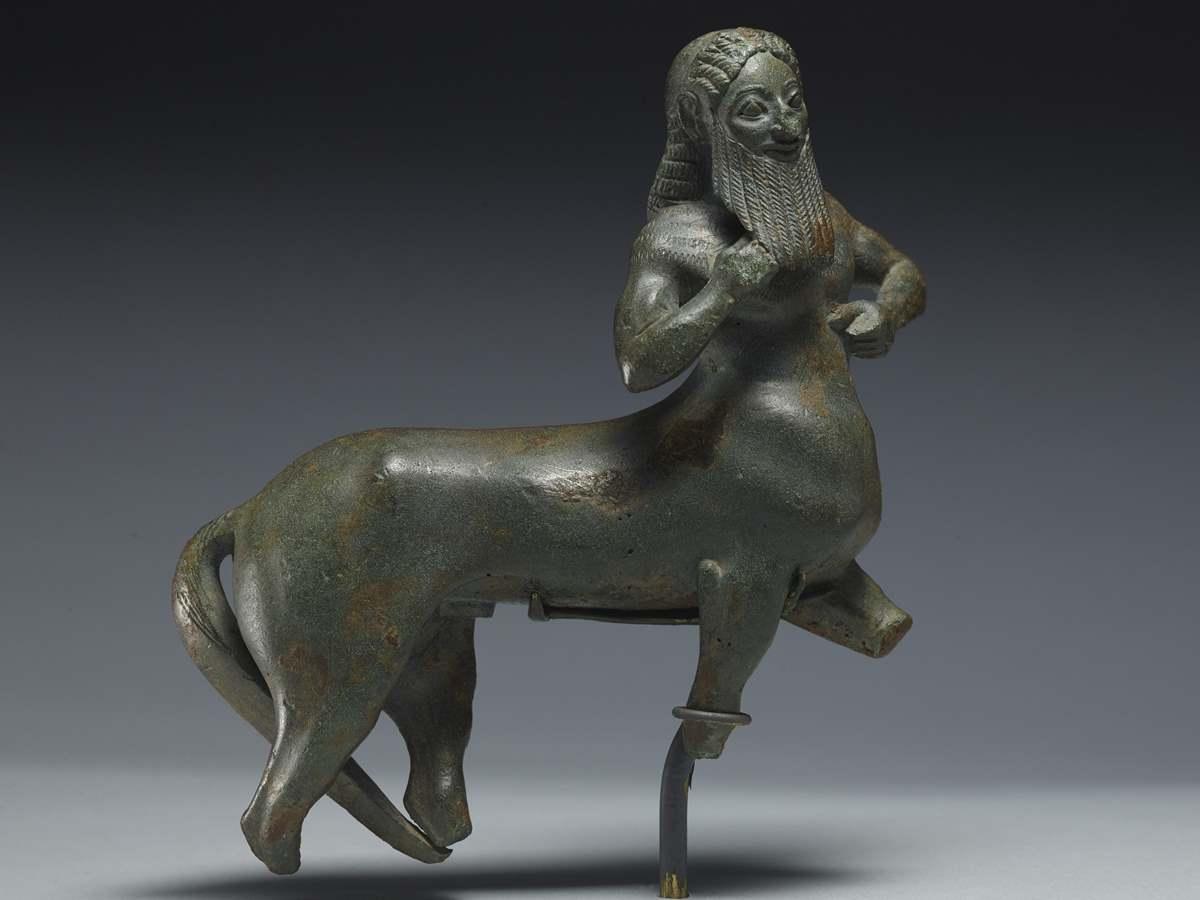
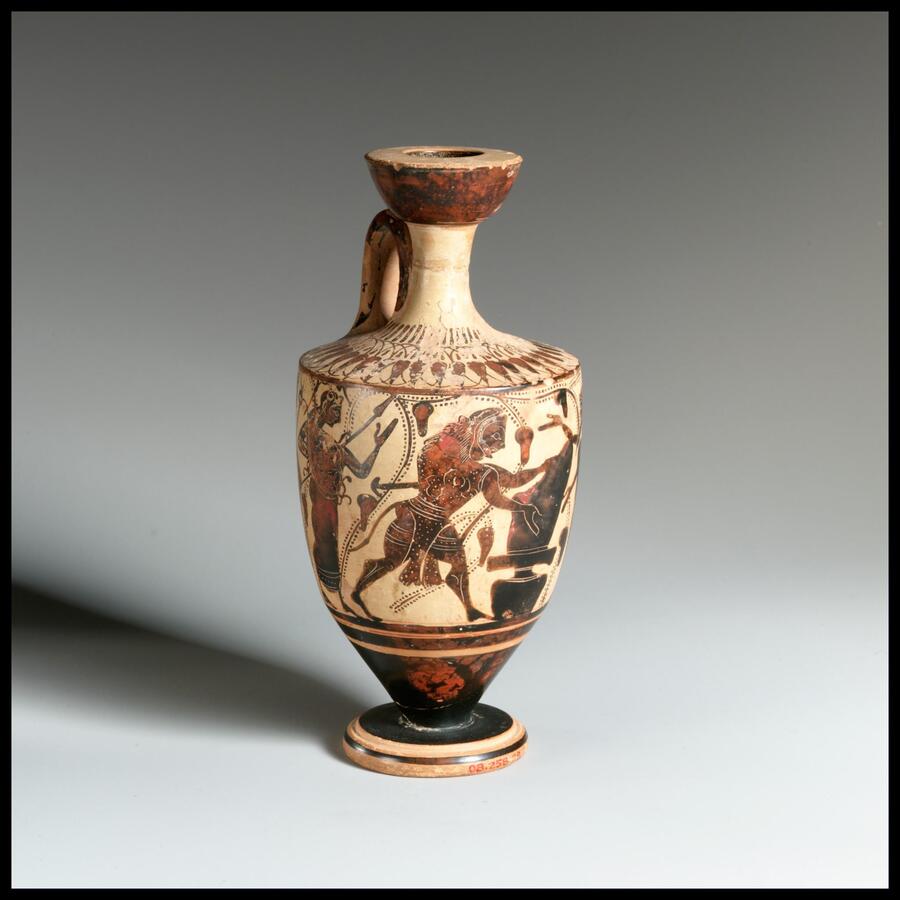
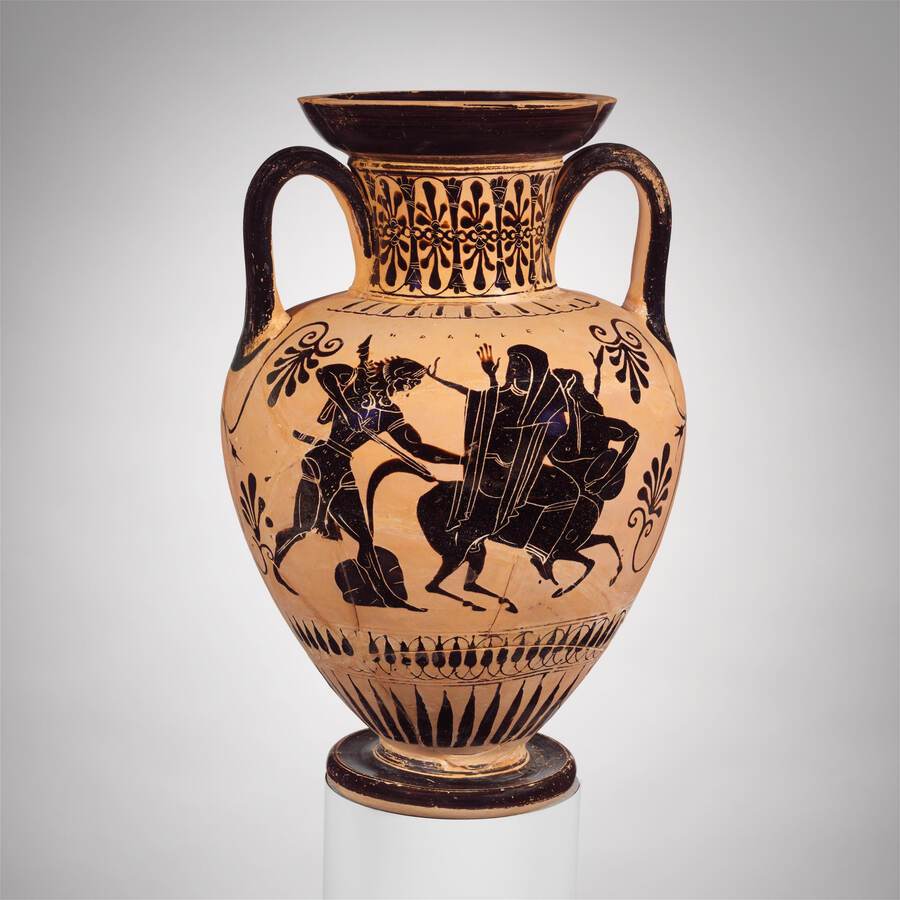
Attica, Ancient Greece, circa 490 BCE; Attica, Ancient Greece, circa 510 BCE; 6th century BCE