Concept
Topic
This visual exploration delves into the family archive of Soviet artist Irina Charskaya, specifically focusing on a trip to Italy in 1964. The situation of people traveling abroad in the Soviet Union was not unique, but it was still quite rare. It becomes even more unique when considering certain biographical facts about Charskaya that seemed, at first glance, as though they should have prevented or even completely blocked the possibility of the trip. Despite all the obstacles, the journey to Italy for the young artist—who had previously only seen Europe in pictures in albums—did happen and left a lasting imprint on her entire life. Furthermore, the perception of the foreign world by an ordinary Soviet citizen from the perspective of culture and art presents an interesting field for investigation.The Core Question
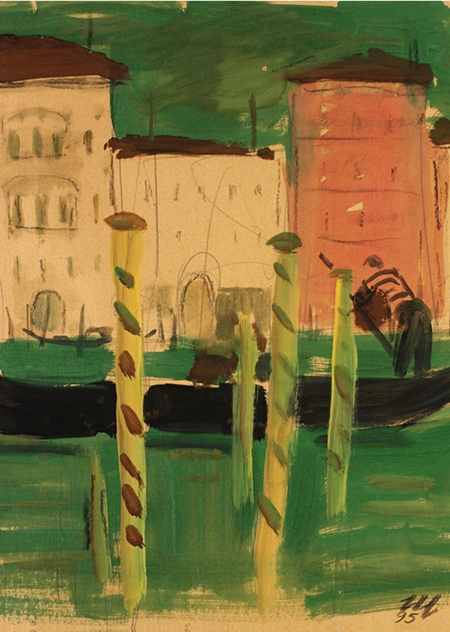
Ultimately, the key question becomes how this experience influenced the artist’s subsequent practice. The interest lies not only in the motif of Italy in her work, but also in other potential echoes of the trip. Attending several museums in person, as well as the 32nd Venice Biennale, seems like a significant event in the life of a Soviet regional artist—one that surely could not have gone unnoticed. Therefore, this research aims to find those traces.Materials
Several categories of materials were selected for study. First, archive materials from a trip to Italy, which include:- Official travel documents—3 items;
- Travel artifacts (tickets, hotel brochures, etc.)—16 items;
- Photographs from the trip—25 items;
- Sketches and drafts created during the trip—109 items;
- Artist’s journals with notes—2 items (66 pages)
- Photographs—34 items;
- Biographical records—43 pages;
- Official documents—17 items.
Total: 374 items
Sources
The research drew upon textual sources dedicated to the history of Soviet tourism and the relationship between the USSR and Europe generally, as well as historical and analytical works studying the 32nd Venice Biennale.Structure
- About the Artist
- Biography
- Social Activism
- Artistic Practice
- Historical Context
- Art Scene in the USSR and Abroad
- 32nd Venice Biennale
- Soviet Tourism
- Italy Trip Archive
- Travel Permit
- Journey Chronology
- Travel Notes
- Sketches and Works
- Created During the Trip
- Created After the Trip
About the Artist
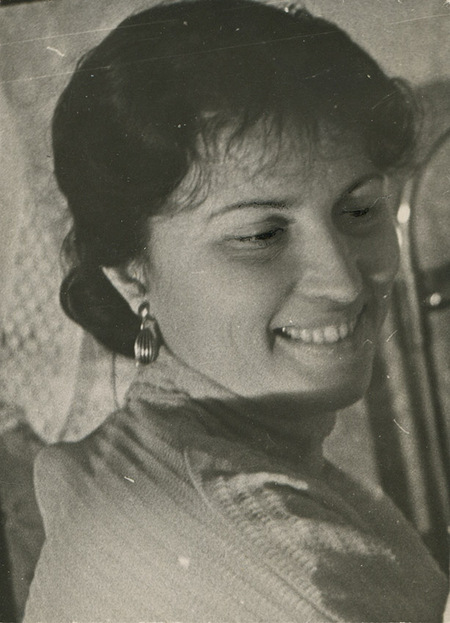
Irina Charskaya (1923–2015) dedicated her entire life to art. From the first still life she painted on the front lines to the unfinished work found on her easel after her death—Charskaya created throughout her life. She survived the war, studied at the Academy, taught, traveled across Europe, started a family, and produced a vast body of work using techniques ranging from mechanical graphics and engravings to monumental painting and illustrations, created both based on classical works and in collaboration with contemporaries, such as M. A. Sholokhov and A. V. Kalinin. Parallel to her artistic creation, the artist meticulously collected artifacts from her life and documented them, resulting in an archive that will be partially examined in this study.
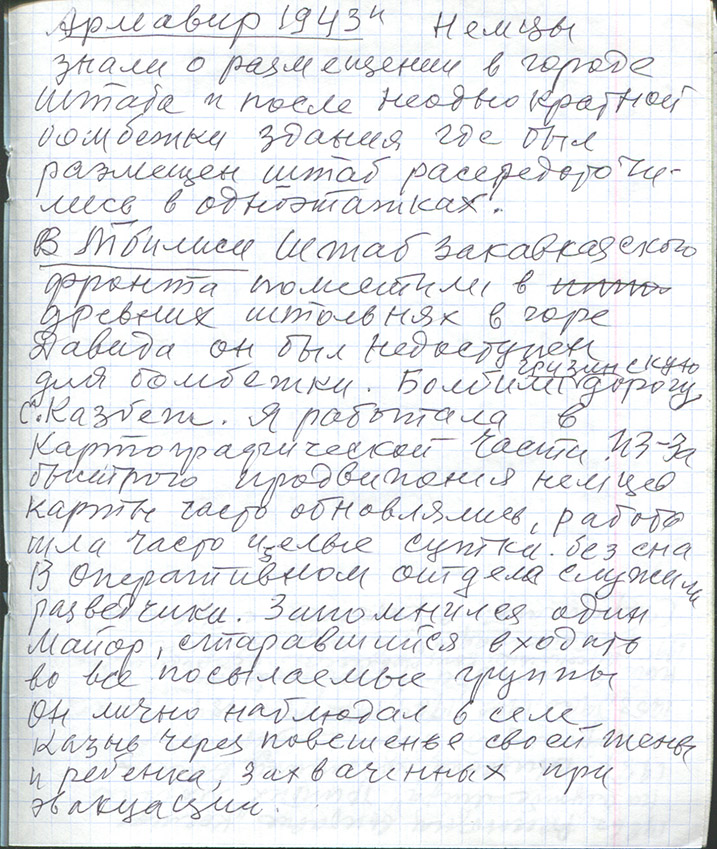
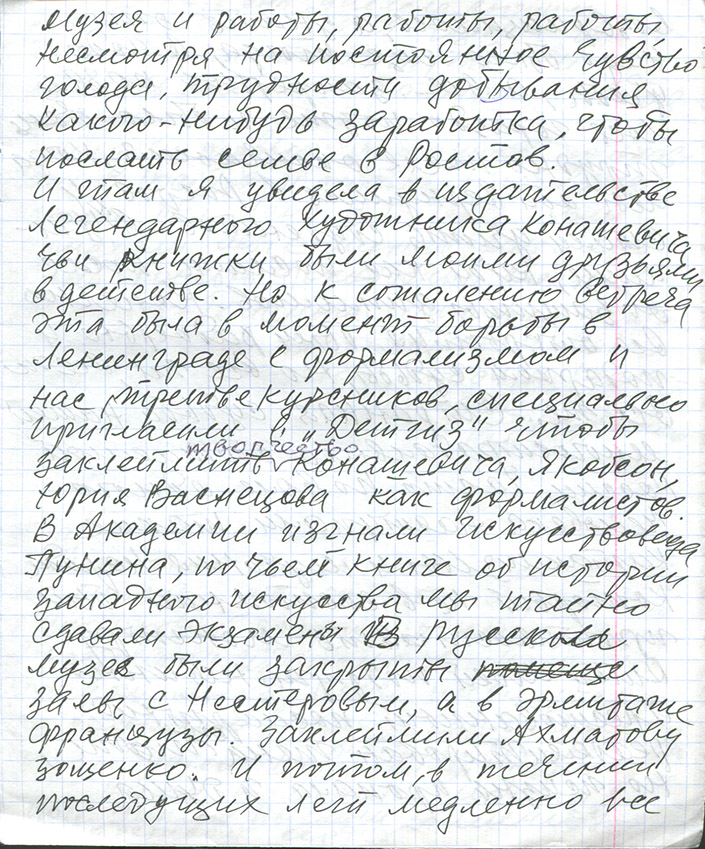
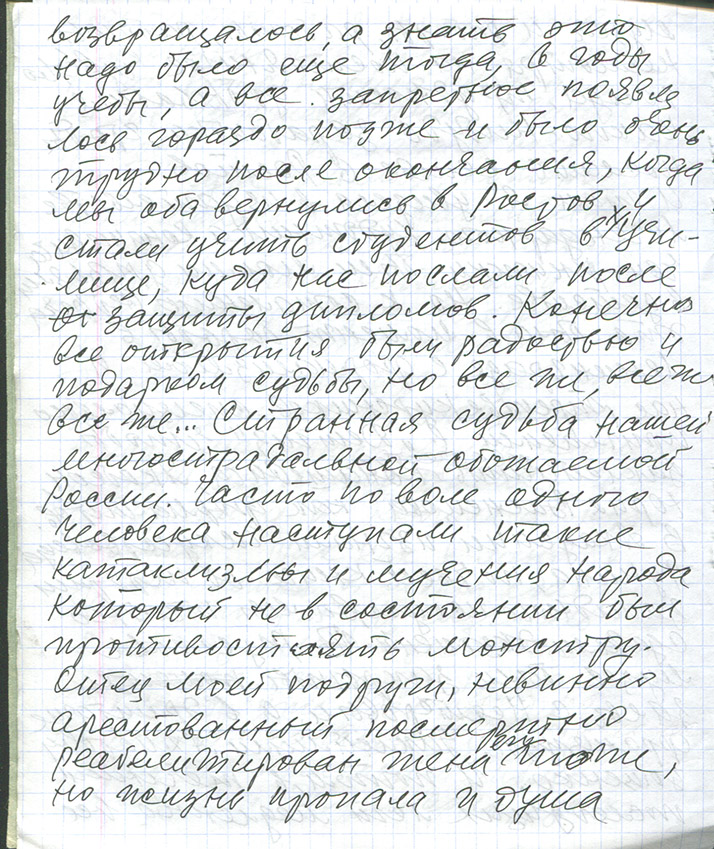
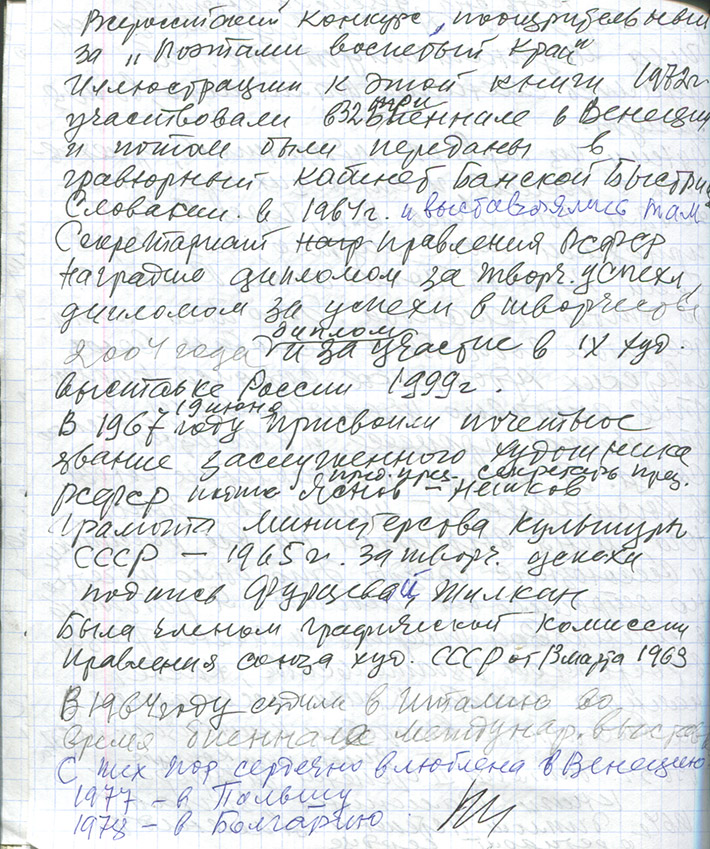
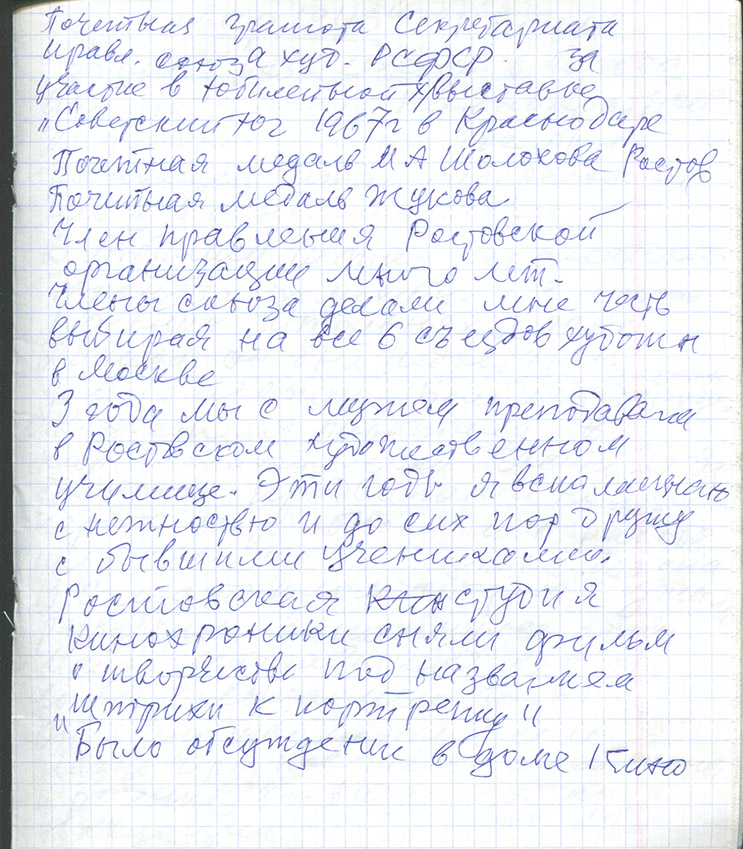
A collection of autobiographical notes by Irina Charskaya
Biography
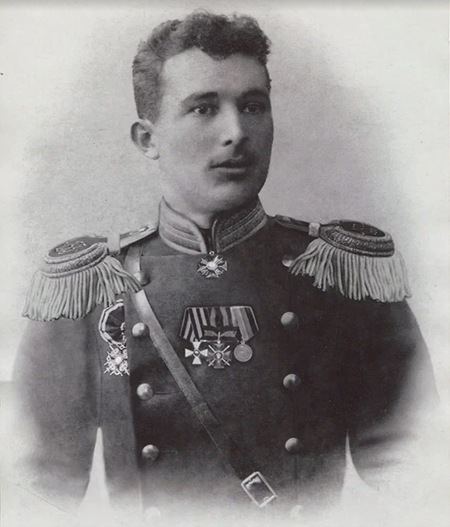
To better understand Irina Alekseevna’s history, one must focus on her lineage, which significantly influenced her outlook on life. Adrian Semenovich Ivanov, the artist’s grandfather, was a pivotal figure in the family’s history. Born in Vladikavkaz in 1875, he built a career in the Imperial Russian Army, rising to the rank of Captain in the 153rd Baku Infantry Regiment. «As an officer, he acquired nobility that was not hereditary.» In the family’s memory, he remains a man of military bearing, discipline, and rare inner composure. It is with him that that short period of stability and dignity was connected—a period that would later be almost swept away by history. In January 1916, Adrian died on the Caucasus Front during the offensive on Erzurum, and his death became not only a personal tragedy for the family but also the beginning of the long disintegration of the old world. After the Revolution, the widow and children endured searches, famine, the threat of arrest, destitution, and the near-total destruction of their accustomed way of life: savings were invalidated, belongings were sold off, and the family was oppressed by fear, poverty, and a constant fight for survival.
Photo: Adrian Ivanov, Irina Charskaya’s grandfather
For this family, everything collapsed with the arrival of the revolution. In an instant, they transformed from respected citizens and the family of a war hero into «former people.»
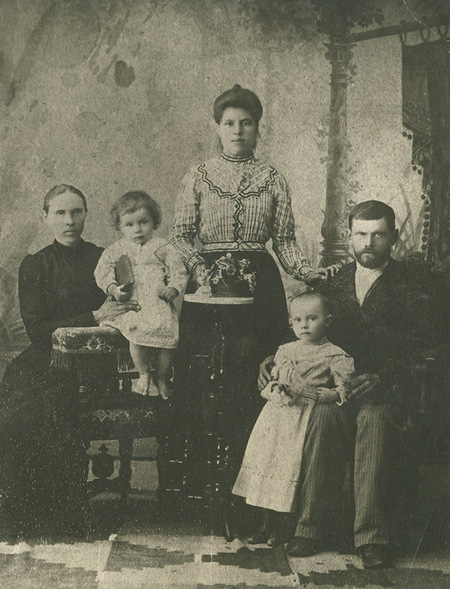
Her daughter, Nina Adrianovna, mother of Irina Alexeyevna, seemed to have inherited from this lineage not only the memory of a brief noble existence but also the resilience to endure harsh circumstances. Born in 1900 in Temir-Khan-Shura, she navigated a difficult childhood amid family disintegration and the post-revolutionary «period of turmoil.» Notably, in 1922, Nina married the Red Army artillery commander, Alexey Yakovlevich Akimov. This marriage gave her the opportunity to receive an education—Nina studied medicine. Her daughter Irina was born to her in 1923. Irina’s mother journeyed from the daughter of an Imperial Army officer in a family crushed by the revolution to a woman whose fate became intertwined with the new Soviet era. It is this dual inheritance she passed on to her daughter—a symbolic legacy divided into two parts: the old, officerly, and proud; and the new, born of the Red Army, hardship, and the necessity of rebuilding life and cherishing every moment.
Photo: the Akimov family (1900)
Military Hospital in Vladikavkaz
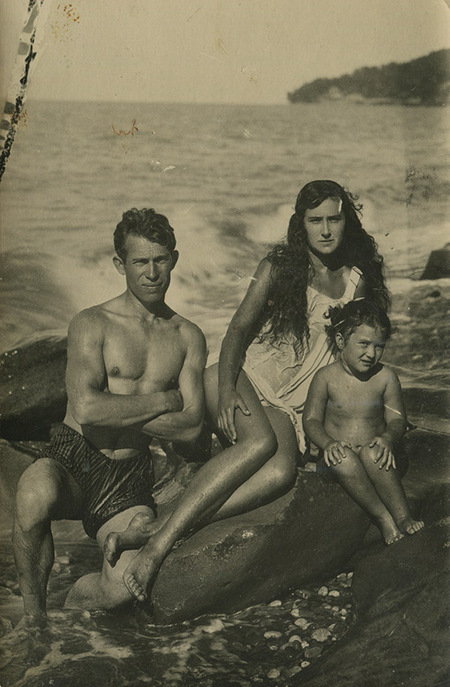
Irina Alekseevna was born on July 5, 1923, in Vladikavkaz, into a family whose life was entirely connected to a military hospital. Her father served as the deputy head, and her mother worked there as a nurse. When the girl was four years old, the family relocated: her father was appointed director of recreation homes for military personnel and their families in Koshtu. These homes were set up in former dachas left vacant after the Revolution and the Civil War. Times were not easy, although the country was gradually recovering from recent devastation. The New Economic Policy (NEP) era arrived—after famine and the harsh years of the Civil War, life began to pick up noticeably. Private trade increased, and everyday life gained comforts that had recently seemed like luxuries. These changes were also felt in printing, which was experiencing a distinct revival during those years.
Photo: with her parents, 1927My mother bought me children’s books with wonderful illustrations by Konashevich, Lebedev, Pakhomov, and Ermolaeva—a marvelous constellation of Leningrad artists. I started reading and drawing early on. And all of this was set against a backdrop of beautiful nature—we lived there all year round.
In 1931, Irina Alekseevna started in the first grade at the Hostin School, but the family moved again within a year when her father was assigned to the headquarters of the North Caucasian Military District in Rostov-on-Don. This move coincided with the end of the NEP and the beginning of an especially difficult period: empty stores, hunger, the black market, cafeterias at schools and enterprises, and people who had come from Ukrainian villages in search of salvation—Irina Charskaya remembered all of this for the rest of her life. In 1941, immediately after finishing school, war entered Irina Alekseevna’s life: she stayed with her grandmother because both her father and mother were called up to the newly forming 19th Army in Rostov, destined for Smolensk.
9B, School No. 78, 1940.
Everything said that everything would be fine. I celebrated the end of school with my classmates in a cheerful way; we wandered through Rostov all night, dreaming. But at midnight, our neighbor woke me and my grandmother up: you don’t know anything? War!
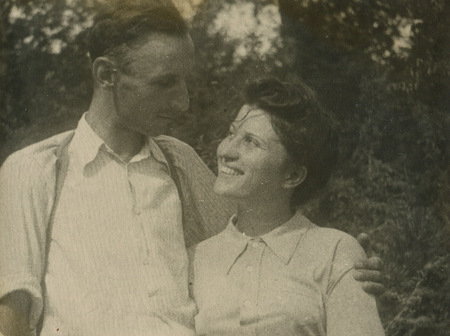
In February, her father’s certificate allowance stopped being paid, which meant he was officially listed as missing. Soon, Irina Alekseevna and her grandmother were taken in an enclosed truck heading to Armavir, where the Corps Headquarters was located. There, she hoped to learn something about her parents’ fate and find work. Her father’s friends helped Charskaya secure a position as an office clerk at the headquarters, and she was learning to type on a machine while already serving. It was in Armavir that her personal destiny awaited her: she married an officer, Evgeny Charsky, who had graduated from an art school and was about to apply to the Academy of Arts in Leningrad. Irina Alekseevna herself had drawn since childhood, but she was hesitant to speak about it out loud for a long time. Only two years later did her husband accidentally realize the place drawing held in her life, and he supported her by commissioning her first still life.
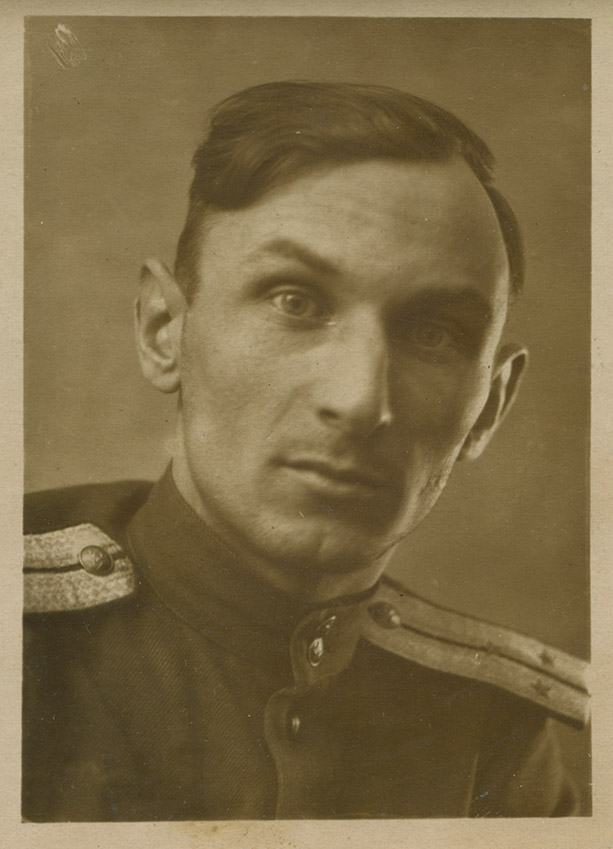
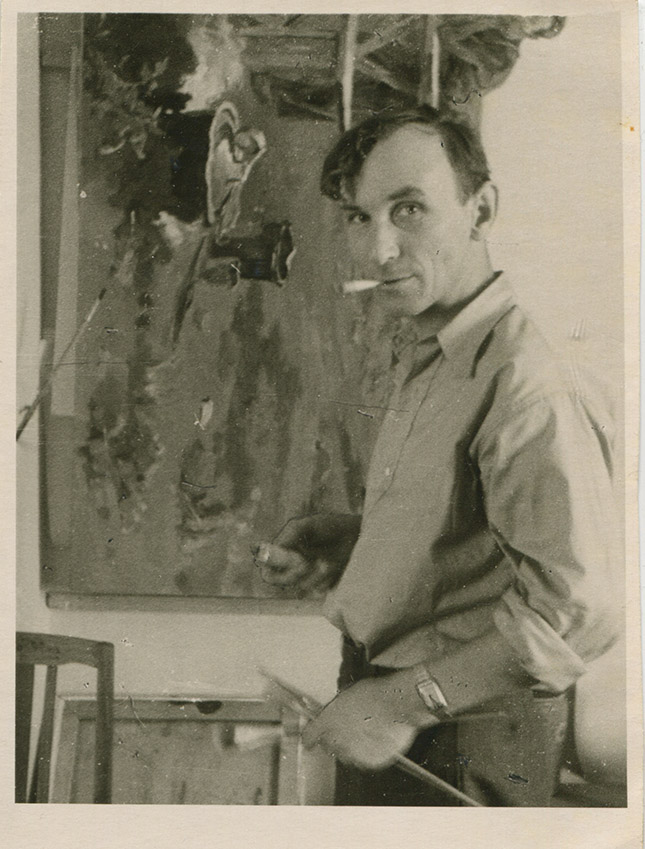
Evgeny Gavrilovich Charsky, husband of Irina Alexeyevna
Meanwhile, the war continued. With the German advance, an evacuation began—first to Ordzhonikidze, then to Tbilisi, where the headquarters was transformed into the Administration of the Transcaucasian Front Formations, and the couple ended up at the Transcaucasian Front headquarters. The brutal winter of 1942–1943 passed under the threat of a German breakthrough into the Caucasus and even a possible evacuation to Iran, but the advance was halted near Alagir. Then came the turning point of Stalingrad. The SCVO headquarters returned to the liberated Armavir, and after the victory in 1945, Irina returned to Rostov-on-Don to receive an education at the school before heading to the Academy in Leningrad with her husband.
I enrolled in the second year of the school, which was located in an unheated building where the watercolor would freeze while our small class of students painted still lifes on paper.
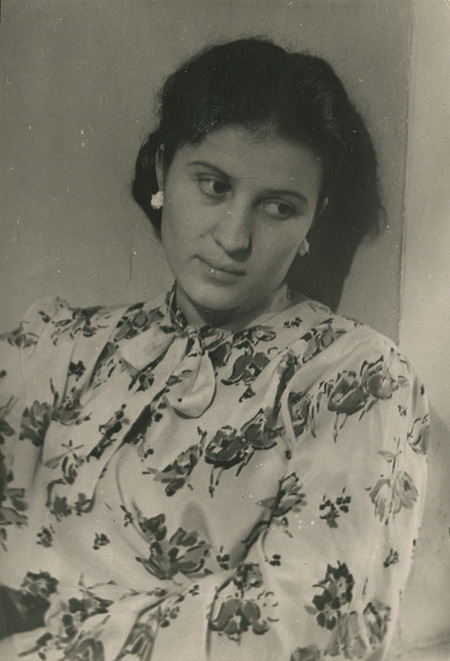
In 1946, Irina Alekseevna Charskaya continued her education in Leningrad, enrolling at the Repin Institute of Painting, Sculpture and Architecture. She chose graphic arts and trained in the workshops of Rudakov and Pakhomov. Life in Leningrad was extremely difficult: constant hunger, poverty, the search for work, and the need to support her family in Rostov. Yet, it was during these years that her vocation became especially clear. Her studies opened up a vast artistic world to her—the Academy library, the Hermitage, the Russian Museum, and demanding daily work. Charskaya defended her diploma thesis in 1952, completing illustrations for M. A. Sholokhov’s novel, «Quiet Don.» This subject proved especially significant for her; she returned to Sholokhov’s works—including «Quiet Don» and «The Raised Virgin Soil”—later throughout her entire creative life.
Photo: Irina Charskaya, Leningrad, 1st Year Student
Leningrad, April 1948. Students of the USSR Academy of Arts, 2nd and 3rd Year Faculty
Community Engagement
In the late 1940s and early 1950s, Charskaya taught at the Rostov Art School named after M. B. Grekov. Her work focused on easel graphic art and book illustration. She collaborated with publishers from Rostov-on-Don, Kyiv, and Moscow. Books featuring her illustrations were exhibited at All-Union and international exhibitions.
Member of the Union of Artists of the USSR. Member of the Graphic Commission of the Board of the Union of Artists of the USSR (since 1963). She was repeatedly elected to the Board of the Rostov branch of the Union of Artists, to the exhibition committees of the Southern region, and served as a delegate to All-Russian and All-Union Artists' Congresses.
She undertook artistic trips to Italy (1964, during the Biennale), Poland (1977), and Bulgaria (1978). A documentary film, «Touches to a Portrait, ” produced by the Rostov Film Chronicle Studio, was made about the artist’s work.
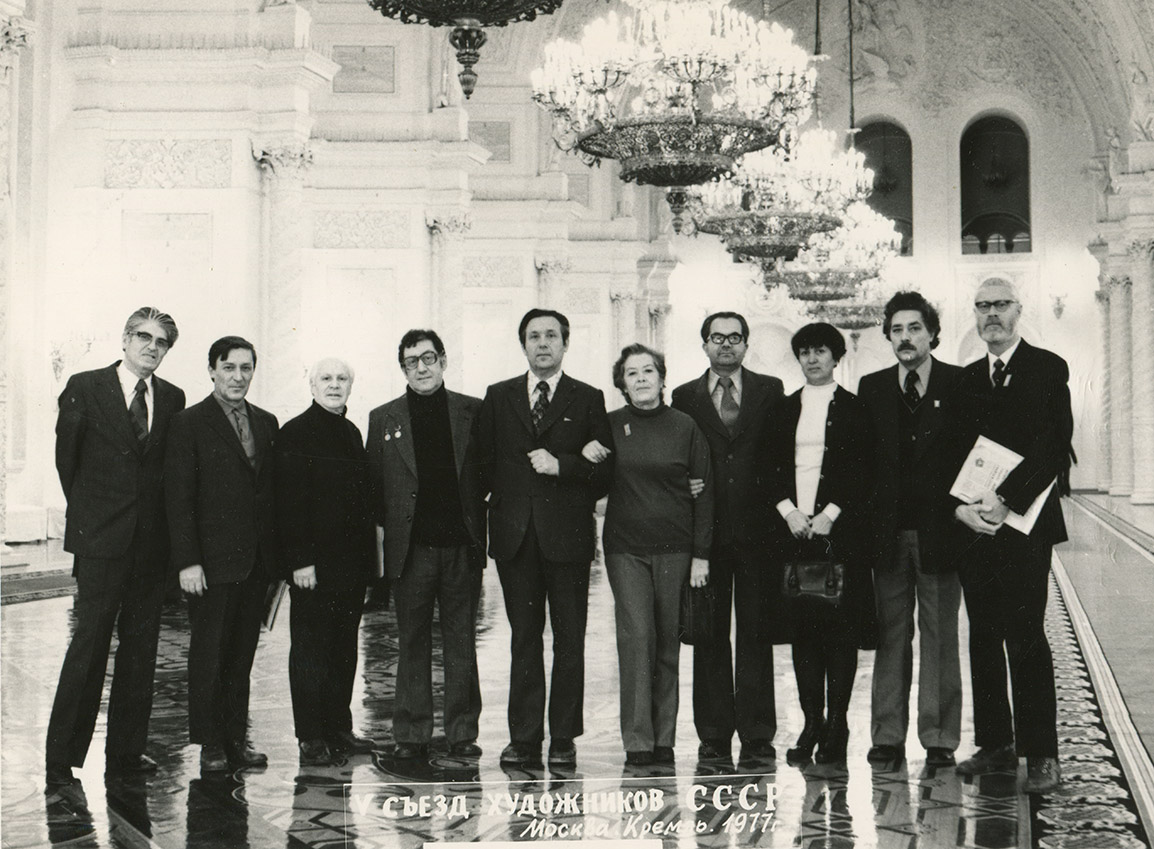
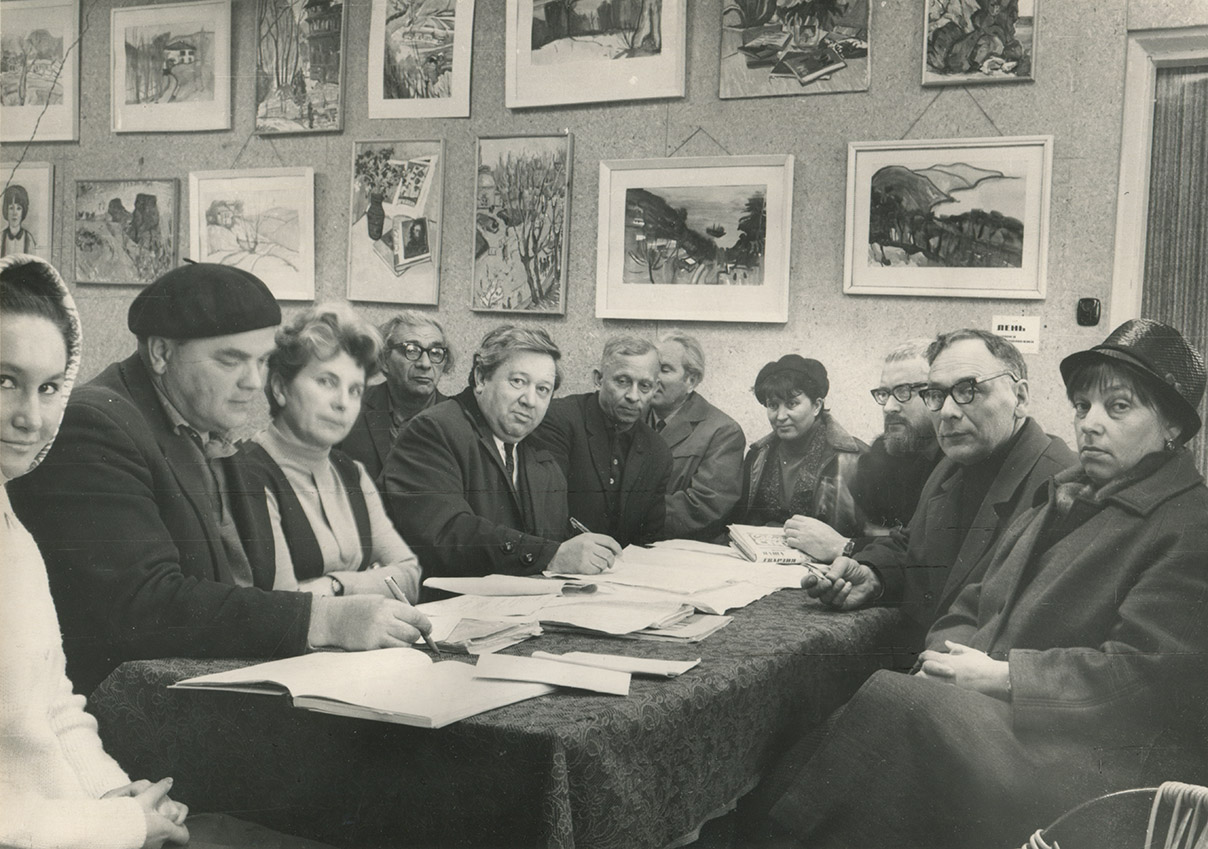
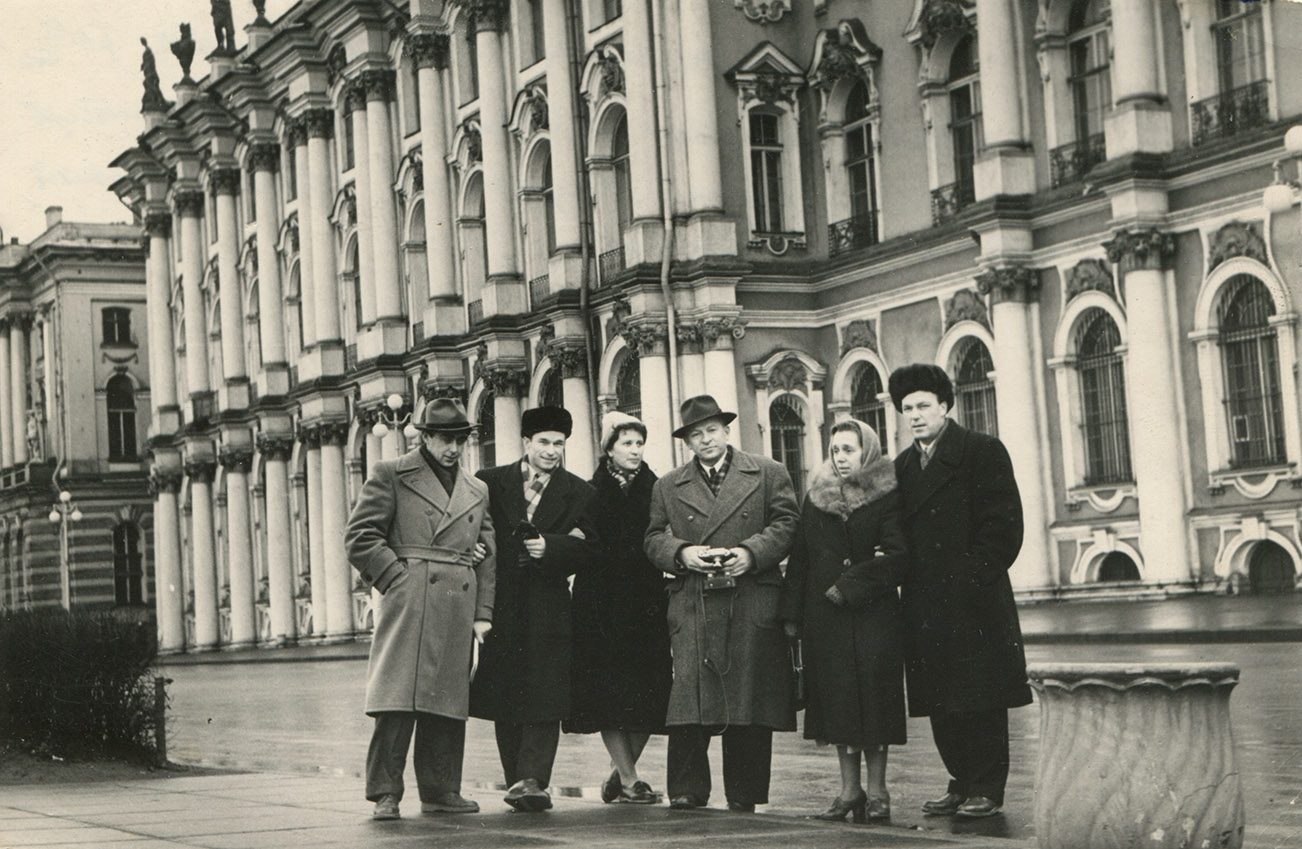
1. Art Council Meeting, 1970s 2. Union of Artists Conference in Leningrad, 1970s 3. USSR Artists Congress, Moscow, Kremlin, 1977
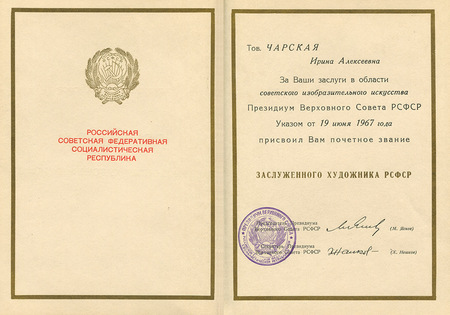
Major Awards and Honors:
- Honored Artist of the RSFSR (June 19, 1967)
- Second Degree Diploma for the design of the book M. Kalinin’s «Cigány» (1963)
- Second Degree Diploma for the book «Legend of the Retiv Heart» (1964)
- Encouragement Diploma from the All-Russian Competition for the book «The Region Celebrated by Poets»
- Certificate from the Ministry of Culture of the USSR (1965)
- Diploma from the Secretariat of the Board of the Union of Artists of the RSFSR for creative achievements
- M. A. Sholokhov Honorary Medal
- Zhukov Honorary Medal
Photo: Diploma for the awarding of the Honored Artist of the RSFSR title
Irina Charskaya was actively involved in the activities of the Artists' Union, regularly being elected as the regional representative at union congresses and conferences. Nevertheless, an interesting fact remains that the artist never belonged to a political party. This can be observed in various questionnaires and other official documents. Despite this, her political neutrality did not prevent her from participating in international competitions or traveling abroad as a delegate from the Soviet Union. Furthermore, Charskaya regularly received letters of appreciation and certificates from the Union and the Government for her contribution to Soviet art.