The Evolution of Landscape in Armenian Painting in the 20th–21st Centuries
Navigator
- Concept.
- Early 20th Century. The creation of the «sunlit paradise» image.
- Mid- to late 20th Century. The period of «internal dialogue.»
- Late 20th Century and the present day. The complete deconstruction of images and meanings.
- Conclusion.
Concept
This visual study is dedicated to analyzing the evolution of the Armenian landscape—a genre that has become fundamental to the national culture of Armenia. Over the past hundred years, the image of the Armenian land has transformed from a vivid, life-affirming myth to complete deconstruction. The central premise of this visual investigation is that in the 20th and 21st centuries, landscape evolved from a simple admiration of nature’s external beauty to a reflection and an attempt to convey complex inner feelings through natural imagery.
The chronological starting point for this visual study is the first quarter of the 20th century. At that time, masters led by Martiros Saryan created the image of a sun-drenched «paradise.» Landscape became an affirmation of life and an admiration for the beauty of nature. The palette of artists during this period is almost entirely devoid of dark tones, creating an image of Armenia as a land of light, where nature and humanity coexist in ideal harmony.
However, the image of Armenia begins to change rapidly around the middle of the century. The landscape ceases to be a means of admiration and conveying visual beauty, becoming instead a subject for deep reflection, an analysis of feelings and emotions. Minas Avetisian’s work is particularly significant during this period. While Armenia appears in Martiros Saryan’s canvases as a sun-drenched paradise, the landscapes by Minas Avetisian resemble a unique, vivid «dream» of the homeland. Akop Akopian’s work is also especially notable during this time. His paintings are based on reflections on historical events, such as persecution and the Armenian Genocide. This is why Akop Akopian’s landscapes lack bright colors. The land in his work is desolate and uninhabited.
Contemporary art strives for a complete reprocessing of images and meanings. In the digital age, the depiction of nature in paintings is no longer the goal—it is an idea. The landscape essentially «disintegrates» into vivid patches of color and swirls.
The decision to choose this specific theme for the visual research stems from a personal interest in depicting Armenian nature, as well as a desire to explore how a seemingly simple and clear genre of painting can encapsulate complex meanings.
Key questions for this visual study: «What is the essence of the evolution of nature imagery in Armenian painting during the 20th and 21st centuries? What thoughts and emotions are embedded in the canvases of Armenian artists working in the landscape genre?»
The visual study covers the 20th and 21st centuries in Armenian painting. Chronologically, the work is divided into the following periods:
- The first quarter of the 20th century. The creation of the «sunny paradise» image.
- The middle and second half of the 20th century. The period of «internal dialogue.»
- The late 20th century and the present day. The complete deconstruction of images and meanings.
The objective of this work is to trace the evolution of the landscape in Armenian painting across the 20th and 21st centuries, and to determine the specific elements that artists representing nature focus on in their works during different periods.
The first quarter of the 20th century. The creation of the «sunny paradise» image.
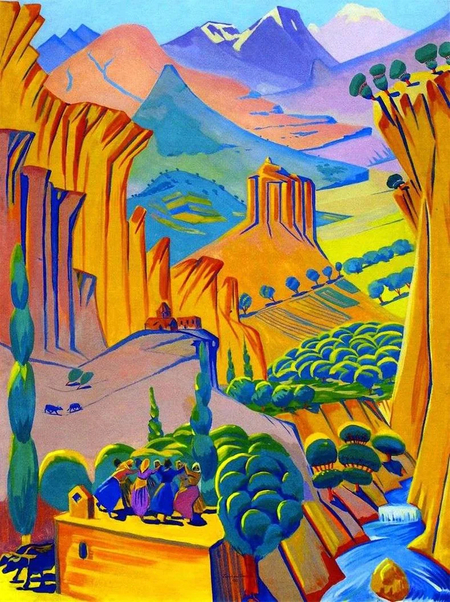
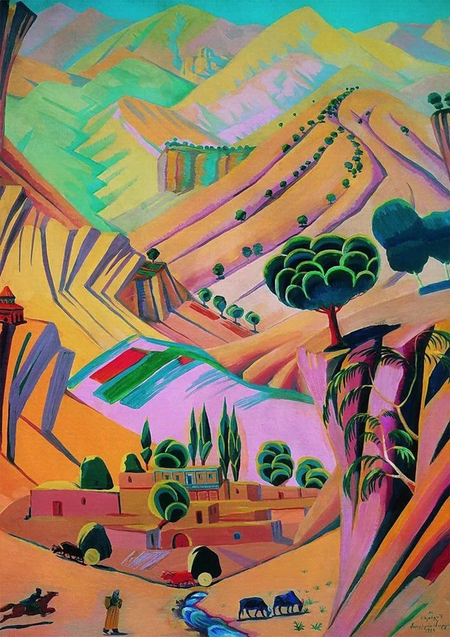
Martiros Saryan, 1. «Armenia, ” 1923; 2. „Colorful Landscape“ from the series „Armenia, ” 1924.
Landscape emerged in Armenian painting in the late 19th century and rapidly became a leading theme in the work of many artists.
Martiros Saryan, «Mountains, ” 1923.
Martiros Saryan is undoubtedly one of the key figures in the development of the portrayal of Armenian nature.
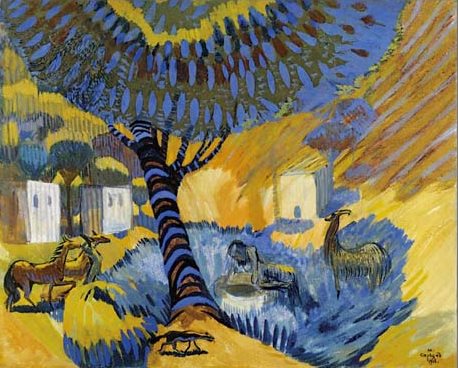
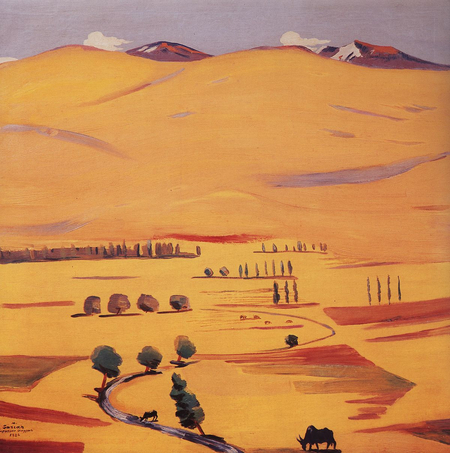
Martiros Saryan, 1. «At the Well, Hot Day,» 1908; 2. «Gagarmine Mountains,» 1926.
«Saryan’s landscapes convey the country’s nature so convincingly that even for those who have never been to Armenia, they provide a clear picture of it» [1, p. 164].
Martiros Saryan, «Mount Aragats in Summer, ” 1922
Eghishe Tadevosyan, «Ararat, ” 1914
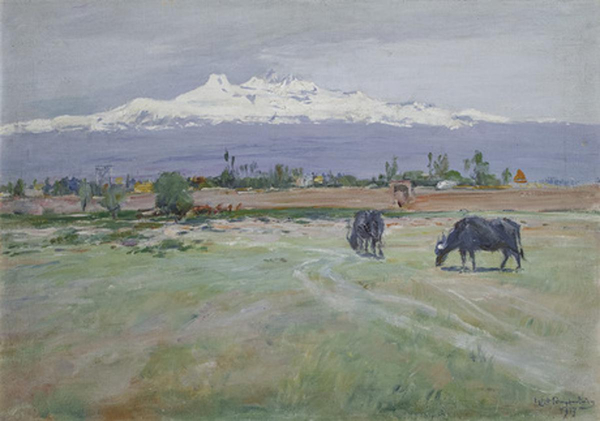
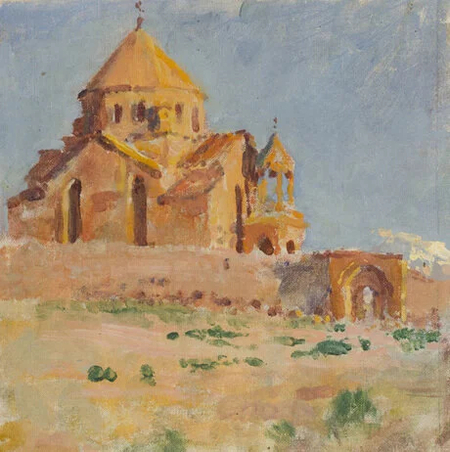
Egish Tadevossyan, 1. «Mount Aragats, ” 1917; 2. „Church of St. Ripsime, ” 1903.
Fanos Terlemeyan, «View of Lake Van and Mount Siphan from Kütç Island, ” 1915.
Paintings from this period are characterized by vibrant visual representations of nature.
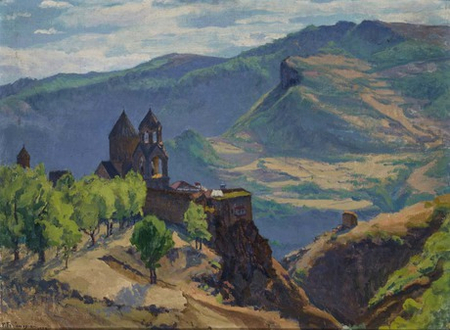
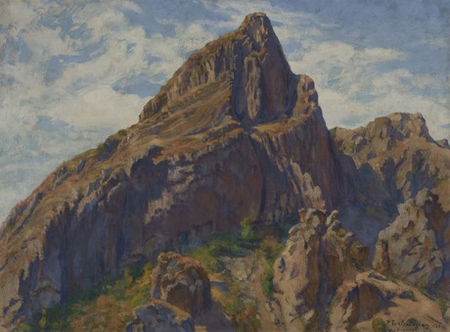
Fanos Terlemeyan, 1. «Tatev Monastery, ” 1929; 2. „Mountains. Dzoraqet, ” 1930.
Phanos Terlemjian, «Sevan, ” 1917.
Thus, the landscape in early 20th-century Armenian painting can be characterized as a «sunny canon.» The artists primarily strive to convey the beauty and diversity of the country’s nature.
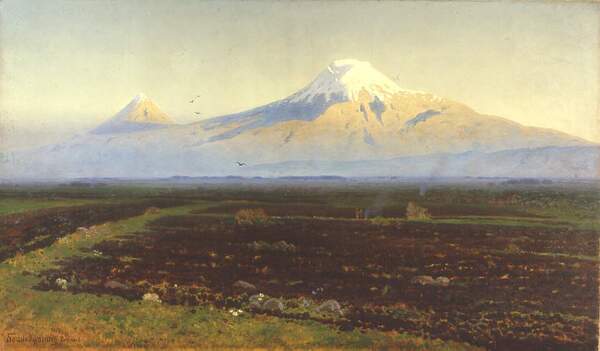
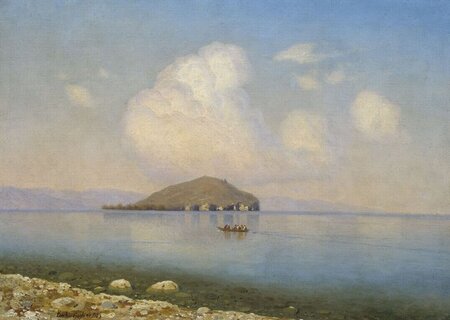
Gevork Bashinjagyan, 1. «Ararat,» 1912; 2. «Sevan,» 1903.
The mid-to-late 20th century. The period of «internal dialogue.»
During this period, artists ceased striving to depict nature with literal accuracy. The focus shifted instead to conveying a complex spectrum of feelings and emotions.
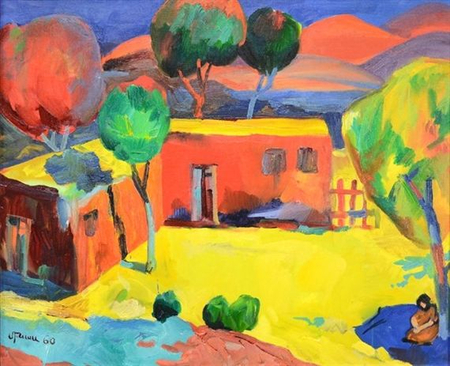
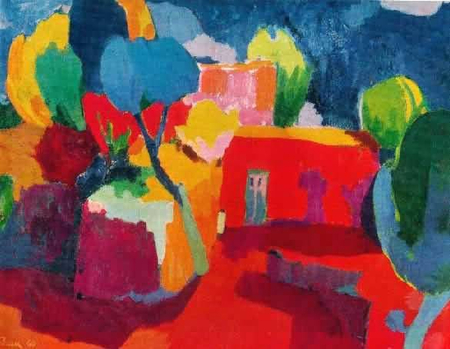
Minas Avetisian, 1. «Noon, ” 1960; 2. „Jajur, ” 1960.