1. Index 2. Concept 3. 1986–1989: Texas Glam 4. 1990–1991: The Birth of Groove Metal 5. 1992–1995: The Triumph of Masculinity 6. 1996–2000: «Bloody Makeup» 7. 2001–2004: Sludge-Black Metallist? 8. 2005–2018–Present: Old-School Brutalism and Return to Roots 10. Conclusion 11. Sources
Philip Hansen Anselmo—one of the most abrasive, contrasting, and influential figures in the history of extreme music, a distinct voice of his generation. After joining Pantera in the late 1980s, he became the embodiment of the era’s key visual markers. In the music industry, image transformation is a common occurrence—artists often adjust their personas according to the prevailing «era.» Anselmo is no exception; however, his evolution is noteworthy because his appearance—from hair length to scars and stage wardrobe choices—became a direct, even unsettling document recording his psychological trauma, intense physical pain, periods of near-death, and subsequent rebirth. This visual study examines the artist’s image as a tangible chronicle of his mental state, independent of producer intent. Over four decades, Anselmo’s appearance functioned as a form of radical, subconscious confession to the audience. Every severe crisis in his life corresponded to a dramatic visual shift. The work’s logic is structured chronologically, demonstrating how a musician’s psychological state is reflected in their outward presentation.
The starting point is 1986, when an eighteen-year-old Phil Anselmo, who moved from New Orleans to Texas, was forced to adapt to the demands of the music industry. At that time, the American metal scene was still strongly influenced by glam metal, which was geared toward commercial success.
The aesthetic of this direction—characterized by leopard-print leggings and a deliberately theatrical hairstyle—becomes part of his stage persona. However, by 1990, with the release of the album «Cowboys from Hell» and against the backdrop of thrash metal’s growing influence and its cult of aggression, a sharp visual shift occurs. Shaved sides and a long lock of hair on the crown become a symbol of an underground mindset—a primal «roughness» characteristic of the thrash metal scene. The process of searching for identity reaches its peak in the first half of the 1990s. A completely shaved head and the large «UNSCARRED» tattoo on his abdomen forge an image of an aggressive, intentionally masculine, and virtually invincible figure. This image became the canonical likeness of Phil Anselmo—the image that springs to mind when his name is mentioned. Over time, influenced by crises and physical ailments, the visual representation of his self-destruction reaches its extreme form. Starting in 1995, the artist moves away from the image of the energetic and brutal «metal stuntman» toward somberness, detachment, and pronounced neglect. A shift also occurred within the extreme scene of the 1990s. The cult of self-destruction becomes a part of the artistic language of an entire generation of musicians, alongside a conspicuous rejection of mainstream culture. The culmination of this period is the 2004 death of Dimebag Darrell, which became one of the most traumatic events in the history of modern heavy music. The final stage of transformation is linked to the gradual recovery and reevaluation of his own identity. Through drastic changes in his appearance, fluctuations in weight, and new tattoos, Anselmo arrives at a significantly more subdued look.
1986–1989 Texas Glam
In the 1980s, the US rock scene was heavily influenced by glam metal. For young bands, the choice was limited: either conform to the demands of the club and radio industries or remain unnoticed. «Panther» (with Terry Glaze on vocals at the time) quickly became one of the most popular regional club bands, building a reputation on loud performances, glam aesthetics, and a party-oriented sound.
After the departure of vocalist Terry Glaze, the group went through a period of instability. Several temporary frontmen cycled through the band, and the audience base gradually shrank.
Album cover for «Power Metal,» 1988.
Musicians were captivated by young vocalist Phil Anselmo from New Orleans, who was playing in the group Razor White. According to members of Pantera, his voice immediately stood out among the other candidates: «Dude, I just talked to this guy, and he sounds exactly like Bon Jovi!» noted Vinnie Paul, Pantera’s drummer. In 1987, Anselmo flew to Texas and made a huge impression during the audition. He soon moved in with the musicians and lived and worked with the band almost non-stop for the next several years.
Promo photograph of «Panther,» 1987.
Philip Hansen Anselmo, 1987
With the arrival of Phil Anselmo, the group’s atmosphere noticeably changed. He brought a more aggressive and dark aesthetic to the collective, taking center stage during performances.
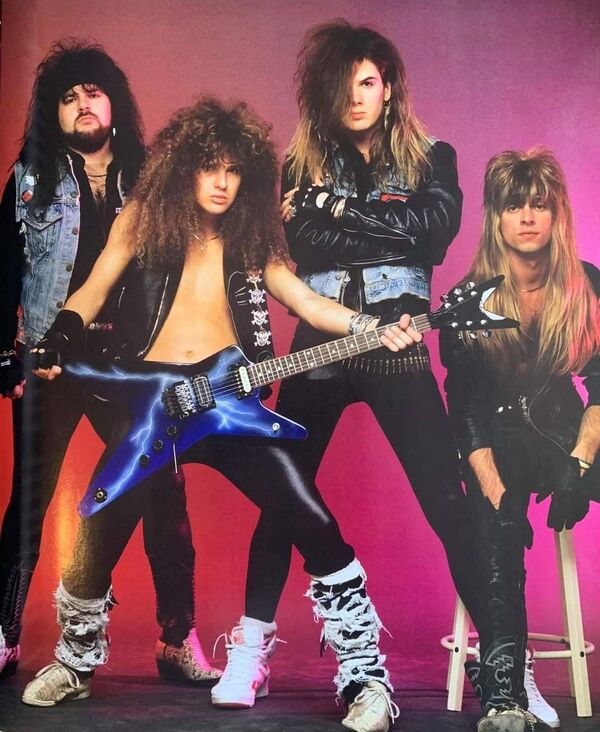
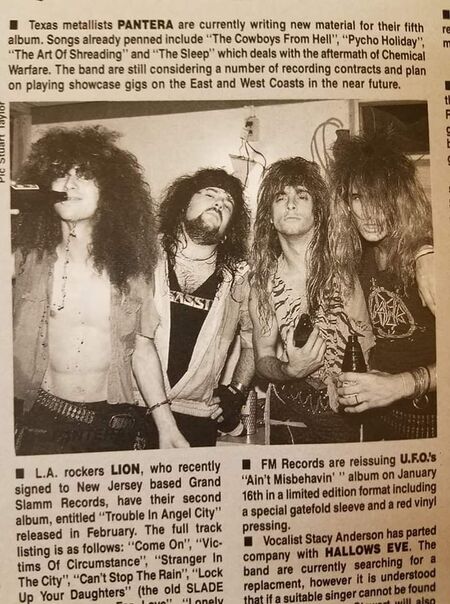
1987, poster by the «Panther» group: Vincent Paul Abbott, Darrell Lance Abbott, Phillip Hanssen Anselmo, Rex Robert Brown. Article in an American newspaper.
«This guy was absolute fire; he looked perfect, only eighteen years old. When you’re messing around with five goofballs and then suddenly you walk up to someone like that—it’s seriously awesome, ” the group participants recalled.
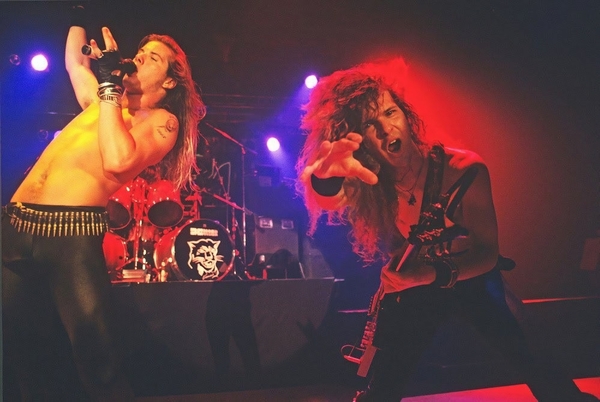
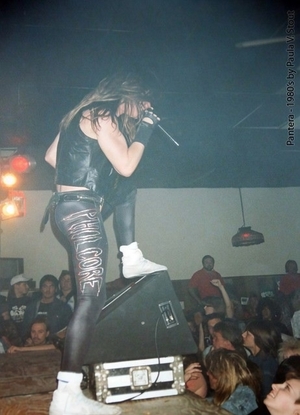
Concert in a modest hall near Dallas, 1987.
During this period, the vocalist’s image was defined by hyper-sexualized and androgynous features. Voluminous, slicked-back hair, tight leather clothing, and imposing handmade jewelry now appear almost comical, especially when compared to his current aesthetic.
«Panther,» 1988
1990–1991: The birth of groove metal
Album cover for «Cowboys from Hell, ” 1990.
Beyond the flashy clothing and long hair, a desire to distance themselves from the artificial festivity of glam rock and make their look grittier and more realistic gradually emerged.
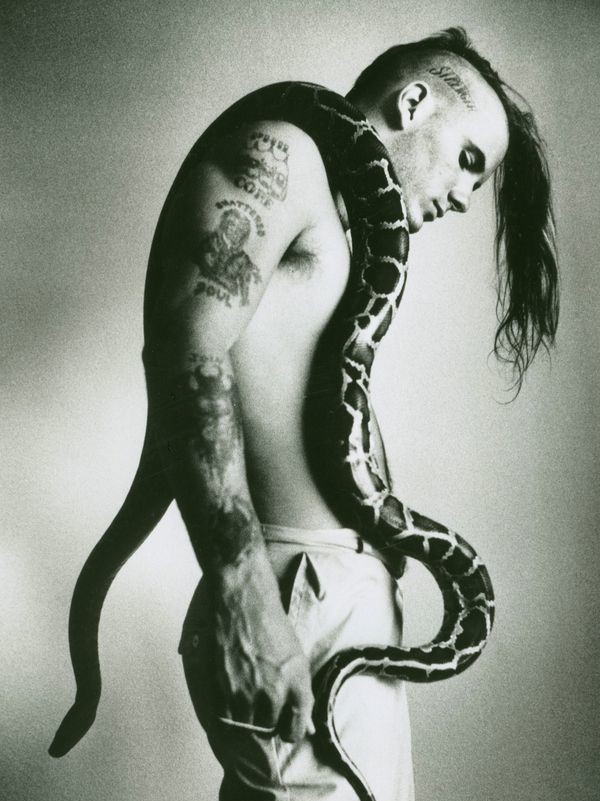
Philippe Anselmo, circa 1990
The musicians faced 28 rejections from various major labels, but the 1990 album «Cowboys from Hell» became a breakthrough after Atco Records agreed to collaborate. This was followed by a change in image: tights and lacquer were discarded; Anselmo favored denim vests, military boots, khaki breeches, and a provocative haircut. New tattoos appeared. Exposure to Kerry King of Slayer infected the band with the aesthetic of aggressive thrash metal.
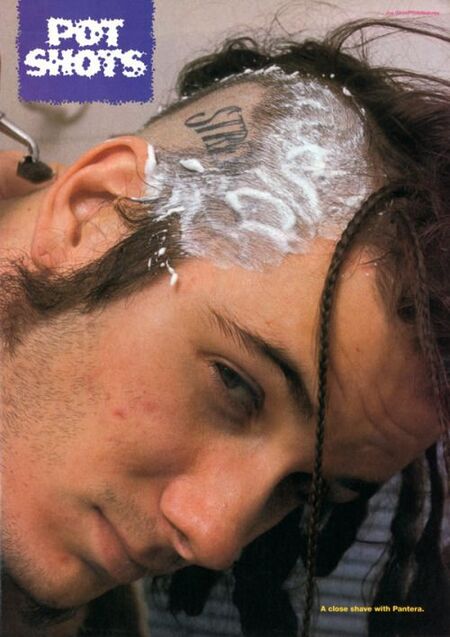
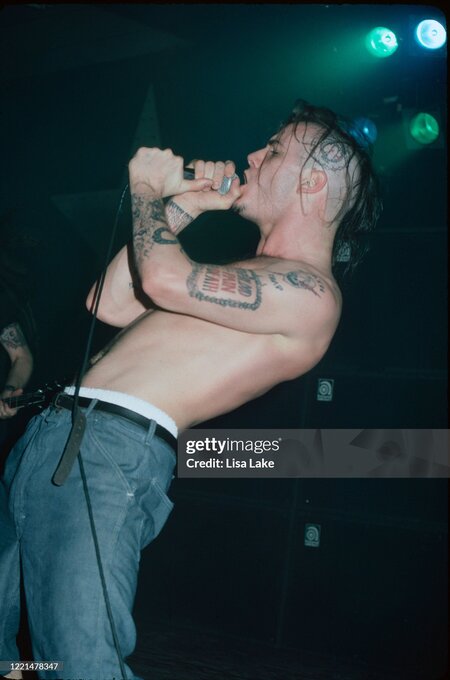
1. Phil Anselmo brews whiskey, c. 1990. 2. Phil Anselmo performs at the Airport Music Hall in Allentown, Pennsylvania, 1991.
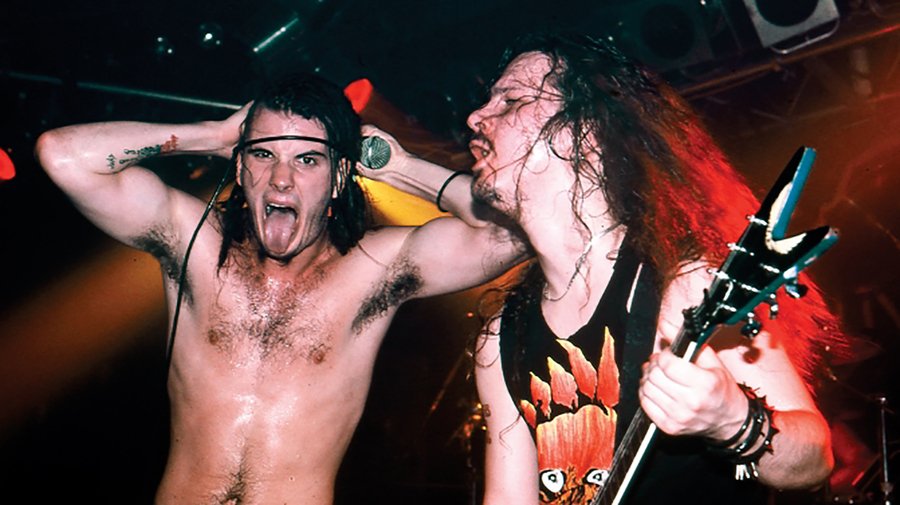
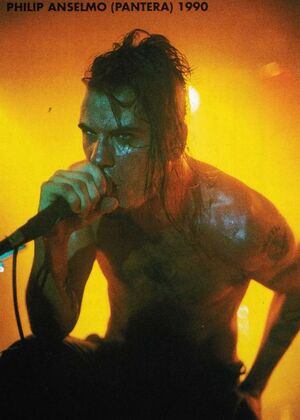
Presentation in support of the album «Cowboys from Hell,» circa 1990.
«Foundation Awards,» 1991
By 1991, Anselmo completely shaves his head and settles into his most canonical look. This image hadn’t yet been cemented in the media—that would happen shortly after, with his performance at the «Rock Monsters» festival in Moscow in 1991 and the release of a new album in 1992.
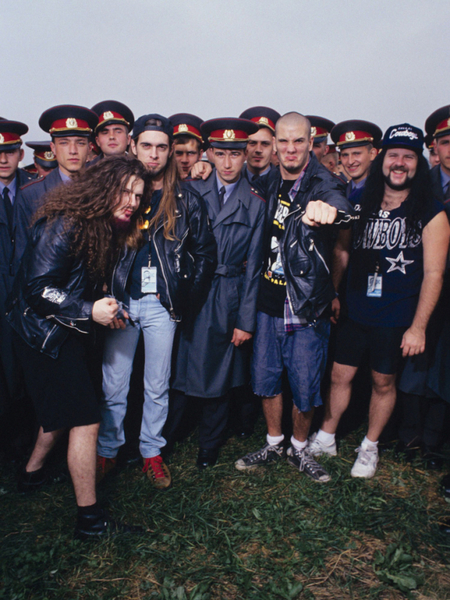

Moscow, «Monsters of Rock, ” Tushino, 1991
Moscow, «Rock Monsters,» Tushino, 1991
Phil aestheticizes absolute masculinity and dominance: a bald head, a T-shirt featuring his favorite band or a bare torso, simple camouflage or athletic shorts, and heavy military boots. The hard muscle definition is clearly visible on his sweaty body, giving the impression that the viewer is observing a regular from street fights. Through his appearance, he projects animalistic threat and testosterone-fueled confidence, which his behavior on stage and in life completely validates. In an interview, Phil mentions that he was inspired by Mike Tyson; he has been a huge boxing fan for most of his life and remains one today.
«Panthera» received the award for Best New Artist at the Foundations Forum Festival on October 5, 1991, in Los Angeles, California.