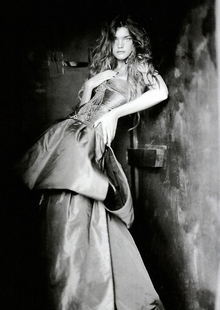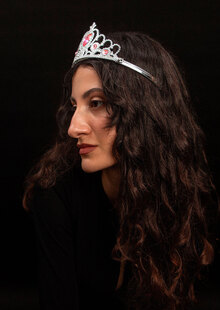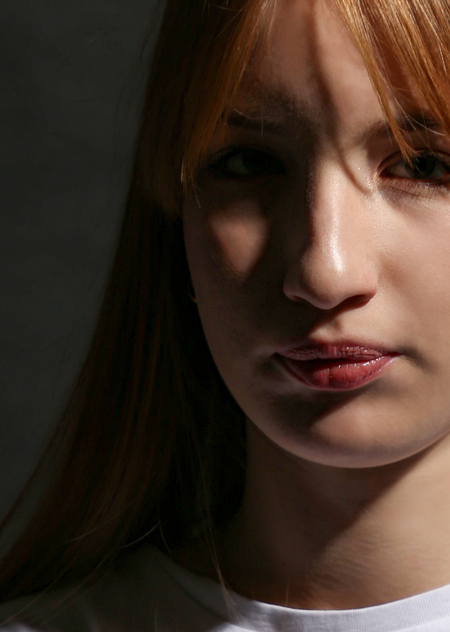
Lighting in portrait photography shapes the facial volume, emphasizes features, and sets the mood of the frame. A lighting scheme refers to the placement of light sources relative to the model and the camera. By altering the direction, height, and intensity of the illumination, one can achieve completely different results even when photographing a single person.
Soft light creates gradual transitions between light and shadow. It is achieved using large softboxes, diffusers, or light reflected off a wall. Hard light forms sharp shadows and pronounced contrast. For this, a small, undiffused light source or direct sunlight is used.
«Butterfly»
One light source is positioned in front of the model and above eye level, angled downward. This creates symmetrical lighting and a butterfly-shaped shadow under the nose. It is often used in beauty portraits.
«Loop»
Place the light source at an angle of approximately 30–45° from the side and slightly above eye level. The shadow cast by the nose should shift to the side and not connect with the shadow under the cheek. This is a universal setup for portraiture.
The Light of Rembrandt
The light source is positioned to the side and above the face. A small triangle of light appears on the shadowed cheek. This scheme is suitable for volumetric, expressive portraits.
Split Lighting
The source is located to the side, at approximately a 90° angle relative to the model’s line of sight. One half of the face is illuminated, while the other remains in shadow, creating high contrast.
Classical three-point scheme
Key light is placed front-side, fill light is positioned on the opposite side at lower intensity, and back light is placed behind the model. This setup helps control facial volume and separate the subject from the background.