Анатомия ведьмовства: визуальная культура магии и страха в Европе XV–XVII веков
Navigation
- Concept
- The History of the Witch Archetype
- The Witch’s Appearance: Beauty, Age, and Ugliness
- The Witches' Sabbath: Secret Gatherings and Rituals
- The Witch’s Attributes: Objects and Their Symbolism
- Demons and Supernatural Beings
- Woman and Society: The Gender Aspect of Witchcraft
- Printing and the Dissemination of the Witch Image
- Witch Hunts: Fear and Real Historical Events
- The Formation of the Visual Witch Archetype
Concept
Witches and sorcery have always evoked a mixture of fascination, curiosity, and fear in people. For many centuries, people believed in magic, supernatural forces, and the existence of an otherworldly realm. Witches were depicted in various ways: as healers and herbalists possessing special knowledge of nature; as dangerous women capable of communicating with malevolent forces; or as participants in secret rituals. Their image evolved depending on the era, cultural traditions, and societal perceptions. This development was particularly active in Europe during the 15th–17th centuries, when belief in witchcraft became part of daily life, influenced public consciousness, and found widespread expression in art.
In my research, I aim to examine how witches were portrayed in European art of this period—what artistic techniques, details, and symbols the masters employed, and why they depicted people associated with magic in those specific ways. I am interested in tracing how real folk beliefs, religious concepts, and human fears were transformed into recognizable visual imagery. Special attention will be paid to engravings and book illustrations, as these were the primary means of disseminating perceptions of witchcraft to the general population.
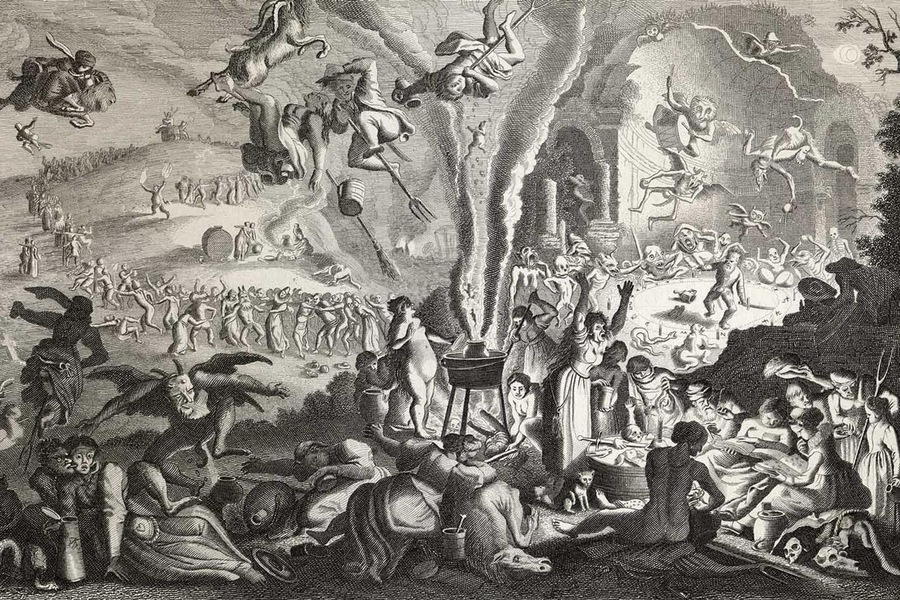
Witch sabbaths will constitute one of the core components of this study. Artists frequently depicted these as nocturnal gatherings where witches performed strange rituals, danced, brewed potions, made sacrifices, and communed with demons. Such scenes are saturated with fantastical creatures, unconventional movements, and ominous details. They reveal characteristic compositional elements: the chaotic arrangement of figures, the stark contrast between light and shadow, and the intertwining of human and animal silhouettes. Through these techniques, an atmosphere of disorder, mystery, and disruption to the established order was created.
Additionally, I plan to examine the objects most commonly associated with witches. Cauldrons, brooms, magical tomes, candles, vessels, herbs, and various implements gradually transformed into recognizable attributes of sorcery. It is fascinating to trace the origins of these associations—the significance these items held in real-life folk practices—and how their original function was altered by superstition. Special attention will be paid to how artists incorporated these objects into their compositions, transmuting ordinary items into symbols of magic.
Special attention will be paid to the appearance of the witches. In ancient depictions, they were often portrayed as old, unattractive, and frightening, or conversely, young, beautiful, and alluring. Sometimes, artists intentionally exaggerated certain physical features, employed unusual poses, and distorted proportions. Through these images, we can understand the societal perceptions of women and why independence, unconventional behavior, or social isolation could evoke suspicion. The image of the witch thus becomes a reflection not only of the fear of the unknown but also of society’s attitude toward female nature and autonomy.
Another vital theme will be the animals and demons depicted alongside the witches. Black cats, toads, goats, snakes, and birds were considered their helpers, companions, or intermediaries between the human and otherworldly realms. Their imagery enhanced the mystical atmosphere of the works and reinforced the perception of a link between witchcraft and demonic forces. Equally compelling will be the study of fantastic creatures—hybrid figures where artists merged human and animal characteristics.
Furthermore, I wish to examine the influence of religion, the printing press, and legal proceedings on the formation of the witch image. The dissemination of witchcraft treatises, printed pamphlets, and illustrated books contributed to cementing specific concepts and visual symbols. Images of witches became not merely works of art, but also a means of conveying societal fears, prejudices, and beliefs.
For this research, I plan to use antique engravings, paintings, book illustrations, and images from witchcraft treatises. By comparing works by different artists, I aim to identify recurring motifs, characteristics in character portrayal, and core symbols of witchcraft. Ultimately, this study will trace how the historical image of the witch was formed, why it acquired these specific features, and how the visual culture of the 15th–17th centuries influenced its subsequent development.
Key Question
How did historical perceptions, religious beliefs, and societal fears influence the formation of the visual image of the witch in European art during the 15th–17th centuries, and what symbols made it recognizable and enduring?
Research Hypothesis
The figure of the witch in European art during the 15th–17th centuries was formed less by actual beliefs about witchcraft than by the influence of religious convictions, folk superstitions, and societal fears. These conceptions were cemented in art through recurring symbols—magical objects, animals, demonic imagery, and distinctive physical characteristics. Their repeated use transformed the witch into a stable artistic archetype that continues to influence the modern perception of magic and sorcery.
1. The Origin of the Witch Archetype
Beliefs about witches existed long before the 15th century. In various cultures, beliefs in magic, spirits, supernatural forces, and the ability to influence the world through special knowledge and rituals were widespread. Individuals who practiced folk healing, prepared medicines, and engaged in various magical practices could be perceived as possessing unusual abilities. In Medieval Europe, attitudes toward witchcraft gradually shifted. Influenced by the Christian Church, magical practices became increasingly associated with the devil, heresy, and rejection of religious norms. These ideas spread most actively during the 15th–17th centuries.
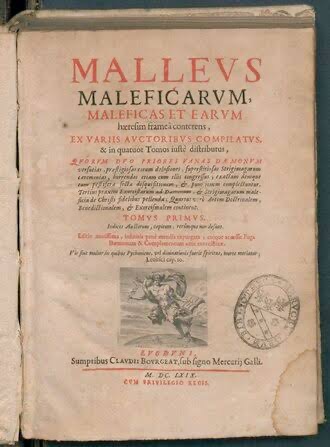
«Malleus Maleficarum» 1486 by Heinrich Kramer and Jacob Sprenger
The treatise «Malleus Maleficarum» played a crucial role. Its text is deeply saturated with misogynistic ideology—specifically, the idea that the body and spirit of a woman are riddled with defects, and that the woman herself is a source of evil and lust.
«A woman’s trait is to cry, weave, and deceive.»
The authors promoted a made-up etymology of the Latin word «woman» (femina) derived from fides (faith) and minus (less), meaning «weakly faithful.» Texts like this contributed to the formation of the persistent image of the witch as a dangerous participant in the demonic world.
2. The Witch’s Appearance: Beauty, Aging, and Ugliness
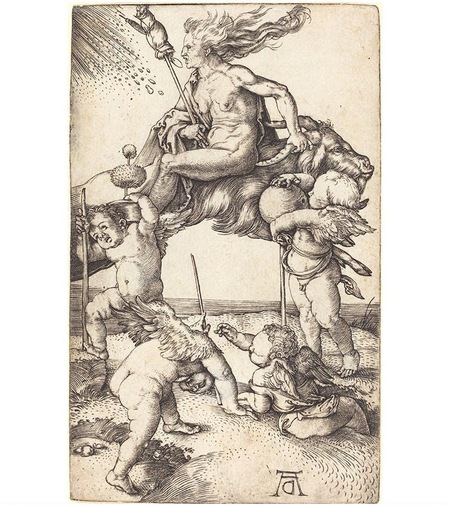
«The Witch on the Donkey, Seen from Behind, ” Albrecht Dürer, c. 1500–1501.The contrast between youth and age played a crucial role in shaping the image of the witch. The young witch was often depicted as beautiful, sensual, and seductive. Her allure could be perceived as a dangerous force capable of tempting people and distracting them from religious values. Elderly witches, by contrast, were portrayed completely differently. Their faces often featured deep wrinkles, sunken cheeks, sharp noses, and unpleasant expressions. Artists emphasized their gauntness, hunching posture, tangled hair, and unusual poses. Old age became a visual sign of connection to the supernatural world, and physical characteristics were transformed into symbols of inner corruption.
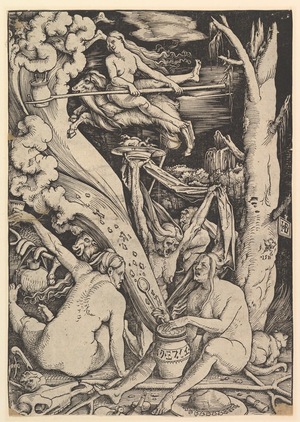
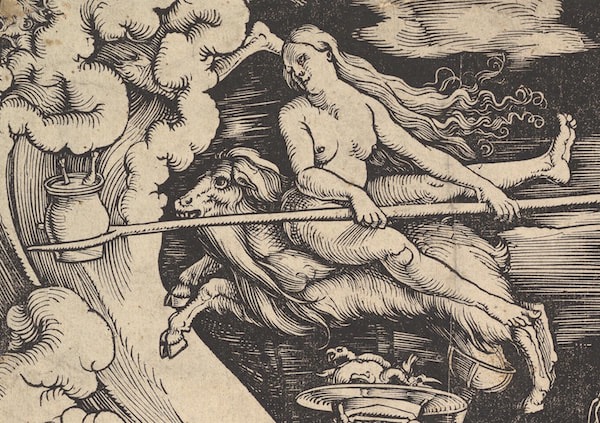
«Witches' Sabbath, ” Hans Baldung Grien, 1510, wood, tempera
Hansa Baldung Green, a German artist, is particularly compelling for his recurring exploration of witchcraft. His works feature female figures with expressive plasticity, unusual poses, and pronounced corporeality.
3. Witch’s Sabbath: Secret Gatherings and Rituals
Sabbath was one of the most recognizable depictions of witchcraft. According to common beliefs in Europe during the 15th–17th centuries, witches would gather at night in remote locations, meet with the devil, conduct magical rites, brew potions, and participate in forbidden rituals.
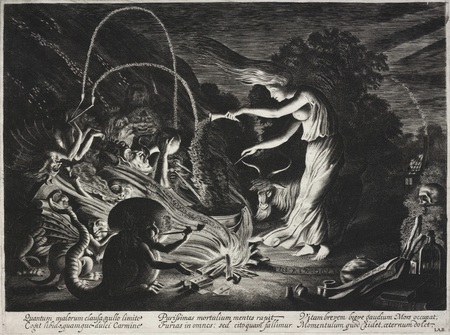
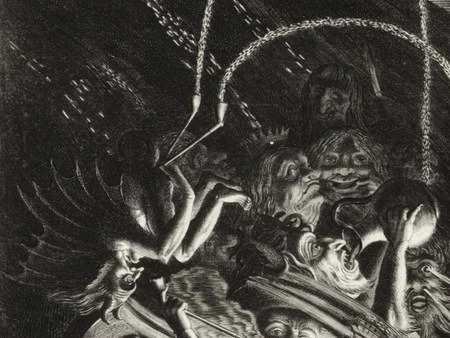
«The Witch» (also known as «The Sorceress» or «The Night Scene») Jan van de Velde II, 1626
4. Witch Attributes: Objects and Their Symbolism
Objects played a crucial role in shaping the image of the witch. In works from the 15th–17th centuries, they served as a kind of visual proof of magic’s existence. Even ordinary household items acquired a sinister meaning within the artistic context.
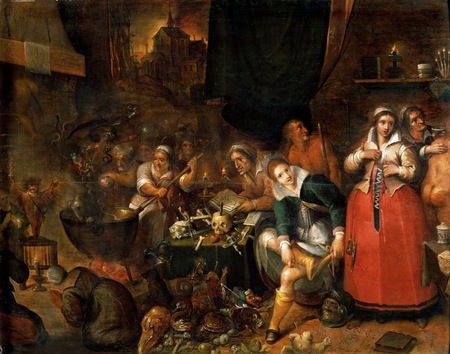
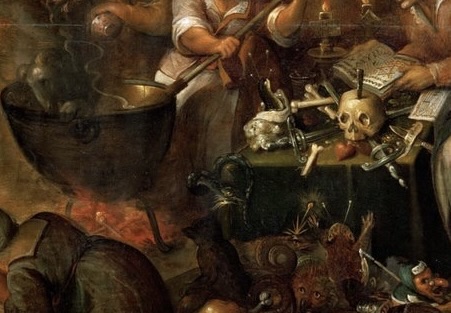
«Kitchen of Witches, ” Frans Francken the Younger, c. 1610
The cauldron symbolizes the preparation of magical mixtures and potions. The fire beneath it is associated with the transformation of substances and the creation of something unusual. In the beliefs of that era, witches were believed to possess the ability to brew special compositions for sorcery.
«The Witch’s Kitchen, ” Jacques de Gheyn II, c. 1600
Skulls and bones evoke themes of death, the afterlife, and the supposed connection between witches and malevolent forces. Such objects amplified the grim atmosphere, presenting witchcraft as a violation of the natural order. Animals and demonic creatures underscore the notion of witches' alliances with supernatural powers. Fantastic beings participate in magical actions, while animals tie into traditional depictions of witch companions.