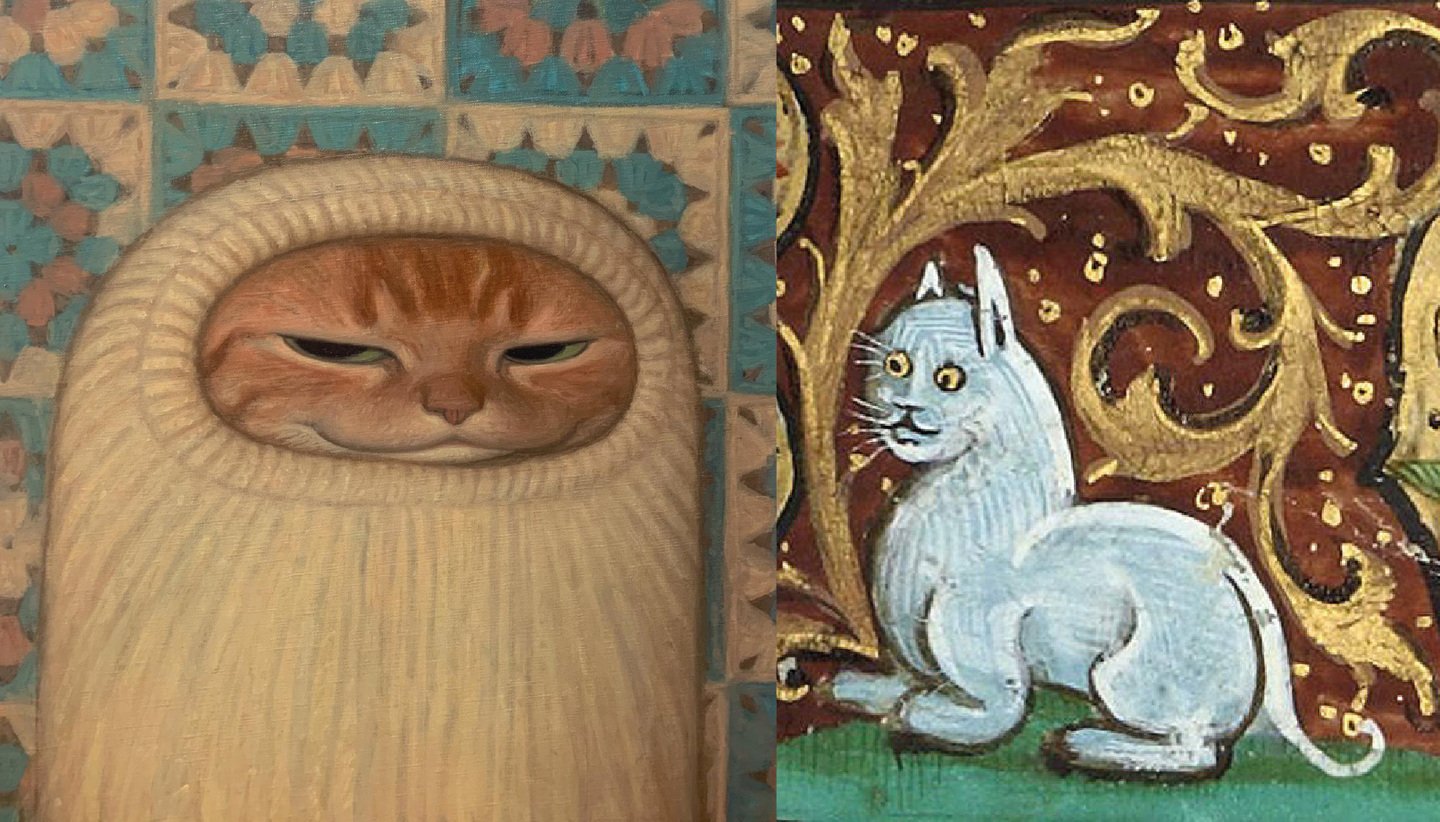
Concept
In the Middle Ages, cats were depicted with human faces, large eyes, and amusing bodies. Artists of that era did not portray animals merely for beauty; they sought to capture a moment, convey an idea, and closely observe the cats to render their unusual poses and movements. However, there were also frightening depictions where cats walked on two legs, held tools, and carried some object. They were bent in unnatural poses and appeared disproportionate. Today, such paintings can cause misunderstanding and fear because we are accustomed to seeing aesthetically pleasing images. Because of this, jokes about medieval cats have even become popular—they evoke a lot of emotion and are humorous. Despite everything, such paintings were considered the epitome of beauty in the past.
Since ancient times, cats have carried diverse meanings. In Egypt, they were considered a sacred animal—revered, protected, and cherished. In other places, people admired and loved them for their grace and clumsy movements.Fluffy pets have also contributed to art; they often surprised people with their behavior and inspired artists. Every creator saw something unique in them—some wished to portray kindness and love, flexibility and dominance, while others focused on fear and terror.Even though paintings of cats from the Medieval era appear somewhat crude, people were not intentionally mocking them or trying to ridicule them. Instead, they sought to convey the entire beauty of these small creatures.
The goal of this study is to explore all the characteristics of cat imagery during the Medieval period, focusing on details, symbols, and meanings, and to find and demonstrate similarities between the artworks of the contemporary artist Hosono and these historical depictions.
The study covers the period from the 5th to the 15th century. It will examine the first paintings of the Medieval period to understand their uniqueness. Starting in the middle of the visual study, paintings from the old era will be compared with works by the contemporary artist Karin Hosono from 2016 to 2025, which will help to determine if there are parallels between the past and the future.Medieval painting is the art of the Medieval period (5th–15th centuries), which was closely tied to the religious and cultural traditions of that time.The primary method will be a historical-comparative analysis of cat paintings. The study will examine various depictions of cats, the plots of the paintings, and their meaning in the Medieval period, which features different everyday scenes and the humorous concepts of the artists. We will also hypothesize about what some of the cat images might resemble and why it sometimes seems possible to confuse them with other animals.
Unknown artist. Medieval period.
We will also explore the characteristics of kitten imagery, learn what drew people to it at the time, and understand why they elicit strong emotions today—not just in children, but in adults as well. Furthermore, I will compare them to the contemporary Japanese artist Karin Hosono, who loves drawing delicate kittens and observing their lives. In her work, the kittens appear incredibly charming; she emphasizes their faces, thereby doubling down on their «cat-like appeal.» Thanks to her unique approach and the visual concept into which she pours her soul, Hosono’s paintings reminded me of medieval cats, even though they look quite friendly and appealing.
Karin Hosono is a Japanese artist who loves depicting kittens. In her work, she strives to reveal the full potential of cats, wanting to show the differences in each cat’s behavior. She pays close attention to details such as plump, oval-shaped faces and smiling expressions that are reminiscent of someone else and appear comical. Her work also possesses a distinct atmosphere; she often uses muted, acidic, and vibrant colors, though at times they are more subdued. Her paintings evoke delight, and the smiling cat that looks down with disdain, clearly knowing something, involuntarily makes you smile.To convey their individuality, Karin Hosono has spent years observing the behavior of fluffy cats. Similarly, in the Medieval era, artists tried to capture feline mannerisms to showcase their uniqueness. Today, the curiosity and keen observation of current and past artists connect them, as this allows them to create unique works that remain in memory and stand out from a thousand paintings.
In my research, I posit that behind every humorous image of a medieval cat lies an unusual artistic intention that explains everything happening. I believe that artists did not merely choose certain symbols and scenes arbitrarily; they sought to convey their ideas to others. Furthermore, Hosono’s contemporary works share a similar palette and feature amusing cat faces.
Features of Cats in the Medieval Era
Anthropomorphism. In the Middle Ages, artists often gave cats human characteristics: cats stood on their hind legs and were given eyebrows and a human-like nose. Artists based their work on their experience drawing people, applying human facial standards to animals. Because of this, it appeared that they were expressing human emotions. Some cats had a sad or sorrowful gaze, while others looked angry or frightening.
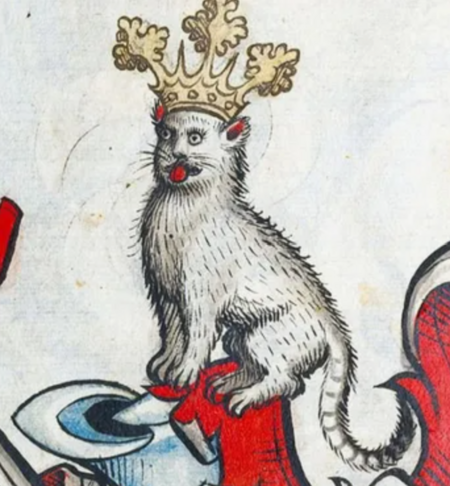
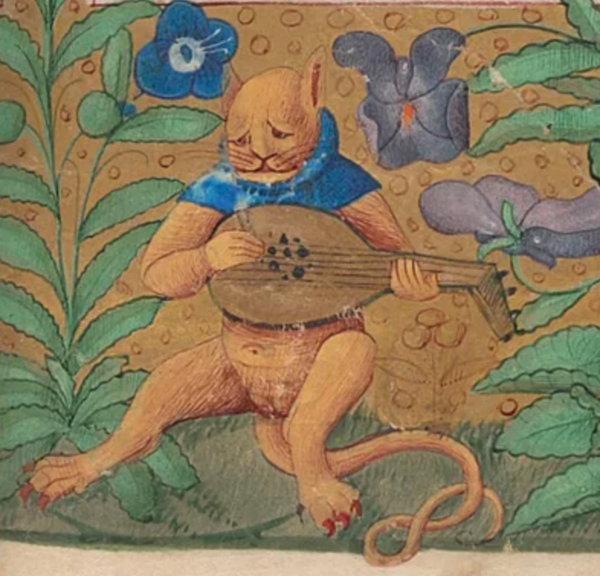
Unknown artist. Medieval period.
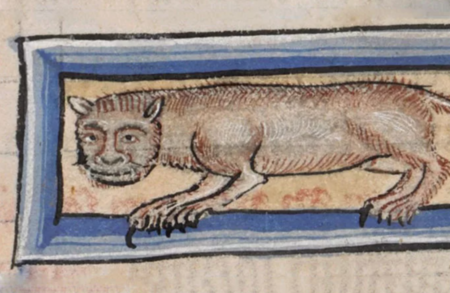
Often, the kittens resembled other animals (like kangaroos or hawks) and possessed not only human faces but also a mixture of various animal parts. Since the artists did not have an accurate understanding of feline anatomy, the cats in the paintings looked as if they were being experimented upon or assembled from different animal elements. Sometimes it was not immediately clear that a cat was depicted, but viewers could recognize it by small details: the stripes on the fur, the long tail, and the whiskers.
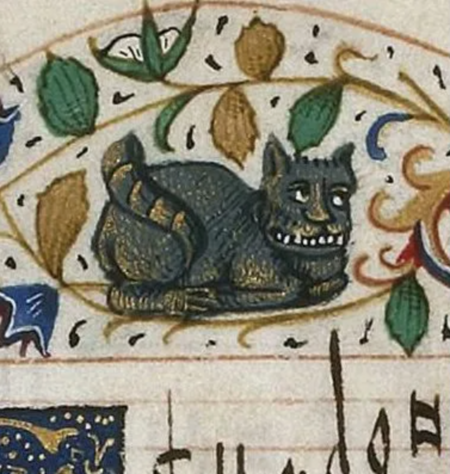
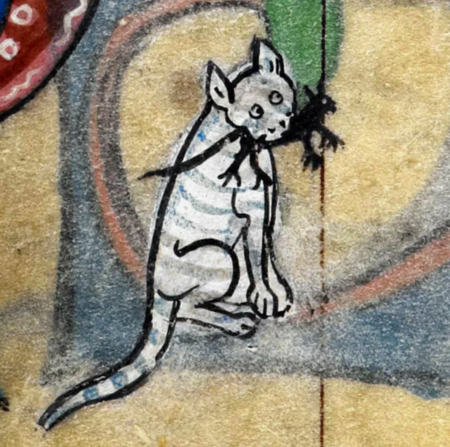
Unknown artist. Medieval period.
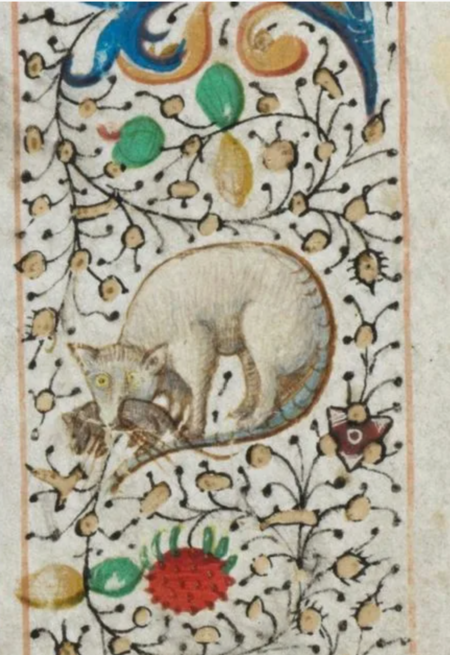
The white kitten pictured could be mistaken for another animal. The unusual curve of its back, the large tail, and its upright posture suggest it resembles a kangaroo. Furthermore, if you look closely, you can notice that all its paws look like feathers, almost as if they are bird wings. One possibility for the artist’s intent is that this was how the fur was imagined.
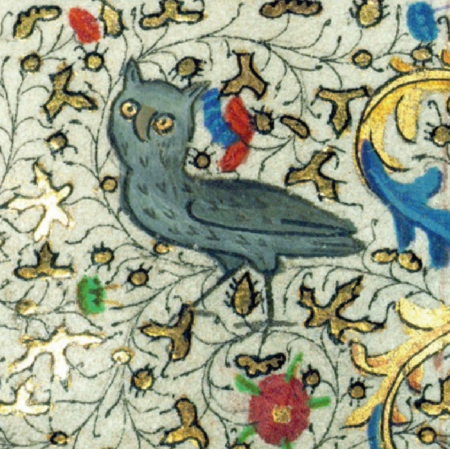
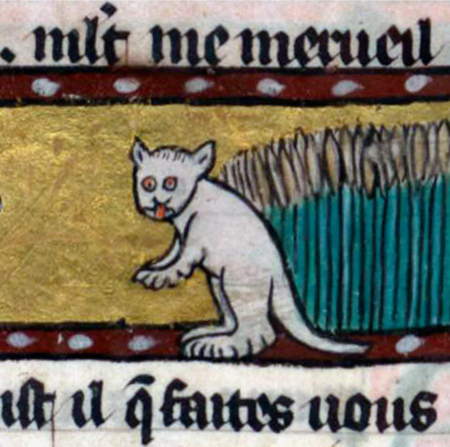
Unknown artist. Medieval period.
The drawn cat closely resembles a chimera (gargoyle) from Notre Dame Cathedral in Paris due to its large, human-like nose, eyebrows, and straight smile. Its paws and body shape also evoke a gargoyle or a demon.
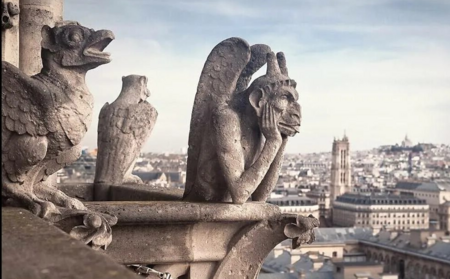
Chimera (gargoyle) from Notre Dame Cathedral, 13th Century/Unknown Artist. Medieval Period.
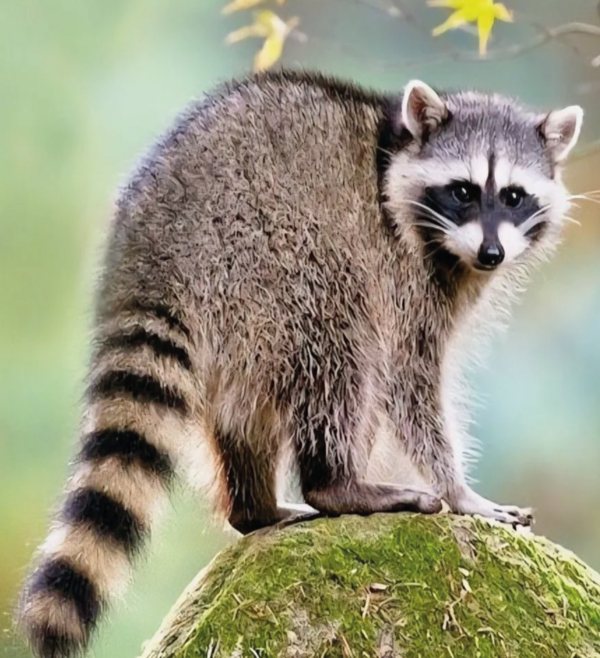
One of the little characters reminded me of a raccoon—the striped tail, the elongated snout, the yellow eyes, and the shape of the ears.
Unknown artist. Medieval period.
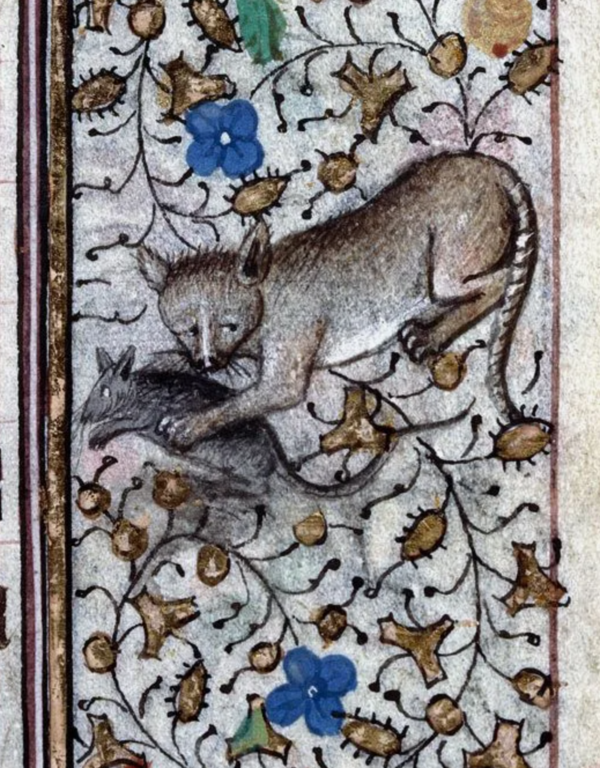
Artists didn’t want to mutilate the cats; they simply lacked visual reference. Often, they took descriptions from books and, using their imagination, tried to depict them. In the Middle Ages, artists might also draw cats from memory—having seen a striking pose, the artist wanted to replicate it immediately on canvas—but human memory could distort recollections and perceptions, and the little inspiration wouldn’t sit still forever, resulting in cats that looked comical and amusing.
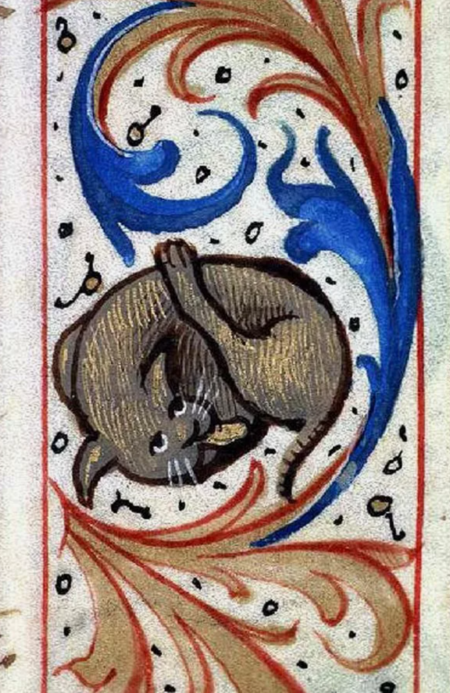
Unknown artist. Medieval period.
Artists could also exaggerate proportions. A large body and gaudy features—all of this was done to achieve greater expressiveness and emphasis.
Unknown artist. Medieval period.
Karin Hosono also exaggerates the characteristic features of her cats in her work to draw attention and emphasize their appearance. They have round faces, narrow eyes that seem squinting, and long smirks. Such faces evoke a sense of suspicion, as if they have done something and won’t tell.
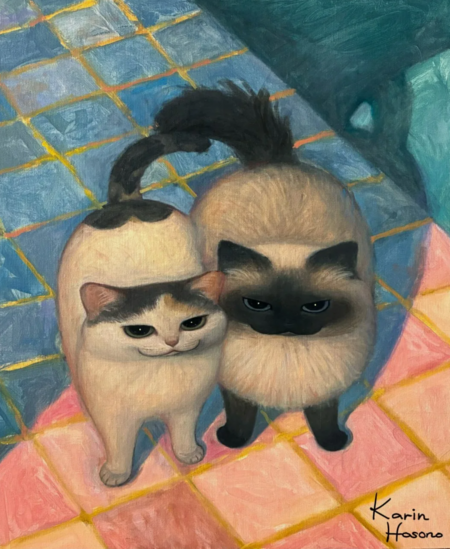
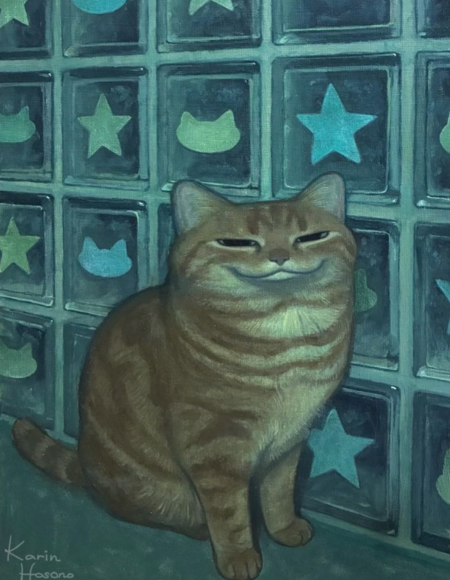
Paintings by Japanese artist Karin Hosono, period 2020–2025.