Woman as Monster, Heavenly Protector, and Symbol: The Transformation of the Female Image in 12th–14th Century French Art
The depiction of the female figure has always held a particular interest for me. I chose this topic because French medieval art constitutes a unique space of ideological and visual confrontation, where the female image simultaneously served as the focus of sacred veneration, demonization, and deep allegorical contemplation. In this historical period, torn between the severe asceticism of church doctrines and the burgeoning courtly tradition, women never remained neutral figures—their representation was always interwoven with complex semantic and sociocultural layers. Tracing the evolution of this image—from a terrifying chthonic being to the exalted Celestial Intercessor—provides the key to understanding the particularities of the mentality of the Middle Ages, the mechanisms of social regulation, and the transformation of aesthetic canons.
As a result of this research, I concluded that contrary to the entrenched perception of total misogyny within the official religious thought of the Early and High Middle Ages, French visual art undergoes a qualitative leap by the 13th and 14th centuries: the powerful rise of Marian cult (the veneration of the Virgin Mary) and the flourishing of courtly love legitimize the female image. These elements endow it with unprecedented subjectivity, autonomy, and aesthetic authority, thereby fundamentally shifting the balance of power away from the «monstrous» pole toward the «divine.»
The visual foundation is built upon three primary areas: monumental and architectural plastic arts (the capitals and portal tympana of churches), illuminated manuscripts (apocalypses, psalters, and chivalric romances), and stained glass art. The selection of monuments adheres to the dialectic of comparing three basic personae: the woman-temptress (the monster), the woman-goddess (the Virgin Mary), and the woman-symbol (allegories of Virtue, the Church, or the Lady).
Woman as Temptress and Chthonic Monstrosity (12th — Early 13th Century)
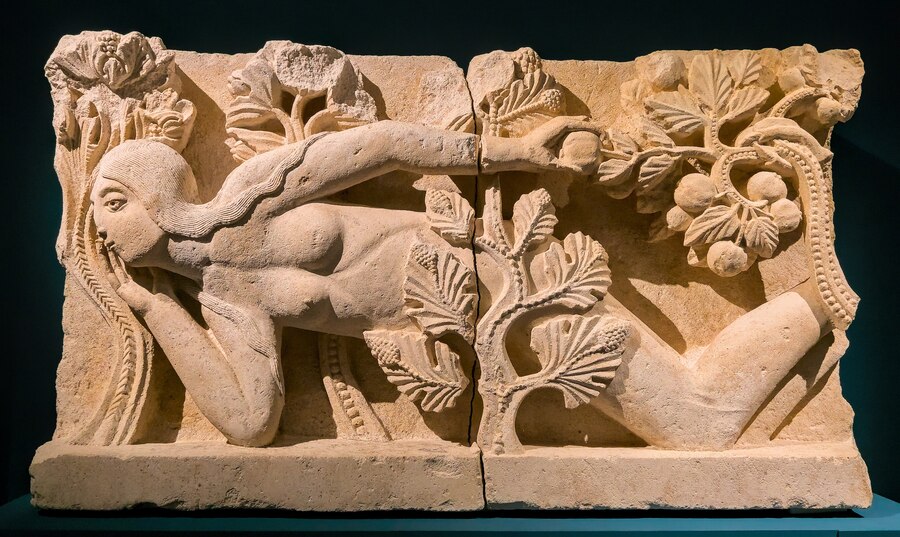
«The Temptation of Eve, ” relief from St. Lazare’s Cathedral, 12th century
Eve is presented not merely as a biblical figure, but as a complex symbol of temptation, physicality, and inner struggle. With her right hand touching her own mouth, she invokes, in medieval iconography, a traditional call for silence, secrecy, or the concealment of impending sin. The figure stretches along the bottom edge of the slab, coiling as if boneless and subject to a fluid, serpent-like dynamic.
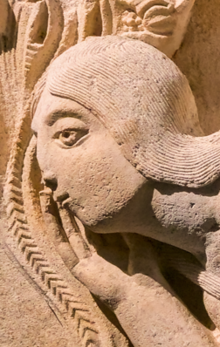
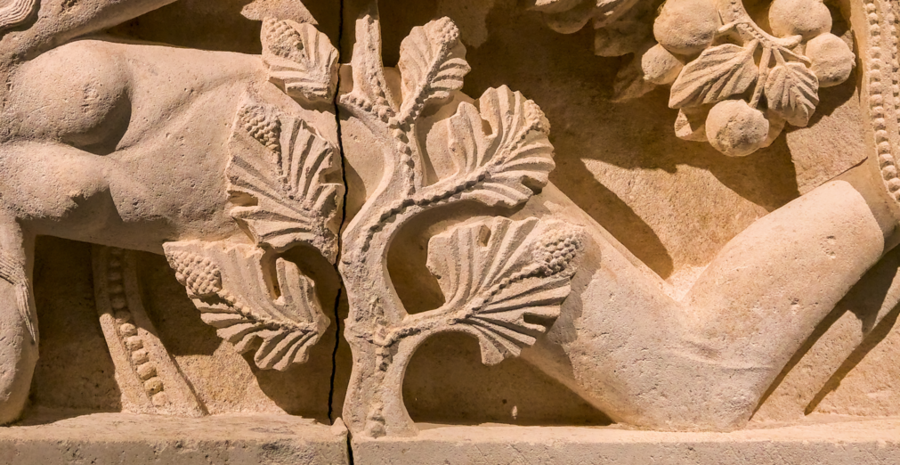
In the Romanesque tradition, chthonic beings (including serpents and frogs) were associated with impurity and earthly temptations. Thus, the boundary between the human female body and the chthonic nature of evil is blurred.
«Женщина со змеями», аббатство Сен-Пьер в Муассакеб, XII век
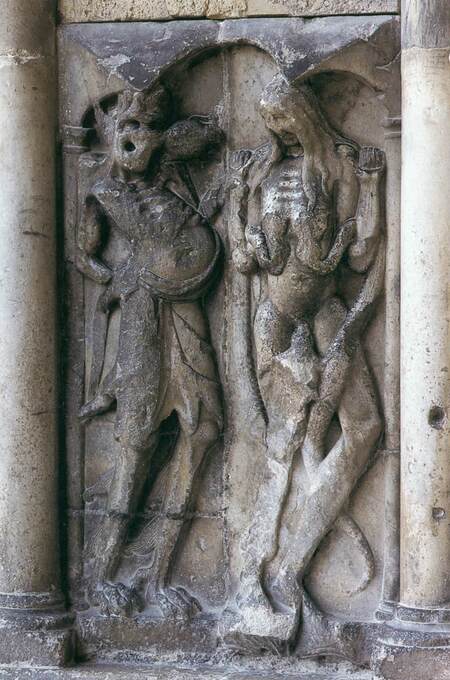
«Сладострастие и отчаяние», базилика Сент-Мадлен в Везле
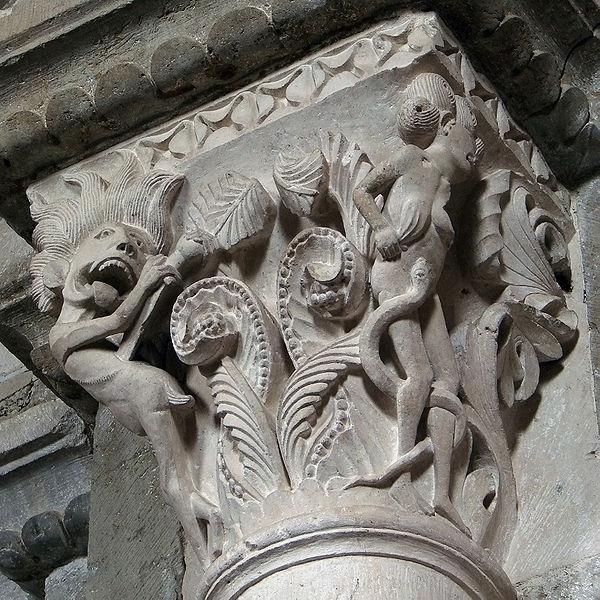
«Woman with Snakes» on the capital features a distorted anatomy: her elongated, serpentine body lacks natural harmony, transformed into a grotesque instrument of punishment. The snakes biting her chest allude to the Eve archetype, subverting the very functions of motherhood and nourishment. The toad, fixed in the abdominal area, embodies the «impurity» of the reproductive system. The figure of the demon standing beside the woman, likely controlling the process, is also significant. His presence visually reinforces the prevailing contemporary notion of women as conduits of evil—a physicality demanding strict spiritual control and suppression.
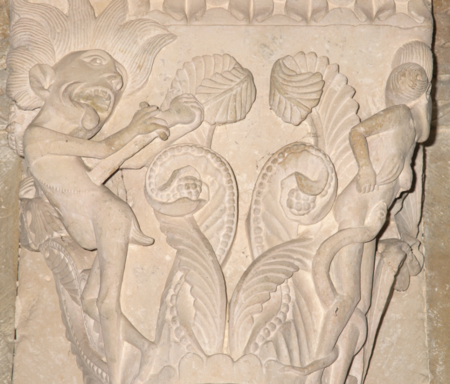
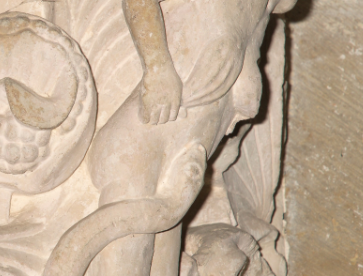
In «Sloth and Despair,» the female figure lacks fantastic limbs or completely altered anatomy. Thus, the monstrosity arises not from the woman’s appearance itself, but from the surrounding symbol of the snake and its interaction with the human body.
The choice of a female figure to depict the sin of lust and suffering reveals how closely female corporeality could be linked to concepts of temptation and moral danger.
«The Babylonian Whore Riding the Multi-Headed Beast,» Parisian Apocalypse, 13th Century
A temptress in lavish yet unsettling attire holds a chalice filled with abominations, symbolizing the temptations of earthly power, heresy, and carnal corruption. In French miniatures of this period, the female figure is depicted riding a grotesque, multi-headed apocalyptic beast, visually reinforcing the union of sinful flesh with the forces of evil.
The image of the temptress undergoes a complex iconographic transformation. Within the aesthetic of High Gothic, succeeding the Romanesque style, physical ugliness disappears.
Woman as Heavenly Intercessor (Triumph of the Cult of the Virgin Mary, 13th Century)
Витраж «Богоматерь прекрасного стекла» в Шартрском соборе (сер. XII — нач. XIII в.)
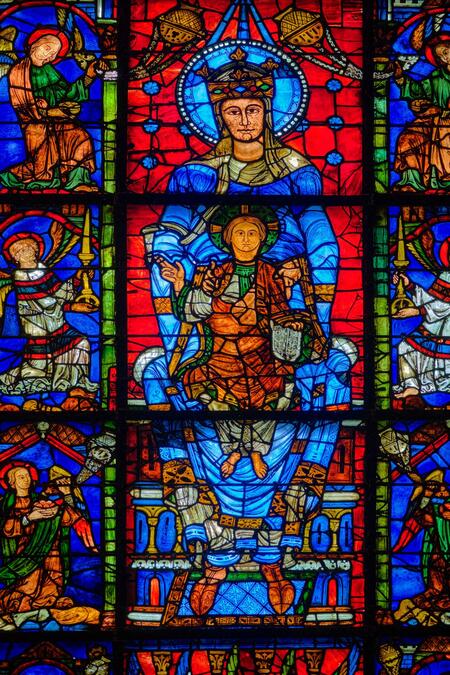
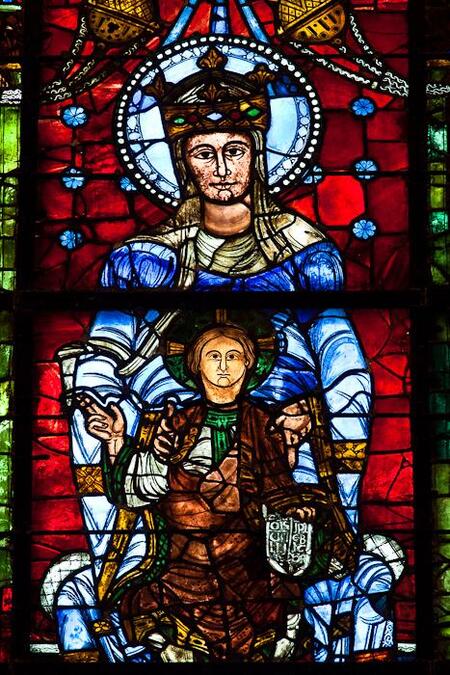
A qualitative shift is occurring in the depiction of the feminine image—the Virgin Mary occupies a central position in art. In contrast to the demonized bodies of Romanesque temptresses, the figure of the Virgin Mary is imbued with monumental serenity, majestic grace, and spiritual beauty.
Madonna Portal, Notre Dame, early 13th century
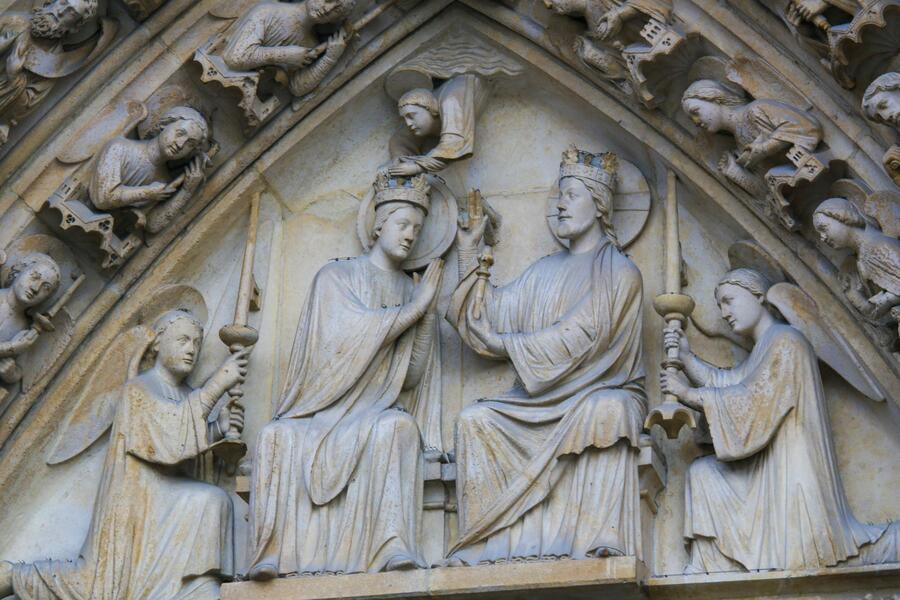
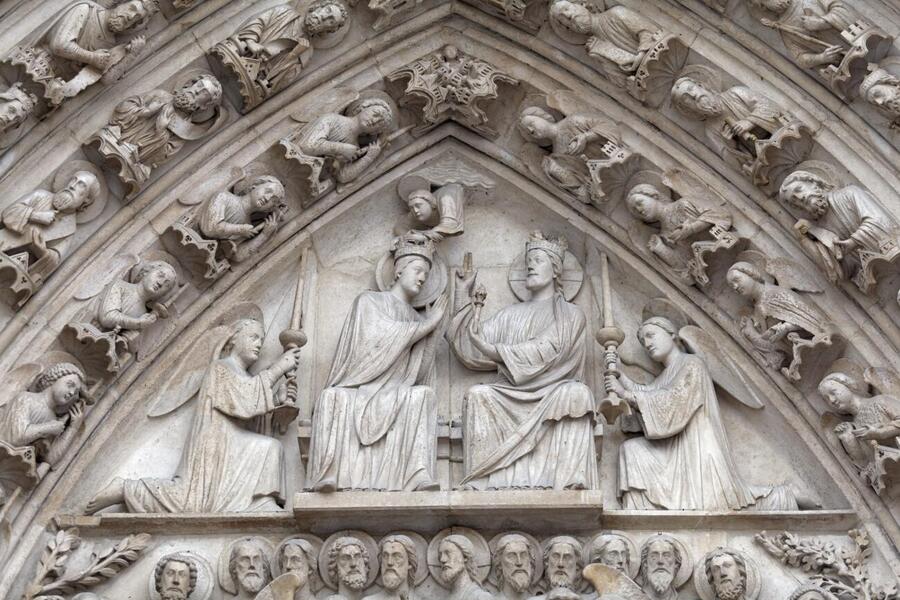
Here, the female figure is completely stripped of Romanesque grotesque and bodily distortions: monumental grandeur, royal attire, and harmonious proportions underscore the woman’s new status as the Empress of Heaven and the chief advocate for humanity.
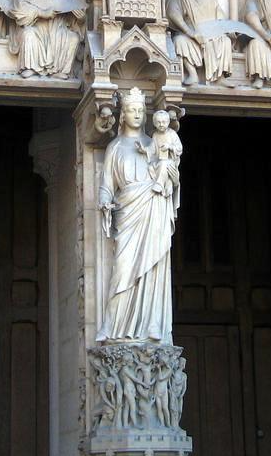
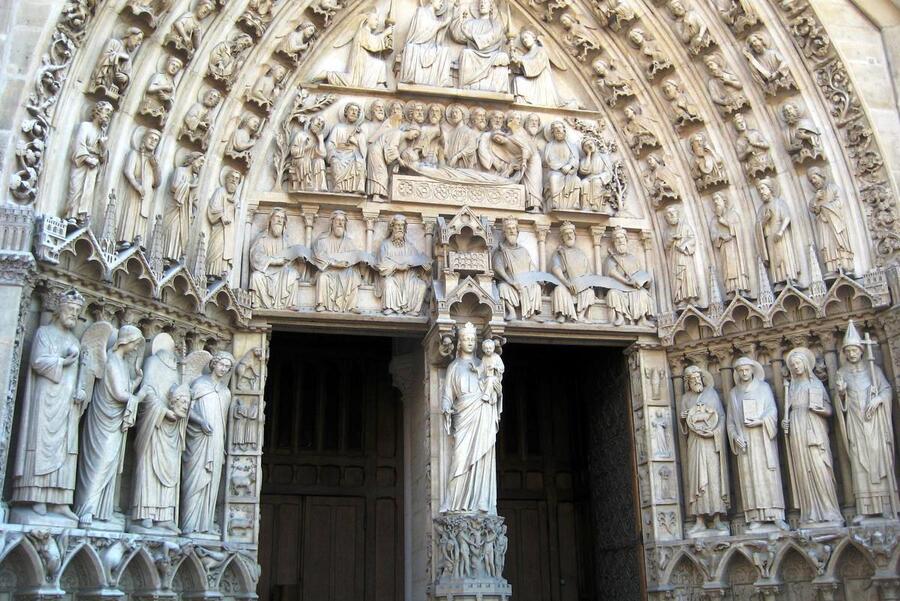
Relief with Adam and Eve
The image of Eve, stripped of its former chthonic motif, is particularly illustrative.
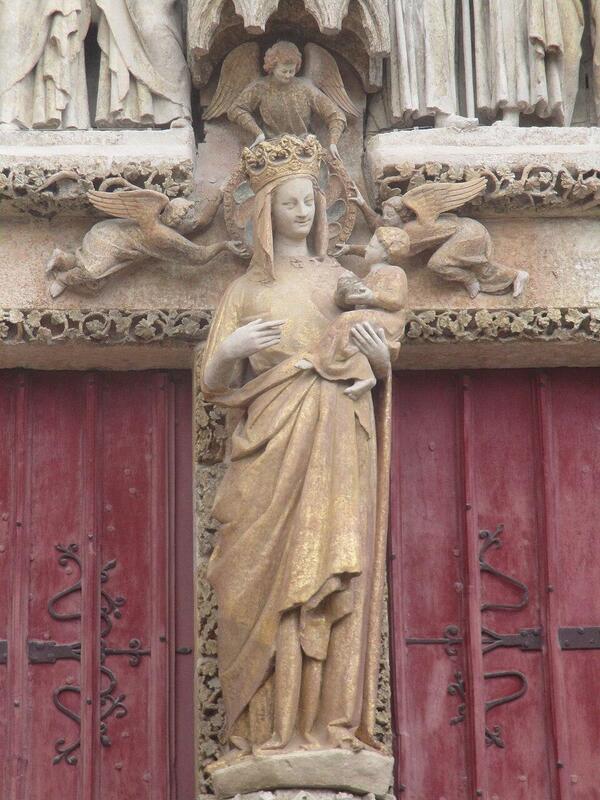
Statue of the «Golden Madonna and Child, ” Amiens Cathedral, 13th century.
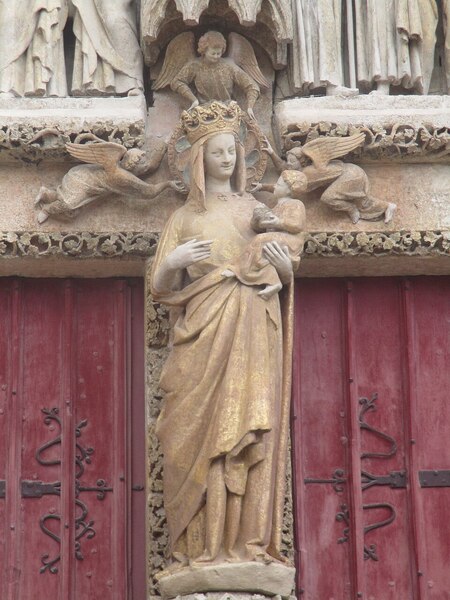
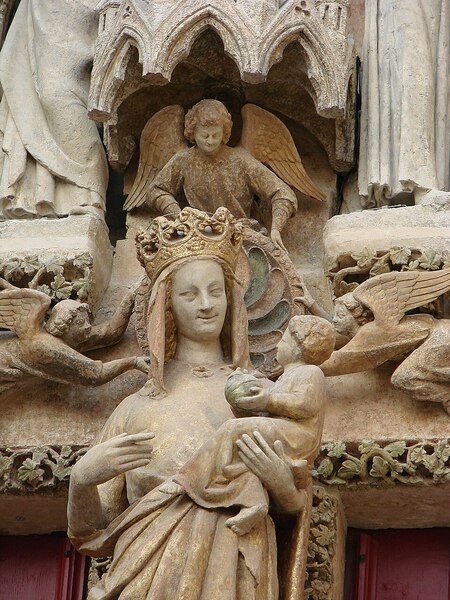
In this monument, the feminine spirit assumes the features of living, corporeal plasticity and emotional warmth: Mary’s figure is permeated by a natural curve (Gothic contrapposto); her hips and shoulders create a fluid rhythm, and a subtle, living smile appears on her face. The Christ Child in her arms is no longer a stern judge—he clings trustingly to his mother.
Thus, the visual foundation is laid for shaping the courtly ideal of the Beautiful Lady, where earthly devotion to woman finds existence through the divine archetype of the Celestial Queen.
We can observe a gradual humanization of the female image.
The Woman as Allegory and Courtly Symbol (High and Late Gothic)