Руки, которые говорят
Жесты в вышивке из Байё
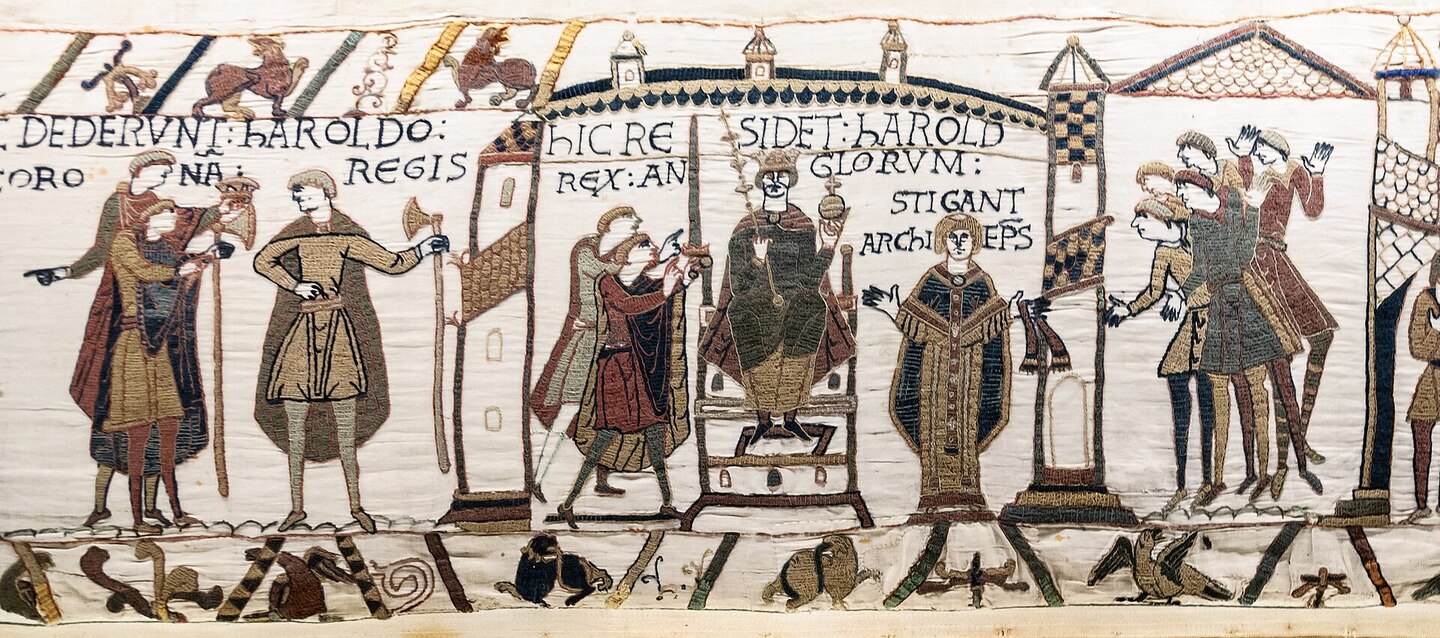
The Bayeux Tapestry is an 11th-century work that recounts events related to the Norman conquest of England. Various scenes are depicted throughout the tapestry: journeys, encounters, oaths, fleet preparation, and the Battle of Hastings itself. The characters constantly interact with one another—they talk, pass messages, make crucial decisions, and issue commands. However, their speech remains outside the pictorial narrative. The Latin inscriptions only briefly describe what is happening, failing to convey the characters' dialogues. Therefore, postures, figure orientations, and hand gestures play a crucial role in understanding the story.
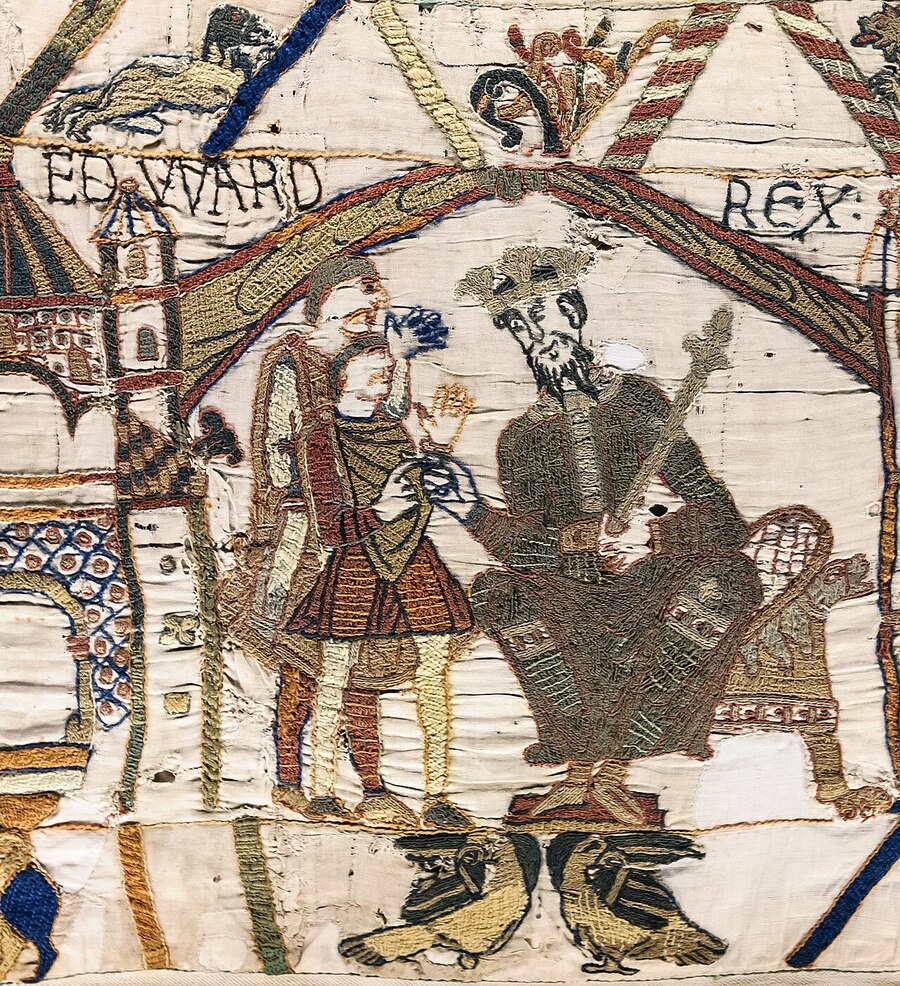
Unknown Masters. Embroidery from Bayeux. 11th Century. Fragment: Edward and Harold. Wool, linen. Bayeux, France.
Hands in the investigation are considered a means of visual communication. They can be directed toward a counterpart, touching an object, or emphasizing a character’s face. The meaning of the gesture, however, depends on the context. An extended hand alone does not reveal whether the character is commanding, responding, or requesting. To interpret it correctly, one must consider the position of the other figures, the turn of the head, the surrounding objects, and the content of the inscription.
The research material comprises selected embroidered episodes: the encounters between Edward and Harold, the negotiations with Guy Ponthieu and William’s envoys, the order to build ships, the blessing of food, Harold’s oath, and the appearance of William with an open face during battle. Examining these scenes helps us understand how gestures change and what role they play in different situations.
Key research question: How do hand gestures convey relationships between characters and direct the viewer’s attention in Bayeux embroidery?
Research Hypothesis: Gestures perform two important functions. They help characters interact with each other within a scene and allow the viewer to better understand how the story is developing. At the same time, the meaning of a gesture depends not only on the movement itself but also on who or what it is associated with, what objects are nearby, what text is present, and what is happening around. Therefore, similar movements can serve different purposes, and outwardly different gestures can participate in the same action.
lvvlvlv
2baa