Images of Byzantine Empresses in Art
6th–11th Centuries: Visual Means of Representing Status and Power
Categories
- Concept
- Introduction
- Power as External Signifier
- Power as Compositional Position
- Power as Action
- Background and Space
- Image Evolution
- Conclusion
- Bibliography
Concept
This visual study is dedicated to the imagery of Byzantine empresses in art from the 6th to the 11th centuries. The core of the research focuses on the artistic techniques—clothing, color palette, ornamentation, gestures, composition, and symbolic attributes—employed to construct the image of a woman possessing power. The objective is a comparative analysis of Byzantine art mosaics featuring empresses, specifically Theodora in the Basilica of San Vitale in Ravenna and Zoe in the Hagia Sophia Cathedral in Constantinople. This comparison will illuminate how the visual means used by artists to emphasize the status and power of the empresses evolved across different historical periods.
Introduction
In Byzantium, the empress was more than just a ruler’s wife existing in the shadows. She occupied an important place within the state structure, and her visual representation went beyond a simple portrait; it served as a means to display the empress’s standing within the state system, confirm the legitimacy of her authority, and establish her connection to the spiritual world. The system of visual attributes was key in shaping the image of the empress. Purple garments, diadems inlaid with gold and precious stones, pearl adornments, and halos allowed the imperial figure to stand out from the rest. These elements served not only a decorative function but also acted as markers of high social status and political authority.
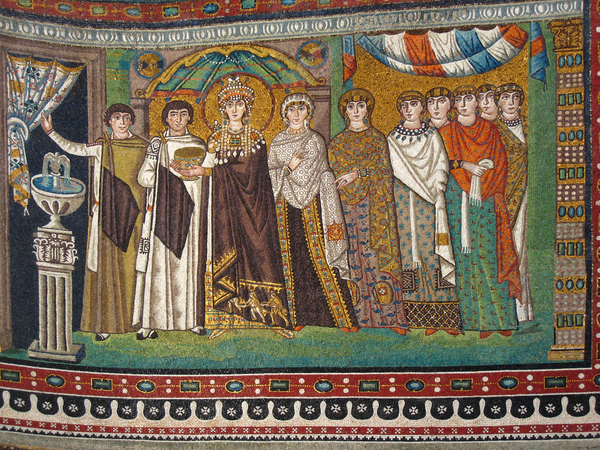
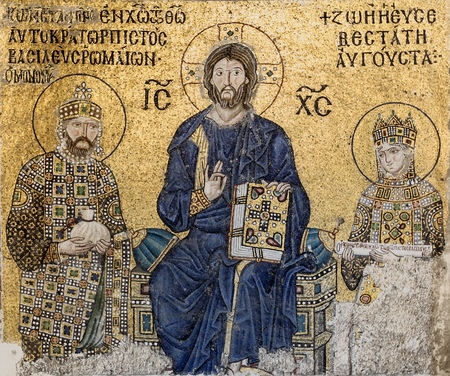
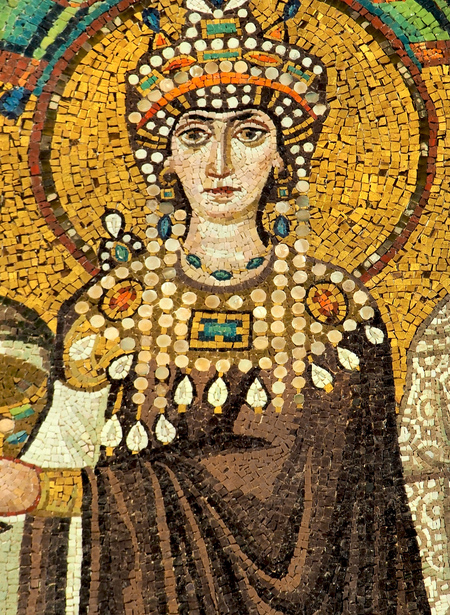
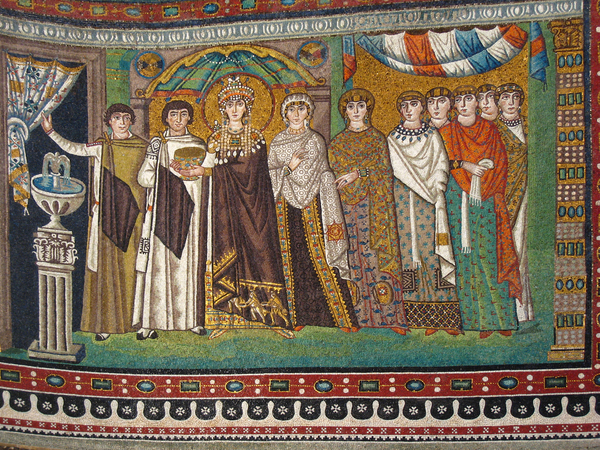
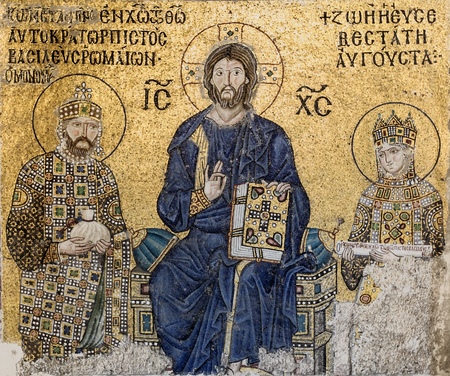
Empress Theodora with her entourage. Basilica di San Vitale, Ravenna. 546–547 AD. Empress Zoe. Mosaic of the Hagia Sophia, Constantinople. 1042–1055 AD.
A comparative analysis can begin with the placement of mosaics in temples.
The mosaic depicting Theodora is located in the apse of the Basilica of San Vitale in Ravenna, opposite the panel of Justinian (Theodora’s husband). It is integrated into the space of the altar and liturgy. [2]
The mosaic in the Hagia Sophia is located on the eastern wall of the south gallery of the cathedral (it is not visible from the sanctuary area). [8]
Feodora seems perpetually present during the divine service, while Zoya exhibits generosity and nobility within the gallery space.
Power as an External Sign
Byzantine imperial dress represented a complex system of signs: the color of the fabric, the nature of the ornamentation, precious jewelry, and the style of the headwear determined a woman’s status.
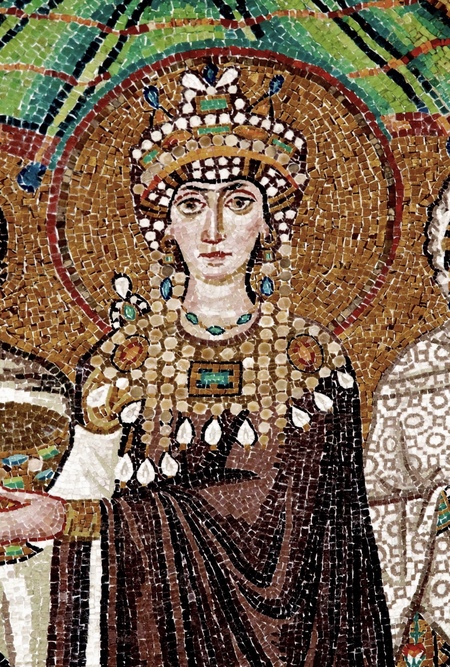
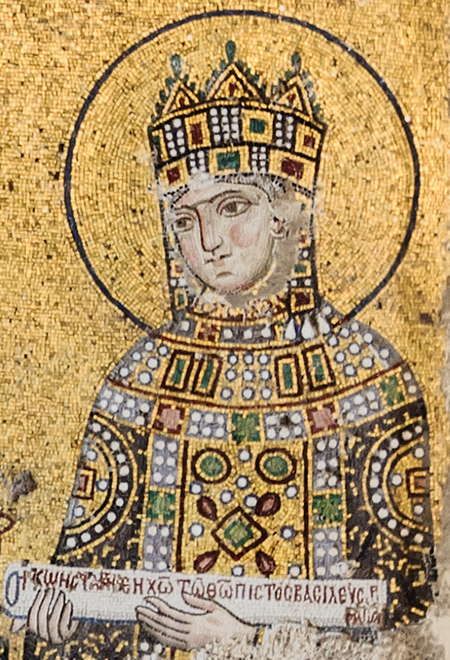
Portrait images of Empresses Theodora and Zoe. Basilica of San Vitale, Ravenna. 546–547 AD/ Hagia Sophia, Constantinople. 1042–1055 AD.
In Theodora’s portrayal, the costume does not merely accentuate wealth; it visually separates her from the entourage and communicates to the viewer her membership in the highest echelon of the state hierarchy. Just as in Theodora’s appearance, Zoe’s costume becomes one of the primary carriers of information regarding status.
Purple—the color of imperial power.
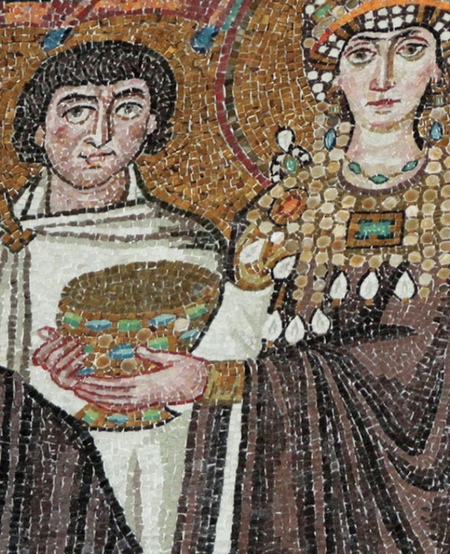
Empress Theodora is dressed in a royal purple chlamys worn over an embroidered gown. It is important to note that the color of the mantle sets her figure apart not only symbolically but also compositionally: the purple garment contrasts with the lighter and more varied attire of the courtiers. Among the elements of her dress, the richly decorated necklace and crown are also noteworthy, from which pearl and gemstone pendants hang. Theodora’s headwear enhances the solemnity of her silhouette and becomes a characteristic part of imperial female regalia. Surrounding Theodora’s head is a golden nimbus—this emphasizes her sacred, almost divine status as ruler. In my opinion, the nimbus does not signify that the empress is portrayed as a saint. Rather, it lends a sense of majesty to Theodora’s image, defining her special position within the ecclesiastical space.
Clothing details. Basilica of San Vitale, Ravenna. 546–547 AD.
At the bottom hem, there is a woven image depicting three wise men bearing gifts. This detail indicates that the Empress is offering a gift to the church.
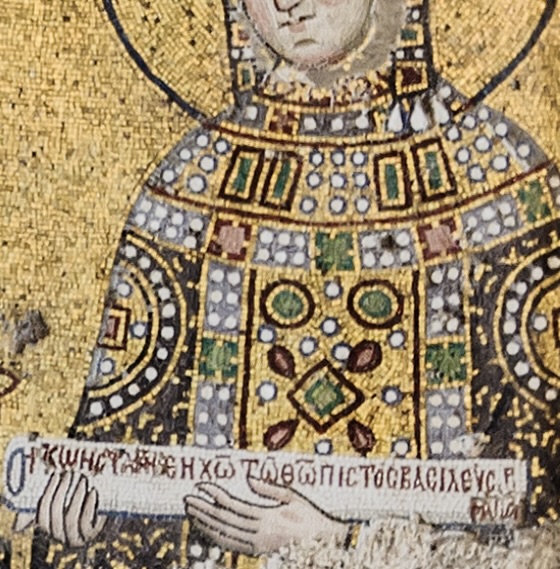
Empress Zoe is depicted in magnificent imperial regalia. This ceremonial costume underscores her divine status as the rightful heir to the throne. Much like Theodora, Zoe wears a purple mantle, a color that symbolized supreme authority. Over her gown is draped a broad, heavy gold sash-shawl, studded with large gemstones and pearls. The Empress’s head is crowned with a high golden diadem inlaid with precious stones, and long strands of pearls with tassels descend along her face and neck. Another detail similar to Theodora’s depiction is the golden nimbus surrounding Zoe’s head.
Using Theodora and Zoe as examples, a stable set of external markers of imperial status can be identified, which remained unchanged: • purple robes • a jeweled crown • a golden halo • pearl pendants
Power as a Compositional Position
Empress Theodora with her retinue. Basilica of San Vitale, Ravenna. 546–547 AD Empress Zoe. Mosaic of the Hagia Sophia Cathedral, Constantinople. 1042–1055 AD
In the San Vitale mosaic, Theodora holds the central position. Her pose is restrained yet majestic. Surrounding the empress on either side is a retinue. The composition of the mosaic is structured so that Theodora is vividly distinguished from the court members, leading us to perceive her not as one participant in the procession, but as an influential co-ruler. This arrangement creates a hierarchical composition in which the other figures are perceived separately from the central figure.
Unlike the mosaics of San Vitale, in the mosaics of Hagia Sophia, the main compositional center is not the empress, but Christ. Zoe is positioned to his right, and Constantine IX is to his left. She holds a position equal to the emperor’s on the side. The inscription above her head calls Zoe a «pious Augusta.» [7] The composition is structured according to the following hierarchy: divine authority (Christ) occupies the central position, and the emperor and empress stand before him as rulers making a donation to Hagia Sophia.
Inscription above the Empress’s head: «Most Pious Augusta Zoe.» Hagia Sophia Cathedral, Constantinople. 1042–1055.
The compositions of the San Vitale mosaic and the Hagia Sophia mosaic share some differences. Unlike Zoe, who is depicted to the left of Christ, Empress Theodora occupies a central position in the mosaic, distinguished by her solemnity and the surrounding entourage. The viewer can immediately discern Theodora’s standing in society. Similar elements include the static and reserved figures of both empresses.
Power as Action
Empress Theodora with her entourage. Basilica of San Vitale, Ravenna. 546–547. Empress Zoe. Mosaic of the Hagia Sophia, Constantinople. 1042–1055.