Introduction
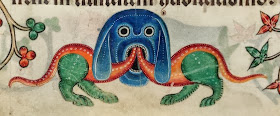
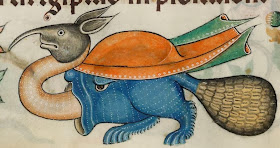
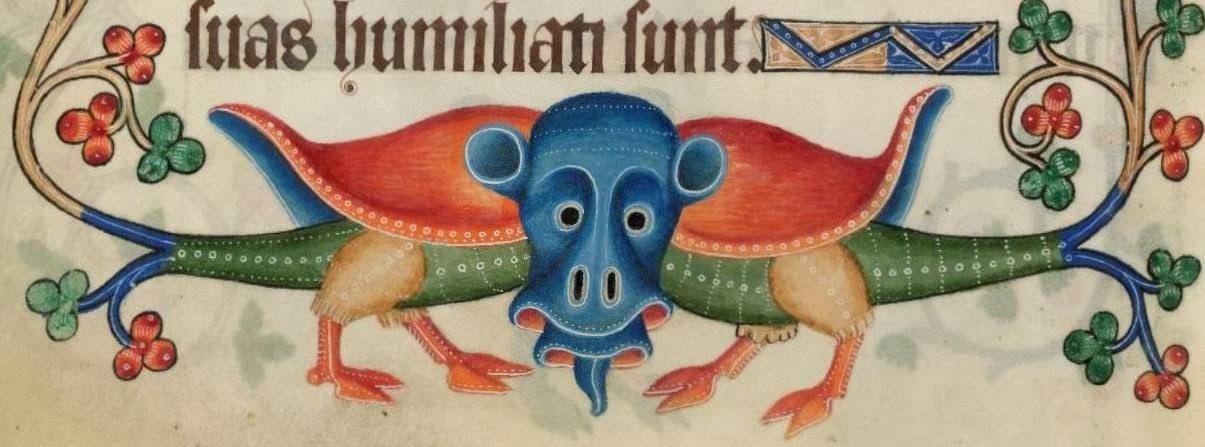
Medieval manuscripts appear to embody perfect order: meticulously aligned lines, exquisite calligraphy, and gold lettering create a sense of a strict and systematic world. However, on the margins of the manuscripts, this order dissolves. Strange creatures appear there—birds with human faces, dragons, and unusual hybrids. These whimsical illustrations might depict humorous scenes or simply coexist with the text, as if belonging to another world.
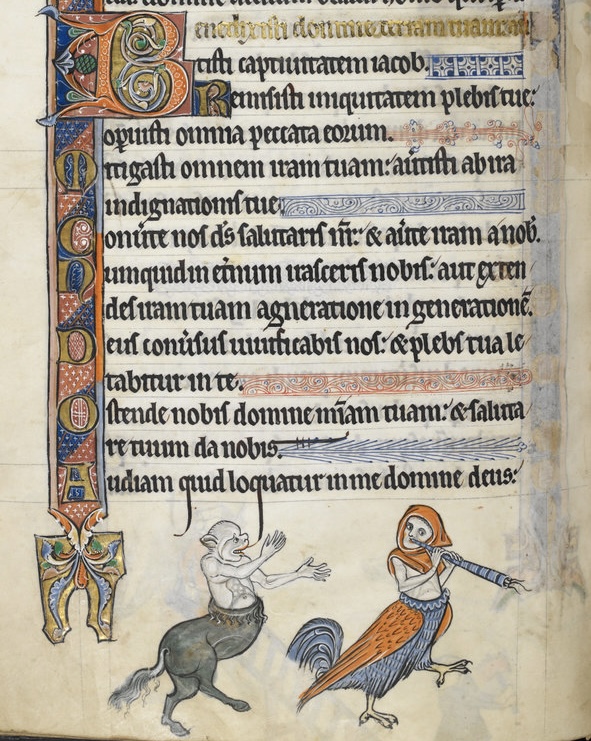
«The Rutland Psalter» England, circa 1260.
Concept
During the 13th and 14th centuries, a trend emerged in the Western European manuscript tradition to decorate the margins of manuscripts with fanciful imagery, which are known as drolleries. These compositions are filled with fantastic creatures, animals with human traits, and scenes with unexpected turns. Particular interest is drawn to the dissonance between the serious content of the book and the character of its illustrations: alongside prayers and psalms, one might encounter humorous scenes, hybrid beings, and figures that seem entirely unrelated to the religious context. The research focuses on studying the fantastic creatures found in the margins of Western European manuscripts from the 13th and 14th centuries. The analysis will include their appearance, methods of depiction, interaction with the text, and potential artistic functions. The relevance of this topic lies in the fact that medieval art is often perceived solely through the lens of religious symbolism. However, the marginalia testify to a more multifaceted artistic culture that permitted humor, imagination, and experimentation. For this study, the Rutland Psalter, the Lattrell Psalter, and the Smithfield Decretals were selected, allowing for a comparison of various expressions of the grotesque and the identification of recurring artistic methods.
Research objective
To determine the functions of fantastical creatures in manuscript illustrations and the artistic means employed to achieve those functions.
Hypothesis
It is hypothesized that the marginal images were not merely ornamentation, but rather a space for artistic play—a domain where established boundaries between human and animal, seriousness and humor, and the real and the fantastic could be boldly transgressed. To substantiate this hypothesis, a comparative visual analysis is being conducted. The images are examined along four axes: the composition of the fantastic figures, how roles are inverted within the narrative, the coexistence of the comic and the sacred, and how the drawing interacts with the page’s space.