Concept
A false door in an Egyptian tomb resembles a genuine entrance: it features recessed areas, door jambs, and lintels. Yet, passage is impossible—it remains a part of the wall.How do relief and architectural form create the illusion of a passage where none exists?I will examine false doors from the Old Kingdom tombs, using monuments from Saqqara as examples. The research is structured around visual techniques: first, the door’s placement within the chapel; second, its form, the depiction of the tomb owner, and the offering scenes. In each chapter, I will correlate the overall composition with specific details and other examples. My objective is to demonstrate how these elements collaborate to transform a section of the wall into a space perceived as an entrance.
The Door as Part of the Wall
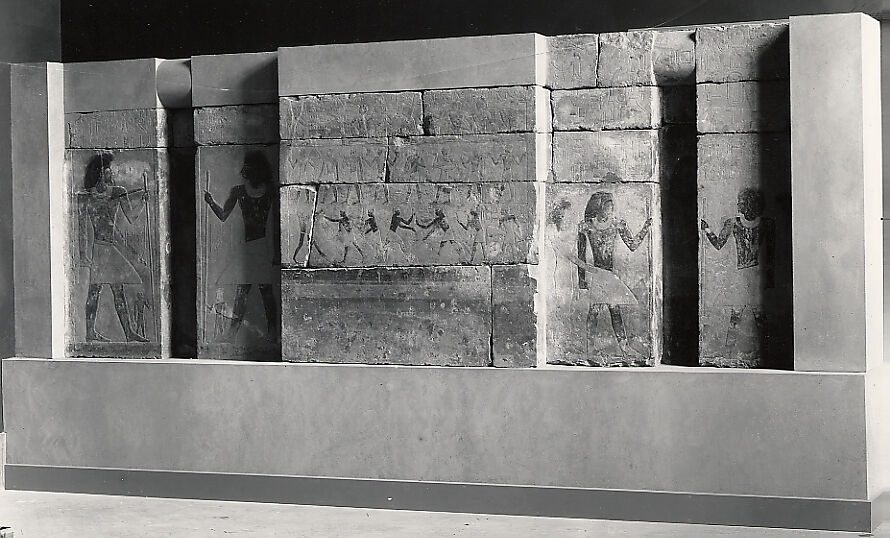
The Western Wall of the Nicokhur and Sekhemkhat Chapel. Saqqara, V Dynasty, c. 2465–2389 BCE. Metropolitan Museum of Art. Nicokhur’s false door is on the left wall; Sekhemkhat’s is on the right.
Let’s start with the overall view before examining a single door. Here, the false doors are located on the same wall as the relief scenes. They are highlighted by recesses and vertical frames, yet they remain part of the wall’s plane. Comparing the two niches reveals that what we are observing is a recurring architectural motif, not a random door design.
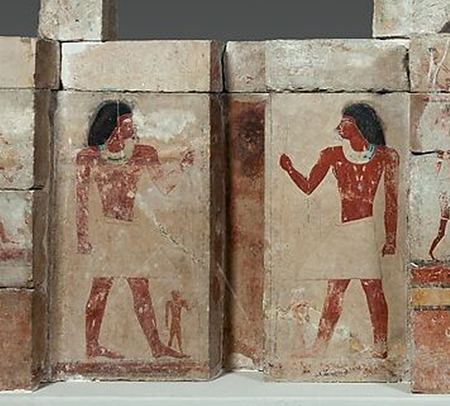
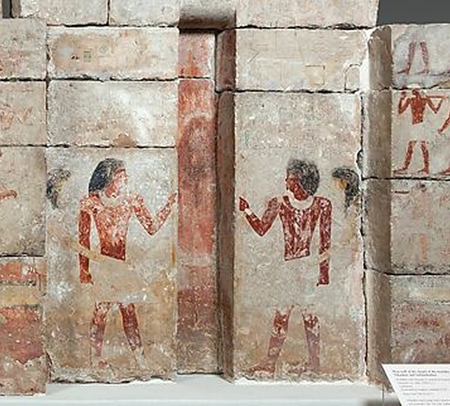
Fragments of the Western Wall of the Chapel: on the left is the Nicauhor false door, on the right is the Sechemhator.
Both doorways are structured as recesses in the wall, but they do not exist separately from the surrounding reliefs. The repetition of the doorway form helps them stand out among the scenes, while the figures on the sides indicate whose entrance each belongs to. Therefore, the placement and framing of the doorway are already involved in creating the image of the entrance.
How a wall becomes a door
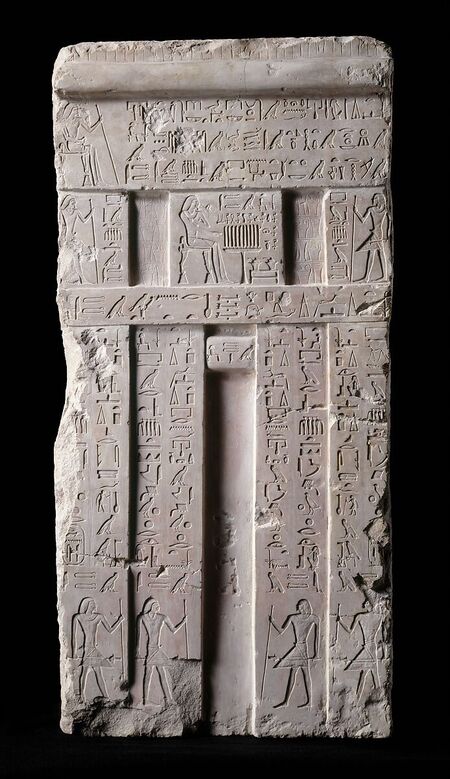
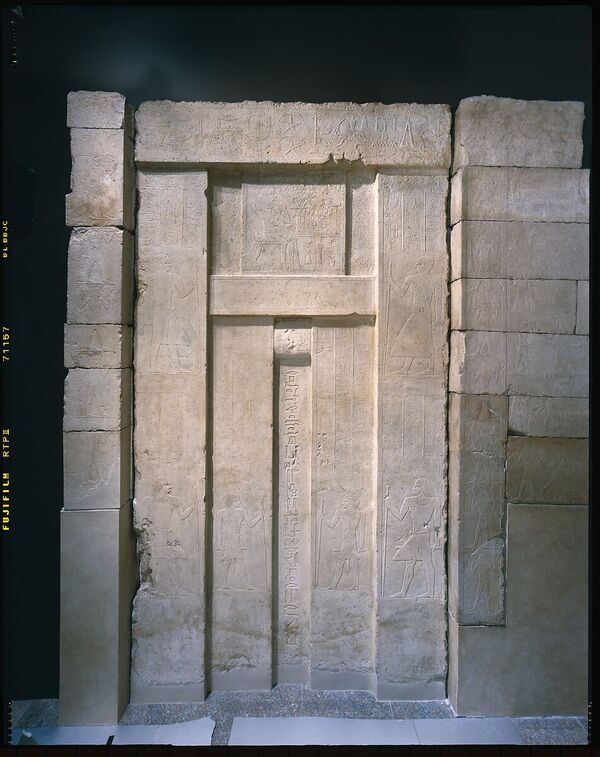
False doors of Medjetjetj and Raemkai. Saqqara, Old Kingdom. To the left—Medjetjetj, c. 2353–2323 BCE; to the right—Raemkai, c. 2446–2389 BCE. The Metropolitan Museum of Art.
At first glance, the doors appear different: Metdgetji’s surface is densely filled with relief, while Raemkai’s form reads more calmly. Yet, in both, the eye is drawn to a narrow indentation in the center. Let’s examine it separately.
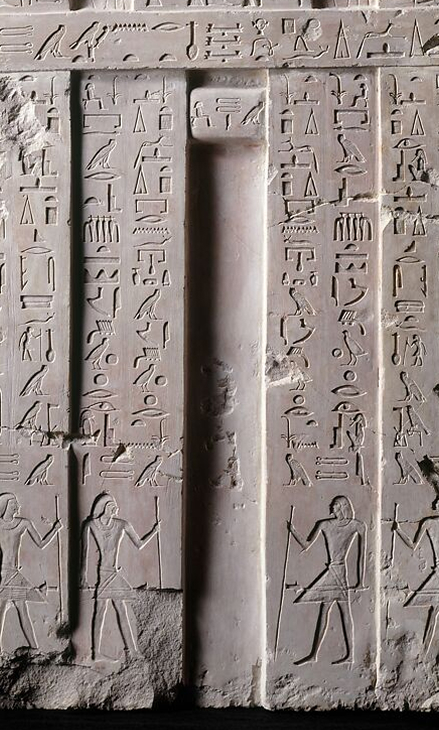
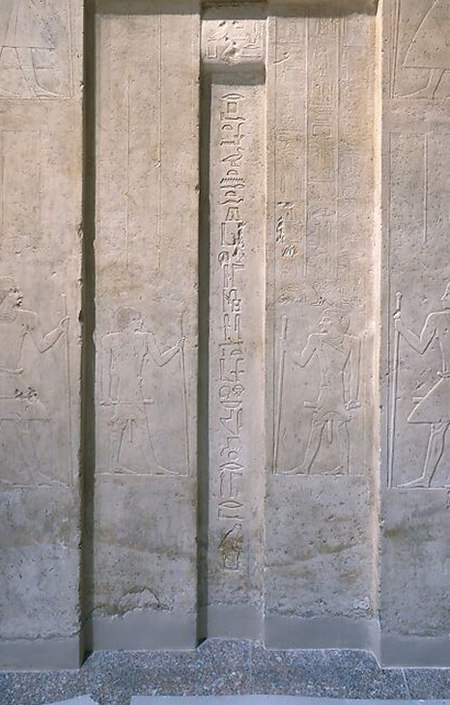
Central niches of the false doors by Metdgetji (left) and Raemkai (right). Photo fragments. Metro Museum.
The niche indicates where we would expect to see an entryway. However, it terminates in a stone surface. The door is recognizable by the shape of the recess, even though there is no space behind it.
Framing: multiple frames around one niche
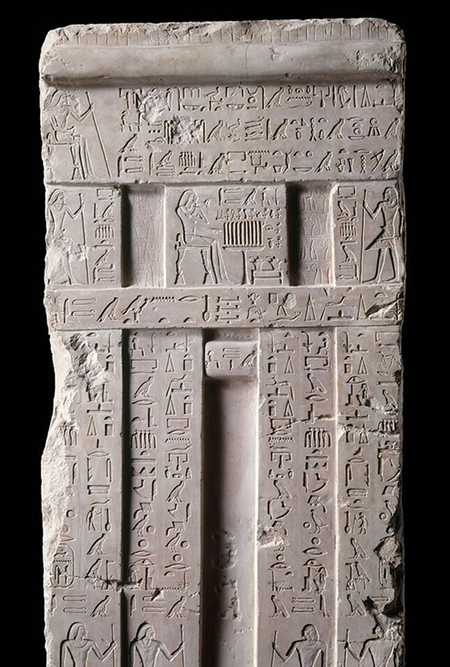
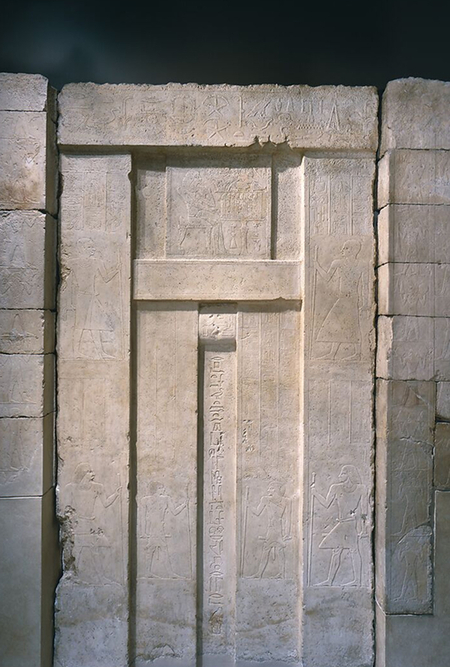
Framing of Metdgetzhi and Raemkai false doors. Repeating vertical and horizontal elements highlight the central niche.
The doorway is not defined by a single line around the niche; its framing is repeated, creating several nested rectangles. These elements guide the viewer’s eye from the edges toward the center, lending visual depth to the flat wall. While the two monuments feature different levels of detail, this underlying principle functions in both.
Who is depicted at the entrance?
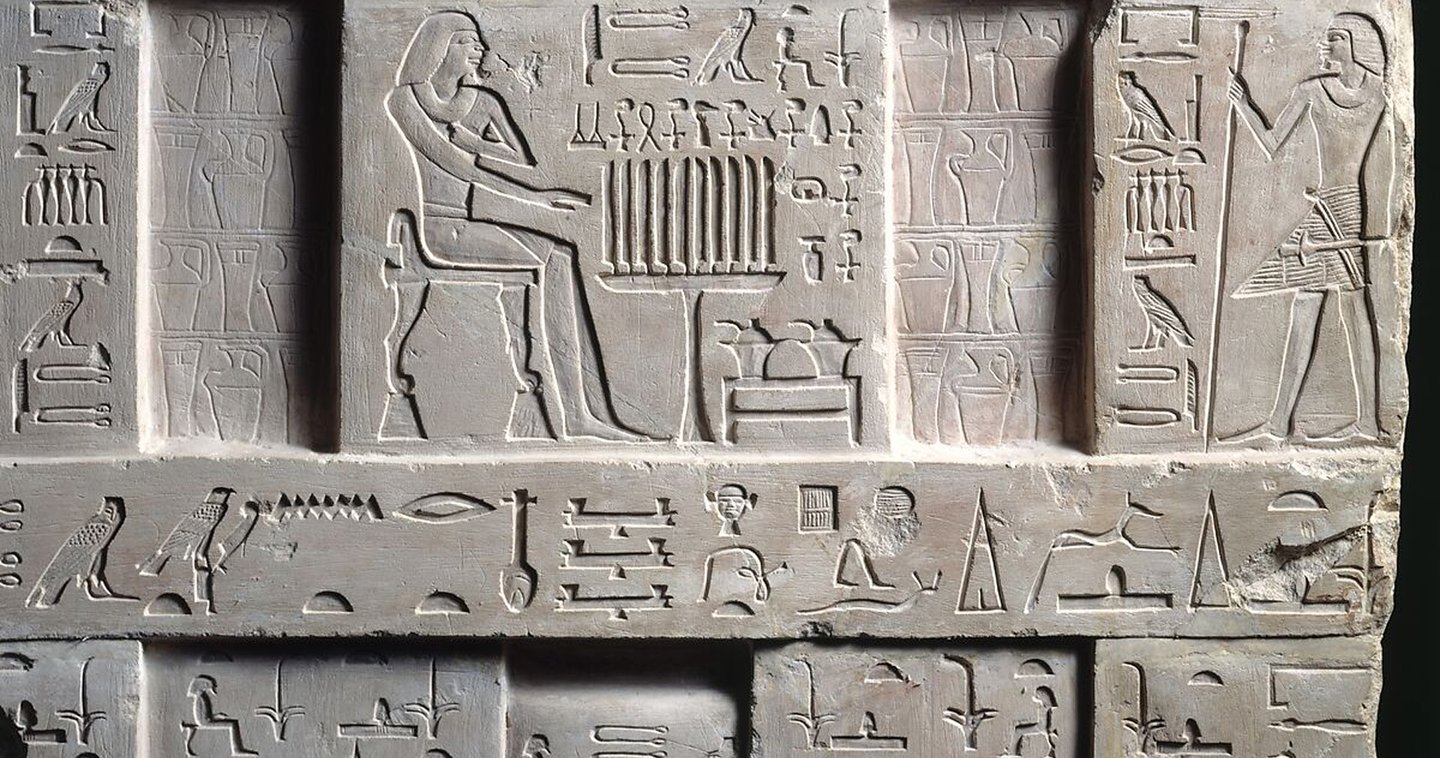
Metrojetsji on its own false door: a seated figure above the niche and a standing figure at its edge. Fragments. Moscow Metro Museum.
At the top of the Metjetji, he is seated at an offering table, while figures stand in niches on either side. His image is repeated in various parts of a single door. Therefore, the relief helps to understand who this symbolic entrance belongs to and connects the central niche with the surrounding imagery.
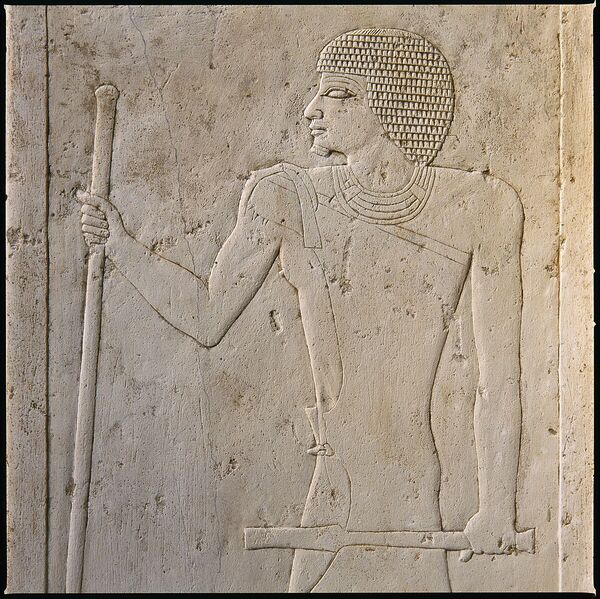
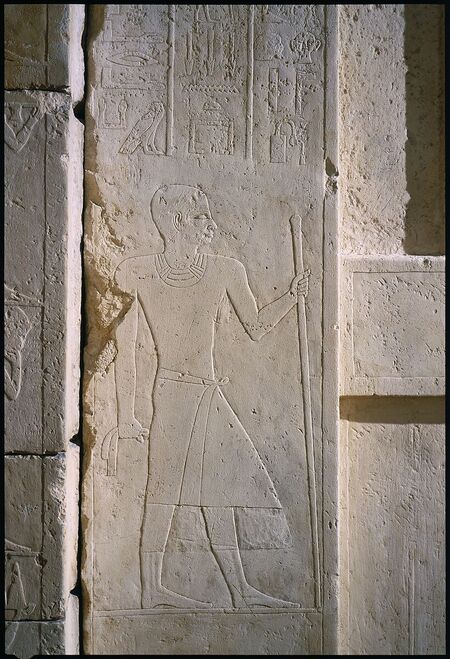
Standing figures on either side of the false door of Ramkaya. Fragments of relief. Metropolitan Museum.
In Raemkai, much like at Metdjetji, the figures are positioned around a central niche. They are repeated on the pedestals that form the edges of a conceptual passage. Consequently, the image of the owner is not placed somewhere near the doorway—it is constructed in the form of the doorway itself.
Conclusion: The niche indicates the conceptual entrance, and the repeating figures suggest its connections. Architectural form and relief work in tandem.
Offerings at the door
Offerings on the False Door of Metrojetsky: A scene with a table and panels with vessels. Fragments. Metro Museum.
The offering scene is situated directly above an indentation resembling an entrance. A seated figure, a table, and vessels form the upper section of the same structure. Thus, the depiction of the offerings is related to the doorway both thematically and spatially.
The West Wall of the Nicauxor and Sechemhator Chapel: A fragment of scenes between false doors. Metropolitan Museum of Art.
In the Metdgetji, the offering scene is positioned above one doorway. On the wall, the bas-relief scenes of Nikauhora and Sekhemathor occupy the space between two doorways. The compositions differ, but in both instances, the offerings are shown adjacent to a symbolic entrance.
Scenes of offerings may be located above or beside the niche on the wall. In both cases, they connect the image of the doorway to the action taking place before it: the offering is directed toward the site of the symbolic entrance.
Figure on either side of the aisle
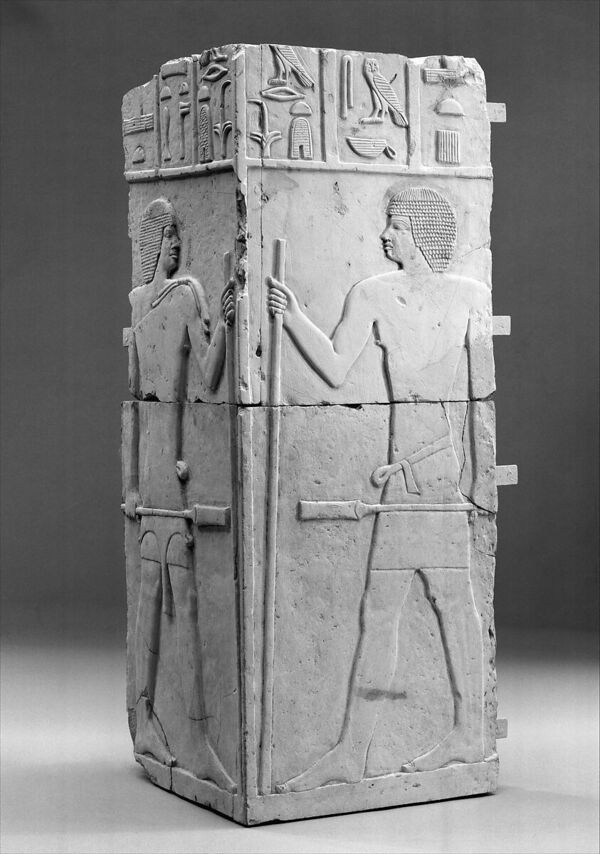
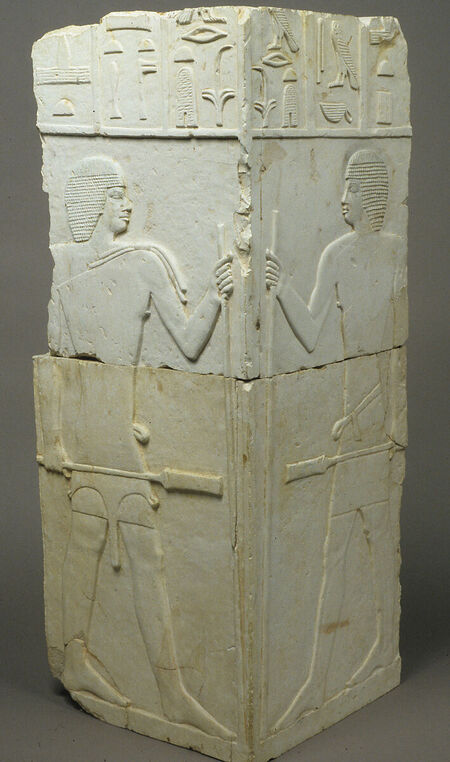
Niche corner from the tomb of Akhhotep. Saqqara, 4th Dynasty, circa 2575–2551 BCE. Metropolitan Museum of Art.