Five apartments, once home and workspace to the leading figures of the Russian avant-garde, are housed in the Zotov Center.
The exhibition «House 21. A Visit with the Artists» tells the story of the 1920s and 1930s not through paintings, but through personal belongings, stories, and subsequent memories. In this material, you will learn what happened at the house located at Myasnitskaya, 21, who lived there, and how the history of the Russian avant-garde is revealed in the exhibition.
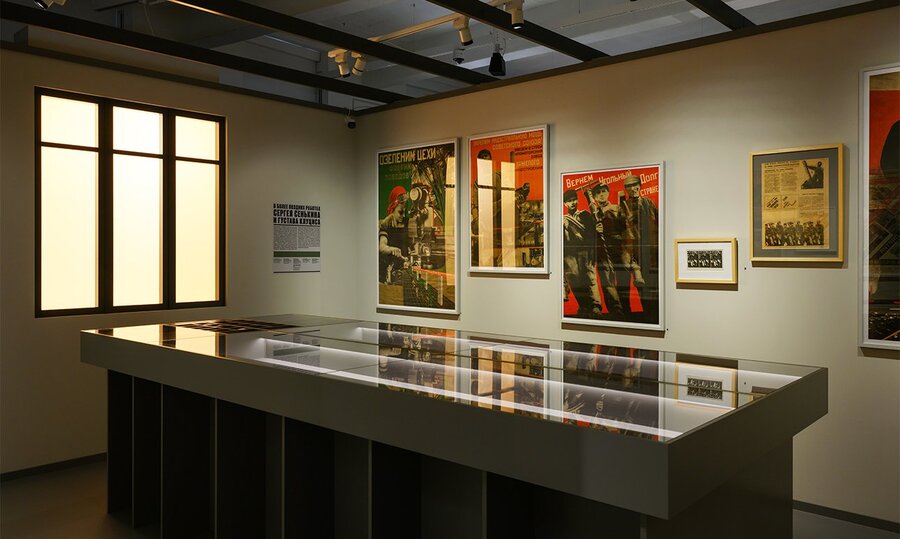
Exhibition «House 21: Guests of the Artists» at the Zotov Center | Photo: Daniil Annenkov
Miasnitskaya St., 21 — a nearly mythical place in Russian art. In the 1920s, it was designated as a dormitory for VKHUTEMAS, transforming it into a true creative commune. Alexander Rodchenko and Varvara Stepanova, Alexander Drevin and Nadezhda Udaltsova, Petr Miturich and Vera Khlebnikova, Sergei Senkin and Vladimir Favorsky—all of them lived in cramped rooms, argued until hoarse, played mahjong, and raised children. The poet Nikolai Aseev called this house the «Moscow Montparnasse”—and today, walking through the exhibition, you understand why.
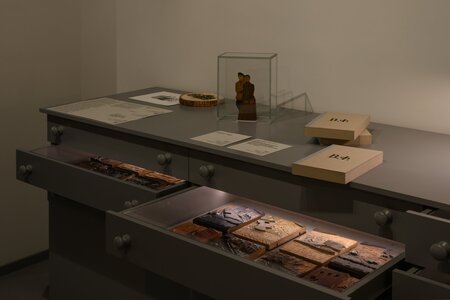
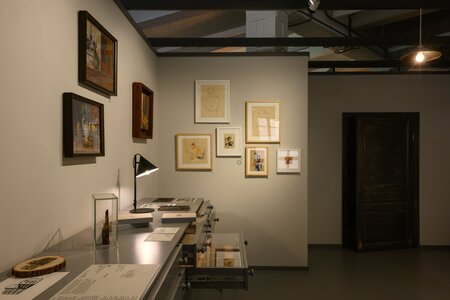
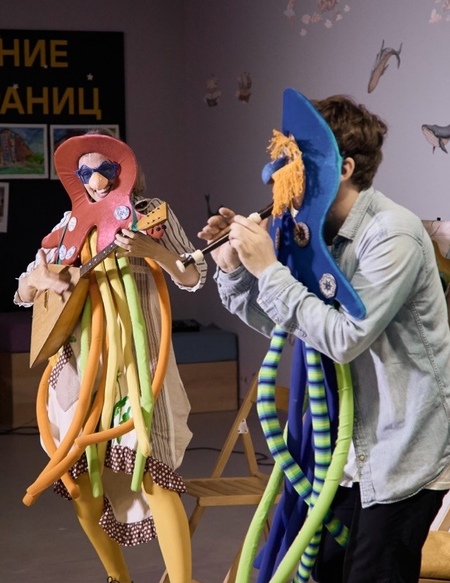
Exhibition «Home 21. A Visit to the Artists» at the Zotov Center | Photo: Daniil Annenkov
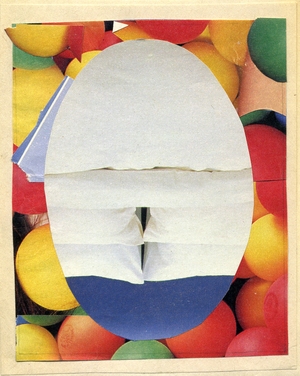
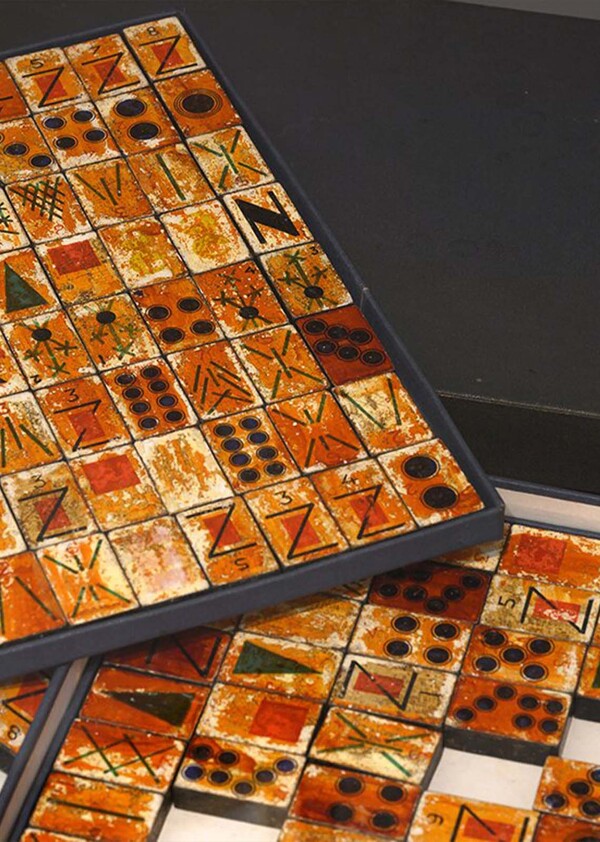
In Rodchenko and Stepanova’s apartment—jazz records, the scent of perfume and coffee, and a Constructivist Mahjong set on the table (they genuinely played it). In Miturich and Khlebnikova’s space—dim light, family photos, and children’s drawings, as if time had stopped on a quiet evening. In Drevin and Udaltsova’s studio—the scent of oil paint and turpentine, canvases in wooden frames, brushes stored in jars. And the best part of the exhibition—Sergey Senkin’s interactive corner, the father of Soviet photomontage, where anyone can assemble their own avant-garde slogan.
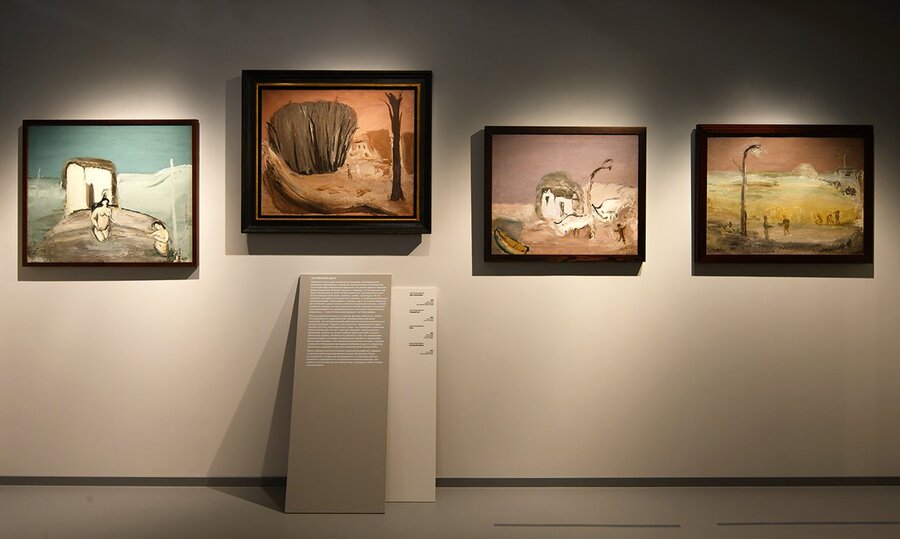
Exhibition «Home 21: A Visit with Artists» at the «Zotov» Center | Photo: Daniil Annenkov
However, this exhibition is distinguished from many projects where the «immersion» effect gradually begins to supersede the content. Here, the reconstruction functions differently. We have a project that interestingly reveals its subjects—not through their creative output, but through their personal belongings, their relationships with one another, and their stories. A serious research effort is evident in the ordinary constructions—the curators consulted with the artists' descendants, studied archives, and restored details. This is visible: each room is not a stylization, but an almost documentary reconstruction of past life.
Exhibition «House 21. Guests of the Artists» at the Zotov Center | Photo: Daniil Annenkov